
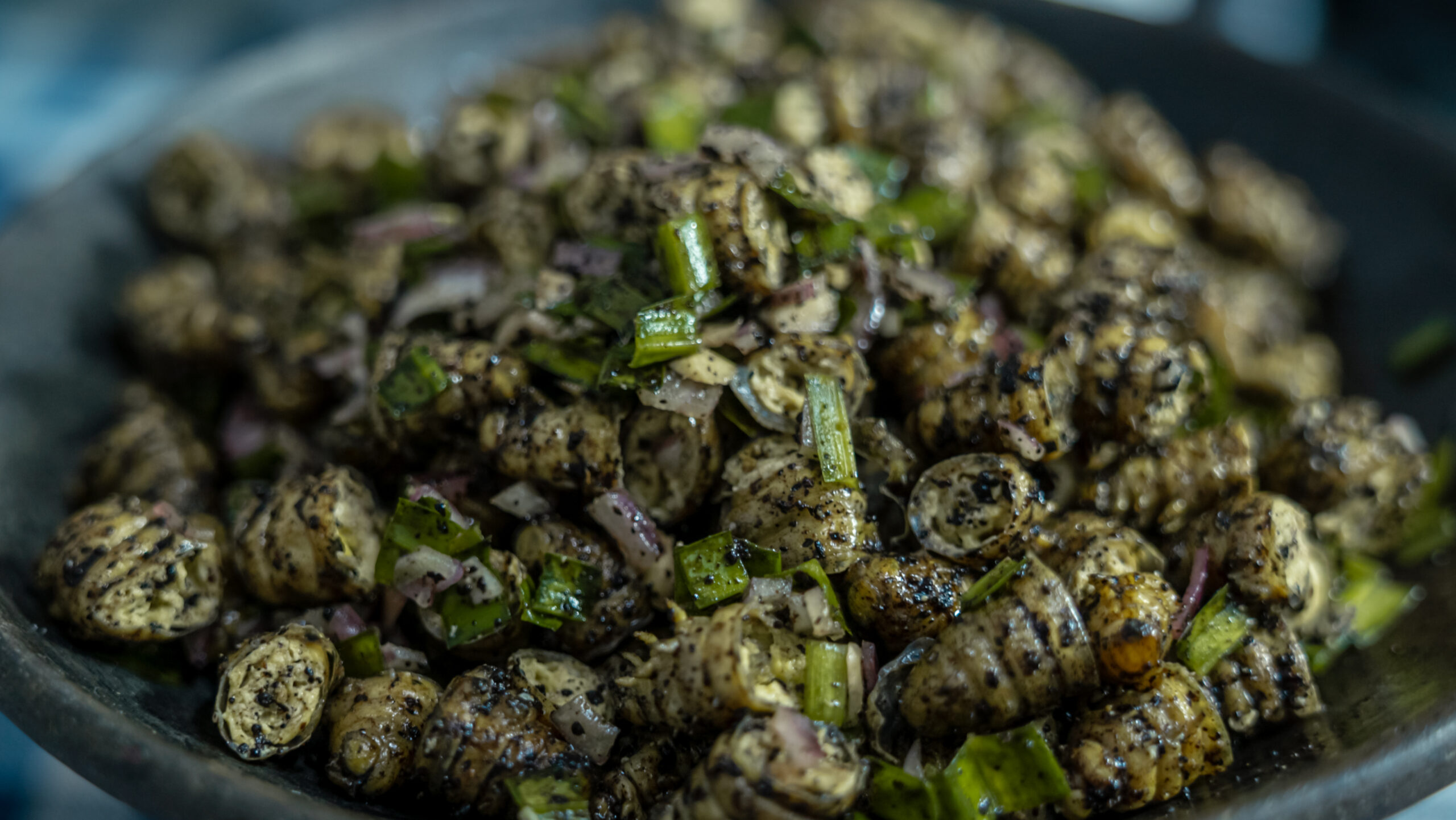
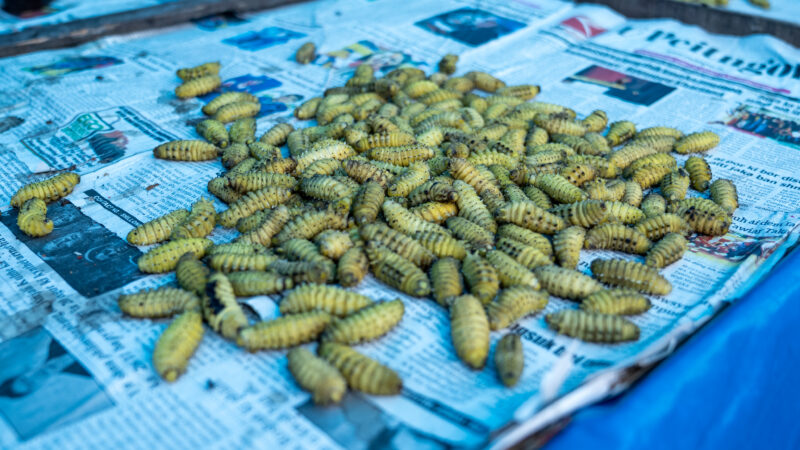
‘Niang-Ryndia’ is the Khasi name for the Eri silkworm. ‘Niang’ means ‘insect’ in Khasi, while ‘Ryndia’ comes from the word ‘Rynda’, the local castor plant whose leaves the silkworm feeds on. In Meghalaya, Eri silk holds a Geographical Indication (GI) tag as a protected textile heritage product. Its production is centred around the Ri-Bhoi district, particularly the Umden-Diwon cluster of villages, about 60 kilometres from Shillong.
Rearing of silkworms in this region takes place throughout the year, with peak harvests in March–April and September–October when castor plants are abundant. In Khasi society, which follows a matrilineal system, the craft of rearing silkworms and weaving Ryndia silk has traditionally been passed down from mother to daughter. Ryndia textiles are worn during ceremonies, festivals, and funerals, and are often preserved as family heirlooms.
Once the silk cocoon is harvested, the pupa inside is not discarded. Instead, it becomes food. The Khasi prepare the protein-rich pupae in several ways, including fried snacks and fresh salads such as this one. The main ingredient used in this recipe is the pupa extracted from the cocoon after the silk has been harvested, reflecting a long-standing practice of using every part of the silkworm.
| Perilla seeds | 1 tablespoon |
|---|---|
| Black sesame seeds | 1 tablespoon |
| Niang Ryndia (Eri silkworm pupae) | 500 grams |
| Mustard oil | 30 ml / 2 tablespoons |
| Salt | 1 teaspoon / to taste |
| Red onion, finely sliced | 150 grams / 1, large |
|---|---|
| Ginger, julienned | 50 grams |
| Bird's eye chillies, chopped | 4-6 |
| Fresh lemon juice | 30 ml / 2 tablespoons |
| Fresh coriander / centella / garlic leaves, thinly shredded | 15 grams / ½ cup |
Frying pan, mixing bowl, slotted spoon or spatula, paper towels, colander, mortar and pestle
Place the perilla seeds and black sesame seeds in a dry pan over low heat. Roast for 2–3 minutes, stirring continuously until fragrant and lightly toasted. Be careful not to burn them.
Transfer the roasted seeds to a mortar and pestle and grind them into a coarse powder. Set aside.
Thoroughly rinse the Eri silkworm pupae under cold running water to remove any dirt or impurities.
Bring a pot of water to a gentle boil.
Add the Ñiang Ryndia and blanch for 2–3 minutes. The pupae will become slightly firmer and brighter in colour.
Drain immediately using a colander and allow them to cool slightly.
Spread the blanched pupae on a clean cloth, paper towel, or tray and pat them dry. Removing excess moisture is important for achieving a crispy texture during frying.
Heat the mustard oil in a frying pan over medium-high heat until it reaches its smoking point. Reduce the heat slightly.
Add the pupae along with a pinch of salt. Pan-fry for 7–10 minutes, stirring frequently to ensure even cooking. The pupae should turn deep golden brown and become crisp on the outside as their moisture evaporates.
Transfer the fried pupae to a plate and allow them to cool for about 2 minutes before assembling the salad. Then carefully slice each pupa in half lengthwise.
Assembling the Salad:
In a mixing bowl, combine all the ingredients together.
Add the halved crispy silkworm to this mixture.
Sprinkle the ground roasted perilla-and-black-sesame-seed mixture.
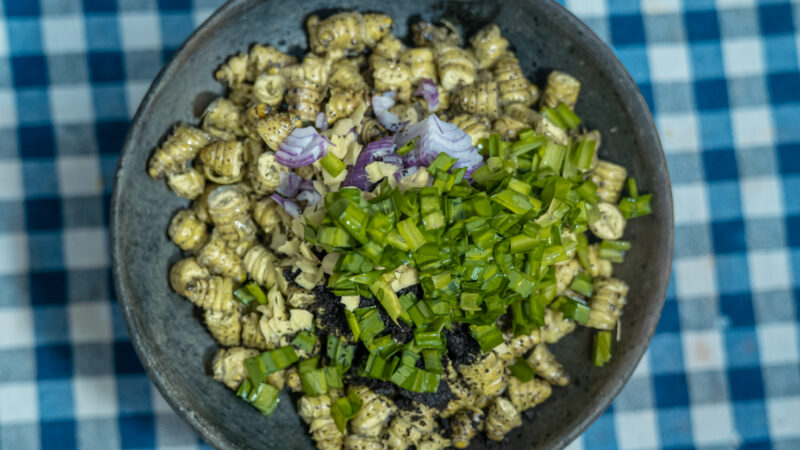
Drizzle the lime juice over the mixture and toss thoroughly until everything is evenly combined. Serve immediately.
Queeneerich and Glerina Kharmawlong are siblings from Shillong who share a love for Meghalaya’s local cuisine. While Queeneerich documents traditional food stories, Glerina brings them to life in the kitchen, preserving Khasi recipes through her passion for cooking.
You must be logged in to rate this recipe.

 Login with Google