
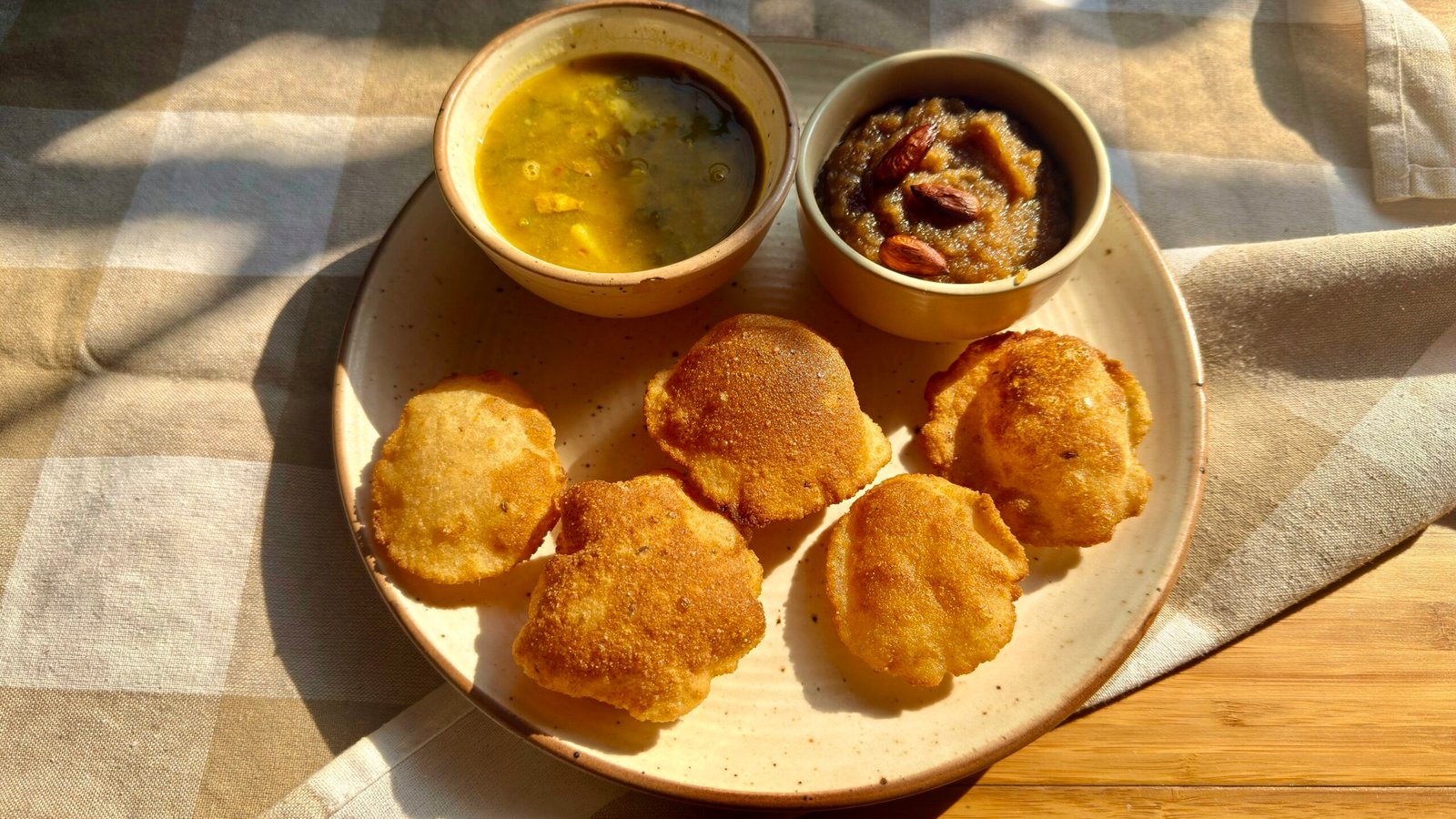
In the late 1990s and early 2000s, Kcamya Aggarwal’s childhood unfolded in the locale with the post code Delhi-6. She grew up within the lanes of the old, walled city in a joint family of over 10 members. Impromptu decisions would often be made late at night: the next morning’s breakfast would be halwa-nagori and bedmi-aloo—and crucially, “halwai ke haath ki”. Excitement would ripple through the household as Kcamya’s grandmother hurried to ready large steel tiffin boxes, which her grandfather would carry at dawn to the local halwai, hoping to return with fresh bedmi pooris, nagori, halwa, spicy aloo sabzi, and jalebis.
While Old Delhi is often known for its kebabs, kachoris, and Daulat ki Chaat, the nagori—a crisp semolina-based poori, slightly larger than a gol gappa and meant to be stuffed with halwa and aloo—is fading from popular memory. Kcamya now finds herself living by herself in Mumbai, where moments of homesickness arrive unexpectedly. Amid queues outside fashionable cafés, memories of oil-stained tiffins brimming with ghee-laden comfort crop up. Each bite of halwa-nagori, then and now, carries with it nostalgia and the enduring warmth of home.
| Fine semolina (bareek rava/sooji) | 180 grams | 1 cup |
|---|---|
| Whole wheat flour (atta) | 30 grams | ¼ cup |
| Carom seeds (ajwain) | 2 teaspoons |
| Ghee | 2 tablespoons |
| Lukewarm water | as required |
| Refined oil | as required |
|---|
| Potatoes | 3, large |
|---|---|
| Oil or ghee | 2 tablespoons |
| Asafoetida (hing) | ½ teaspoon |
| Cumin seeds (jeera) | 1 tablespoon |
| Fresh ginger, finely chopped | 5-cm piece |
| Green chillies, slit lengthwise | 2 |
| Water | 2½ cups approx. |
| Fenugreek seeds (methi dana), soaked for 20 minutes | ½ tablespoon |
| Whole coriander seeds (sabut dhania) | 1 tablespoon |
| Red chilli powder | 1 tablespoon |
| Coriander powder | 1 tablespoon |
| Dry mango powder (amchur) | ¼ teaspoon |
| Black pepper powder | ½ tablespoon |
| Fresh coriander leaves, chopped | to taste |
| Ghee | for frying + 5 tablespoons approx. |
|---|---|
| Mixed nuts (almonds, cashews) | to garnish |
| Fine semolina (bareek rava/sooji) | 1 cup |
| Gram flour (besan) | 3 tablespoons |
| Water | 4 cups |
| Sugar | 1 cup |
Heavy-bottomed kadhai or wok; heavy-bottomed saucepan; rolling board and rolling pin; blender (if grinding thick sooji); slotted spoon or ladle
Preparing the Nagori Dough:
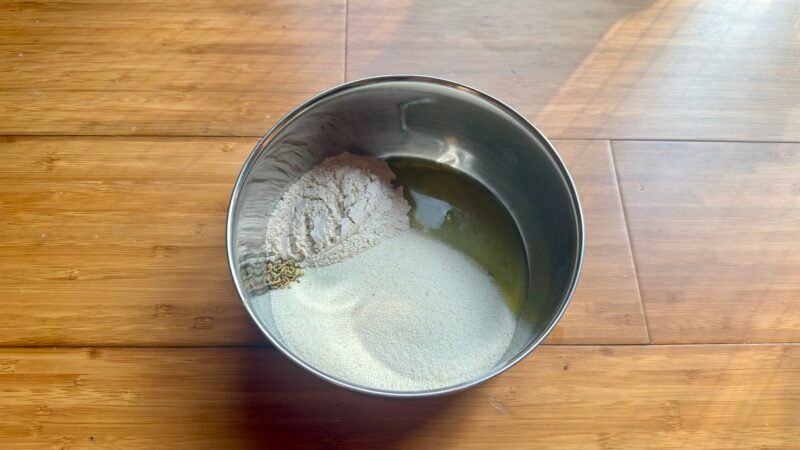
In a large bowl, combine the semolina, wheat flour, and carom seeds. Add the ghee and rub it into the flour using your fingertips until the mixture resembles coarse crumbs. Add about 2 tablespoons of lukewarm water and mix thoroughly with a spoon.
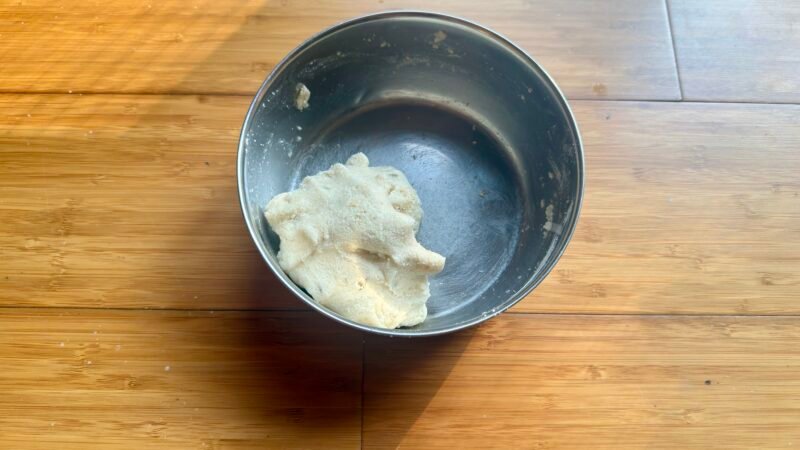
Gradually add more lukewarm water and begin kneading with your hands. Knead to form a soft dough. It should be slightly softer than regular dough, as the semolina will continue to absorb moisture.
Lightly oil the surface of the dough, cover, and allow it to rest for 20 minutes.
Note: If the semolina is coarse, dry-grind it in a blender for a few minutes to make it finer.
Frying the Nagori
Heat refined oil in a heavy-bottomed kadhai over medium heat. To test the oil, drop in a small piece of dough; if it rises immediately, the oil is ready.
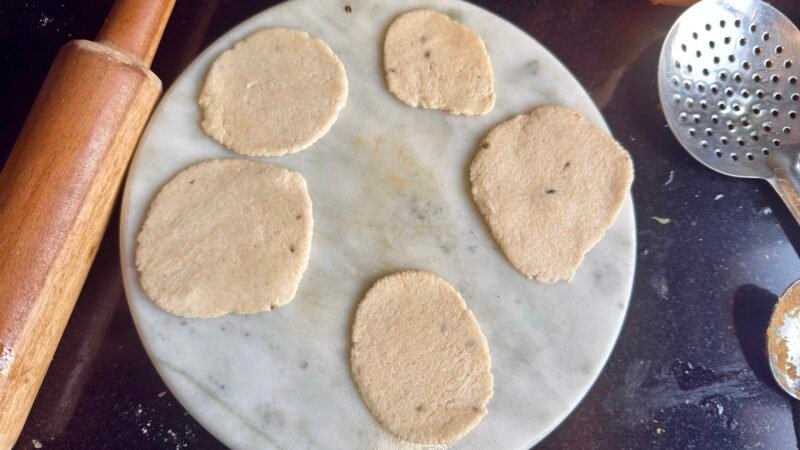
Divide the rested dough into 12–14 small balls. Oil the rolling board, rolling pin, and dough balls lightly. Roll each ball into a small poori, slightly thicker than gol gappa, ensuring the edges are not too thin.
Gently slide the poori into the oil from the side of the kadhai. Lightly press the centre of each poori with a ladle to help it puff up.
Fry until golden brown on both sides, about 1–2 minutes per side. Remove and drain on kitchen paper.
Preparing the Aloo Sabzi
Wash the potatoes thoroughly and boil them whole in salted water until a knife passes through easily. Drain, allow them to cool slightly, then peel off the skins. Roughly chop the potatoes into large, uneven chunks and set aside.
Heat oil or ghee in a heavy-bottomed pan over medium heat. Add asafoetida, cumin seeds, ginger, and green chillies. Sauté for about 2 minutes until aromatic.
Add the chopped potatoes and pour in the water.
Add all remaining spices along with coriander leaves and stir well. Bring the mixture to a boil. Once boiling, lightly mash 5–6 pieces of potato to thicken the gravy. Reduce the heat to low and simmer for 20–30 minutes, stirring occasionally. Adjust seasoning, if needed.
Garnish with extra ginger, green chillies, and coriander before serving, if desired.
Preparing the Sooji Halwa
Heat a small spoonful of ghee in a pan over low heat. Add the nuts and fry gently, stirring continuously, until lightly golden and fragrant. Remove immediately and set aside; use these to garnish the halwa just before serving.
Heat ghee in a heavy-bottomed kadhai over high heat. Add the semolina and reduce the heat to medium-low.
Roast, stirring continuously, until the semolina turns light golden and releases a nutty aroma, about 7–10 minutes. Add the besan and roast for another 1–3 minutes.
In a separate pan, combine water and sugar and bring to a boil to form a light sugar syrup.
Carefully pour the hot syrup into the roasted semolina mixture, stirring continuously to avoid lumps.
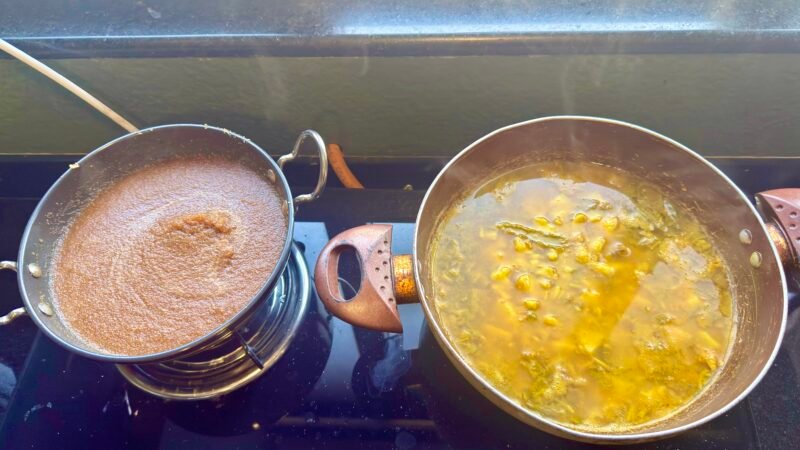
Cook until the halwa thickens and comes together. Garnish with ghee-fried nuts.
Assembling and Serving
Serve the hot aloo sabzi and sooji halwa in separate bowls.
To eat, gently break open a nagori and stuff it with halwa, or with a combination of halwa and aloo sabzi.
Enjoy immediately while everything is warm.
Kcamya Aggarwal (tarottalesbykc) is a tarot card reader and astrologer. Deeply interested in food and culture, cuisine, for her, is a lens through which social memory, place, and lived experience can be understood. She is also a member of The Local Food Club by The Locavore in Mumbai. To become a member, sign up here.
You must be logged in to rate this recipe.

 Login with Google