
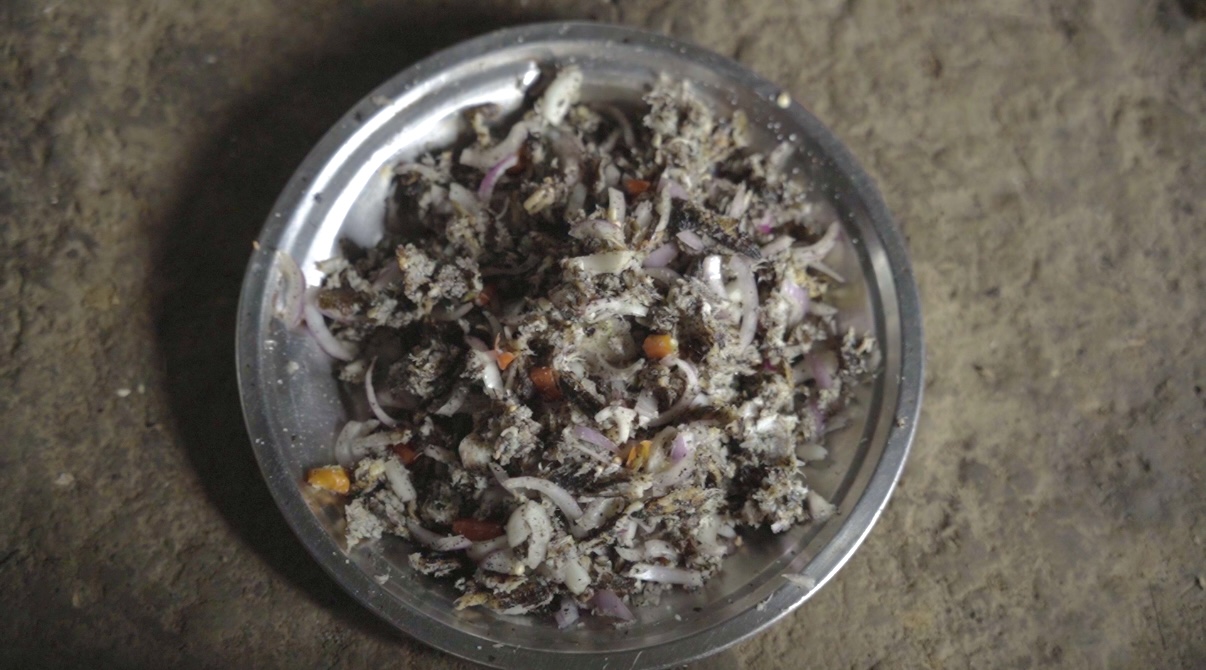
During the rice harvesting season in Meghalaya, when the water is drained from the fields, children, neighbours, and friends gather to catch dohthli.They place a traditional bamboo fish trap called khnam in Khasi, in the flowing water overnight and return the next morning to find it full of fish.
The fish is kept alive in a pot of water at home and eaten over the following week. Sometimes it is roasted over an open fire, sometimes fried. The roasted fish is mixed with onions, green chillies, and salt, and eaten on its own or with steamed rice.
In the village of Nongjngi in the Jaintia Hills, rice farmers Randa Papiah, Toy Sumer, and Hunlang Papiah earn an income from the fish, by selling it if they are able to catch enough. For them, there is a balance between catching fish and protecting the paddy. The water is drained only after the rice is ready for harvest. Draining it too early, or walking through the field just to catch fish, can damage the crop, causing the rice plants to dry out or produce smaller grains. For them, catching dohthli is simply another part of the harvest season.
For the three women farmers, this dish is inseparable from their childhoods, shared labour, and the excitement of waking up to check the fish trap each morning. Today, roasting dohthli together brings back memories of the paddy fields and the seasons that shaped their lives. Watch the full story.
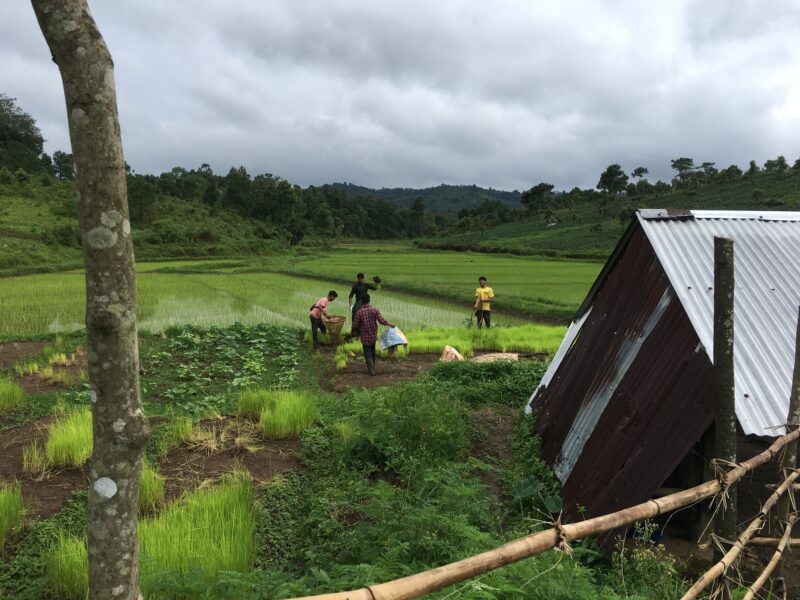
Caption: Catching dohthli in the paddy fields.
| Fresh dohthli (snakehead fish) | 25, small |
|---|---|
| Onion, finely chopped | 2, medium |
| Green chillies, finely chopped | 2 |
| Salt | to taste |
Open wood fire, knife, meat-trussing needles or poultry skewers, bowl or plate for mixing
Rinse the freshly caught dohthli thoroughly under running water, rubbing it gently to remove any mud or slime. If you prefer, use a knife to carefully trim off the sharp fins.
Place the whole fish on skewers and directly over an open fire and roast, turning it occasionally so that it cooks evenly on all sides. Continue roasting until the flesh is completely cooked through and flakes easily when pressed with a fork. This should take about 8-12 minutes, depending on the size of the fish.
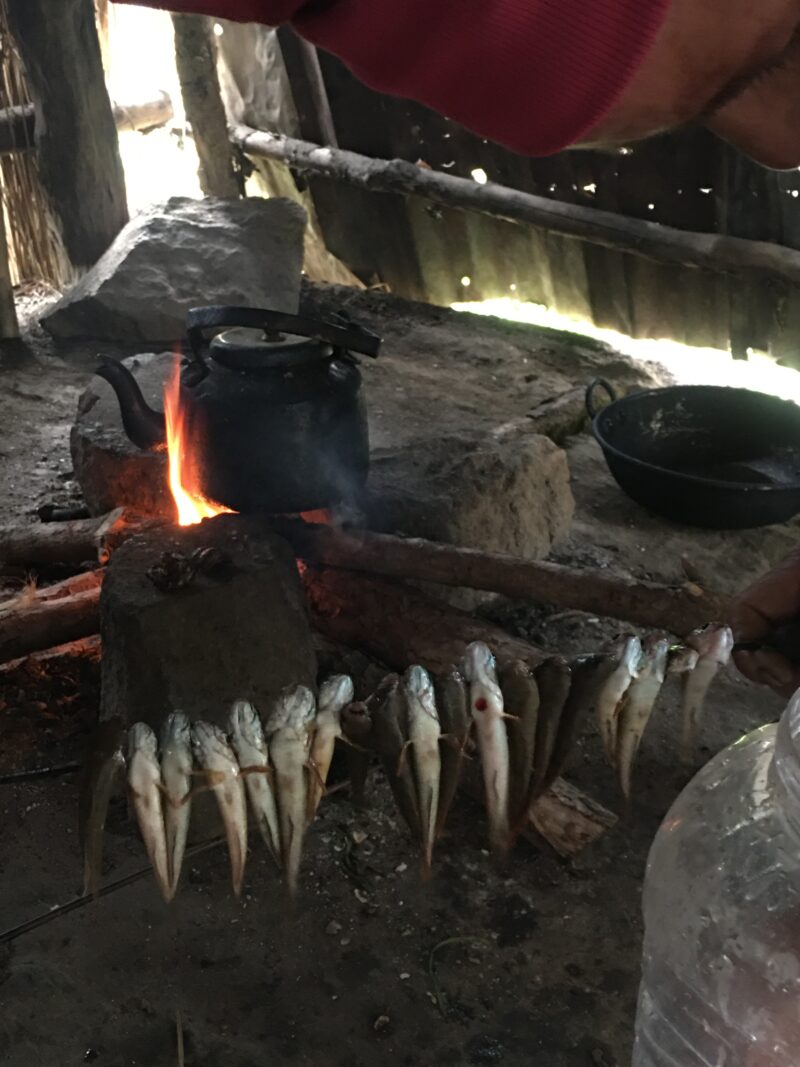
Remove the fish from the fire and let it cool slightly, until it is comfortable enough to handle.
Carefully peel away the skin, then remove the bones, taking care to check the flesh for any small bones.
Flake the cooked fish into small pieces and place them in a bowl.
Add the finely chopped onions, green chillies, and salt.
Using clean hands, gently mix the fish with the onions, chillies, and salt until all the ingredients are evenly combined.
Serve immediately on its own or with hot steamed rice.
Roast the fish over hot embers or a moderate open flame, rather than very high flames, so the skin chars without burning before the flesh cooks.
This recipe comes from three rice farmers and friends from Nongjngi, Meghalaya—Randa Papiah, Toy Sumer, and Hunlang Papiah.
The recipe has been documented by Ibapdianghun Myria—the Audio-Visual Fellow from Meghalaya for the Woman Farmer Project. Ibapdianghun works at the intersection of storytelling and the field, documenting real experiences through film, photography, and writing. Rooted in communities across Meghalaya, her work revolves around livelihoods, culture, food, climate, and community-led change. She enjoys learning new things, meeting people, and understanding the different ways stories exist in everyday life.
This story is part of the Woman Farmer Project, a multimedia storytelling initiative led by The Locavore in partnership with the Doc Society Climate Story Kitchen. It aims to build a roadmap for successful collaborations between institutions and innovative grassroots networks who are committed to amplifying climate stories.
The Doc Society supports climate action across the globe by championing independent filmmakers, audio producers, journalists, and artists working alongside impact producers and movement builders to bring more communities into climate conversations to advance climate just and biodiverse futures.
Editor: Ishani Banerjee
Copy editor: Khorshed Deboo
You must be logged in to rate this recipe.

 Login with Google