
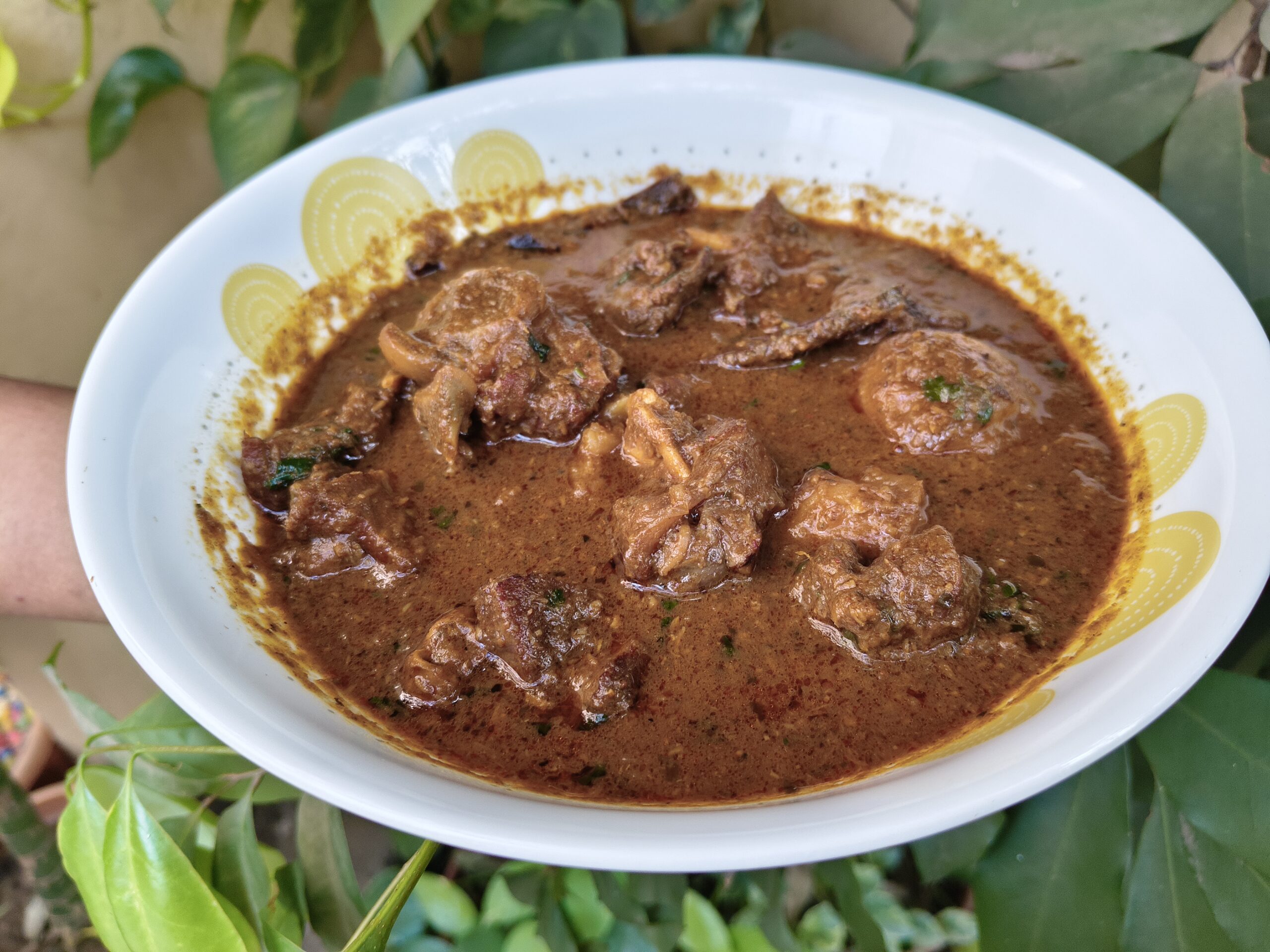
This recipe for Mutton Kasa comes from Baripada in Odisha, where, during the festival of Holi, Jinnie and Rini Saren’s mother, Champabati Majhi, would make it every year. Some of their fondest memories of growing up are tied to this dish. The preparation would begin with their father, Kalidas Majhi, buying the mutton from a local butcher, after which all of them would lend a helping hand in the kitchen.
Every Holi, the family hosted a gathering featuring this dish. Once it had cooked, Rini and Jinnie got a few pieces to taste before the others arrived. It was the marrow and raan piece that the sisters enjoyed the most, fondly calling it the ‘resa-wala’ or ‘line-line’ piece. Rini shares that there were hardly ever any leftovers, but if there were, they would eat them with muri—or puffed rice—in the evenings. Muri mangsho, or mutton with puffed rice, is a well-known delicacy in Baripada. They say that whenever they pass a stall and catch its aroma, it takes them back to their childhood.
While Jinnie and Rini would often help their mother in the kitchen, they did not get the chance to cook their mother’s iconic dish with her. Years later, Jinnie recreated her mother’s recipe with her mami, Purnamani Majhi, with help from other family members. The mutton was cooked in a large iron kadhai for hours, until it was fall-off-the-bone tender, the gravy thick and brown.

| Mutton (shoulder, brisket/chest, liver) | 500 grams |
|---|---|
| Onion | 3, medium |
| Cumin seeds | 2 teaspoons |
| Coriander seeds | 3 teaspoons |
| Ginger, fresh | 50 grams |
| Garlic, whole | 3 |
| Mustard oil | as required |
| Potatoes, halved | 2, medium |
| Bay leaves (whole) | 2–3 |
| Cinnamon (whole) | 2–3 sticks |
| Green cardamom (whole) | 2 pods |
| Salt | to taste |
| Red chilli powder (spicy) | 1 teaspoon, to taste |
| Turmeric powder | 2 teaspoons |
| Water | 2 cups approx. + extra as required |
| Kasoori methi | a handful |
| Kashmiri red chilli powder | 2 teaspoons |
Mortar-pestle, heavy-bottomed kadhai, pressure cooker
Preparing the ingredients:
Wash the mutton pieces thoroughly under running water. Drain well and keep aside.
Next, peel the onions, cut them in half, and slice them thinly. Keep aside.
In a mortar and pestle, add the cumin seeds. Crush them until coarse, then add a teaspoon or two of water and grind into a thick paste. Set aside.
In the same mortar and pestle, add the coriander seeds and grind them separately in the same way, adding a little water as needed to form a paste. Set aside.
Peel the ginger and chop it roughly. Peel the garlic. Pound it in a mortar and pestle until smooth, adding a few drops of water if required to help it blend into a paste.
In a kadhai, heat some mustard oil and fry halved potatoes until lightly golden on the outside. Keep aside.
Making the kasa base:
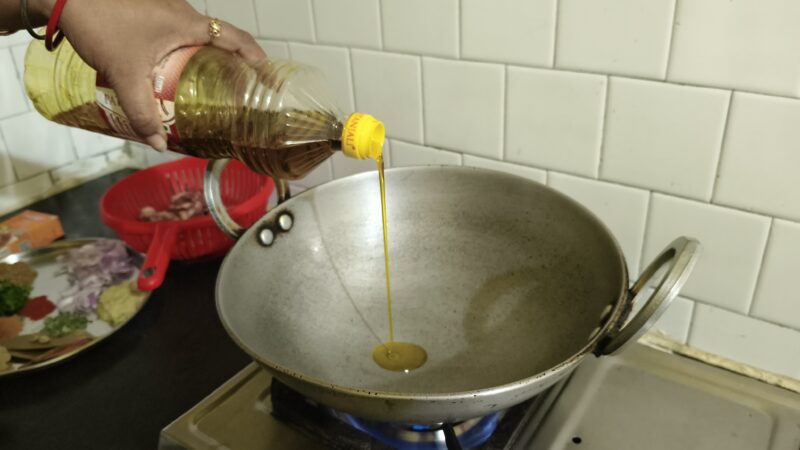
Place a heavy-bottomed kadhai on medium heat. Add the mustard oil and let it heat until it just begins to smoke lightly.
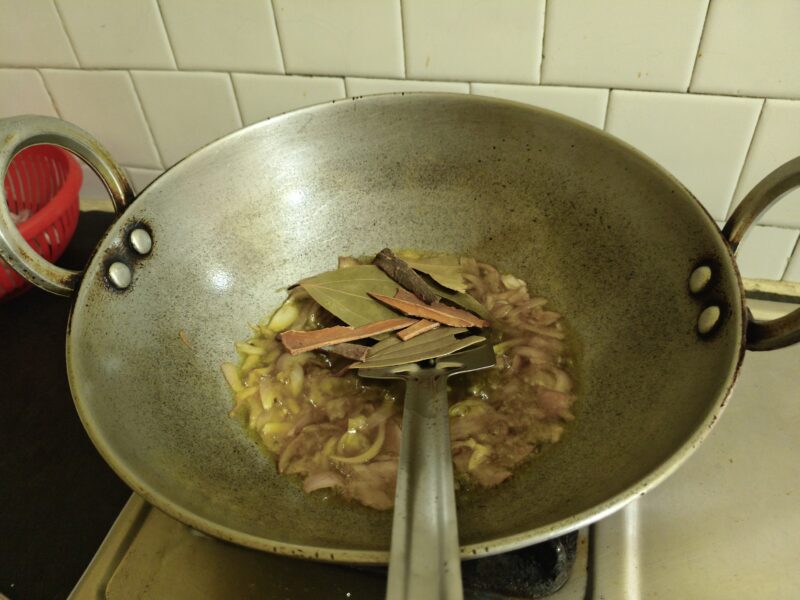
Add the bay leaves, cinnamon sticks, and green cardamom pods. Allow the spices to crackle and release their aroma.
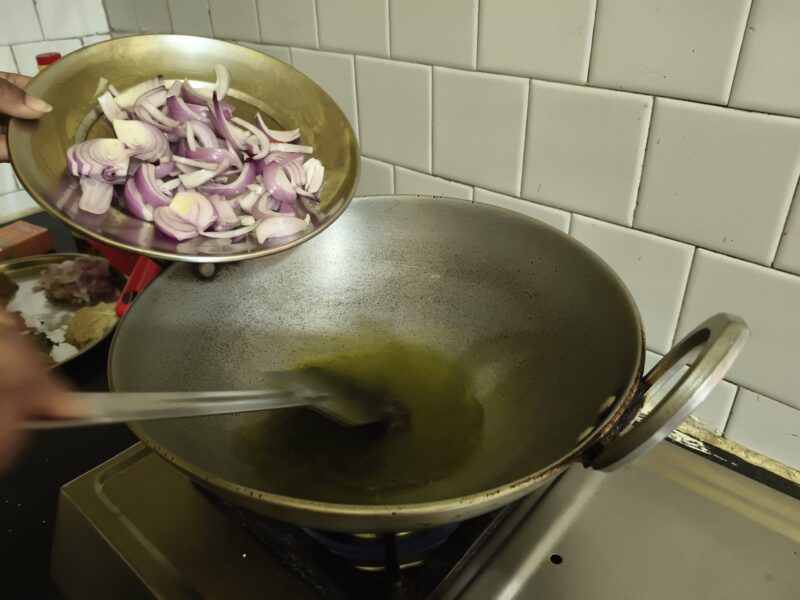
Add the sliced onions and a teaspoon of salt (this helps the onions cook faster). Cook on medium heat, stirring occasionally, until golden brown and caramelised. This may take 10–15 minutes.
Add the cumin paste and coriander paste and fry for 2–3 minutes until aromatic.
Add the ginger paste and fry briefly, followed by the garlic paste. Cook until the raw smell disappears, or when you can smell the ginger over the garlic.
In a small bowl, mix the red chilli powder and turmeric powder with about 2 cups of water to form a thin spice mixture. Add this to the kadhai and stir well.
Crush the kasoori methi between your palms and add it to the kadhai. Add the Kashmiri red chilli powder as well.
Cook the masala on medium-low heat for 15–20 minutes, stirring occasionally and scraping the sides of the kadhai as needed. The oil should begin to separate from the masala.
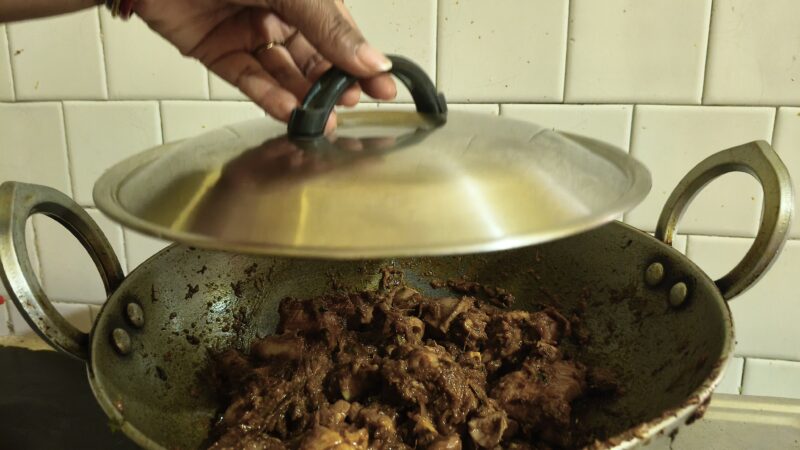
Add salt to taste and mix well. Cover and let the masala cook gently, checking and stirring in between if required.
Add the washed mutton pieces and mix thoroughly so they are well coated in the kasa masala.
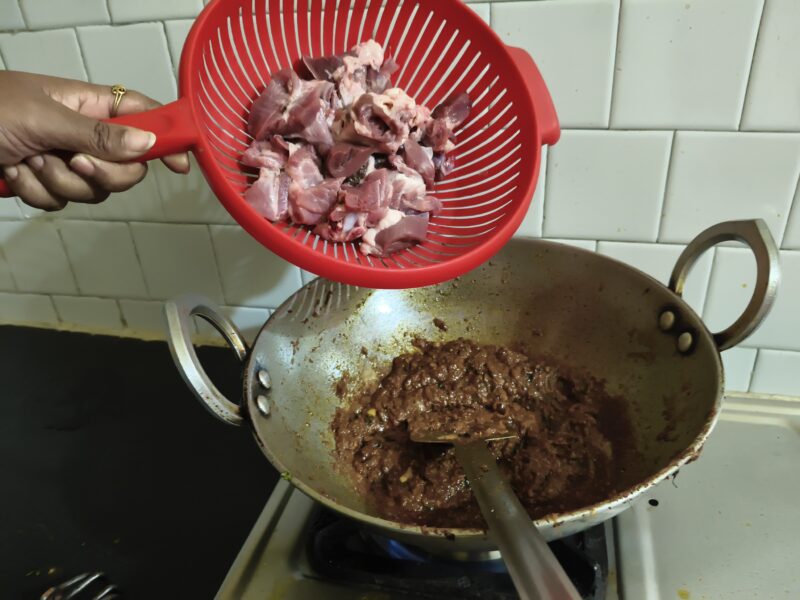
Cover and cook on low heat in its own juices, stirring occasionally to prevent sticking.
Add the fried potatoes to the mutton kasa.
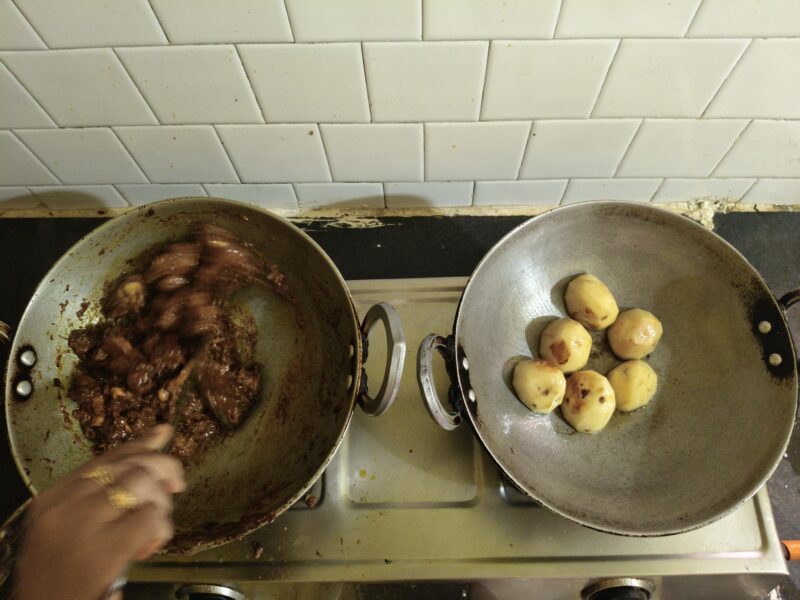
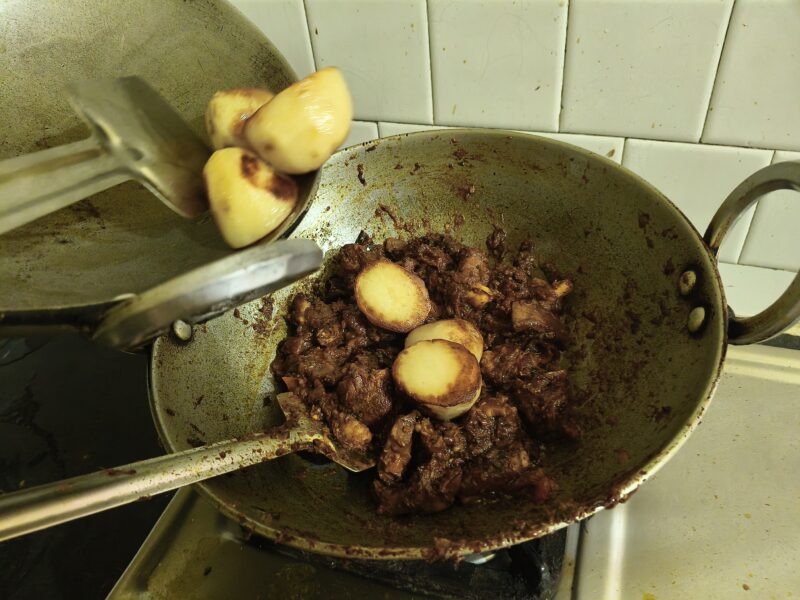
Once the mutton has begun to soften, transfer everything to a pressure cooker.
Add a little warm water to the kadhai to loosen any remaining masala; pour this into the cooker as well.
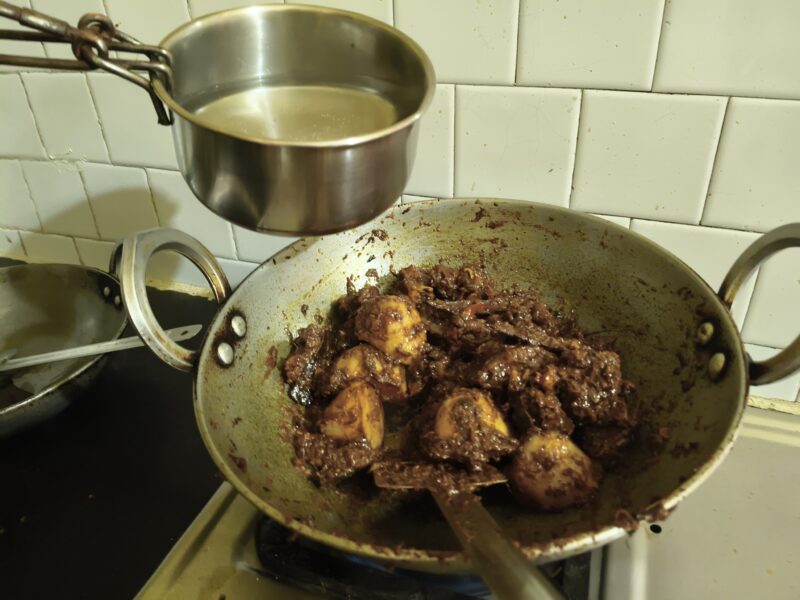
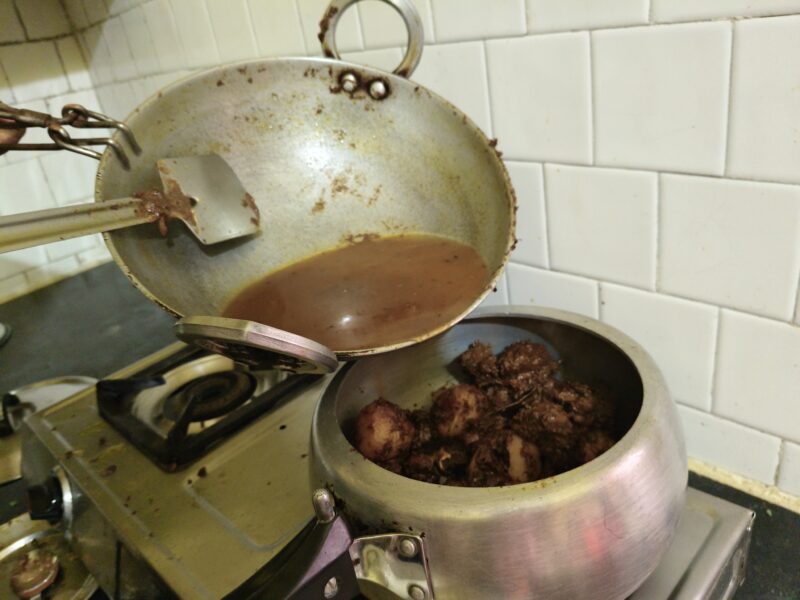
Close the lid of the pressure cooker and cook for about 5 whistles, or until the mutton is tender. Allow the pressure to release naturally. (Traditionally, the mutton would be slow-cooked over an open fire for hours. The pressure cooker is a practical adaptation for home kitchens.)
Check the seasoning and consistency. The gravy should be thick and brown, and the mutton tender.
Serve hot with steamed rice.
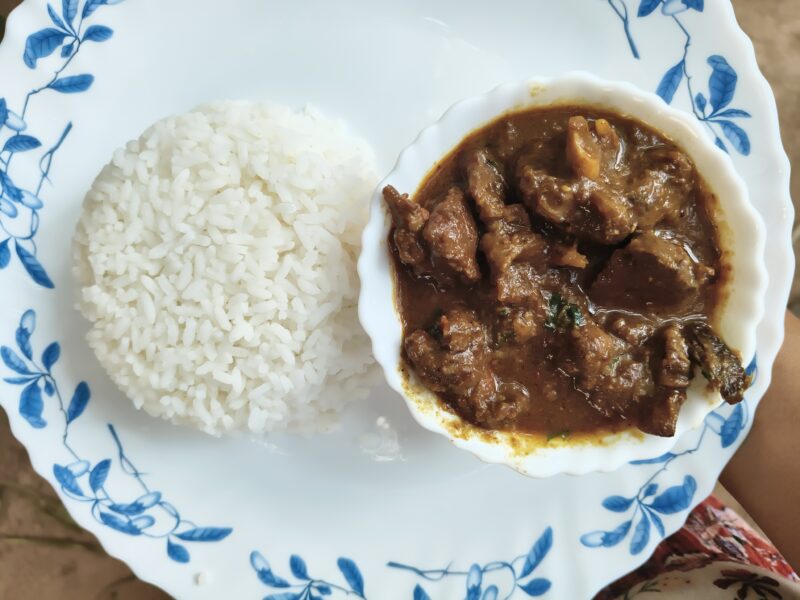
Instead of steamed rice, the dish can also be enjoyed with puffed rice.
Rini Saren is an IT professional from Pune who enjoys exploring local food from different places. Jinnie Saren is an architect by profession and a writer by instinct with an interest in sustainable living. They are both a part of the Local Food Club in Bhubaneswar. To become a member, sign up here.
You must be logged in to rate this recipe.

 Login with Google