
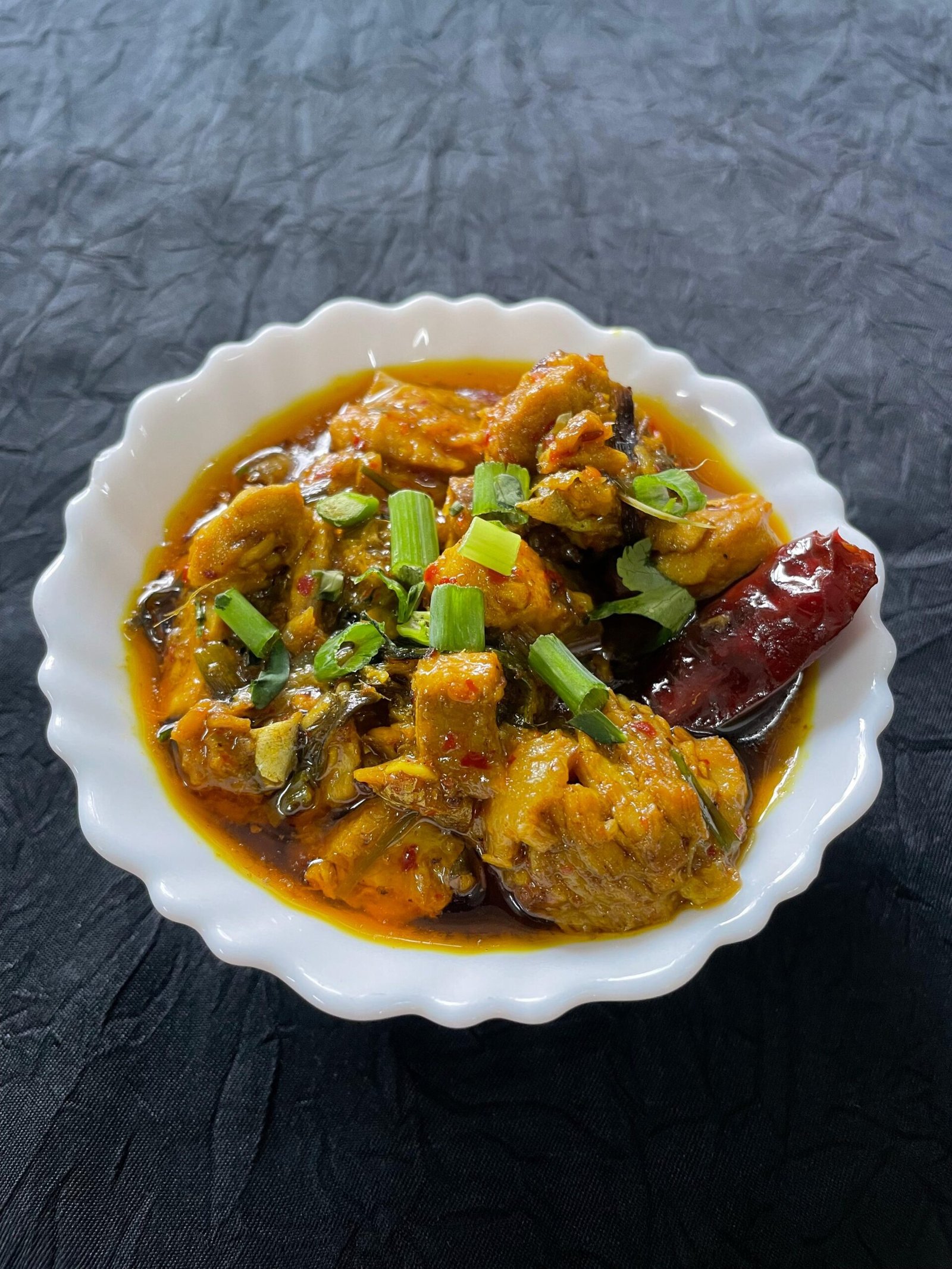
In Manipur’s Meitei households, fish—or ‘nga’—is more than just food; it’s woven into the rhythm of daily life and tradition. Whether caught fresh from the Loktak Lake, rivers or ponds, it can be prepared in countless ways: smoked, fermented, dried or stewed. One of the most cherished preparations is Nga Atoiba Thongba, a fish curry cooked to mark both joy and remembrance, celebrations like engagements and salary day, or even after a period of mourning. As captured in Nongthombam Kunjamohan Singh’s Sahitya Akademi-winning short story Elisha Amagi Mahao (The Taste of a Hilsa), fish carries immense emotional weight in our lives, writes Beauty Thounaojam.
Beauty goes on to say, “In our home, fish curry often signalled something special. We’d eat it when guests came over, or when good news was around the corner. During Emoinu Eratpa—a winter festival dedicated to the goddess Emoinu Ima—Sareng (Wallago attu), a kind of freshwater catfish, is a must. Any leftover curry left out in the cold would turn into nga-ren, a jelly-like delicacy we looked forward to.”
Now living in Delhi, Beauty and her sister continue to make Nga Atoiba Thongba, using ingredients from Northeast specialty stores. Sareng isn’t easy to find here, so they use Pangas (a kind of catfish), which comes close in both taste and texture. Passed down from their mother, the recipe is layered. Rather than stirring the fish, they gently shake the pot to keep the pieces intact, adding water and aromatics with careful timing.
Key to this dish is heiribob (a fruit native to Manipur), which lends a sharp, citrusy aroma when added toward the end. Along with pungent hooker chives and asafoetida, heiribob creates a fragrance so distinct that it drifts through homes, often prompting curious neighbours to prod, “What are you celebrating?”
Cooking this dish now is an act of remembrance. A day before, the sisters scout the Munirka and Humayunpur markets in Delhi for fresh herbs. During the monsoon, they pair it with seasonal sides like singju, a leafy salad made with fermented fish and chillies. Each time they prepare it, the aroma, and the taste, take them back to childhood meals at home.
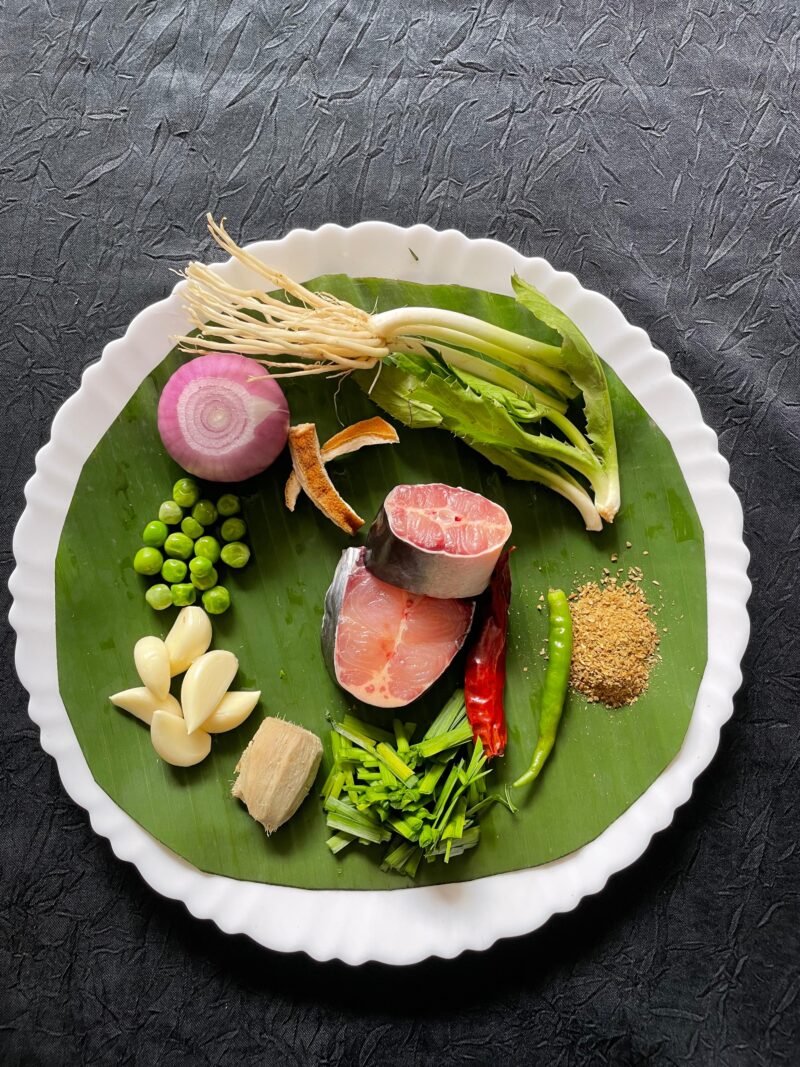
| Freshwater fish, small-to-medium pieces | 1 kilogram |
|---|---|
| Onion | 2, medium |
| Green chillies | 2–3 pieces |
| Mexican coriander leaves (Culantro) | 5–6 leaves + extra for garnish |
| Hooker chives, along with roots | 2–3 stalks |
| Heiribob (sun-dried/fresh citrus peel) | 2–3 |
| Potato, chopped into 4 pieces (optional) | 2 medium potatoes |
| Mustard oil | 3–4 tablespoons |
| Cumin seeds | ½ teaspoon |
| Ginger-garlic paste | 2 tablespoons |
| Turmeric powder | 1 teaspoon |
| Coriander powder | 2 teaspoons |
| Kutti mirch (coarsely ground chilli) | ½ teaspoon |
| Water | 1 cup (adjust to consistency) |
| Salt | to taste |
| Green peas | 30 g | 2 tablespoons |
| Asafoetida | ½ teaspoon |
| Mustard oil | 1 tablespoon |
|---|---|
| Dried red chillies | 2 |
| Garlic chives | 2–3 stalks |
| Hooker chives | 2 stalks |
| Cumin seeds | 1/2 teaspoon |
| Turmeric powder | a pinch |
| Asafoetida (optional) | a pinch |
Kadhai or metal wok; mortar and pestle; mesh tray or colander; small tadka pan
Begin by washing the fish thoroughly 3-4 times under running water to remove any dirt, blood, or fishy odour. Once cleaned, place the fish on a mesh tray or colander and let it drain completely.
Next, prepare the vegetables and herbs. Peel and finely chop the onions. Rinse the green chillies and slit them lengthwise. Wash the hooker chives along with their roots, the garlic chives (to be used for the tempering), and Mexican coriander leaves, and set them aside. If using potatoes, peel and cut each into four large chunks.
Heat 3-4 tablespoons of mustard oil in a metal pan or wok over medium heat. Let the oil heat until it starts to smoke slightly.
Add the cumin seeds and let them crackle for a few seconds.
Add the chopped onions and sauté them until they become translucent and soft.
Add the ginger-garlic paste and stir well. Cook this mixture until the raw smell disappears and you are able to smell the ginger over the garlic.
Once the base is golden and aromatic, add the chopped hooker chives along with their roots. Stir them in and cook for about a minute.
Add the turmeric powder, coriander powder, and kutti mirch, and sauté for 1-2 minutes, stirring continuously to prevent burning. If needed, add a few splashes of water to stop the spices from sticking or burning.
Gently place the pieces of fish into the pan in a single layer. Let them cook over low-to-medium heat for about 5-7 minutes.
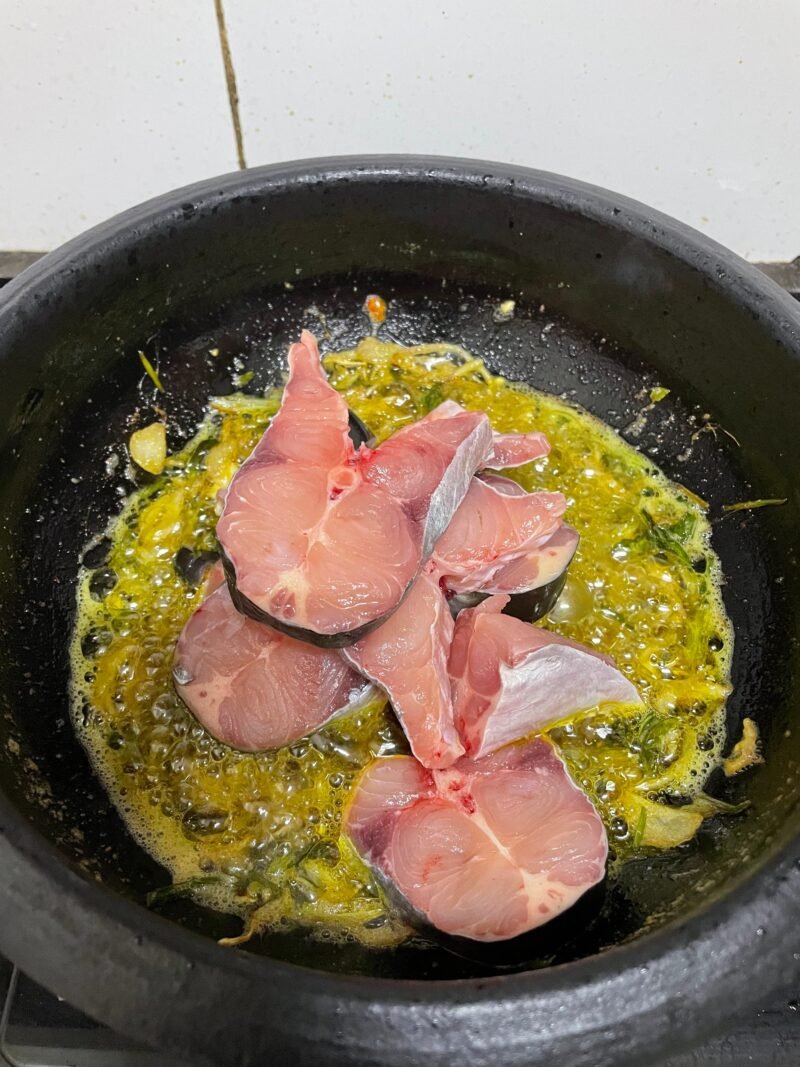
Avoid using a spatula to stir the fish, as the pieces are delicate. Instead, gently shake or tilt the pan from side to side to turn the fish and ensure even cooking.
Add salt to taste and cook for another 2-3 minutes until the moisture released by the fish mostly evaporates.
Now, add the green peas, heiribob pieces (sun-dried or fresh citrus peel), and the chopped potatoes, if using. Stir gently to combine.
Pour in 1 cup of water to create a curry with your preferred consistency. Add the asafoetida and mix gently.
Let the curry simmer uncovered over low heat while you prepare the tempering.
To make the tempering, heat 1 tablespoon of mustard oil over medium heat in a separate small pan.
Once hot, add the red chillies, garlic chives, hooker chives, cumin seeds, a pinch of turmeric, and a small pinch of asafoetida (optional). Sauté for 2-3 minutes until fragrant.
Carefully pour the tempering over the simmering fish curry.
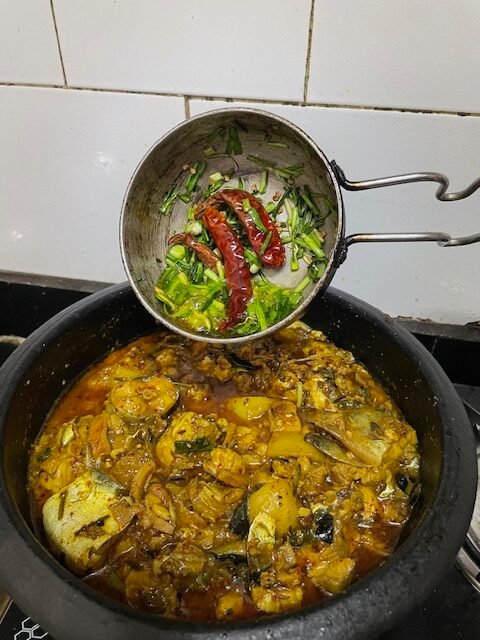
Gently stir to incorporate the tempering into the curry without breaking the fish.
Allow the curry to cook for another 10 minutes on low heat so the flavours meld together and the gravy thickens slightly.
Turn off the heat and finish the dish by garnishing it with freshly chopped Mexican coriander leaves.
Serve hot with plain steamed rice.
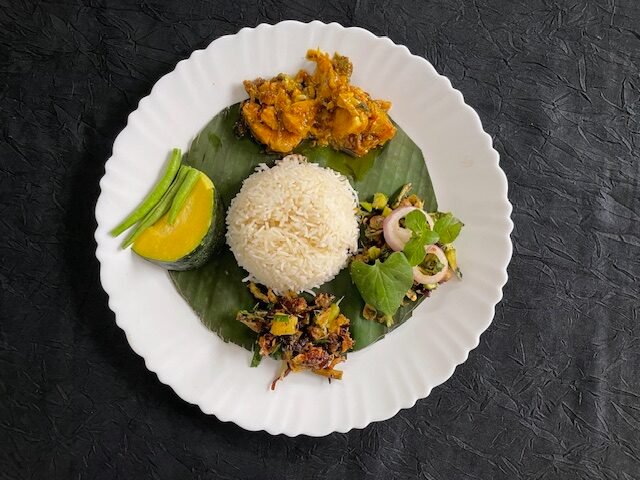
A Nga Thongba Platter served with rice, steamed vegetables, singju, and fish head fry. All photographs by Beauty Thounaojam.
Ingredients such as Hooker chives and Mexican coriander leaves may not be available in all markets in India. You can substitute Hooker chives with spring onions and Mexican coriander with regular coriander. However, as the ingredients used in the recipe have distinct flavours, aromas, and textures, the substitutions may not fully recreate the original taste and aroma.
For the Kutti mirch (coarsely ground chilli), pound dried red chillies using a mortar and pestle until they form flakes. Alternatively, you can use store-bought red chilli flakes. You can adjust the quantity based on your heat preference.
Beauty Thounaojam (@beautythounaojam) teaches sociology at Miranda House, University of Delhi. She specialises in the sociology of food, and unpacking the culture and politics of what we eat. She is also a member of The Locavore’s Local Food Club in New Delhi. To become a member, sign up here.
You must be logged in to rate this recipe.

 Login with Google