
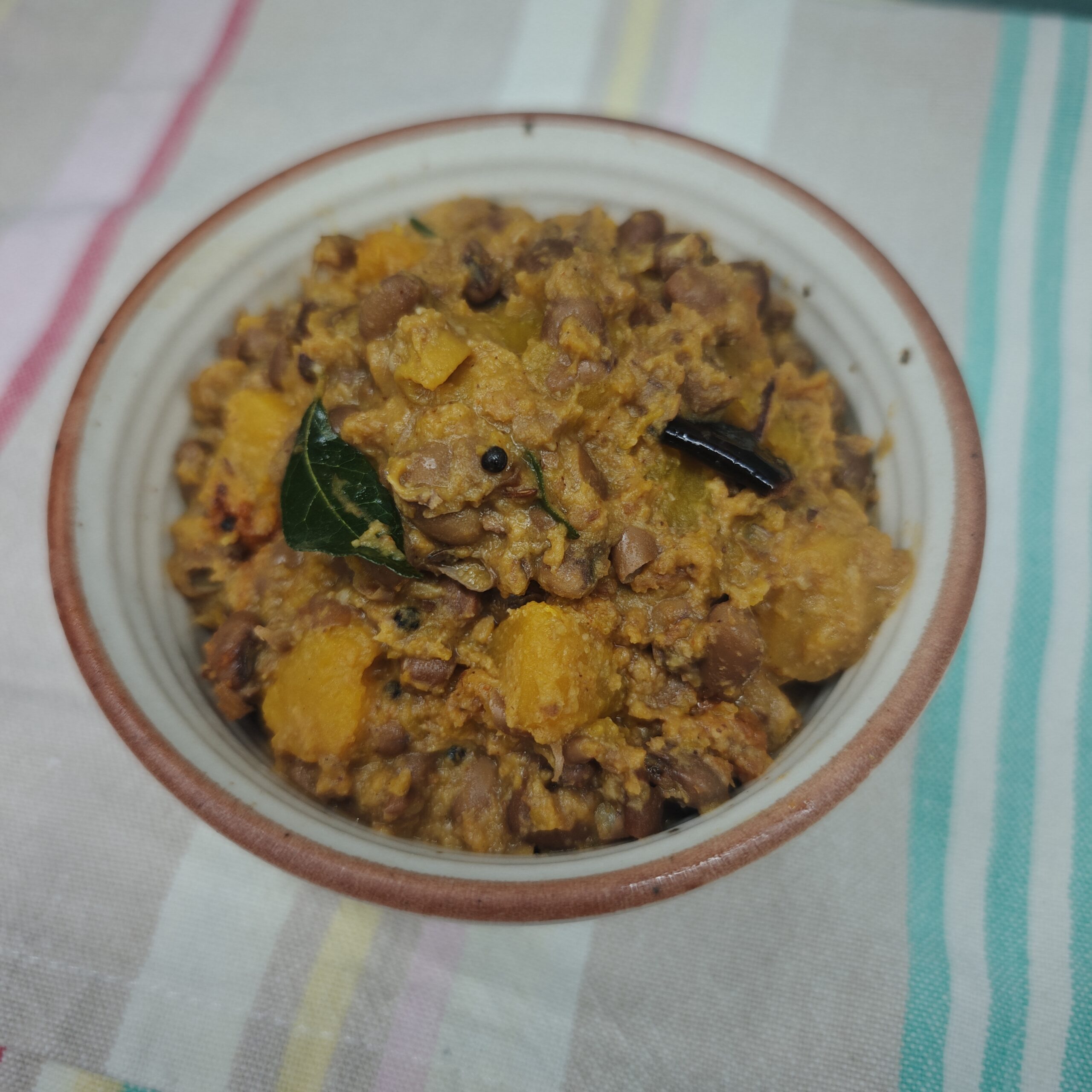
Erissery is a traditional Kerala dish made with mathanga (pumpkin), vanpayar (cowpeas), and thenga (coconut). Nithin Samuel says that since vanpayar is harvested and dried for storage and is available year-round, and pumpkin is a multi-season crop, erissery can be made throughout the year. It is also a favourite in their home during Onam, Kerala’s harvest festival, which is celebrated with family gatherings and elaborate feasts known as sadhyas. Nithin’s family grows a few vegetables and fruits at home, including pumpkin, making it especially joyful to prepare the dish with their own harvest. Nithin and his mother, Anita, share fond memories of making erissery together during Onam, using pumpkins harvested from their backyard.
Once every few years, Nithin would cook an Onam sadhya with his mother. In the early years, he would help her shop for the ingredients while she did most of the cooking. Over time, they began cooking together. Anita makes dishes such as inji-puli curry, aviyal, erissery, beetroot pachadi, and thoran, while Nithin takes on the parippu pradhaman payasam, kurukku kaalan, and pappadoms. For them, making erissery is part of a larger tradition of cooking and celebrating Onam together.
For the cowpeas:
| Red cowpeas | 250 grams |
|---|---|
| Water | 2–2½ cups approx. |
| Turmeric powder | ½ teaspoon, divided |
| Cumin powder | ¼ teaspoon |
| Green chillies | 2–3 |
| Garlic cloves, crushed | 2–3 |
For the pumpkin:
| Pumpkin | 250–300 grams |
|---|---|
| Red chilli powder | 1 teaspoon |
| Coriander powder | 1½ teaspoons |
| Ginger, crushed | ½-inch piece |
| Garlic cloves, crushed | 2 |
| Water | ½ cup approx. |
| Salt | to taste |
| Freshly grated coconut (for paste) | 1 cup |
|---|---|
| Water | ¼–½ cup approx. |
For the tempering:
| Coconut oil | 4 tablespoons |
|---|---|
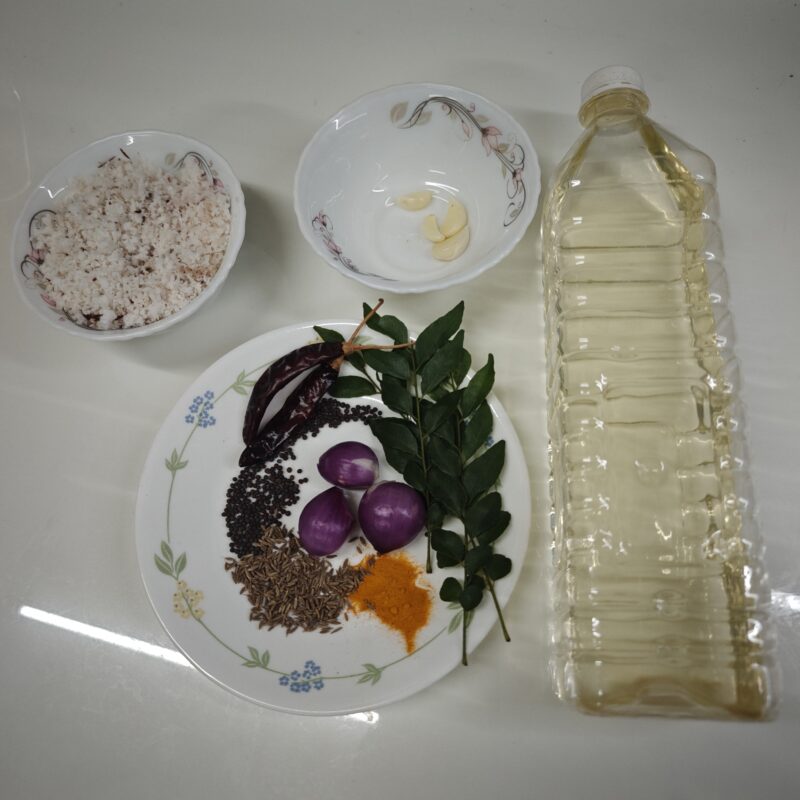
| Freshly grated coconut (for roasting) | 1 cup |
| Mustard seeds | 1 teaspoon |
| Cumin seeds | 1 teaspoon |
| Shallots, sliced | 3 |
| Curry leaves | 3 sprigs |
| Dried red chillies, halved | 2 |
| Asafoetida | ½ teaspoon |
| Red chilli powder, optional | to taste |
What You Will Need
Pressure cooker, heavy-bottomed saucepan or cooking pot, blender, frying pan, small tadka pan
Instructions
Rinse the red cowpeas thoroughly under running water twice or thrice, or until the water runs relatively clear. Soak them in enough water for 3–4 hours.
Drain the soaked cowpeas and transfer them to a pressure cooker. Add 2-2 ½ cups water, ¼ teaspoon turmeric powder, the cumin powder, green chillies, and garlic. Cook for 2–3 whistles over medium heat. Turn off the heat and allow the pressure to release naturally before opening the cooker. Drain any excess water and set the cooked cowpeas aside.
While the cowpeas are cooking, rinse the pumpkin well. Peel it, remove the seeds, and cut the flesh into bite-sized cubes.
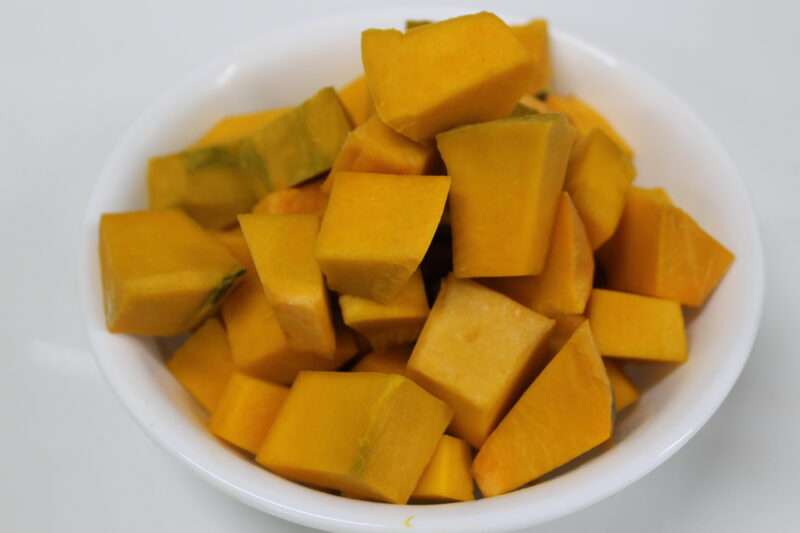
Place the pumpkin in a heavy-based saucepan and add ½ cup water, the remaining ¼ teaspoon turmeric powder, red chilli powder, coriander powder, ginger, garlic, and salt to taste.
Cover and cook the pumpkin over medium heat until it begins to soften. Stir occasionally to prevent it from sticking to the bottom of the pan.
Check the pumpkin after a few minutes. If the water has evaporated before the pumpkin is tender, add a little more water and continue cooking. The pumpkin should be soft enough to break apart easily when pressed with the back of a spoon, but it does not need to become completely smooth.
While the pumpkin cooks, place half of the grated coconut in a blender with ½ -¼ cups of water. Blend until you have a smooth, thick paste.
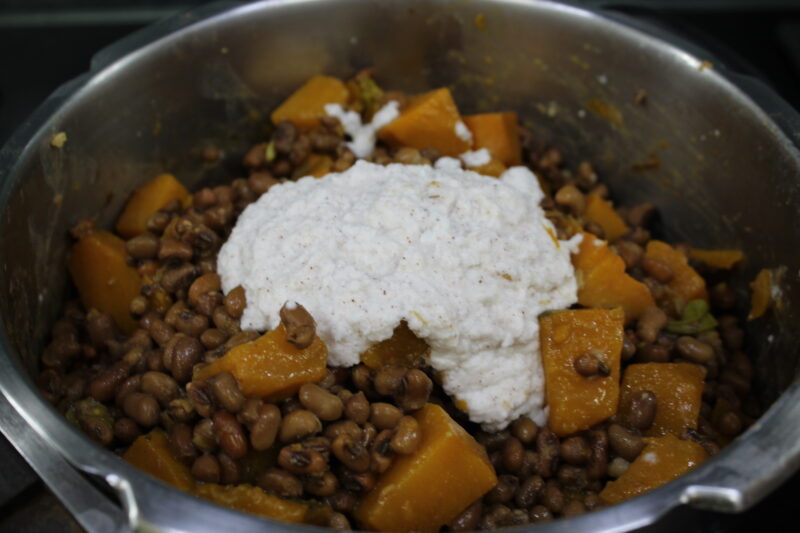
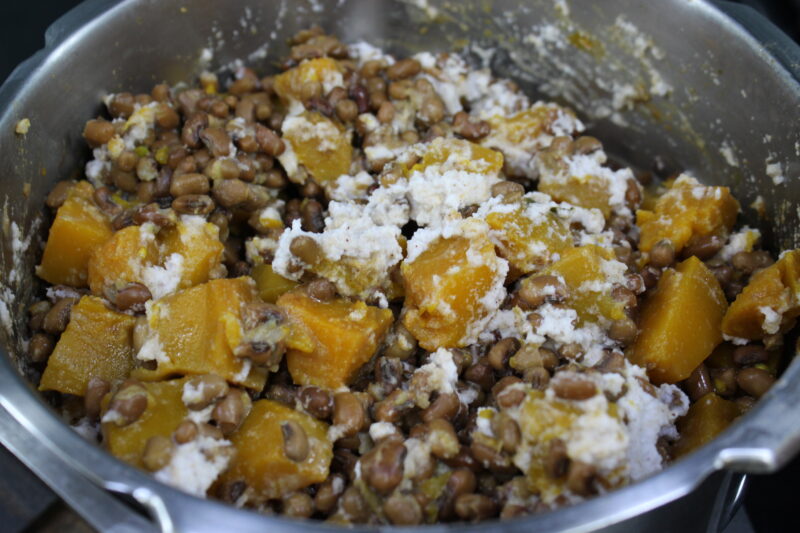
Add the coconut paste to the cooked pumpkin and stir gently to combine. Add the cooked cowpeas and mix well. Cook together for another 4–5 minutes over low to medium heat. If the mixture looks too dry, add a little warm water as needed. The finished erissery should be thick and spoonable rather than watery.
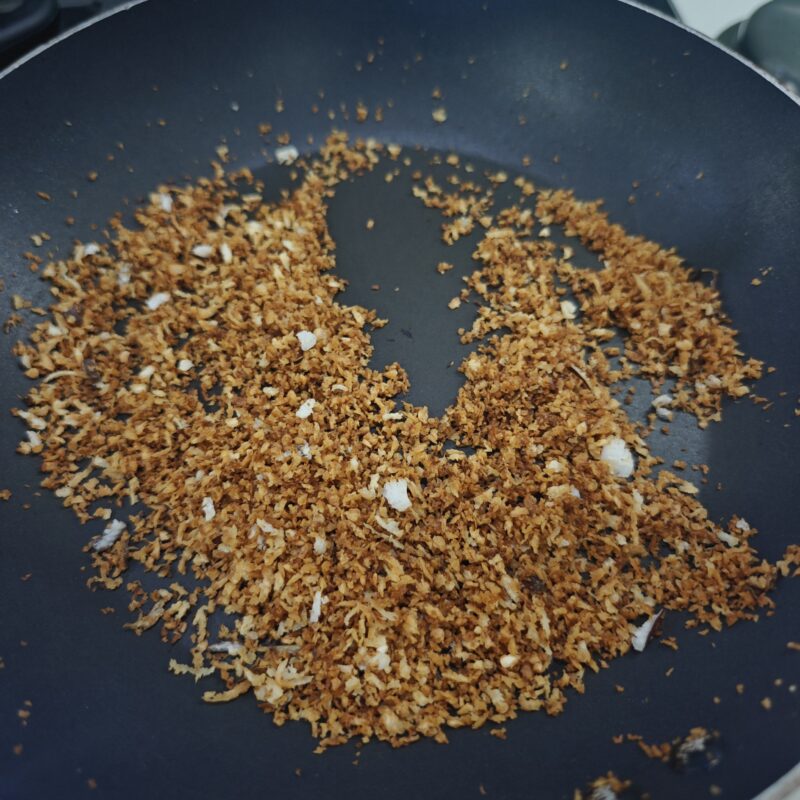
Heat 2 tablespoons of coconut oil in a frying pan over medium heat. Add the grated coconut and roast, stirring continuously, until it turns golden. Take it off the heat and set aside.
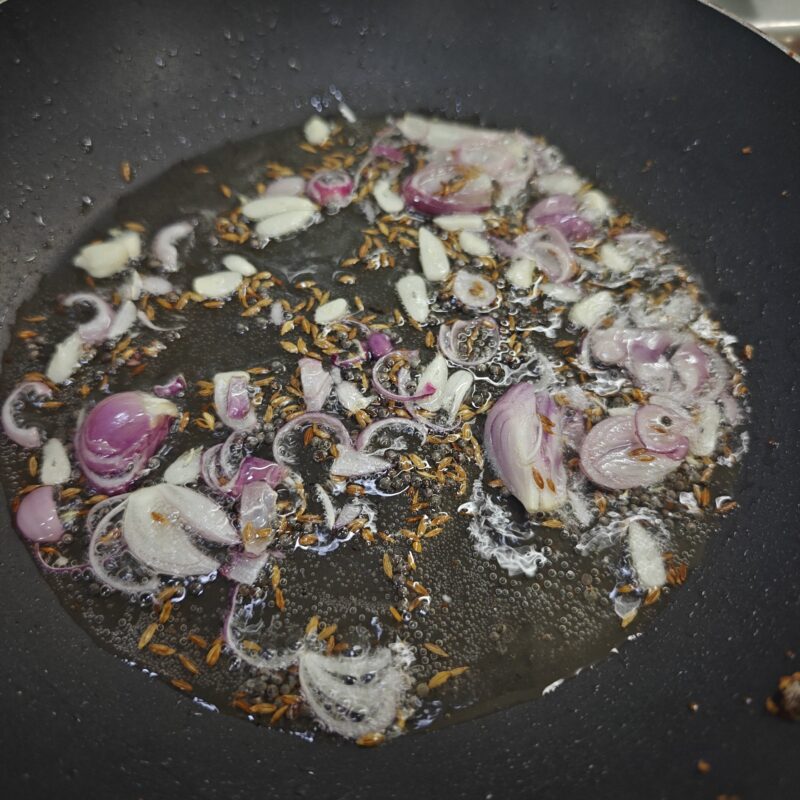
In the same pan, heat the remaining 2 tablespoons of coconut oil over low heat. Once the oil is hot, mustard seeds. When they begin to crackle and pop, add the cumin seeds and sauté briefly. Add the sliced shallots and cook until they turn translucent.
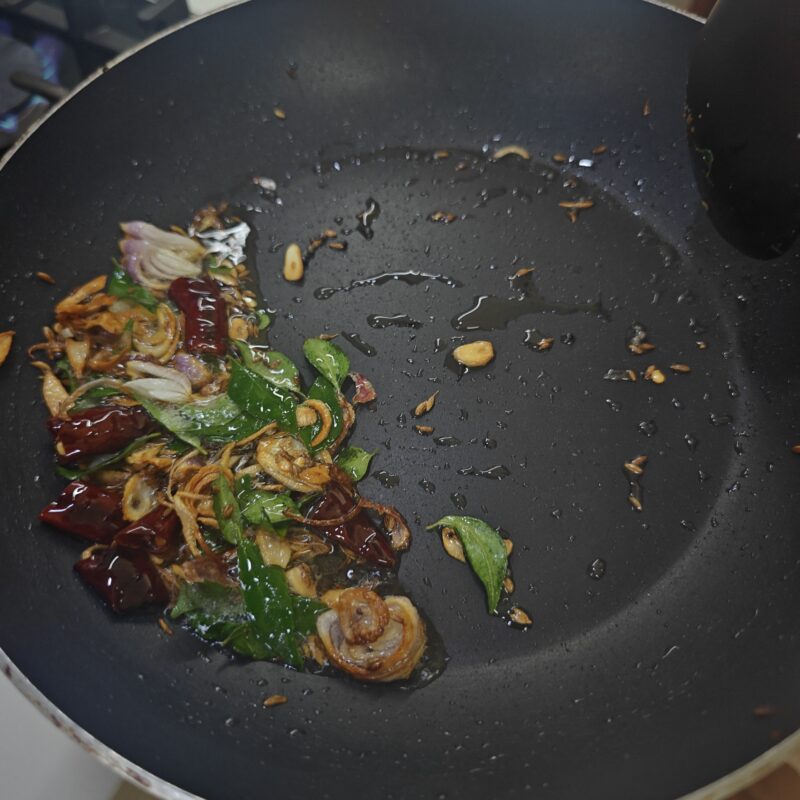
Add the curry leaves and dried red chillies. Fry for a few seconds until the curry leaves become crisp and the chillies darken slightly. Add the asafoetida. Take care, as the curry leaves may splutter when added to the hot oil.
Pour the tempering over the pumpkin and cowpea mixture along with the roasted coconut and stir gently to combine.
Taste and adjust the salt if needed. For extra heat, you may heat a little coconut oil, add a pinch of red chilli powder, and immediately pour it over the erissery. Stir gently to combine.
Serve the erissery warm with chemba rice or any slow-boiled rice. Erissery is also traditionally served as part of onasadhya.
Tips:
Keep the heat low once the coconut paste has been added, as coconut can catch on the bottom of the pan if cooked over high heat.
Anita Sam (anitasam18) loves to cook. Some of her favorite dishes include inji-puli curry for Onam, erisssery, aviyal, and chicken stew with appams. She is part of the Local Food Club (LFC) in Kochi.
Nithin Samuel (samuelspicks) is curious about flavours and pairings across cuisines and has a keen eye for rediscovering recipes. He is the Super Locavore for The Locavore’s Local Food Club (LFC) in Kochi. Professionally, he works in software sales and operations.
You must be logged in to rate this recipe.
 Login with Google
Sign in with email