
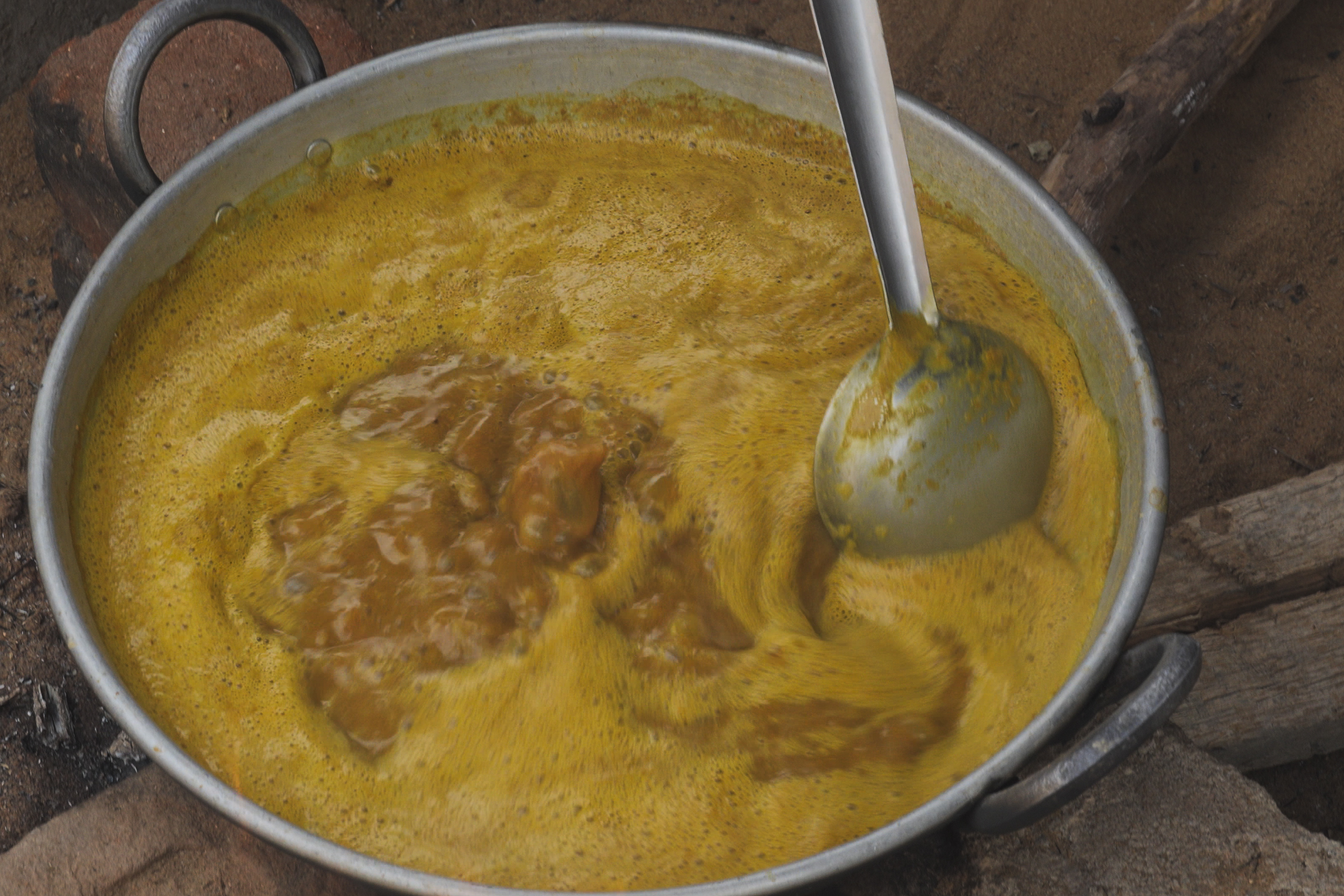
For generations together, the fishing communities of Tamil Nadu’s southeastern coast have relied not only on the sea for sustenance but also on an intimate knowledge of food as medicine. Recipes are often valued as much for their healing properties as for their flavour. Many of these dishes draw on ingredients from traditional medicine including dried ginger, long pepper root, carom, and fennel.
Omathara Thirukkai Kozhambu is a peppery broth traditionally made with stingray and a carefully balanced blend of spices. This dish was cooked by Santha A, a fisher from Karangadu, a coastal village in North Ramanathapuram.
The recipe reflects generations of practical knowledge. The ray is meticulously cleaned with rock salt and turmeric to remove its distinctive aroma before being gently simmered in a broth flavoured with freshly ground spices. Traditionally, the spice paste is prepared on an ammikkal (grinding stone), a process that produces a smoother texture and releases the essential oils of the spices more gradually than modern electric grinders. The resulting curry is light in appearance yet deeply aromatic, with the warmth of carom, black pepper, and dried ginger balanced by the sweetness of fennel and coriander. The recipe embodies the close relationship between food, health, and traditional knowledge passed down through mothers and grandmothers as an expression of care and healing.
Note: Stingray is an endangered species; The Locavore recommends making sustainable fishing and seafood consumption choices.
For cleaning the fish:
| Ray (preferably Honeycomb Stingray or Blockhead Piercing Ray) | 2, small |
|---|---|
| Rock salt | as needed |
| Turmeric powder | as needed |
| Water | as needed |
For the spice paste:
| Coriander seeds | 1 small handful (approx. 1 tablespoon) |
|---|---|
| Dried ginger (Sukku) | 2 large sticks |
| Dried red chillies | 3 |
| Indian long pepper root (Kandathippili) | 5-7 sticks |
| Carom seeds | 1 big handful (approx. 2 tablespoons) |
| Whole black peppercorns | 1 ½ tablespoons |
| Cumin seeds | 1 handful (approx. 1½ tablespoons) |
| Fennel seeds | 1 handful (approx. 1½ tablespoons) |
| Dill seeds (Sathakuppai) | few seeds (approx. ½ teaspoon) |
| Dried turmeric fingers | 2 |
| Garlic | 1 whole bulb |
| Water | 3 tablespoons (approx.) |
|---|---|
| Salt | to taste |
What You Will Need
A medium-sized heavy-bottomed pot, a spatula, kadhai/frying pan
Instructions
Begin by cutting the ray into small pieces. Traditionally, this is done using an aruvamanai, a knife fixed to a wooden base.
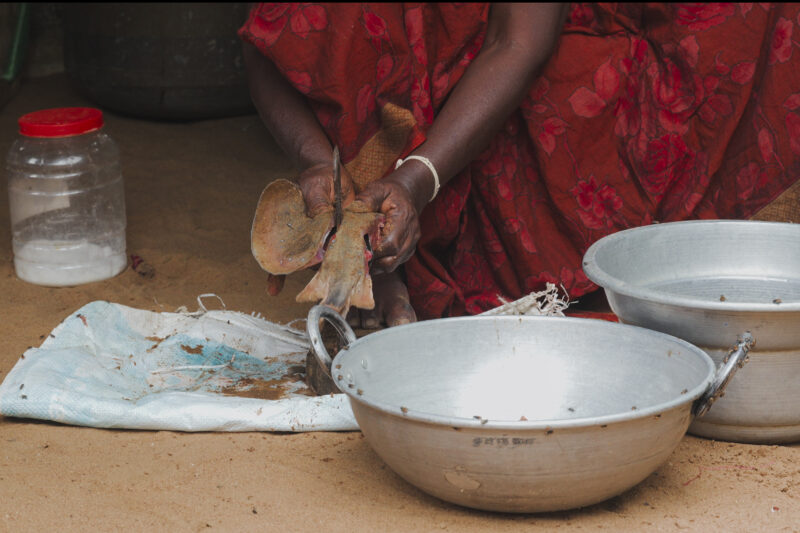
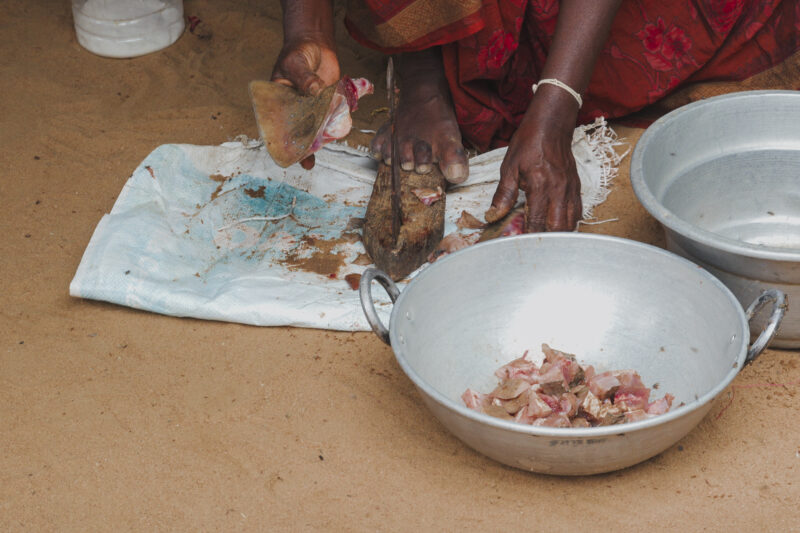
Place the fish pieces in a bowl and rub them with rock salt and turmeric. Add water, rinse thoroughly, and repeat several times to clean the fish and reduce its characteristic smell. Drain and set aside.
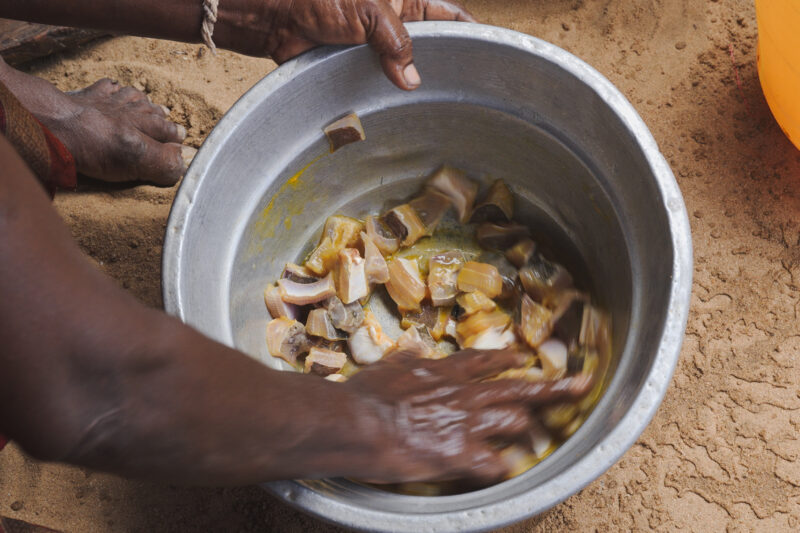
In a frying pan or kadhai, dry-roast the coriander seeds, dried ginger, and dried red chillies over medium-low heat for a few minutes, stirring occasionally, until fragrant. Remove any charred portions from the dried ginger and set the spices aside.
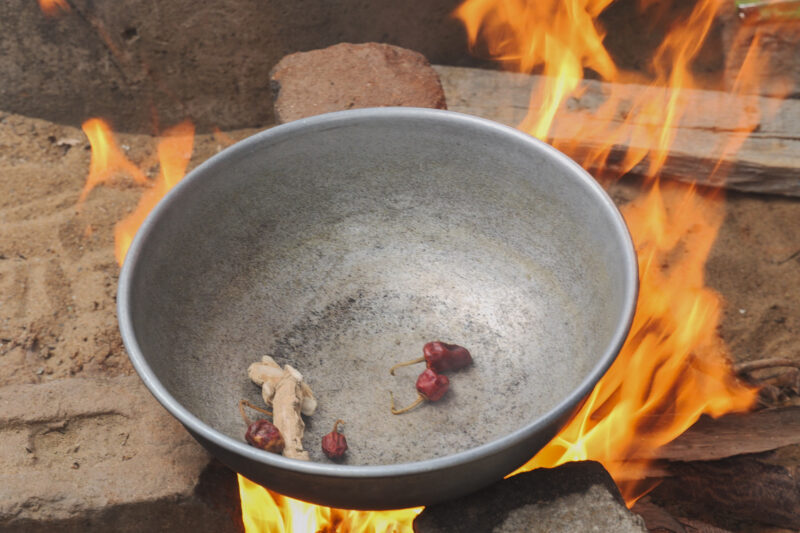
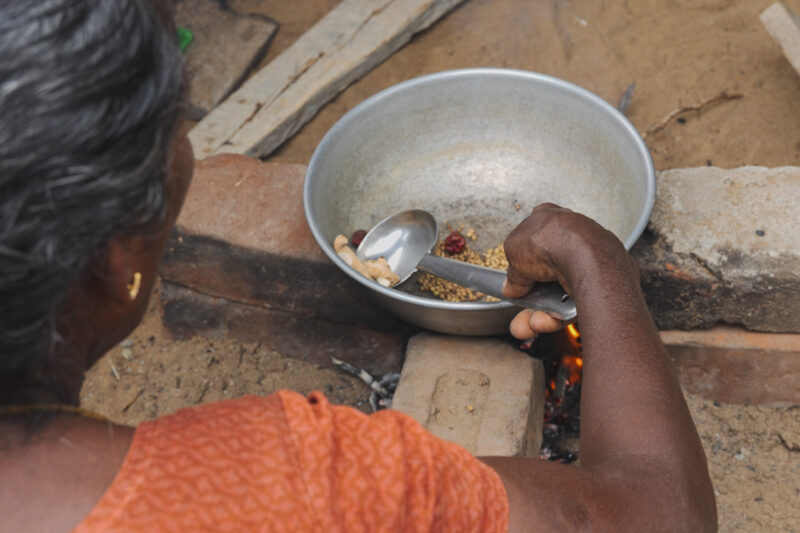
In the same pan, dry-roast the Indian long pepper root and carom seeds for a few minutes. Add the black pepper along with the cumin, fennel and dill seeds and continue roasting until fragrant, taking care not to let the spices burn. Remove from the heat.
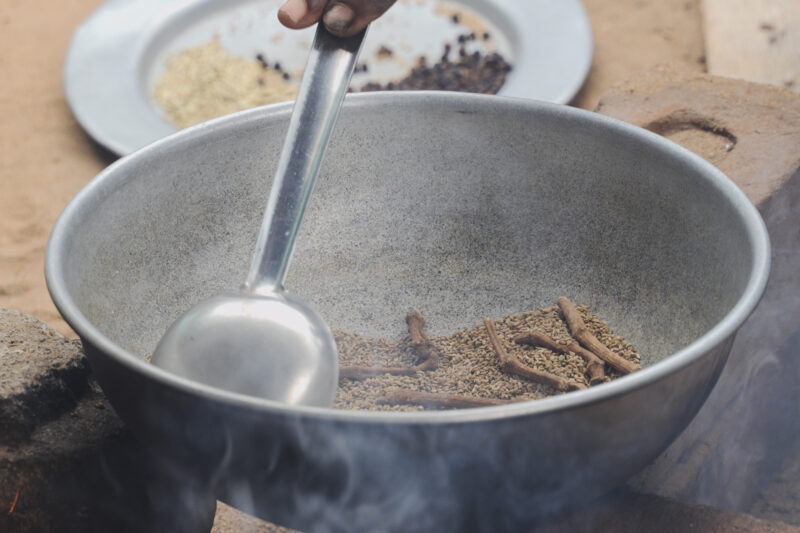
Grind the dried turmeric fingers on a grinding stone until they form a smooth paste.
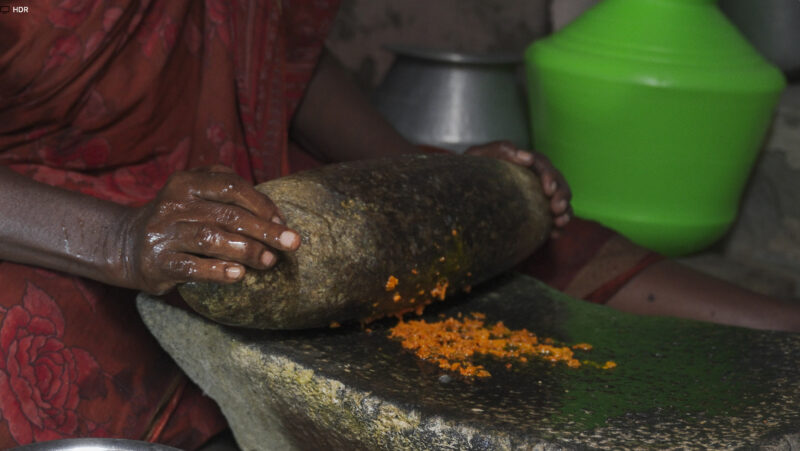
Add the rest of the roasted spices and continue grinding until well combined.
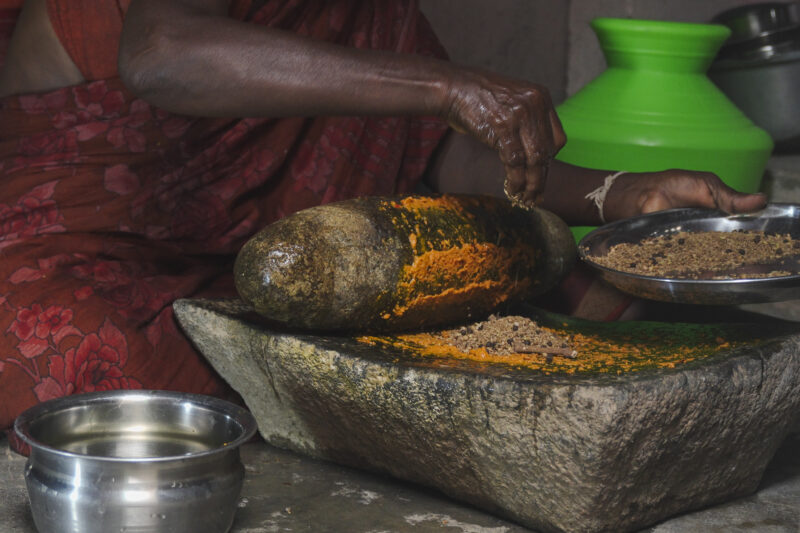
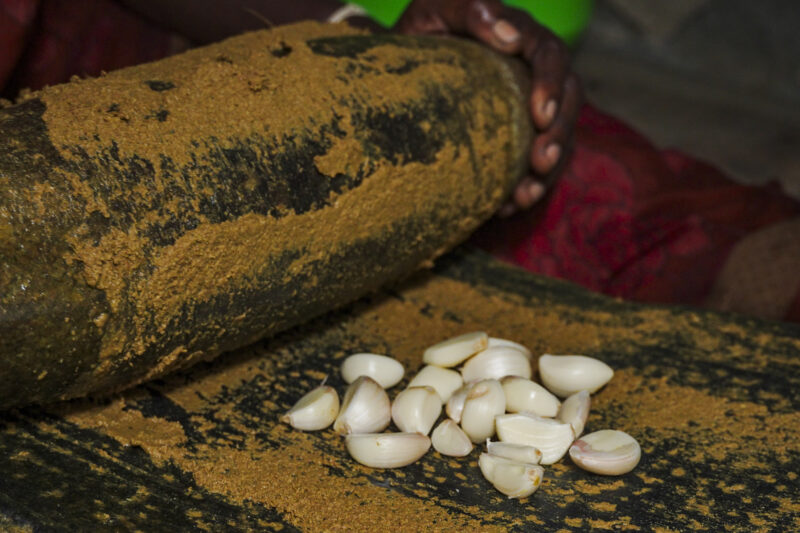
Add the garlic and grind everything together until you have a fine, smooth paste that is firm enough to gather into a ball.
Add water to a medium-sized heavy-bottomed pot. Add the spice paste and stir well to dissolve it into the water.
Add the pieces of ray and some salt to taste. Bring to a boil, then reduce the heat and simmer for 10–15 minutes, or until the ray is cooked through and tender.
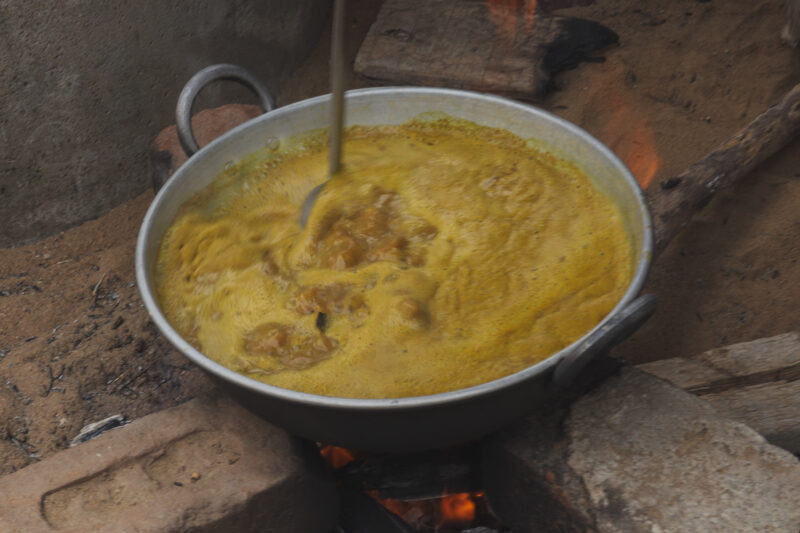
Serve hot with steamed rice.
Tips:
- Traditionally, the spices are ground on a grinding stone, which gives the paste a smooth, fine consistency.
- Use all edible parts of the ray when making the broth to make the most of the fish and add flavour to the dish.
- Serve the broth hot, alongside freshly cooked steamed rice.
Variations:
The kozhambu may be seasoned with mustard and curry leaves based on preference.
This recipe comes from Santha A, a fisher from Karangadu, a coastal village in North Ramanathapuram with support from her daughter Jerald Mary J.
This recipe was documented by Rashmi Sridhar and photographed by Revathi Sunil.
Rashmi Sridar is the Writer-Researcher fellow from Tamil Nadu, trained in Geographical Information Systems (GIS) and environmental law. She is interested in working with fishing communities using participatory approaches with a focus on women’s labour, seafood markets, and collective action.
Revathi Sunil is the Audio-Visual fellow from Tamil Nadu. She is a Bengaluru-based filmmaker, writer, and editor interested in intimate, non-intrusive storytelling that centres the dignity, complexity, and perspectives of those furthest from the frame.
This story is part of the Woman Farmer Project, a multimedia storytelling initiative led by The Locavore in partnership with the Doc Society Climate Story Kitchen. It aims to build a roadmap for successful collaborations between institutions and innovative grassroots networks who are committed to amplifying climate stories.
The Doc Society supports climate action across the globe by championing independent filmmakers, audio producers, journalists, and artists working alongside impact producers and movement builders to bring more communities into climate conversations to advance climate just and biodiverse futures.
Editor: Ishani Banerjee
Copy editor: Khorshed Deboo
You must be logged in to rate this recipe.
 Login with Google
Sign in with email