
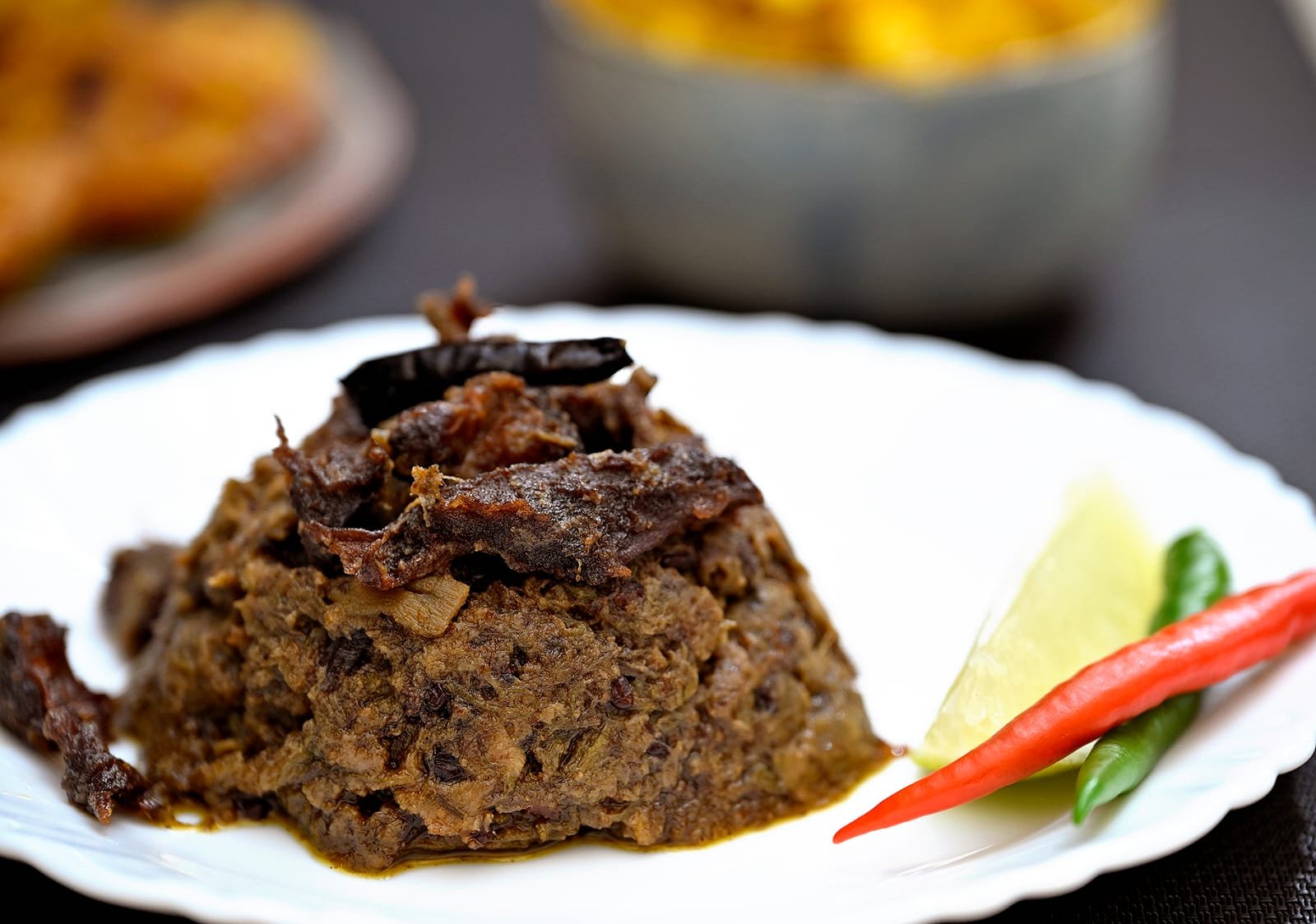
In most Bengali kitchens, kochur shaak, or taro stem, is one of the most cherished parts of the taro plant. The stems come in two varieties—pale green and purplish—both edible, though the thinner stalks are preferred as they tend to be less prickly and cook faster. Preparing kochur shaak calls for a bit of care: if not processed properly, it can cause itching on the hands or a tingling sensation in the throat after eating.
The dish is prepared in both vegetarian and non-vegetarian forms across Bengal. In this version, dried beef is paired with the vegetable and cooked with a light tempering, allowing the flavours of the shaak and meat to shine through in equal measure.
Sayani Sengupta first began using dried beef when a friend from Nepal gifted her a small stash. It soon became one of her favourite experiments in the kitchen, inspiring recipes like this one. Dried beef is also found in regions such as Sikkim, Darjeeling, and other parts of Northeast India. In this preparation, the heat level can be adjusted according to one’s spice tolerance.
| Taro stems | 500 grams |
|---|---|
| Water | 3 cups |
| Turmeric powder | ½ teaspoon |
| Salt | to taste |
| Water | ½ cup |
|---|---|
| Dried beef | 1 cup |
| Ghee | 1 tablespoon |
|---|---|
| Green chillies, slit in half | 6 |
| Sugar | ½ teaspoon |
| Soaked tamarind pulp | ½ teaspoon |
| Fenugreek seeds | ½ teaspoon |
| Dried red chillies | 3 |
| Mustard oil | 3 tablespoons |
Heavy-bottomed kadhai with lid; Pressure cooker; Strainer/Colander; Spatula/Turner
Preparing the Taro Stems
Dip a clean kitchen towel in a bowl of water, wring it out slightly, and use it to wipe the outside of each stalk. If the water becomes dirty, replace it with fresh water.
Gently separate each layer of the stem, much like peeling the layers of an onion. Wipe the inside of each layer clean with the damp towel.
Once cleaned, cut the stems into 1-inch pieces. As you cut, peel away the rough outer skin—this is similar to peeling green drumsticks. Removing the tough exterior ensures a smoother texture in the final dish.
Rinse the chopped stems thoroughly under running water.
Cooking the Taro Stems
6. Transfer the cleaned stems to a pressure cooker. Add 3 cups of water, turmeric powder, and half a teaspoon of salt.
Cook on high heat until you hear two whistles. Allow the pressure to release naturally. The stems should be soft and cooked through when done.
Drain the stems in a colander, then rinse gently under running water. Use light fingers to avoid breaking them.
With the help of a spatula, press out any excess water. The stems should now resemble a rough mash. Set aside.
Rinse the pressure cooker clean. Add half a cup of water and the dried beef. Cook on medium to high heat until two whistles.
Let the pressure release naturally, then check the meat—it should be well cooked but still have a bit of bite.
Separate the meat from the cooking stock and keep both aside in separate bowls. Cut or shred the meat into bite-sized pieces.
Heat mustard oil in a large pan or kadhai over medium heat.
Add broken dried red chillies and fenugreek seeds to the hot oil. Once the seeds turn a shade darker and release their aroma, add the cooked, mashed taro stems.
Fry the taro stems over low to medium heat for about 5 minutes, stirring occasionally so they do not stick to the base.
Add the chopped meat, tamarind pulp, sugar, slit green chillies, and the reserved meat stock. Increase the heat to high and cook until most of the liquid has evaporated.
Lower the heat, cover the pan, and continue cooking. Stir every few minutes to prevent burning at the bottom.
The dish is ready when the taro stems turn dark, begin to crisp slightly, and oil starts to separate from the mixture. The longer it cooks slowly, the deeper the flavour will be.
Adjust the salt to taste, stir well, and cook for another 2 minutes with the lid on.
Turn off the heat and immediately fold in the ghee. Serve hot with rice.
Sayani Sengupta is the Cooking Lab Lead for the Millet Revival Project by The Locavore and a home chef based out of Kolkata. Sayani runs her own food brand, Gooseberri, for which she often writes recipes. Her recipes have also featured in Bengali magazines, such as Sananda, as well as other English publications.
She is also a member of The Locavore’s Local Food Club in Kolkata. To become a member, sign up here.
You must be logged in to rate this recipe.

 Login with Google