
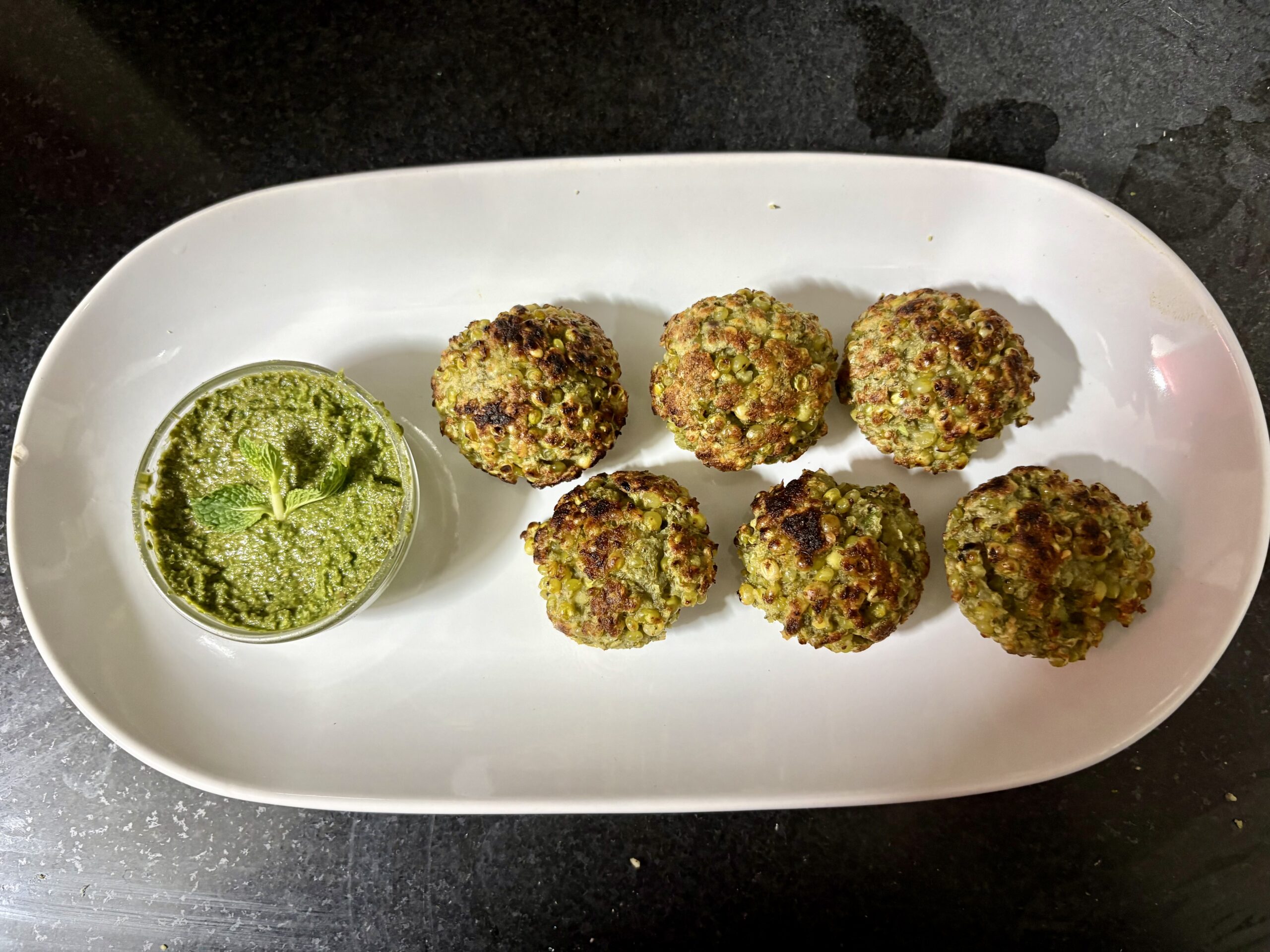
Winter, in western India, is marked by an abundance of green produce—from tender leafy vegetables and strawberries to dried fruits and ingredients such as fresh amba, haldi, and gondh. In many Gujarati households, the colder months signal not only a shift in climate but also in culinary practices. For Vidhi Vora, growing up in a Gujarati family meant that winter brought with it an array of dishes rooted in the Kathiawad region, including Vagharelo Bajri Rotlo, Undhiyu, Lilva Ghugra, and a variety of nutrient-dense paks such as Gondh, Khajur, and Adadiyo.
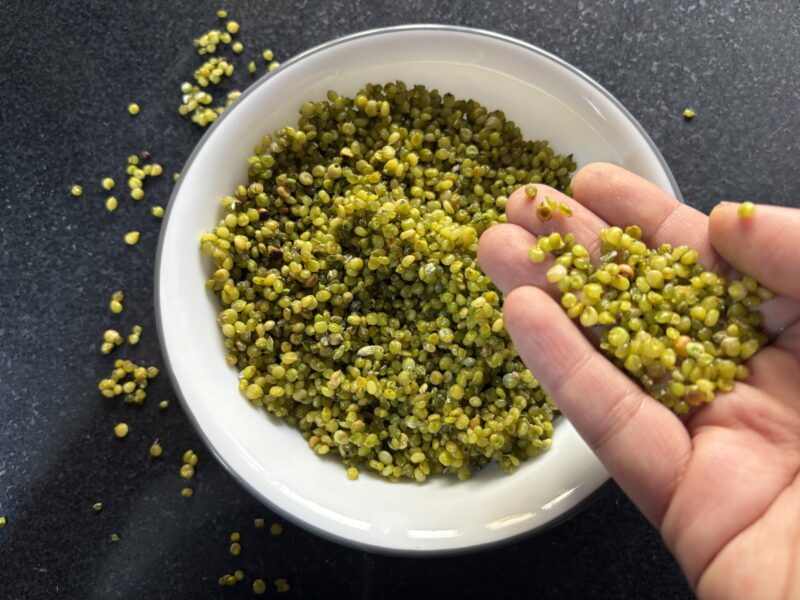
Amidst this seasonal abundance, one ingredient stood out in particular: ponkh. Ponkh—also known as ‘hurda’ or ‘vani’—refers to the immature, tender green grains of jowar harvested during the winter months. Vidhi remembers ponkh arriving either from the local market or carried by travellers returning from Surat.
For much of her childhood and early adulthood, ponkh was enjoyed in its simplest form: with speciality sev and a squeeze of lemon juice. It was only later that Vidhi encountered its incorporation into dishes such as bhel, vadas, and bhajiyas. Motivated by an interest in developing more nourishing interpretations of familiar snacks, she began to explore the grain’s versatility. The result was ponkh appe—a wholesome, seasonal preparation.
| Green moong, whole | 1 cup |
|---|---|
| Green chillies | 2-3 |
| Green garlic greens | 2 tablespoons |
| Onion | 1, medium |
| Ginger | ½ inch |
| Garlic, peeled | 5-6 |
| Fresh ponkh | 250 grams |
| Salt | to taste |
Mixer or blender, sieve or colander, saucepan, cast-iron appe (paniyaram) pan with lid, silicone brush, kitchen towel
Place the whole green moong in a large bowl and cover it completely with water. Leave it to soak overnight, or for at least 6–8 hours. The moong will swell and soften as it absorbs the water.
Once soaked, pour the moong into a sieve and drain away all the soaking water. Tip the drained moong into a mixer or blender jar.
Remove the stalks from the green chillies. Roughly chop them into a few pieces (this helps them blend more easily), and add them to the blender.
Wash the green garlic thoroughly under running water to remove any dirt or grit. Pat it dry with a clean kitchen towel. Roughly chop the greens.
Peel and roughly chop the onion and ginger. Peel the garlic cloves.
Add the chopped green garlic, onion, ginger, and peeled garlic cloves into the blender with the moong and chillies.
Blend everything together to form a thick, slightly coarse paste. Avoid adding water. If absolutely necessary, add just 1–2 tablespoons to help the blades move, but make sure the mixture is still thick; it should not be runny.
Spoon the blended mixture into a large mixing bowl.
Bring a pot of water to the boil. Once the water is bubbling, add the fresh ponkh. Let it boil for about 1 minute. This helps remove any impurities and will slightly soften the grains. Drain the ponkh through a sieve and allow any excess water to drain away fully.
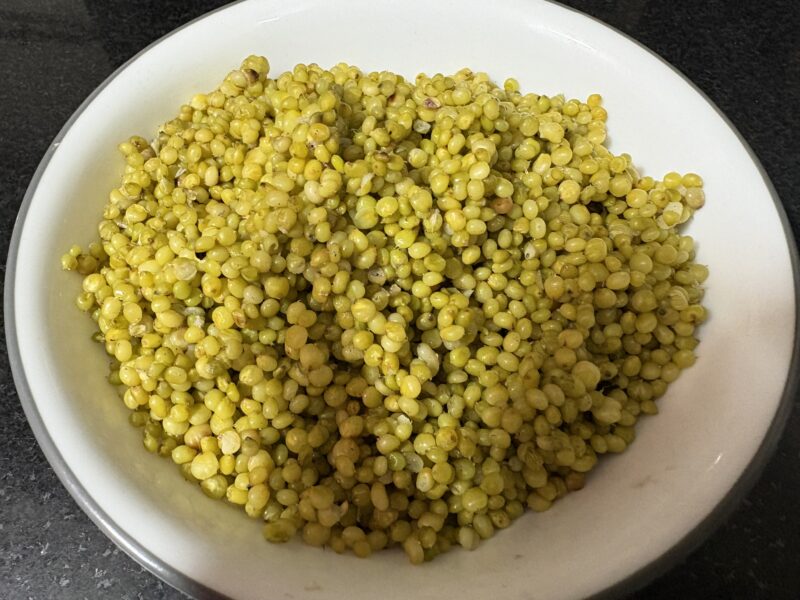
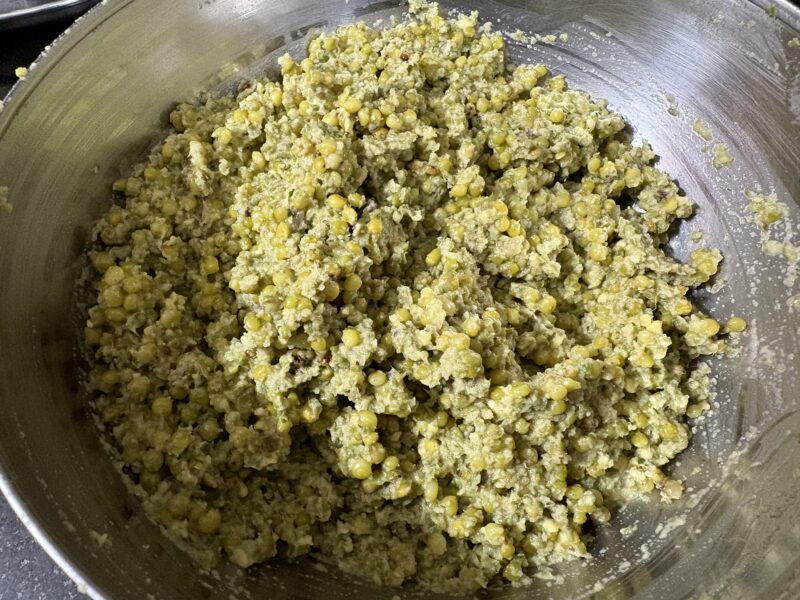
Add the drained ponkh and salt to the moong mixture in the bowl. Mix well until everything is evenly combined. The mixture should be thick enough to hold its shape when spooned.
Place a cast-iron appe (paniyaram) pan on the hob over medium heat. Once warm, lightly grease each mould using oil and a silicone brush or a teaspoon.
Spoon the mixture into each mould, filling them nearly to the top.
Cover the pan with a lid and cook on medium heat until the bottom turns golden brown and crisp. This usually takes about 3–5 minutes.
Using a spoon or skewer, gently turn each appe over. Drizzle a few drops of oil around the edges if needed. Cook the other side until golden brown and crisp.
Remove from the pan and serve hot with mint or coriander chutney.
In case green garlic is not available, increase the amount of whole garlic cloves and also add some fresh coriander leaves.
Dr Vidhi Vora is a Circular Economy Strategist, educator, and an entrepreneur. She is the founder of Green Phoenix Circular Solutions—a boutique sustainability consultancy firm that handholds organisations to reduce their ecological footprint.
She is also a member of The Local Food Club by The Locavore in Mumbai. To become a member, sign up here.
Learn more about Ponkh here.
You must be logged in to rate this recipe.

 Login with Google