
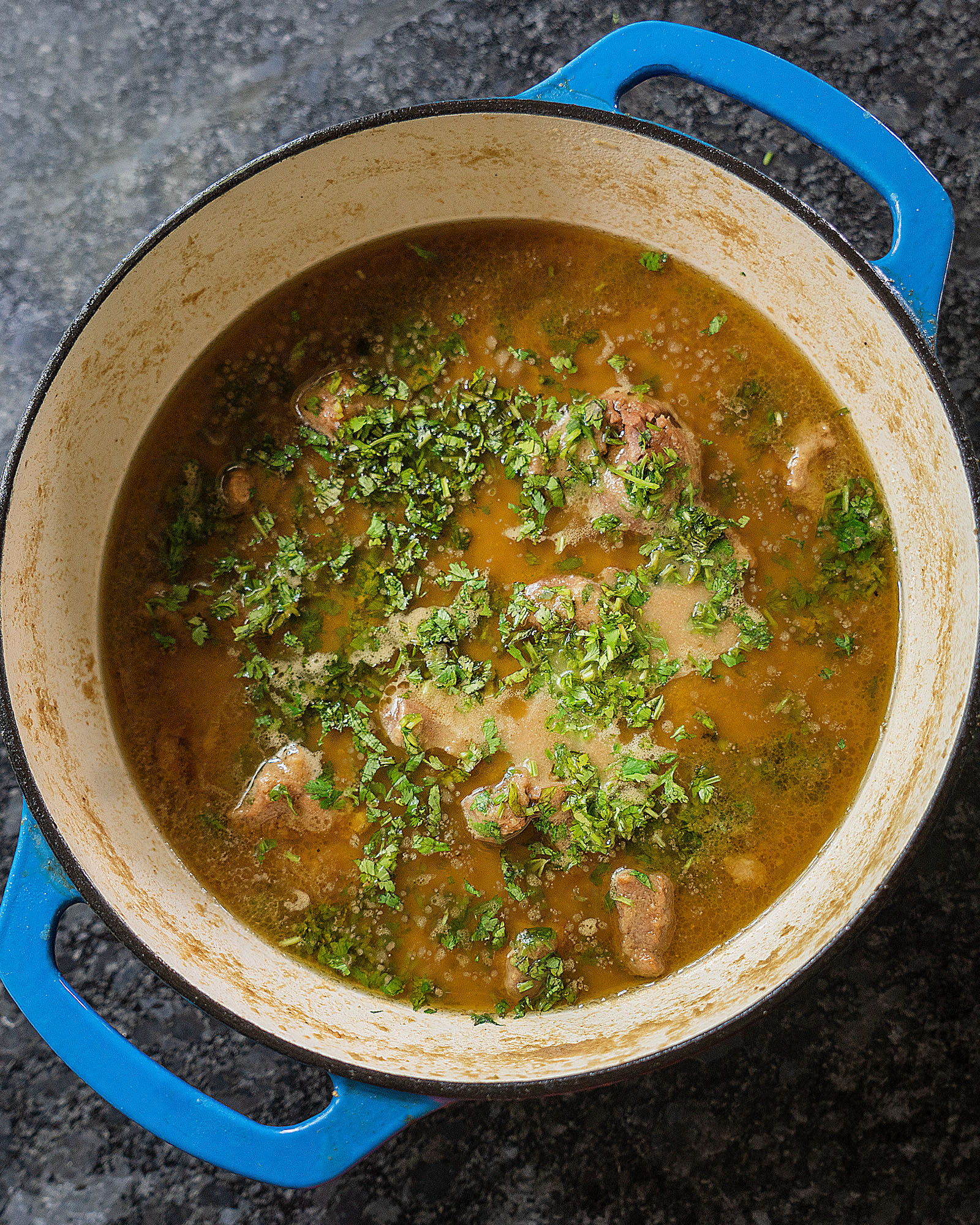
For Meher Malhotra, Dhaniwal Korma is one among the many home-style dishes where the flavour is built slowly and patiently. This is her nani Shama Mir’s recipe, made with bone-in lamb, lots of yoghurt, onions, garlic, ginger, sonth, saunf, and fresh coriander.
Meher’s nani didn’t use a pressure cooker to make this korma. Food was cooked in heavy-bottomed pots, over slow heat, for hours. “That process of slow-cooking is central to the dish,” says Meher. It allows the yoghurt and onions to reduce gently along with the lamb, the bones to flavour the gravy, and the coriander to settle into the korma instead of sitting on top of it.
Unlike many kormas where the onions are fried first, this recipe begins with the lamb, yoghurt, blended onions, ginger, and garlic cooking down together until everything becomes thick, concentrated, almost jammy in consistency. Only then does the oil go in, followed by the powdered spices and fresh coriander. The result is deeply savoury—tanginess from the yoghurt, fragrant with fennel and dry ginger—and unmistakably Kashmiri in spirit.
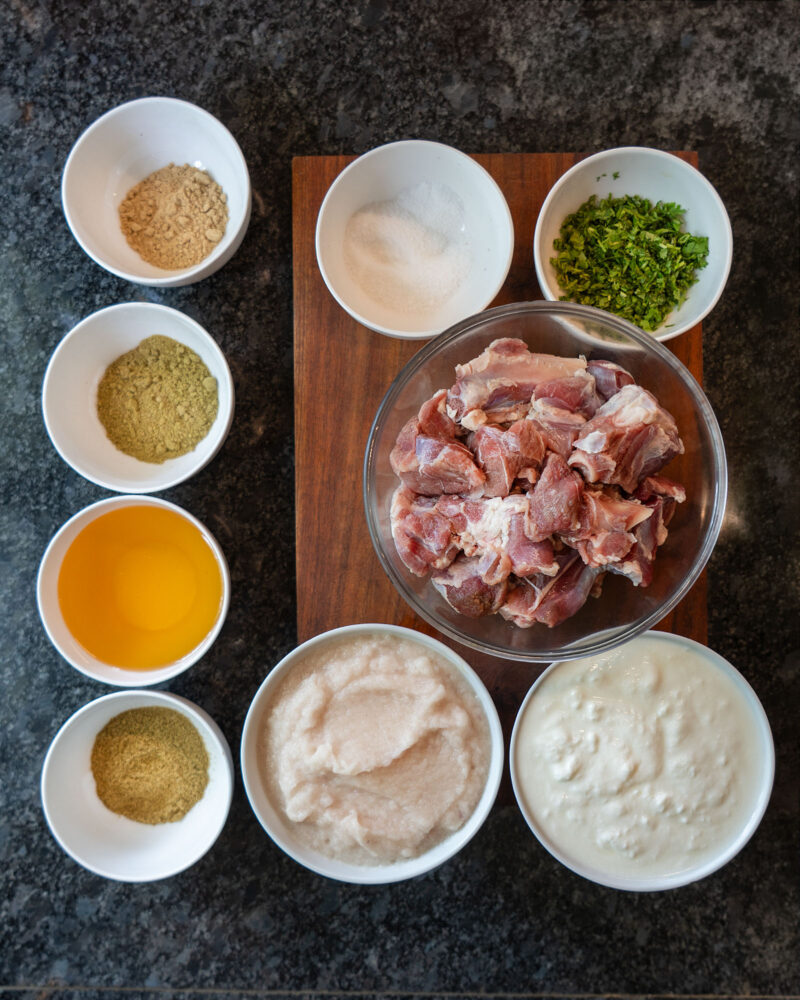
| Bone-in lamb, preferably shoulder, ribs, or mixed curry cuts | 1 kg |
|---|---|
| Onions, blended to a smooth paste | 3, medium |
| Full-fat dahi (yoghurt), whisked until smooth | 900 grams–1 kg |
| Garlic paste | 1½ tablespoon |
| Fresh ginger paste | 1 tablespoon |
| Oil | 100–120 ml |
| Salt | 2 teaspoon, or to taste |
| Saunf powder (fennel powder) | 2 teaspoon |
| Sonth (dry ginger powder) | 1 teaspoon |
| Dhaniya powder (coriander powder) | 2 teaspoons |
| Hot water | 500–700 ml |
| Fresh coriander, finely chopped | 1½–2 cups/ 60–80 grams approx. |
What You Will Need
Large heavy-bottomed kadhai or pot, blender or mixer-grinder
Instructions
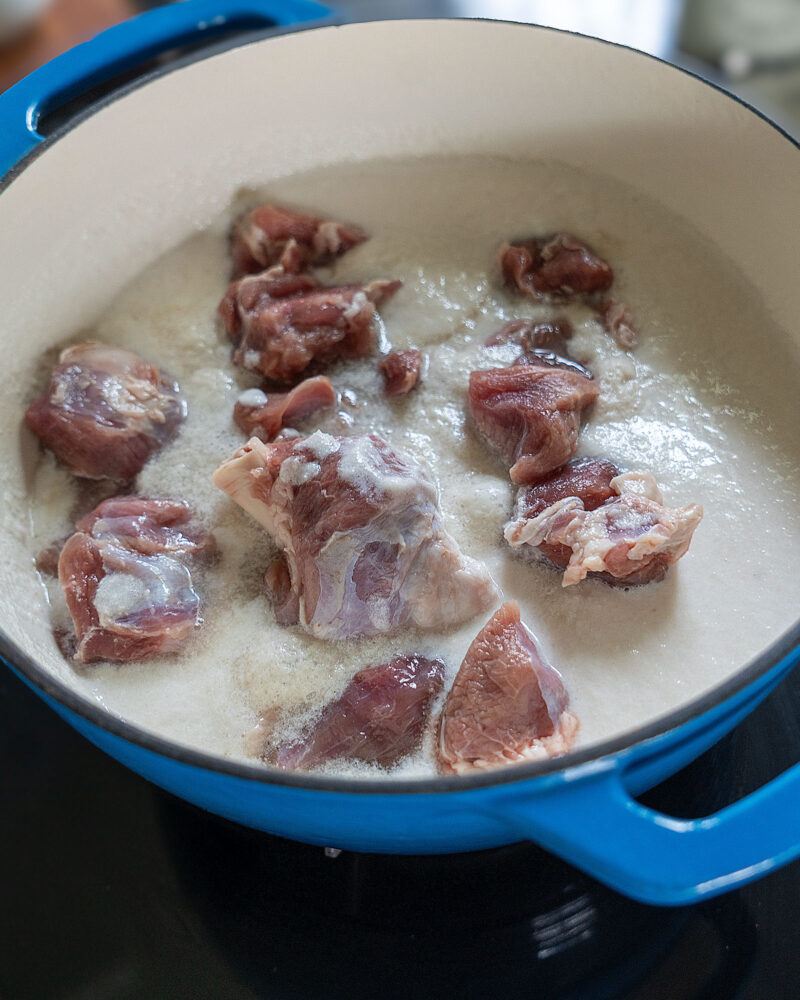
Put the bone-in lamb, onion paste, whisked dahi, garlic paste, and fresh ginger paste in a heavy-bottomed pot. Mix thoroughly until the lamb is evenly coated with the rest of the ingredients.
Place the pot over medium-low heat and begin cooking, stirring frequently to prevent the yoghurt from catching at the bottom. As the mixture heats, the yoghurt will release moisture and appear loose.
Continue cooking patiently until most of the liquid has evaporated, the onions lose their raw aroma, and the yoghurt begins to thicken and clings to the meat. This reduction is essential for developing the flavour of the korma and should not be rushed.
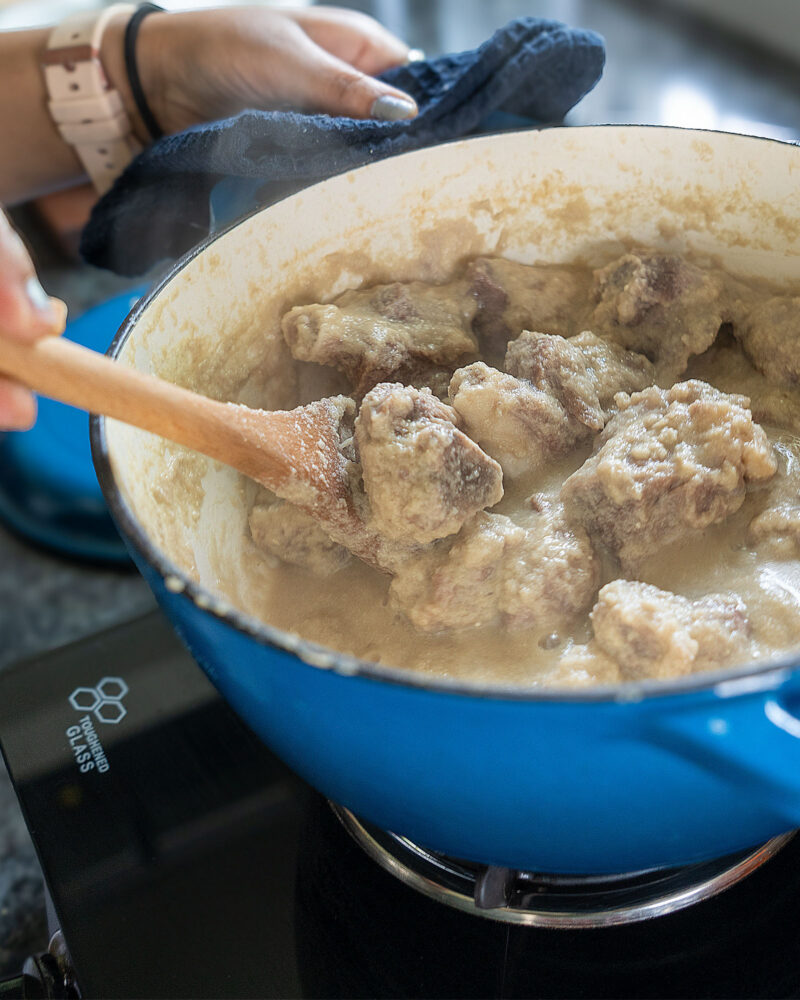
Pour in the oil and continue cooking, stirring regularly, until the masala looks glossy and the oil begins to separate lightly around the edges.
Add the salt, saunf powder, sonth, and dhaniya powder. Stir well and cook for 2–3 minutes so the spices bloom in the hot fat.
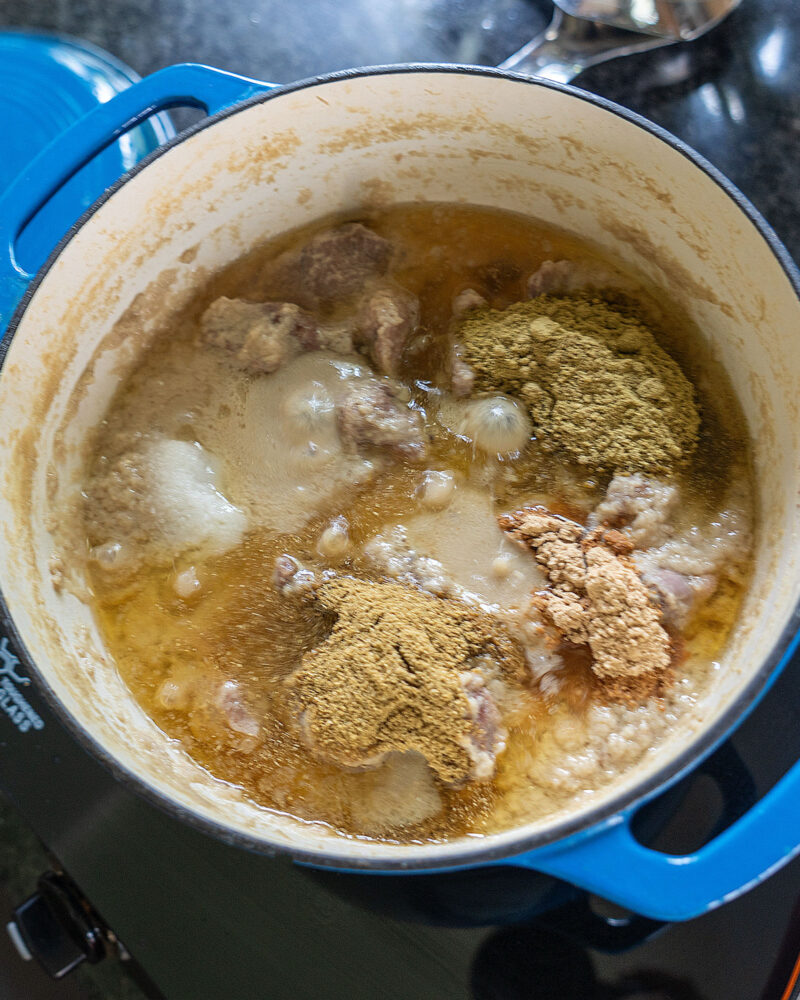
Pour in the hot water and mix well, scraping the bottom of the pot to loosen any caramelised bits. The gravy should be loose enough for the lamb to cook gently but not watery.
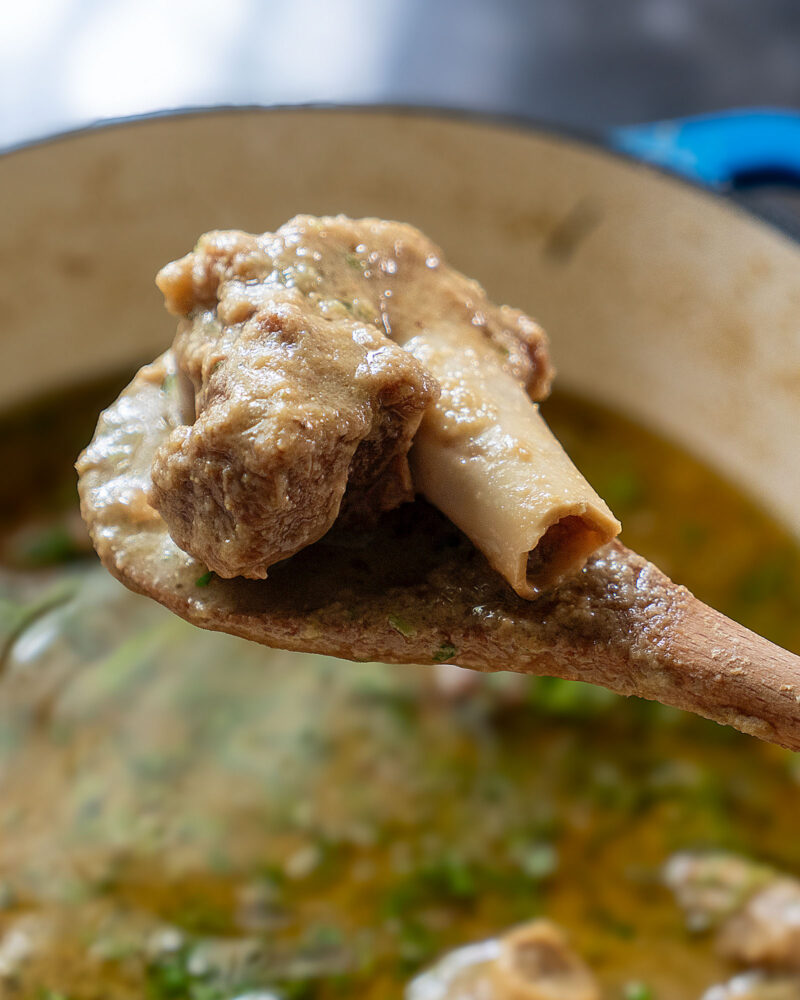
Cover the pot and simmer over low heat, stirring occasionally, until the lamb is completely tender and beginning to pull away from the bone. Depending on the cut of meat, this may take 1½ to 2 hours. Add a little more hot water during cooking if the gravy reduces too quickly.
Stir in the chopped coriander and continue cooking, uncovered, for 10–15 minutes, until the coriander softens into the gravy and the oil rises once again to the surface.
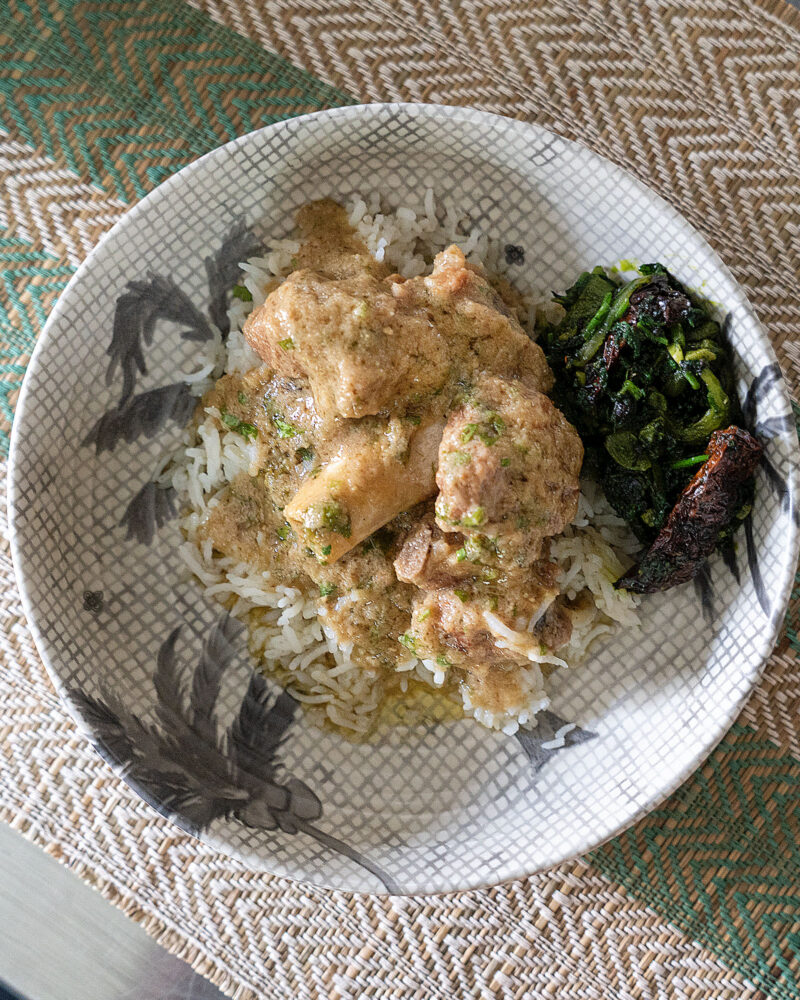
Taste and adjust the seasoning, if needed. The finished korma should have a rich, full-bodied gravy with a gentle tang from the yoghurt and plenty of fresh coriander running through it.
Serve hot with steamed rice.
Tips:
- This korma develops its characteristic flavour through slow-cooking and reduction. Avoid using a pressure cooker, if possible.
- Bone-in lamb produces a richer, more gelatinous gravy than boneless meat.
- Use full-fat dahi, as low-fat yoghurt is more likely to split during the long cooking process.
- Stir regularly throughout cooking to prevent the yoghurt from scorching or catching at the bottom of the pot.
Drawing from her background in art, Meher Malhotra (@paprikatokri) founded Paprika Tokri, an ongoing exploration of food, natural farming, and the cultures that shape the way we eat. Through recipes, storytelling, and intimate supper clubs, she celebrates food as memory, place, and connection.
You must be logged in to rate this recipe.
 Login with Google
Sign in with email