
Found at the foot of the sal tree, the black-coloured ‘Putpura’ mushrooms resemble stones lying in the dirt, easy to miss unless you know where to look. They emerge only during the monsoon months, when the forest floor becomes damp enough to pluck them out from beneath fallen leaves and soil. For tribal communities in central India, monsoon means it’s time to forage for these mushrooms. The seasonal window in July to gather their favourite ingredient—also a substantial source of livelihood—is quite short.
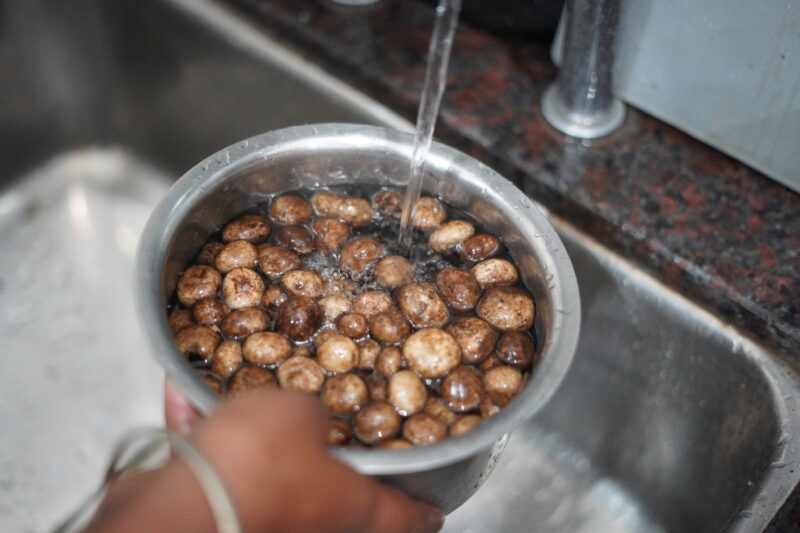
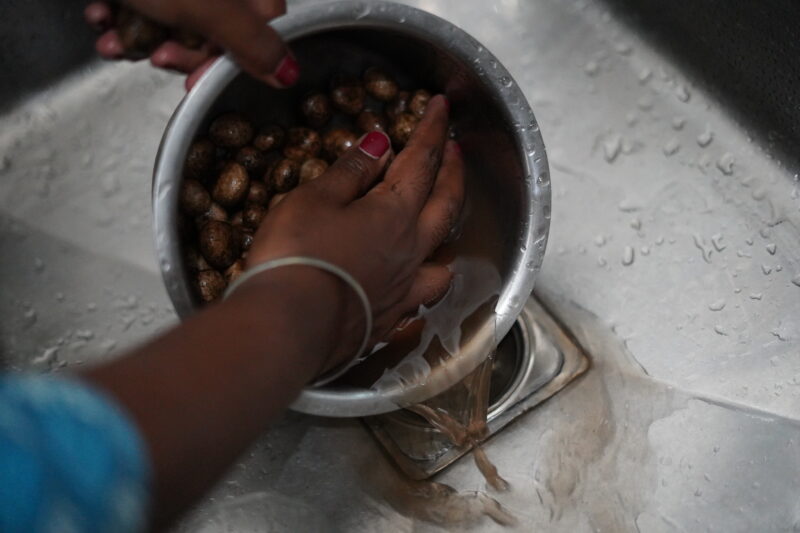
These wild mushrooms must first be carefully cleaned of the mud and forest debris clinging to their surface, a process that requires a gentle hand so as not to damage their delicate structure. Once cleaned and cut, they are fried until they take on a reddish hue. This step helps develop their flavour before they are simmered further.
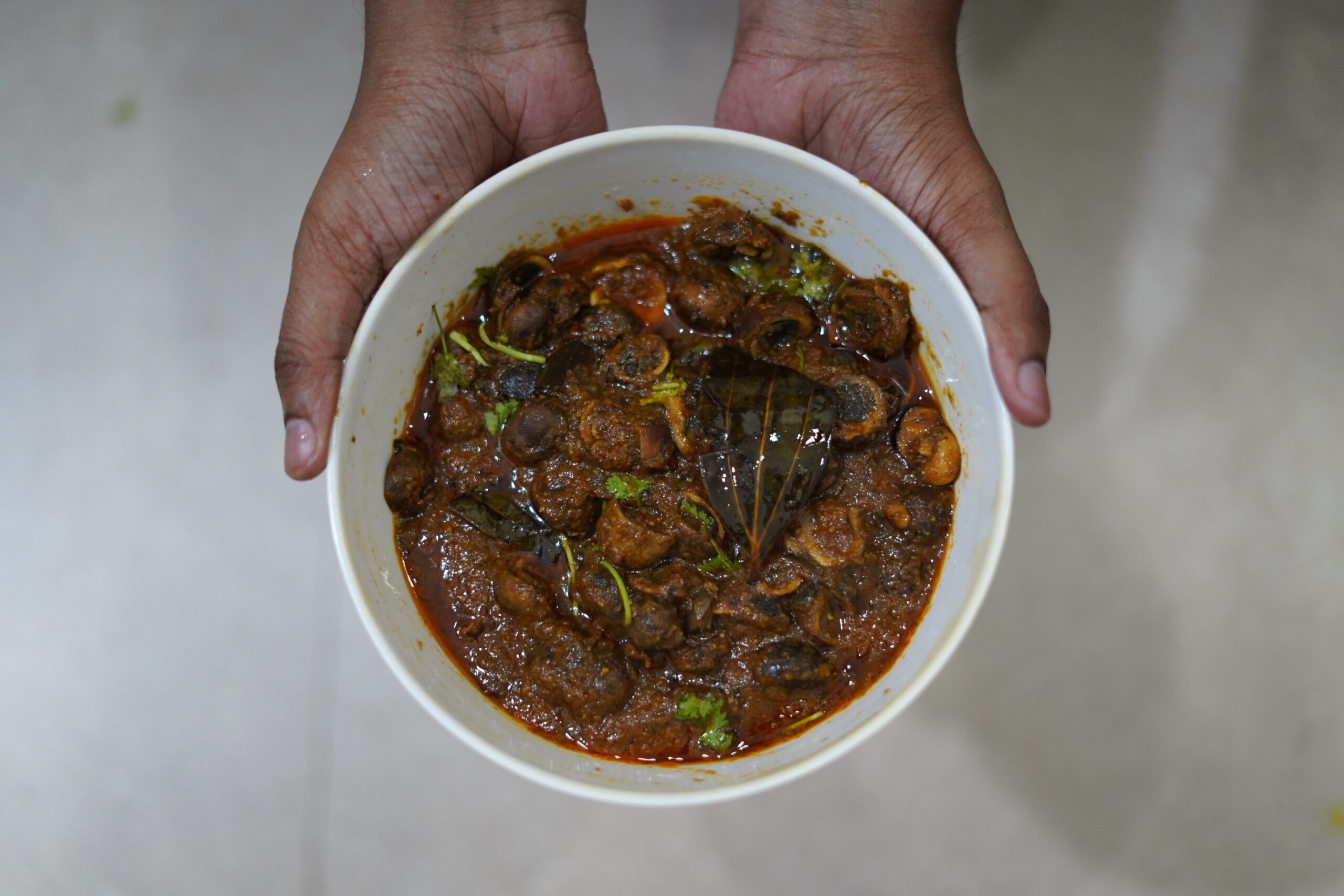
A freshly ground paste of onions and green chillies is cooked down until the oil separates, concentrating the flavours before the fried mushrooms are added back in. It is this final stage of cooking, low and unhurried, that brings out the soft, meaty consistency the mushrooms are known for, turning an otherwise stone-like mushroom into a tender, satisfying dish.
This recipe reflects the tradition of tribal cooking that relies on close, seasonal knowledge of the forest, using ingredients that cannot be store-bought or replicated but only gathered at the right place and the right time.
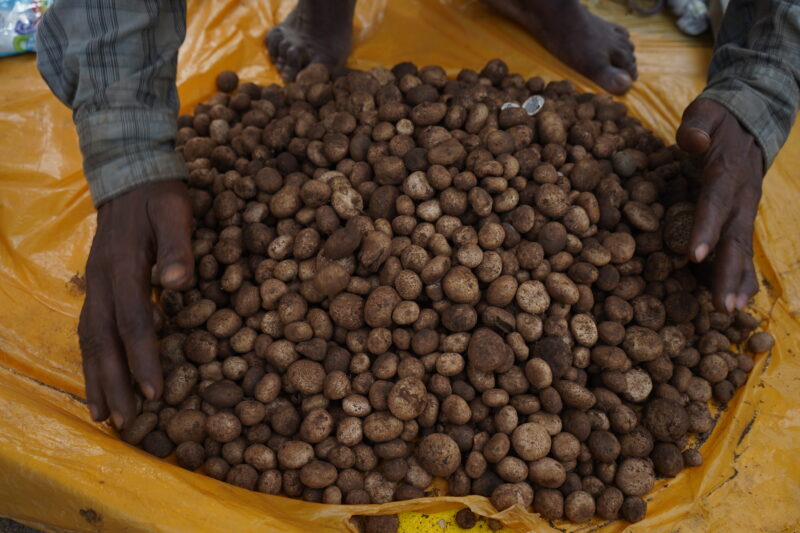
Note: Putpura is a hyperlocal, highly seasonal food for communities in central India. Please source it responsibly and in ways that do not compromise local access to or place undue pressure on the landscapes from which it is gathered.
| Putpura mushrooms | 250 grams (2 cups) |
|---|---|
| Oil | 3–4 tablespoons, or as needed |
| Onions, halved | 3, small |
| Dried red chillies | 2–3 |
| Coriander seeds | 1 tablespoon |
| Bay leaves | 2 |
| Salt | ½ teaspoon or to taste |
| Turmeric powder | ½ teaspoon |
| Red chilli powder | 1 teaspoon |
| Water | as needed |
| Fresh coriander, chopped | for garnish |
Mortar and pestle or blender, kadhai, chulha
Wash the mushrooms thoroughly to remove any mud.
Cut each mushroom into half.
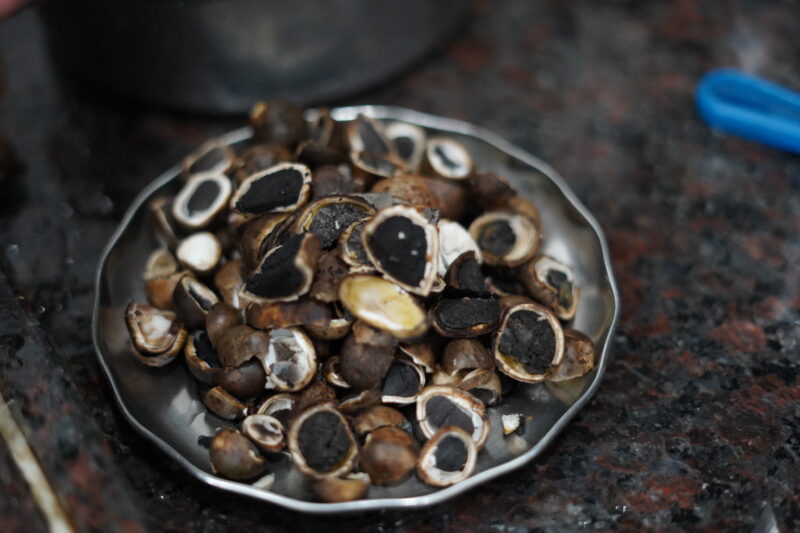
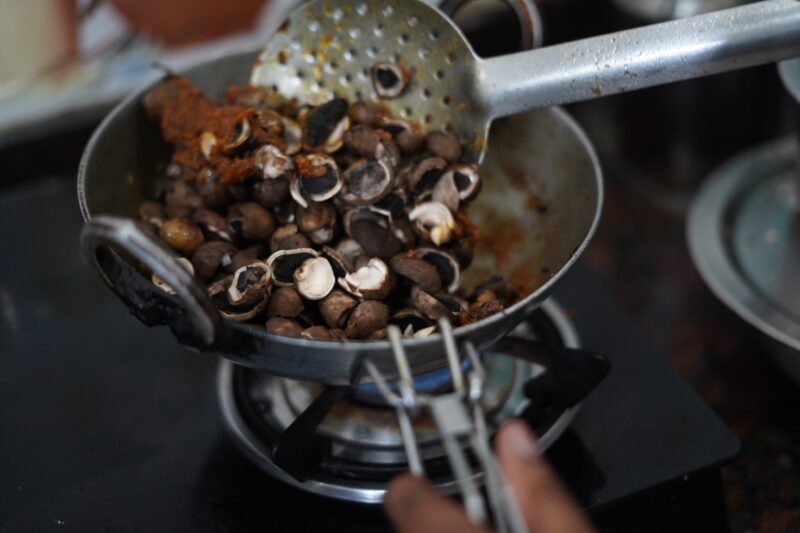
Heat the oil in a kadhai over medium heat. Add the mushrooms and fry until they deepen in colour and turn reddish.
Remove the mushrooms from the kadhai and set aside, leaving the oil in the pan.
Grind the onions, red chillies, and coriander seeds into a paste using a mortar and pestle or a blender.
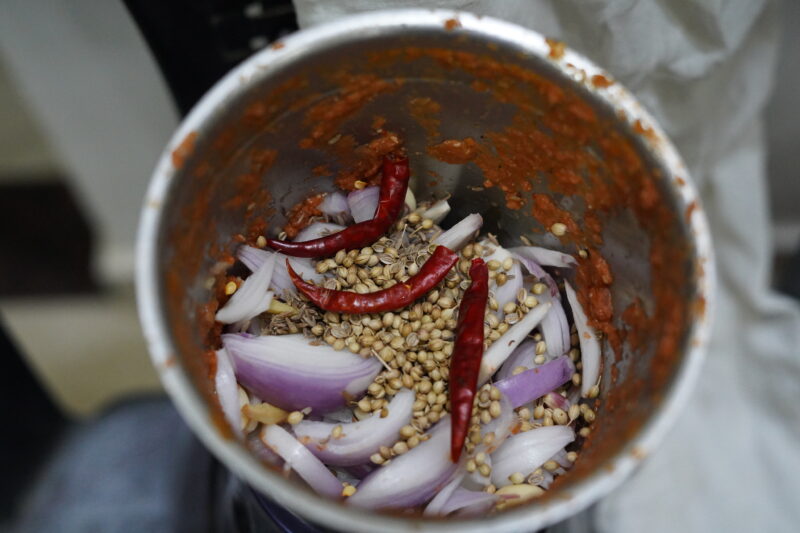
Add the bay leaves, then after 2-3 seconds add the onion-chilli paste to the same oil and fry for a few minutes. Add the salt, turmeric powder, and red chilli powder, stirring to combine.
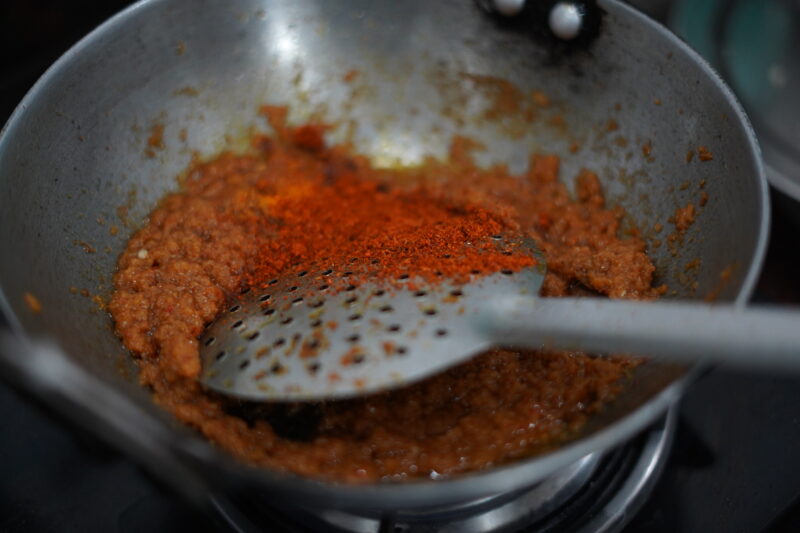
Cook the paste for 10–15 minutes, stirring occasionally, until it turns reddish and the oil separates from the mixture.
Add the fried mushrooms and cook for another 10–15 minutes, stirring occasionally, until the mushrooms are well coated and cooked through.
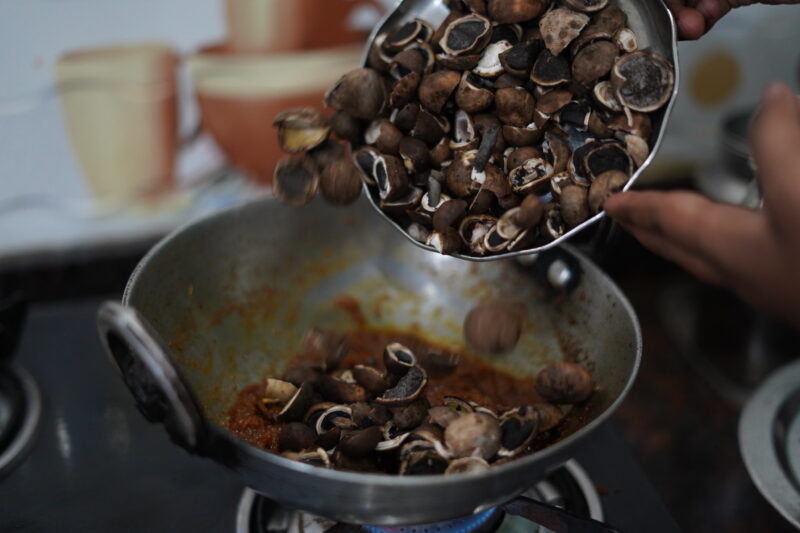
Add water and let it come to a boil.
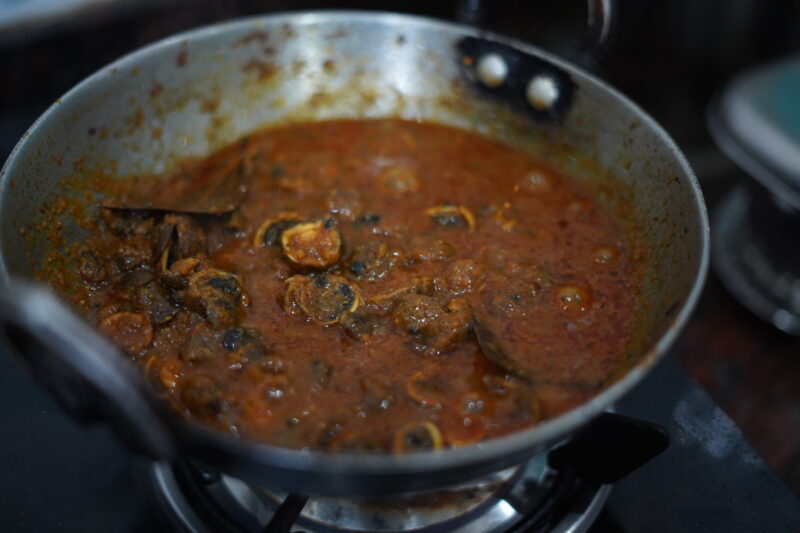
Garnish with coriander leaves and serve hot with rice.
A retired anganwadi worker, Damyanti has worked with Baiga tribes in the Balaghat region in Madhya Pradesh for most of her life.
This recipe has been documented by Nidhi K. and photographed by Kiran Admache.
Nidhi K. is the Writer-Researcher Fellow from Madhya Pradesh for the Woman Farmer Project. She is an independent journalist from Mumbai who writes on travel, food, policy, public health, and the environment. A data nerd, she loves scouring databases to bring stories to the fore. Nidhi is currently learning Italian for fun, and building the courage to start her own newsletter on autism.
Kiran Admache is the Audio-Visual Fellow from Madhya Pradesh for the Woman Farmer Project. A Gond Adivasi filmmaker and engineer from Seoni, Madhya Pradesh, she holds a Bachelor’s degree in Electrical and Electronics Engineering and is an alumna of the Green Hub Central India Fellowship where she learned documentary filmmaking. She has worked with organisations such as PRADAN in Rajasthan, Wild Harvest in Jharkhand, and Samagra Seva in Bihar as a freelance filmmaker. Currently, she is part of CICADA, a tribal filmmakers’ collective, where she co-runs community film clubs.
This story is part of the Woman Farmer Project, a multimedia storytelling initiative led by The Locavore in partnership with the Doc Society Climate Story Kitchen. It aims to build a roadmap for successful collaborations between institutions and innovative grassroots networks who are committed to amplifying climate stories.
The Doc Society supports climate action across the globe by championing independent filmmakers, audio producers, journalists, and artists working alongside impact producers and movement builders to bring more communities into climate conversations to advance climate just and biodiverse futures.
Editor: Ishani Banerjee
Copy editor: Khorshed Deboo
You must be logged in to rate this recipe.

 Login with Google