
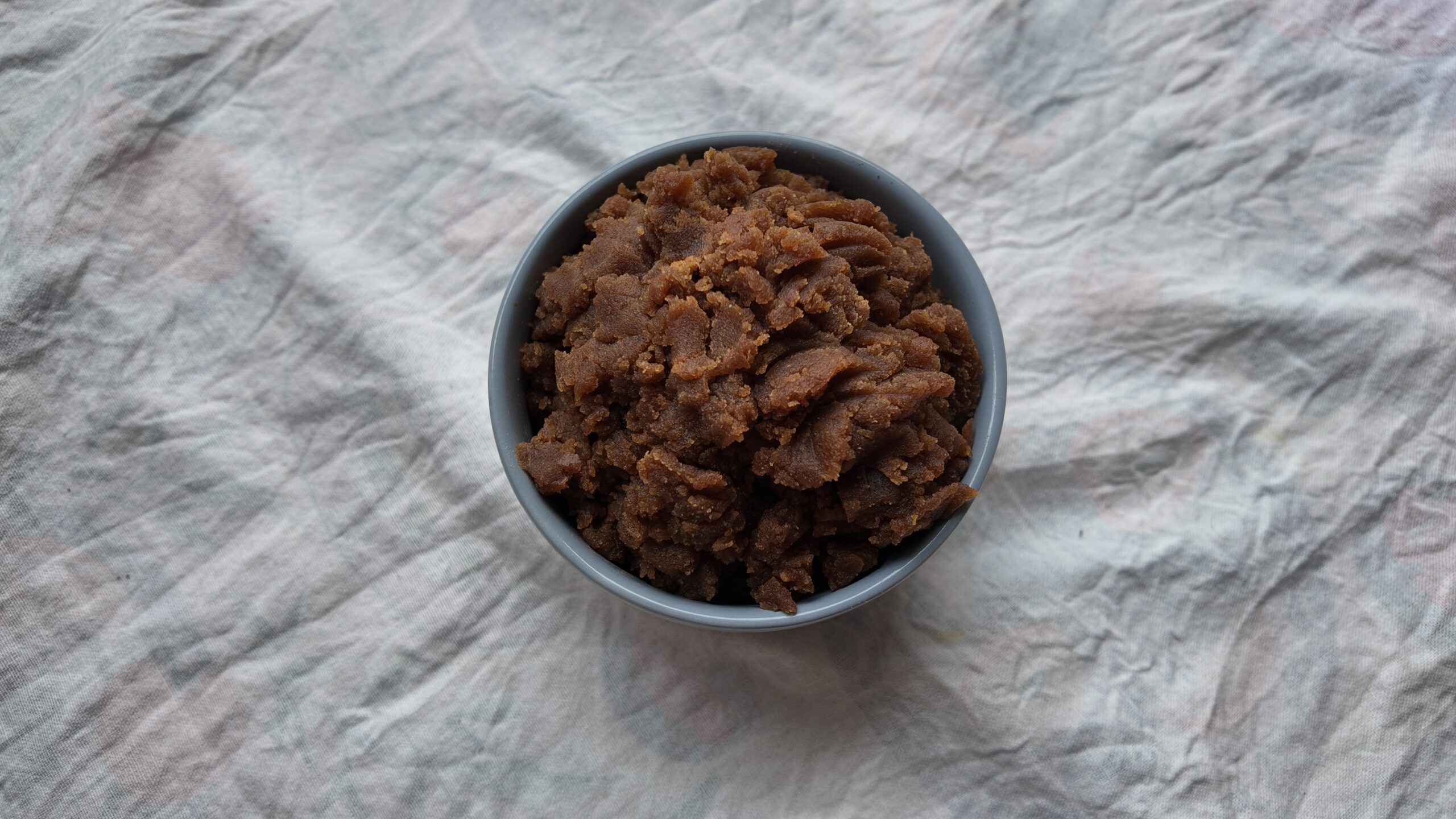
With just three ingredients, sugar, ghee, and aata (flour), Atte ka Halwa is the perfect example of how the most simple ingredients can create a dish that brings immense comfort. Across most regions in north India, the intoxicating aroma of bhuna aata (toasted flour) and ghee lingering in the air, drawing you in until you can no longer resist this decadent treat, is a familiar experience.
Bhanu Roy, a seasoned cook in Tansha Vohra’s home in Bengaluru, has mastered the family’s culinary heritage over 22 years, guided by recipes from Tansha’s grandmother. While Tansha seldom savours such traditional dishes, Bhanu’s Atte ka Halwa transports her back to the cherished flavours of her grandmother’s kitchen. Listen to their memories here.
Ingredients:
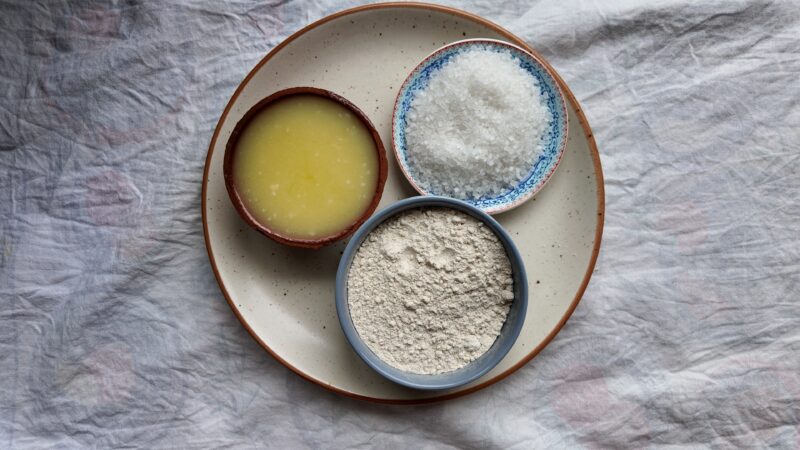
| Sugar | ½ cup |
|---|---|
| Water | 1 cup |
| Whole Wheat Flour (Atta) | 1 cup |
| Ghee | ½ cup |
What You Will Need
Kadhai; sieve; saucepan
Instructions
In a small saucepan, add sugar and water in equal parts. Boil the mixture over medium heat, stirring occasionally, until the sugar is completely dissolved in the water.
Once the sugar is dissolved, remove the saucepan from the heat and set it aside.
In a separate kadhai or a heavy-bottomed pan, add the sieved flour to ensure there are no clumps. Make sure the pan is completely dry before the atta is added, as any moisture would create lumps.
Turn on the heat to medium-low and slowly toast the flour, stirring constantly to avoid burning. Brown the flour for about 5-7 minutes until it starts to take on a light golden colour.
Once the atta is toasted, add ghee to the pan. Stir the mixture well, ensuring that the ghee coats the flour evenly and there are no lumps.
Continue to brown the atta in the ghee for another 5 minutes. Stir the mixture constantly, until you can smell the rich, warm aroma of the halwa.
Slowly pour the prepared sugar water into the flour-and-ghee mixture. It is important to add the sugar water gradually and keep whisking constantly to ensure a smooth texture and prevent lumps from forming.
The mixture will start to thicken as it absorbs the sugar syrup. The halwa should begin to come together and thicken into a smooth consistency.
Continue cooking for 5-10 minutes, until the halwa reaches the desired consistency and is fully cooked through. You’ll know it’s ready when it starts to leave the sides of the pan and has a rich, glossy texture.
Tips:
- Make sure the sugar is fully dissolved and the mixture doesn’t start to caramelise or turn brown. The sugar syrup should be clear.
- It is important to incorporate the sugar syrup slowly into the mixture to prevent it from forming any clumps.
Variations:
For a gluten-free alternative, almond flour can be used instead of whole wheat flour.
Tansha Vohra is a food writer and researcher, with a Master’s in Anthropology of Food from SOAS, London. In 2021, she was a resident at the Serendipity Art Foundation’s Food Lab where she initiated her project ‘Boochi’, an interdisciplinary investigation into edible insects in India. The project was invited to Dubai Expo 2020 and India Art Fair in 2022. If she could, she would grow gills and fins and live under the sea.
Editors: Swati Jena, Ishani Banerjee
Copy Editor: Khorshed Deboo
You must be logged in to rate this recipe.
 Login with Google

Sign in with email