
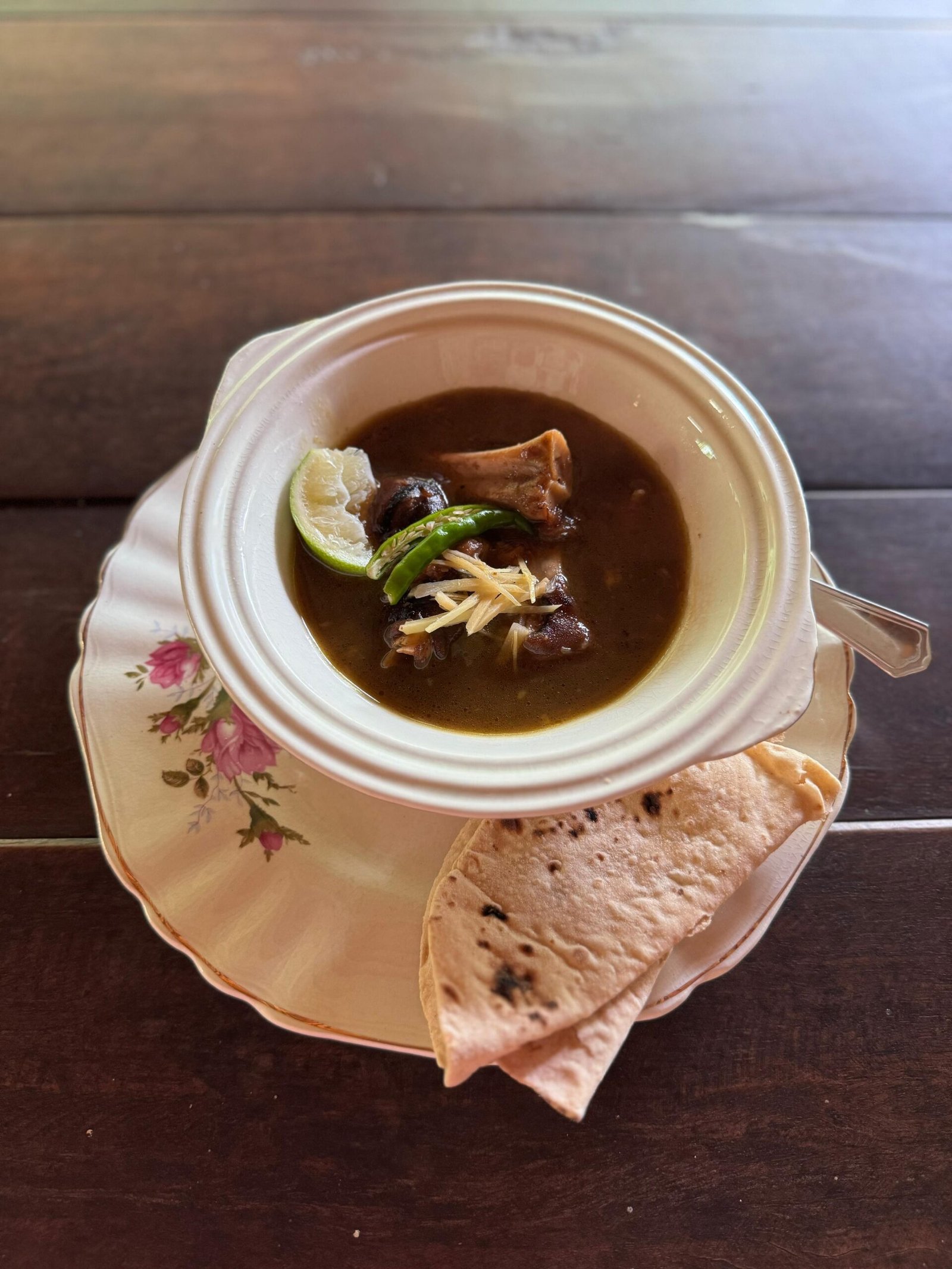
Cooking has always been a constant in Auroni Mookherjee’s life. One of his earliest memories in the kitchen is receiving a frying pan from his grandmother once he was old enough to stand by the stove. He grew up in a family that took its food seriously. His mother, Sheema, kept detailed food journals and wrote occasionally about food, while his father, Aniruddha, learned to identify cuts of meat during regular visits to the butcher with his own father. Aniruddha became so familiar with it that he could tell which shop had the best quality brain or intestines. They often bought meat in bulk, ten kilos at a time, to clean and store for a range of dishes.
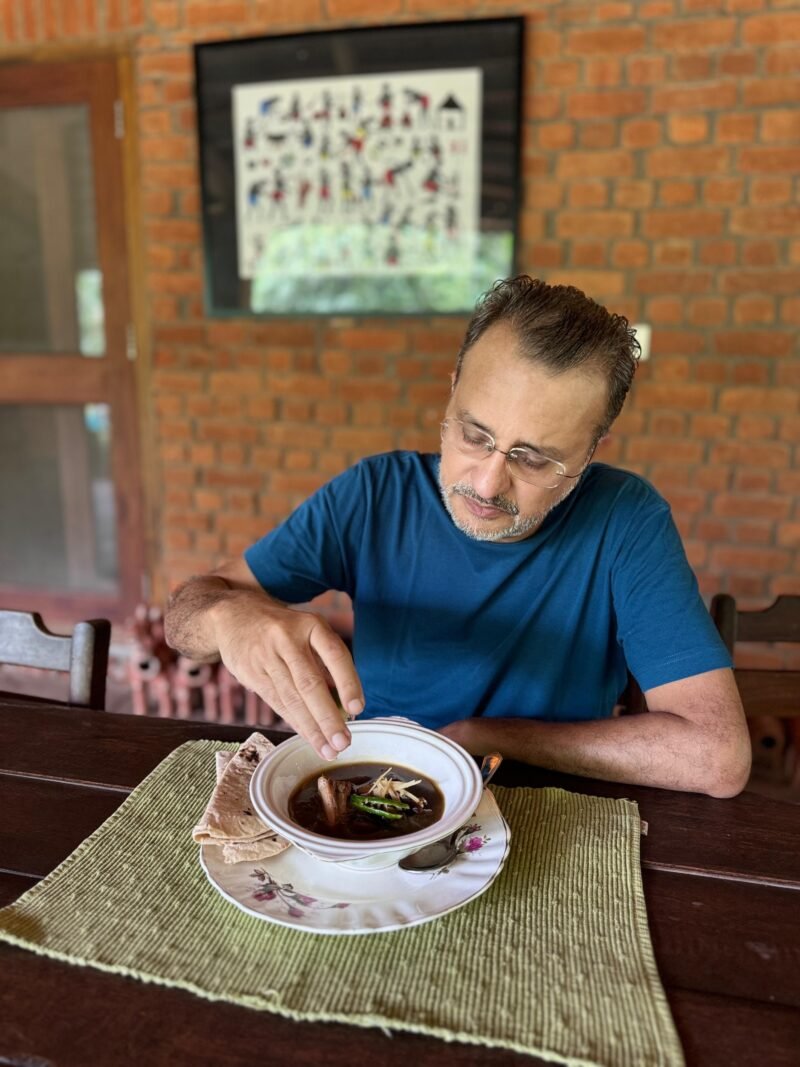
Today, Auroni has a personal library of over 200 books on food and alcohol. The paya soup is Auroni’s father’s recipe, developed slowly over the years with influences from Mughlai cooking. For both of them, drinking the soup on cold winter nights or rainy evenings with their hands wrapped around warm bowls, chewing on the bones, became a ritual that brought them back to the kitchen, and to each other, again and again. Listen to their memories of the paya soup and cooking together here.
| Mutton paya | 1 kilogram |
|---|
For the Garam Masala
| Black cardamom | 2 pieces |
|---|---|
| Cinnamon | 3 sticks |
| Cloves | 4-5 pieces |
| Peppercorns | 8-10 pieces |
| Fennel seeds | ½ teaspoon |
| Cumin seeds | ½ teaspoon |
| Yoghurt or Yoghurt water | 1 teaspoon, or as needed |
For the first paste
| Onion, chopped | ¼ of a medium onion |
|---|---|
| Ginger, chopped | ½-inch piece |
| Garlic, chopped | 3-4 cloves |
| Green chillies | 1-2 whole chilies (adjust based on heat preference) |
For the second paste
| Onion | ¼ of an onion |
|---|---|
| Coriander stems | a handful |
| Salt | to taste |
|---|---|
| Oil | as needed |
| Water | as needed |
What You Will Need
Pressure cooker, Mixer grinder or mortar and pestle, frying pan or grill
Instructions
Start by thoroughly washing the mutton paya under running water. If the paya are large, break each one into three smaller pieces to make them easier to cook and handle—you can ask your butcher to do this for you, if needed.
Place the pieces in a dry pan or directly on a grill and roast them over medium heat until they develop a light brown colour.
Next, dry-roast the whole spices—black cardamom, cinnamon, cloves, peppercorns, fennel seeds, and cumin seeds in a clean pan over low heat.
Stir continuously and roast until the spices become fragrant, which should take around 2-3 minutes. Once they’ve cooled slightly, grind them into a fine powder using a mixer grinder or a mortar and pestle. Mix this spice powder with thick curd (dahi) or yoghurt water to create a smooth paste. Set this aside; it will be added later in the cooking process.
Now, prepare the first paste. In a blender or mixer grinder, grind together a small quantity of onion, ginger, garlic, and green chillies until smooth. You should end up with about 2-3 tablespoons of paste. Keep this aside.
To make the second paste, thinly slice one medium-sized onion and fry it in a small amount of oil over medium heat until golden brown; this should take about 10–12 minutes.
Let the onions cool, then grind them into a separate smooth paste and set aside.
Finally, wash a few coriander stems (including the roots), and grind them into a smooth paste as well. You will need about two teaspoons of this for the final stage of cooking.
In a large pressure cooker, heat a few tablespoons of oil over medium heat. Add 2-3 tablespoons of the onion, ginger, garlic, and green chilli paste. Sauté the paste, stirring often, until it turns golden brown and the oil begins to separate.
Add the roasted mutton paya pieces to the cooker and fry them in the masala for 10–15 minutes, stirring occasionally so that they are well coated. Add salt to taste, followed by 2-3 cups of water. If you prefer, you can also add enough water to fully cover the paya, the consistency can be adjusted later.
Close the lid of the pressure cooker and cook on a low flame. While pressure cookers usually cook food faster, in this case, you’re aiming for a long, slow cook to extract maximum gelatin and flavour from the bones. Let it cook for about 2-3 hours on low heat. The soup will slowly thicken and become rich and gelatinous.
After this slow cooking, open the cooker and add the garam masala-curd paste you had prepared earlier. Stir well to combine, then cook the soup uncovered for another 2 hours, allowing it to reduce and deepen in flavour. Stir occasionally to prevent sticking, and taste for seasoning at this stage.
About 15 minutes before you’re ready to take the soup off the heat, add 2teaspoons each of the brown onion paste and the coriander stem paste. Stir them in and let the soup simmer for the remaining time, letting all the flavours come together.
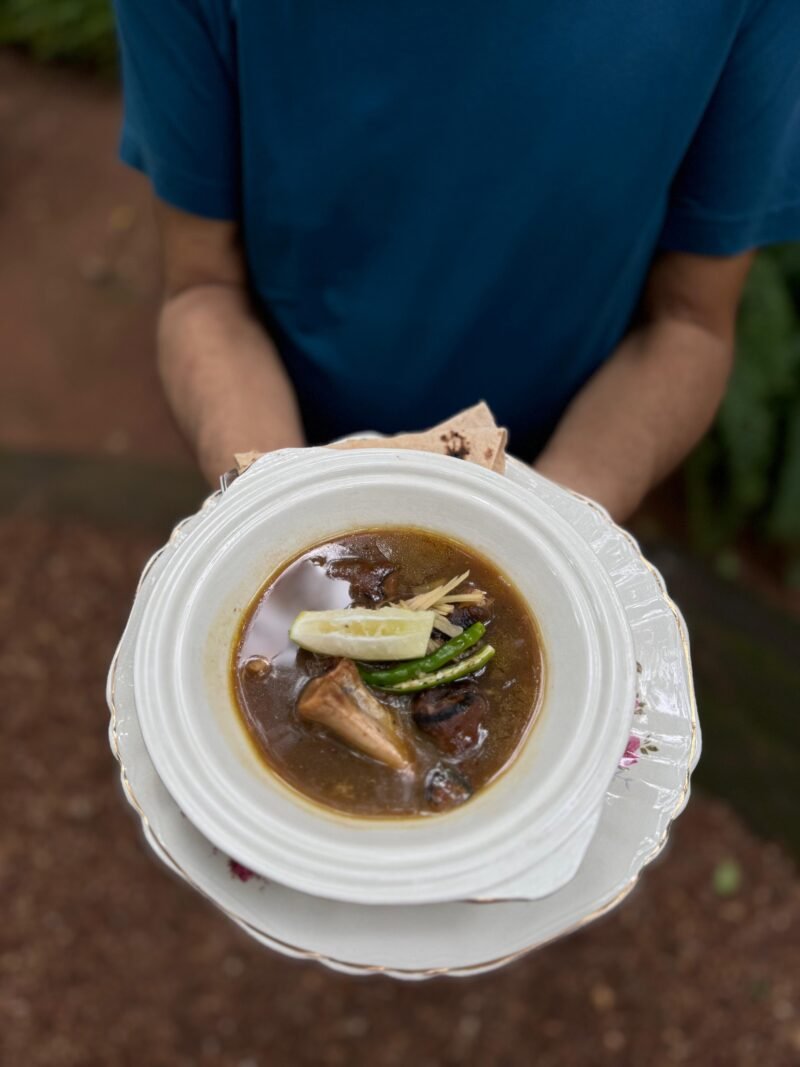
The mutton paya soup is now ready to serve. It is best enjoyed with khameeri roti or plain roti.
Tips
The highlight of this recipe is in the rich flavor imparted by the fat and gelatin under the skin of the paya, so be sure to clean it carefully.
Variations
If the means allow, the best way to cook this soup is on open fire embers overnight. The gelatin and tendons slowly break down, allowing the soup to become more flavourful.
A former copywriter and creative professional who left the advertising world to become a chef, Auroni (@auronithologist) now celebrates and champions the city of Kolkata and the rich culinary heritage of Bengal.
You must be logged in to rate this recipe.
 Login with Google
Sign in with email