
Sreedevi Lakshmi Kutty recollects how growing up in Kerala in the 1970s and 80s, chakka kuru, or jackfruit seeds, were hard to come by, and became abundant only during the heavy monsoons, following the summer jackfruit bounty.
It was also a period when Malayalis usually ate food preserved from the summer—food that was sun-dried, pickled, and stored. It ranged from mangoes in brine, dried fish, and jackfruit seeds to ripe jackfruit preserves, mango pickles, and sun-dried vegetables.
Jackfruit seeds were one of Sreedevi’s favourite monsoon ingredients, perhaps because they were cooked so often at home. They carried a flavour profile of plenitude: creamy, slightly sweet, with a consistency similar to that of a potato, when cooked, and could transform lunches into a delightful affair.
The rainy days allowed time for the processes of cleaning, cutting, and cooking the seeds. Cleaning jackfruit seeds was time-consuming, thanks to its two layers of skin, the thin brown inner membrane being particularly stubborn.
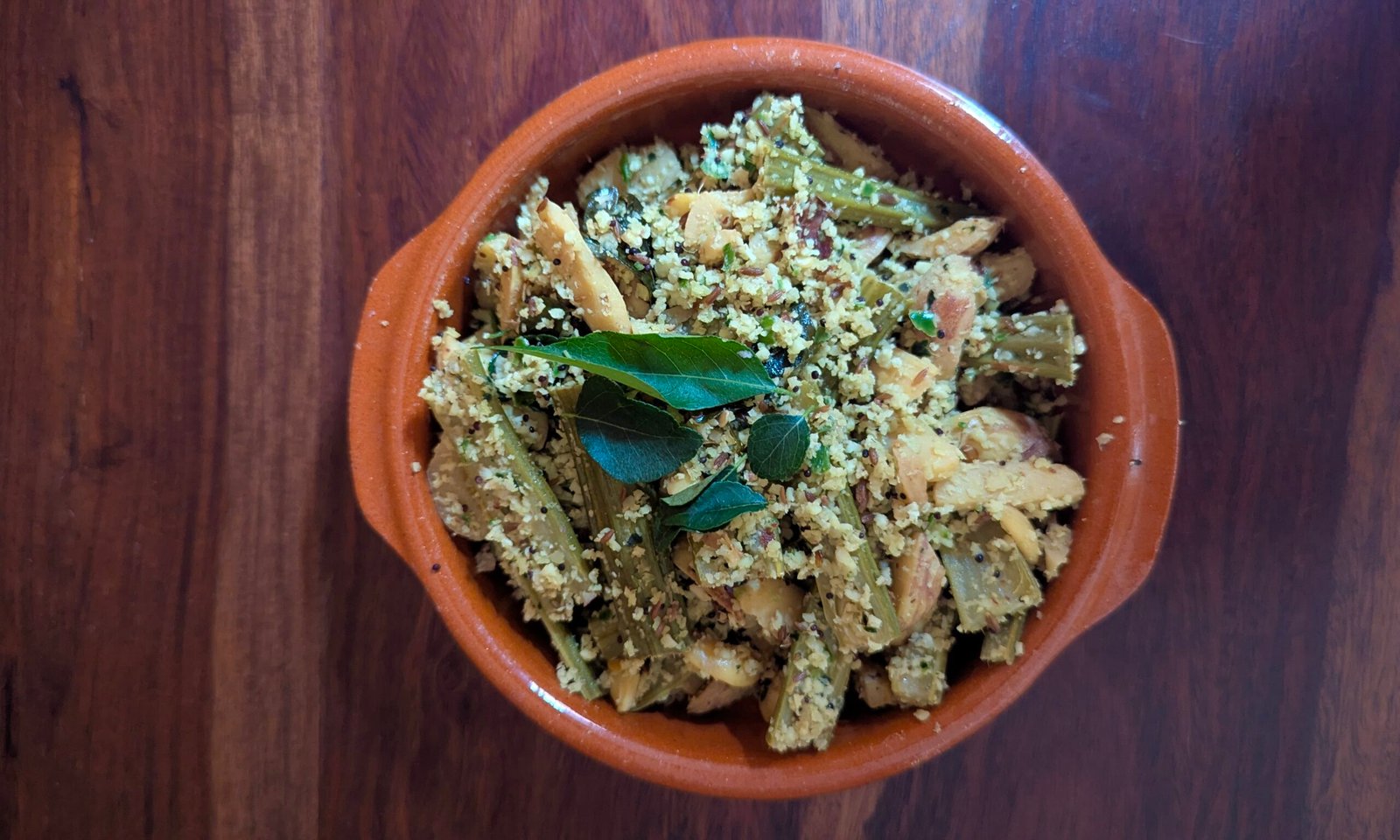
At home, a number of dishes were made with chakka kuru—thoran (a dry preparation comprising vegetables, coconut, cumin, and green chillies), theeyal (made by roasting coconut and spices into a paste, which is then cooked in a gravy) or simply boiled and eaten as a snack.
“Over the years, these seasonal recipes have all but disappeared; everything is now available even during the monsoon. So the recipes that use ‘lesser’ parts of a vegetable have mostly disappeared in urban and even rural areas,” shares Sreedevi. Over the last few years, she has restarted the practice of eating jackfruit in the summer and saving the seeds to make chakka kuru in the monsoon.
Here, Sreedevi shares her favourite thoran recipe, comprising chakka kuru and murungakai (drumstick).
| Jackfruit seeds | 1 cup |
|---|---|
| Drumsticks | 2 pieces |
| Turmeric powder | ½ teaspoon |
| Salt | to taste |
| Grated coconut | ½ cup |
| Green chillies | 2–3 pieces |
| Cumin seeds (jeera) | 1 teaspoon |
| Garlic pods | 3 pieces |
| Curry leaves | 2 sprigs |
| Turmeric powder | ¼ teaspoon |
| Mustard seeds | 1 teaspoon |
| Dried red chillies | 2 pieces |
| Curry leaves | 1 sprig |
| Oil | as needed |
What You Will Need
Mixer grinder or mortar and pestle; kadhai or deep-frying pan; small pan (for tempering)

Instructions
Clean the jackfruit seeds by washing them thoroughly and slitting each seed lengthwise.


Wash and cut the drumsticks into 2-inch pieces, then slit them lengthwise.

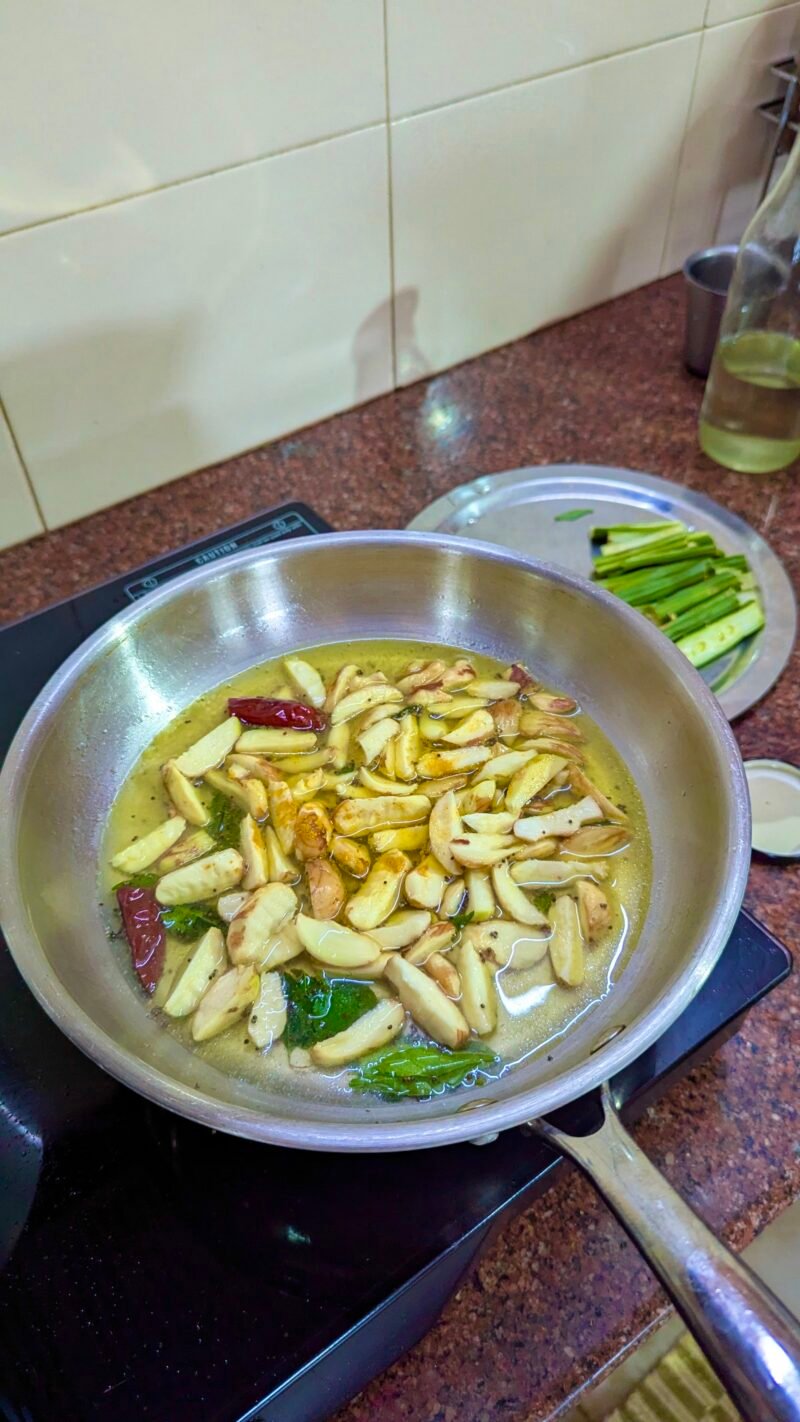
In a kadhai or deep-frying pan, add the jackfruit seeds, ½ teaspoon turmeric powder, salt, and enough water to cover the ingredients. Cook on medium heat until the seeds are half-done (they should feel tender but not fully cooked).
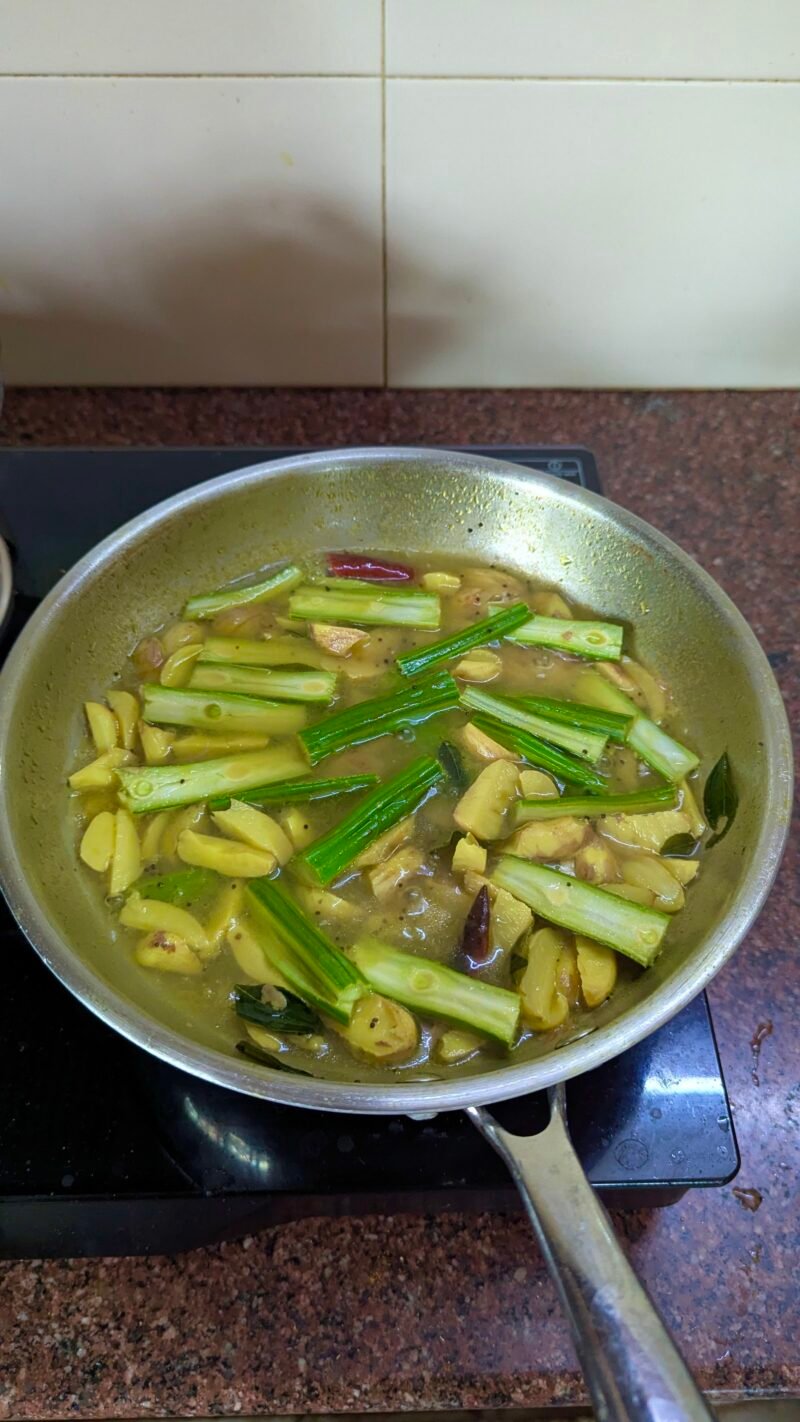
Add the drumstick pieces to the same pan and continue cooking until both the jackfruit seeds and drumsticks are cooked through.
While the jackfruit seeds and drumsticks are cooking, in a mixer grinder (or using a mortar and pestle), coarsely grind grated coconut, green chillies, cumin seeds, garlic pods, curry leaves, and ¼ teaspoon turmeric powder. Use just a splash of water, if needed, to bring the mix together.
Once the vegetables are cooked, add the coarsely ground coconut paste along with salt to the pan.
Stir gently and cook on low heat for 3–4 minutes, until the raw smell of the coconut paste disappears. The mixture should be fragrant and lightly thickened.
In a separate small pan, heat 1 tablespoon of oil to make the tempering. Add mustard seeds and let them splutter.
Add dried red chillies and curry leaves, frying briefly until aromatic.
Pour this tempering over the jackfruit seed and drumstick curry. Mix well and serve hot.
Tips:
- Jackfruit seeds have two layers of skin. The thin brown inner skin can be stubborn—soaking the seeds in hot water for 10–15 minutes makes peeling easier.
- Jackfruit seeds take longer to cook than drumsticks. Always cook them partially first before adding the drumsticks, to avoid the drumsticks becoming mushy.
- Keep the coconut paste coarse, not smooth. This gives the thoran its texture.
- For best flavour, use coconut oil for tempering.
Sreedevi Lakshmi Kutty is the co-founder of Bio Basics, a venture committed to safe, organic whole foods, decent livelihoods for farmers, and the preservation of our natural environment, including heritage grains. She spends her time both on farms and in constant dialogue with farmers and consumers, experimenting with new grains and recipes. Read more about Bio Basics here.
You must be logged in to rate this recipe.
 Login with Google
Sign in with email