
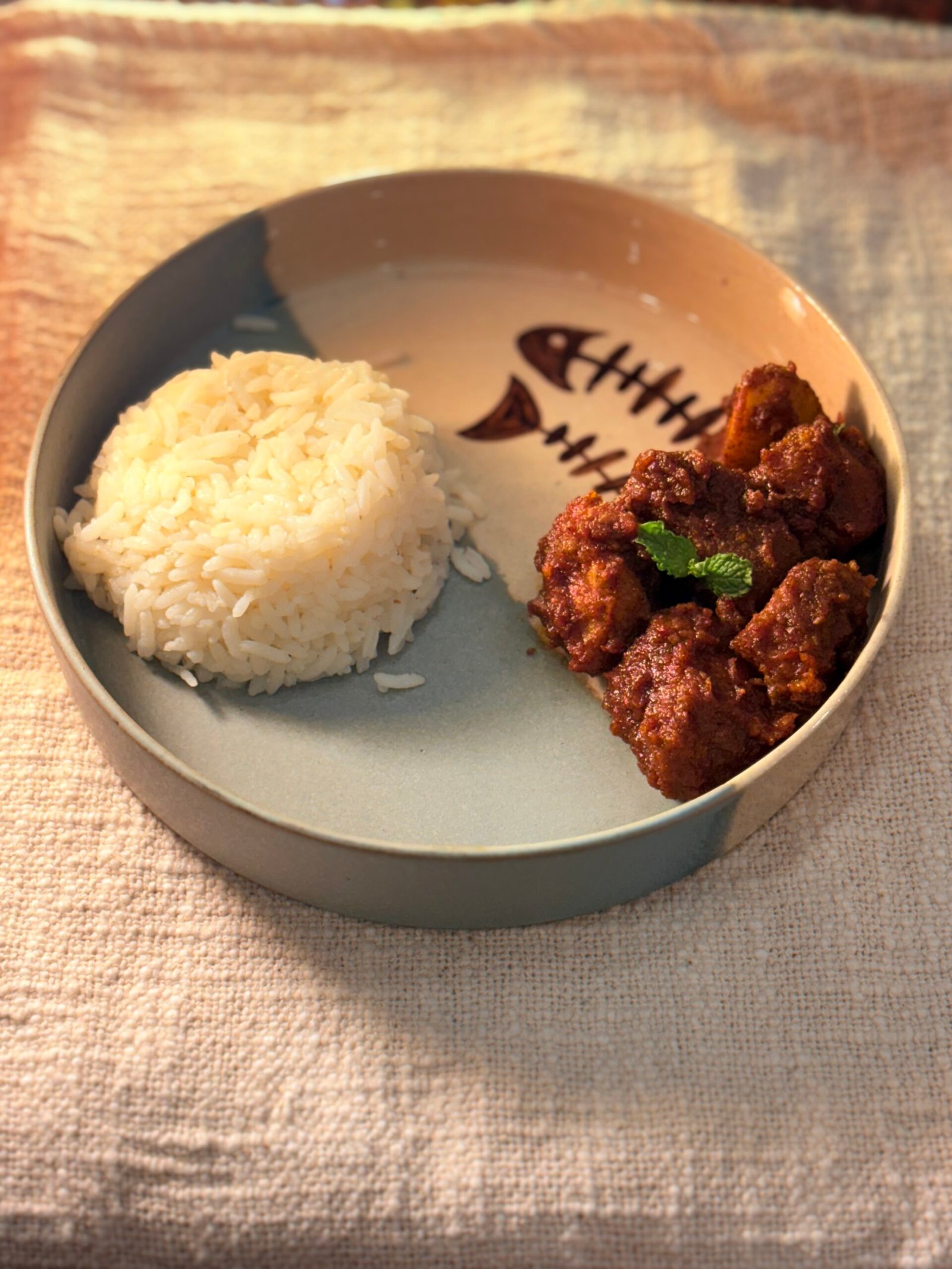
Of half Mangalorean and half Goan heritage, for Dhruv Mark Mendes, family gatherings were always shrouded in the sweet, savoury smell of cooked pork. From the spicy, tangy aroma of pork sorpotel to the unmistakable sizzle of Goan sausages, pork has somehow become the backbone of Dhruv’s family’s celebratory table.
This particular recipe is no different. Dhruv believes it originally came from his grand-aunt Melba, though she might have inherited it from the generation before her. Like most truly treasured family dishes, no one really knows where it started. One of his earliest and fondest memories in the kitchen revolves around this dish. When Dhruv was around seven or eight years old, his father declared that he’d be his “sous chef” for the day.
What that really meant, of course, was that Dhruv did all the grunt work—peeling garlic, deseeding sticky dates, grinding spice pastes by hand, and fetching whatever his dad barked out from across the kitchen. At the time, he didn’t quite understand the magic of what they were making. What he knew was that he was elbow-deep in ingredients, covered in spice dust and garlic skins, and was loving every minute of it.
Looking back Dhruv realises he was basically free labour—unpaid, untrained, and easily bribed with a lick of the spoon. But somewhere in the middle of all that chopping and grinding, something stuck. Maybe it was the rhythm of the kitchen, or the satisfaction of seeing raw ingredients transformed into something his family would gather around and devour with pure joy. Whatever it was, those moments lit the first spark of what Dhruv now calls his culinary path.
| Pork, cut into 3 x 3-inch pieces | 1 kilogram |
|---|---|
| Turmeric powder | 1 teaspoon |
| Salt | to taste |
For the Masala:
| Byadagi chillies/ Kashmiri chillies | 15 pieces |
|---|---|
| Peppercorns | 10 pieces |
| Onions, roughly chopped | 3, medium |
| Dates, pitted and deseeded | 20 pieces |
| Cloves | 3 pieces |
| Cinnamon | 1-inch piece |
| Tamarind, soaked (or vinegar) | 1 marble-sized ball / to taste |
| Cumin seeds | ½ teaspoon |
| Garlic, peeled | ½ pod |
| Fresh mint leaves | 10 leaves |
| Water | as needed |
|---|---|
| Oil / fat from pork-frying | 1 tablespoon |
| Potatoes, cut into 1-inch pieces and fried | 2 pieces |
| Jaggery (optional) | to taste |
What You Will Need
Mixer-grinder or blender; Large frying pan or kadhai; Non-stick saucepan or heavy-bottomed pan with lid (to simmer the pork in the masala until tender)
Instructions
Wash the pork pieces thoroughly and drain out the excess water. Rub them well with about half a teaspoon of turmeric powder and a teaspoon of salt. Set the pork aside to marinate for at least 15-20 minutes while you prepare the masala.
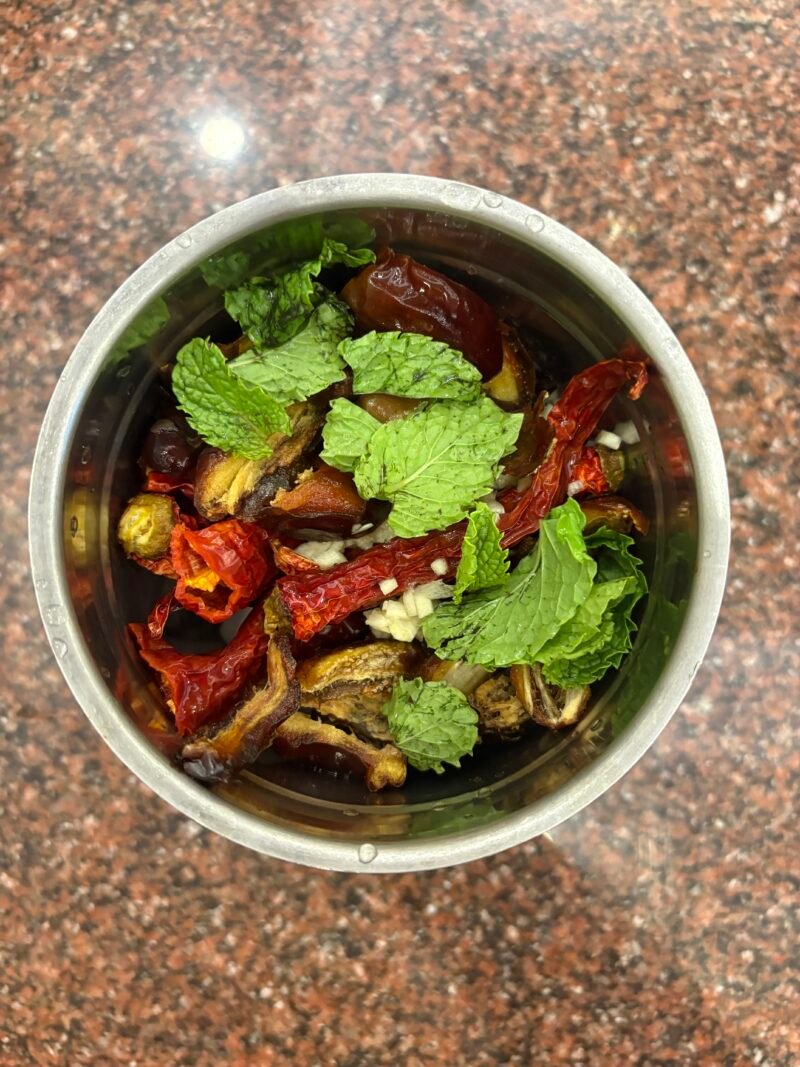
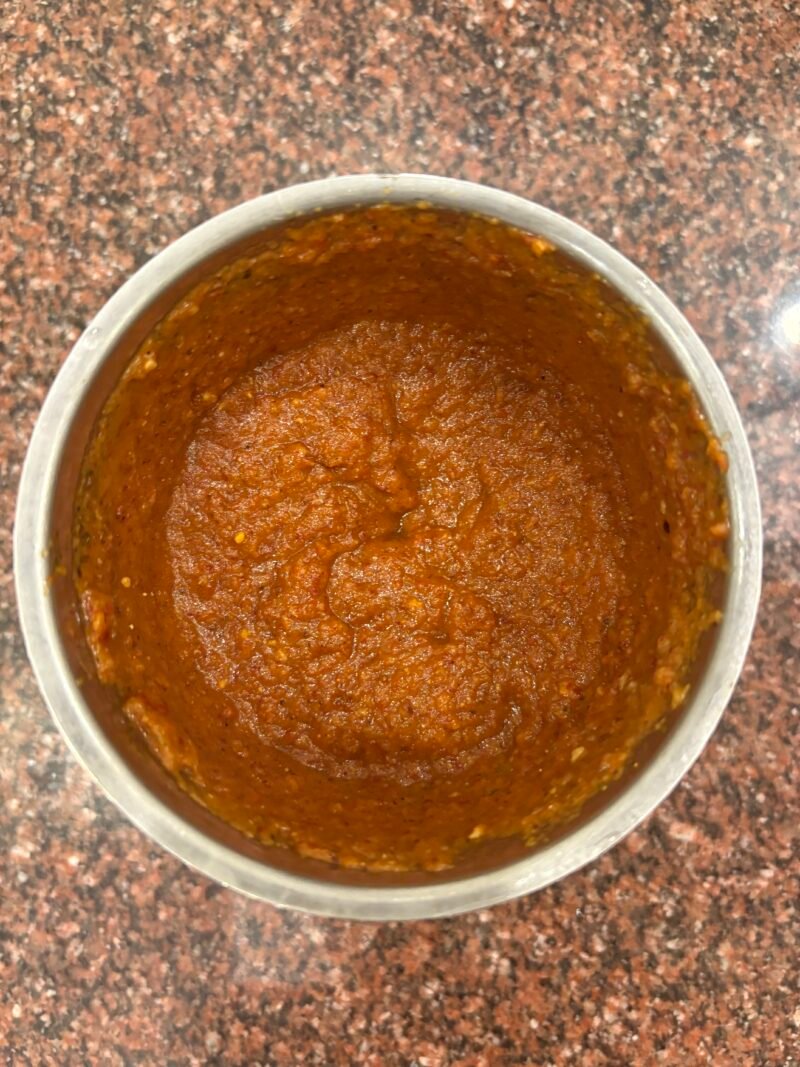
To make the masala paste, first soak the dried red chillies in warm water for about 10-15 minutes, until they soften and become pliable. Drain them and place them into a mixer-grinder along with the peppercorns, chopped onions, deseeded dates, cloves, cinnamon stick, tamarind pulp (or vinegar), cumin seeds, garlic cloves, and mint leaves. Add 2-3 tablespoons of water and grind until you have a smooth, thick, deep reddish-brown paste.
Next, heat a large, heavy-bottomed pan over medium flame. Add the pork pieces in a single layer and fry them, turning every couple of minutes, until they turn golden brown on all sides. This should take about 6-8 minutes. As the pork cooks, you will see some of its fat rendering into the pan. Remove the browned pork pieces and set them aside, saving the rendered fat to use later.
In the same pan, add one tablespoon of oil, or use the pork fat. Spoon in the ground masala paste and fry it over medium flame for about 5 minutes, stirring continuously so it does not stick to the bottom. You will notice the smell of the raw onion fading, the colour deepening, and the paste beginning to thicken slightly. If it sticks too quickly, splash in a tablespoon of water to loosen it.
Return the fried pork pieces to the pan and stir well so the meat is evenly coated with the masala.
Lower the flame to a gentle simmer, add about half a cup of water and a little salt, cover the pan, and let the pork cook slowly until tender. This can take anywhere between 45 minutes to an hour, depending on the cut of meat. Add more water in small splashes if the masala begins to stick to the pan.
The final consistency should be thick and should cling to the pork.
Taste the dish and adjust the salt if needed. If you prefer a slight sweetness to balance the spice, stir in a small piece of jaggery until it dissolves into the gravy. At this stage, you can also add fried potato cubes, gently mixing them in so they soak up the masala.
Pork Indad is best served warm, alongside plain rice or soft pav to mop up the gravy.
Tips:
- Don’t overcrowd the pan while frying the pork. Fry the pieces in batches if needed so they brown evenly instead of steaming.
- Frying the paste properly is key. Stir continuously over medium heat until the raw smell disappears.
- The final gravy should be thick but not dry. Add water little by little if it becomes too thick while cooking.
Dhruv Mark Mendens is a chef at Shangri-La Hotels, Singapore. Outside the kitchen, he finds joy in riding his bike to remote corners, keeping his knives sharp, and listening to ’80s rock.
You must be logged in to rate this recipe.
 Login with Google
Sign in with email