
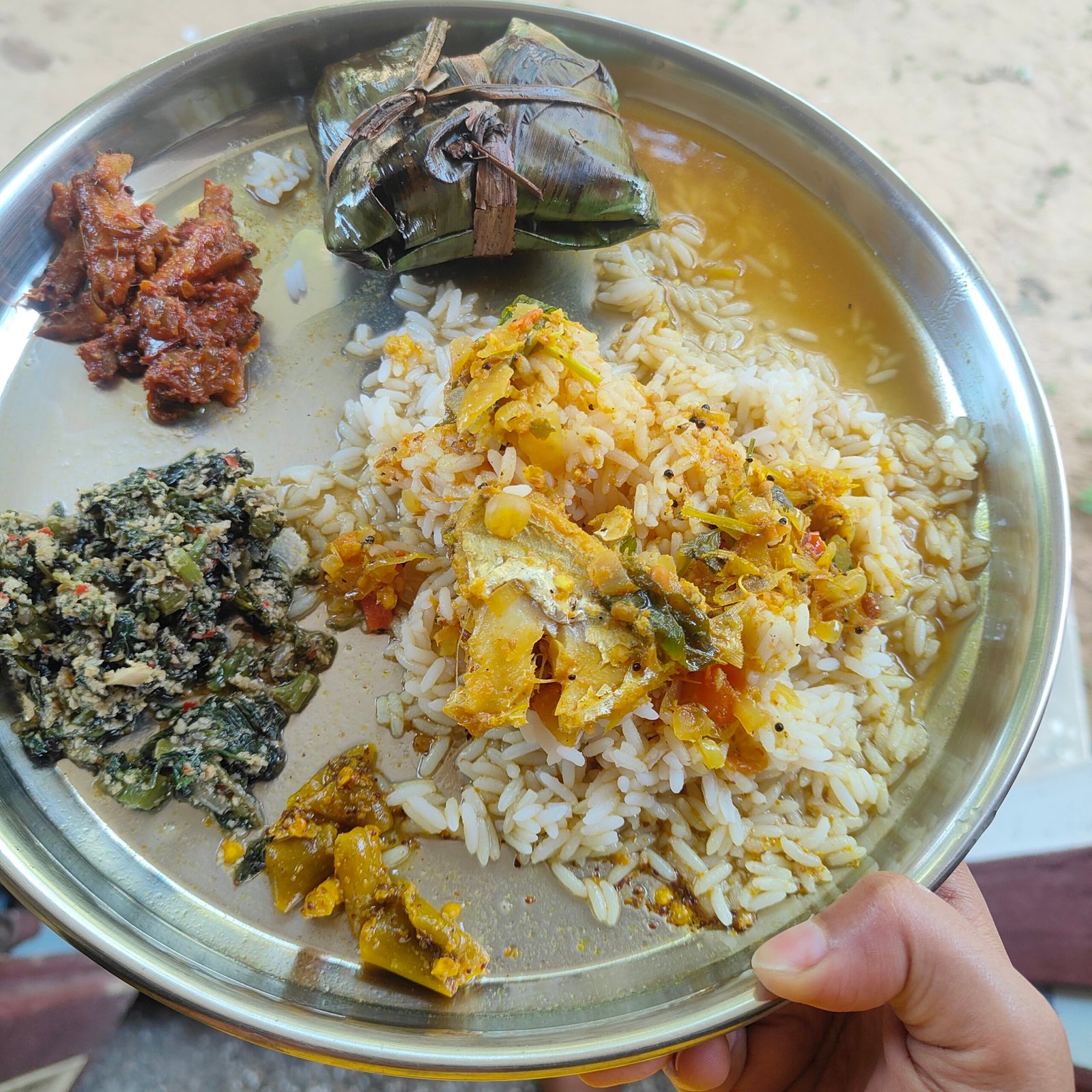
A staple in most coastal kitchens in Tamil Nadu, Karal Karuvadu Rasam is made using locally sourced ingredients, with every household in Rameshwaram having its own version. Learned through years of everyday cooking, Kalaimahal (also known as Kalai)—who has been working at Dakshin Foundation’s field station since 2023—shares her own version of the recipe. The use of locally sourced karal karuvadu (dried ponyfish) reflects a tradition where dried fish is not a substitute but a choice, valued for its comfort and affordability. At a time when global seafood markets are reshaping coastal foodscapes, this Karal Karuvadu Rasam holds on to the flavour, memory, and the quiet resistance of fishing communities.
For the Kuzhumbu milagai thool:
| Raw turmeric root | 100 grams |
|---|---|
| Fennel seeds | 50 grams |
| Cumin seeds | 50 grams |
| Fenugreek seeds | 25 grams |
| Peppercorns | 25 grams |
| Cinnamon, cloves, cardamom, bay leaves and poppy seeds (kasa kasa) | 50 grams (combined) |
| Raw asafoetida | 25 grams |
| Split bengal gram/Chana dal (Kadalai parappu) | 150 grams |
| Coriander seeds | 1 kilogram |
| Dried red chilli | 750 grams |
| Rice, toasted (optional) | 50 grams |
| Curry leaves, dried | a handful |
For the ground paste:
| Cumin seeds | ½ teaspoon |
|---|---|
| Black peppercorns | 1 teaspoon |
| Ginger | 1-inch piece |
| Garlic cloves | 15-20 |
| Green chilli | 1 |
For the rasam:
| Tamarind | lime-sized ball |
|---|---|
| Karal karuvadu (dried ponyfish) | 13-14 pieces |
| Tomatoes | 2, medium |
| Shallots, peeled | 20 |
| Turmeric powder | 1 teaspoon |
| Kuzhambu milagai thool | 5 teaspoons |
| Salt | to taste |
| Refined oil | 2-3 teaspoon |
| Mustard seeds | 1 teaspoon |
| Fenugreek seeds | ½ teaspoon |
| Curry leaves | 1-2 sprigs |
| Dried red chilies | 2 |
| Coriander leaves, chopped | a handful |
| Water | 2-3 cups |
What You Will Need
Spice-grinder, mortar and pestle, colander/ big sieve, heavy-bottomed pot or kadhai, a big jar to store the spice blend
Instructions
For making the Kuzhumbu milagai thool:
(Kuzhumbu milagai thool is a spice blend used for kuzhumbu or curry, and rasam, in South India):
Wash the raw turmeric roots thoroughly and wipe them dry using a clean cloth.
Sun-dry the turmeric along with all the other ingredients until they are completely dry and free of moisture. This step is essential to ensure easy grinding and a longer shelf life.
Once fully dried, grind all the ingredients together in batches to make a fine powder.
Allow the freshly ground spice powder to cool completely before transferring it to an airtight container.
Store the Kuzhumbu milagai thool in a cool, dry place and use it within six months for the best flavour.
Optional variation:
Grind all the ingredients except the dried red chillies and store this as a mild base masala. Grind the dried red chillies separately and add them at the cooking stage according to the level of heat required.
Measure and keep 5 teaspoons of this spice blend to use in the rasam.
For making the ground paste:
Grind the cumin seeds, black peppercorns, ginger, garlic, and green chilli with a little water to make a coarse paste, and set it aside. This can be done using a mortar-pestle or a grinder.
Soak the tamarind in hot water for 10-15 minutes, then squeeze it well to extract the pulp and discard the fibres. Set the tamarind water aside.
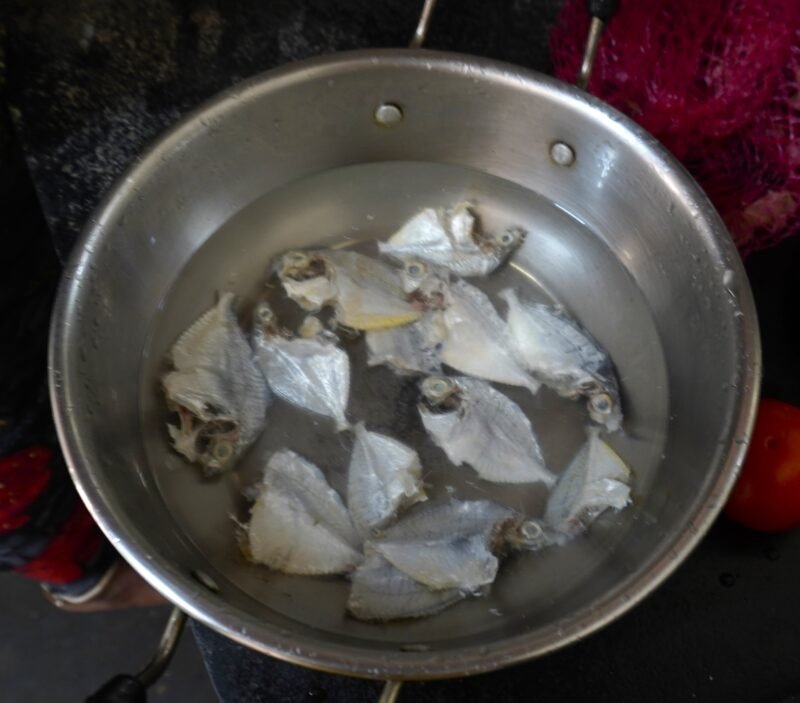
Rinse the dried ponyfish under running water 2-3 times to remove excess salt, then drain and keep aside.
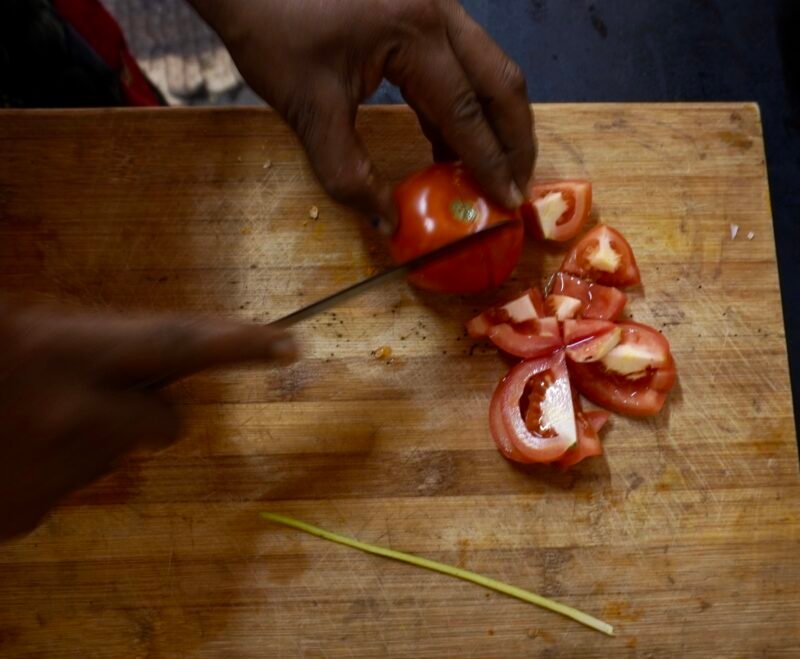
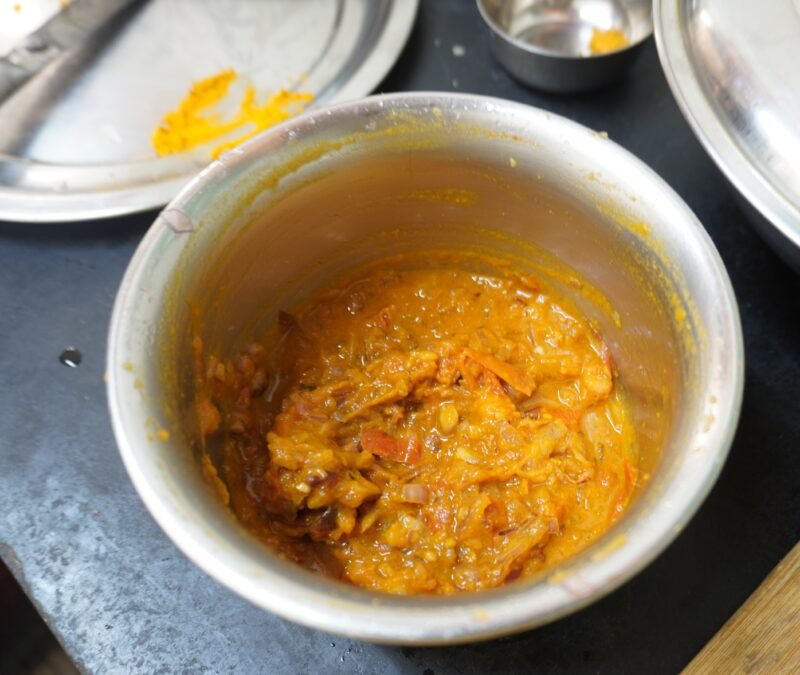
Roughly chop the tomatoes and shallots and place them in a bowl. Add the turmeric powder, kuzhumbu milagai thool, and salt, then use your hands to mash everything together until the tomatoes release their juices.
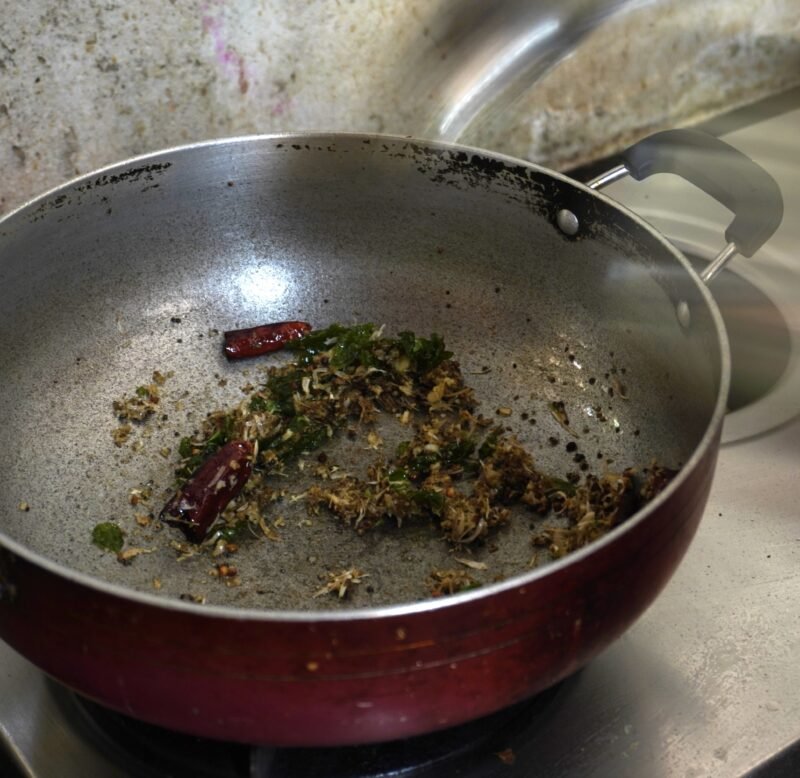
Heat the oil in a deep heavy-bottomed pot over medium heat, then add the mustard seeds and fenugreek seeds. Once the mustard seeds begin to splutter, add the curry leaves and dried red chillies.
Add the ground paste to the pot and sauté for about 1 minute, stirring continuously, until the mixture becomes aromatic.
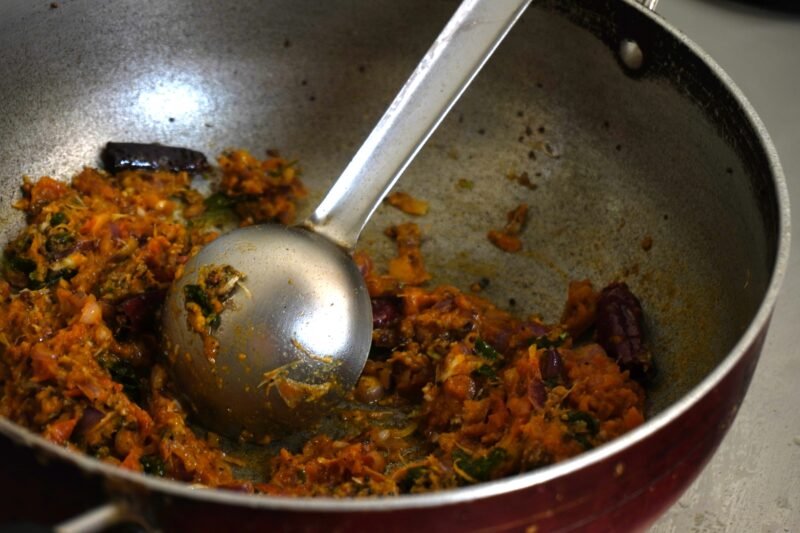
Add the crushed tomato-and-shallot mixture to the pot and cook for 3-4 minutes until it softens slightly.
Pour in the tamarind water, add the chopped coriander leaves, and add 2-3 cups of water, depending on how thin you prefer the rasam.
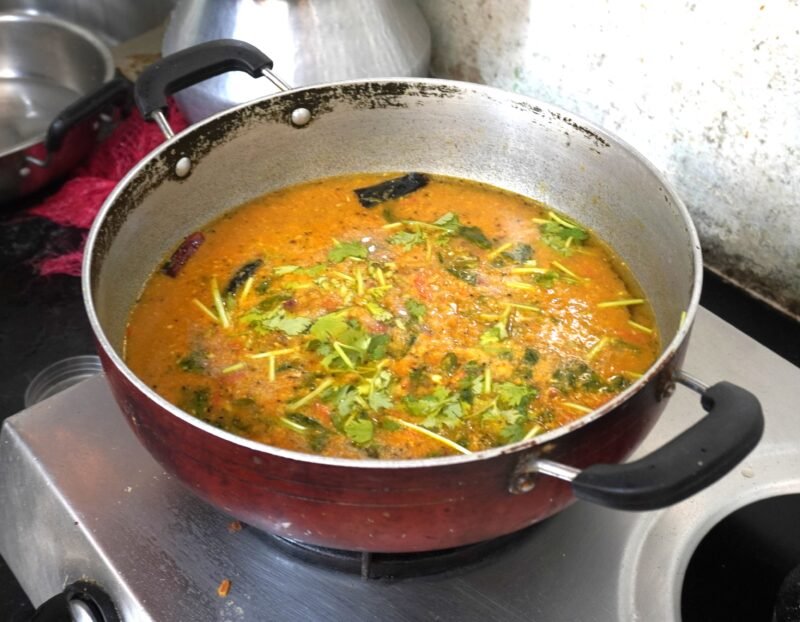
Allow the rasam to simmer gently on the stove, and add the rinsed, dried ponyfish before the rasam reaches a rolling boil.
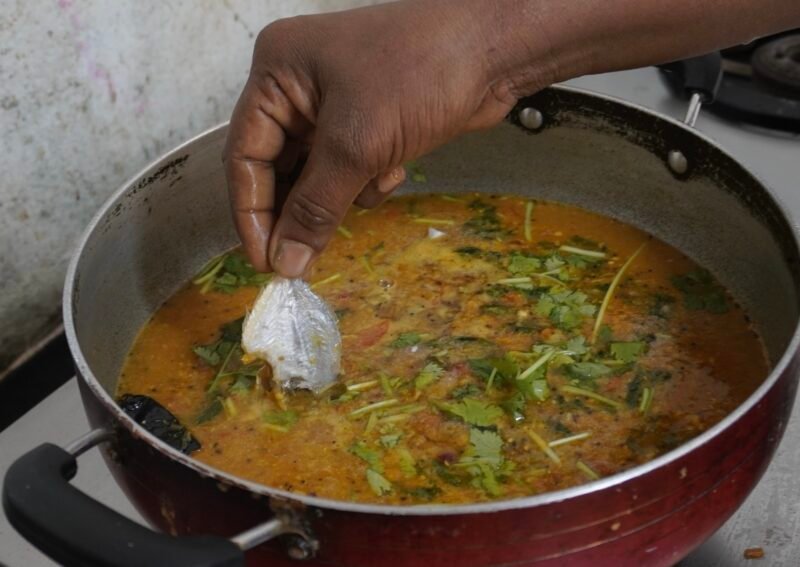
Let the rasam cook gently for 5-7 minutes, allowing the fish to soften and the flavours to come together. Taste and adjust the salt if required.
Bring the rasam to a final boil, turn off the heat, and serve hot with steamed rice.
Tips:
- Ensure all ingredients for the Kuzhumbu milagai thool are completely dry before grinding, as even small amounts of moisture can cause the spice powder to spoil quickly.
- Grind the spice blend in small batches.
- Allow freshly ground masala to cool fully before storing, as trapping residual heat can create condensation inside the container.
- Always rinse dried fish thoroughly—this removes excess salt and improves the final balance of the rasam.
- Add the dried fish only after the rasam has begun to simmer, but before it reaches a full boil, to prevent the fish from breaking apart.
- Avoid overboiling the rasam after adding the tamarind, as prolonged boiling can make it taste overly sharp and acidic.
- Adjust the quantity of Kuzhumbu milagai thool depending on how spicy the dried red chillies are.
- Lightly crushing the tomatoes and shallots by hand helps them release juices faster and creates a more rounded broth.
- The spices listed as a combined quantity (cinnamon, cloves, cardamom, bay leaves, and poppy seeds) do not need to be measured equally and can be adjusted according to personal taste.
- Raw asafoetida is the natural resin of the Ferula plant and not the hing powder commercially available in markets. The Kuzhumbu masala uses the raw version to retain flavour and aroma after drying and grinding.
Kalaimahal (Kalai) has been working at Dakshin Foundation’s Rameshwaram field station since 2023, where her cooking sustains the researchers’ daily fieldwork.
With thanks to E. Haripriya for documenting this recipe.
Read The Slow Disappearance of Karal Meen from Rameshwaram’s Fish Markets by E.Haripriya.
You must be logged in to rate this recipe.
 Login with Google
Sign in with email