
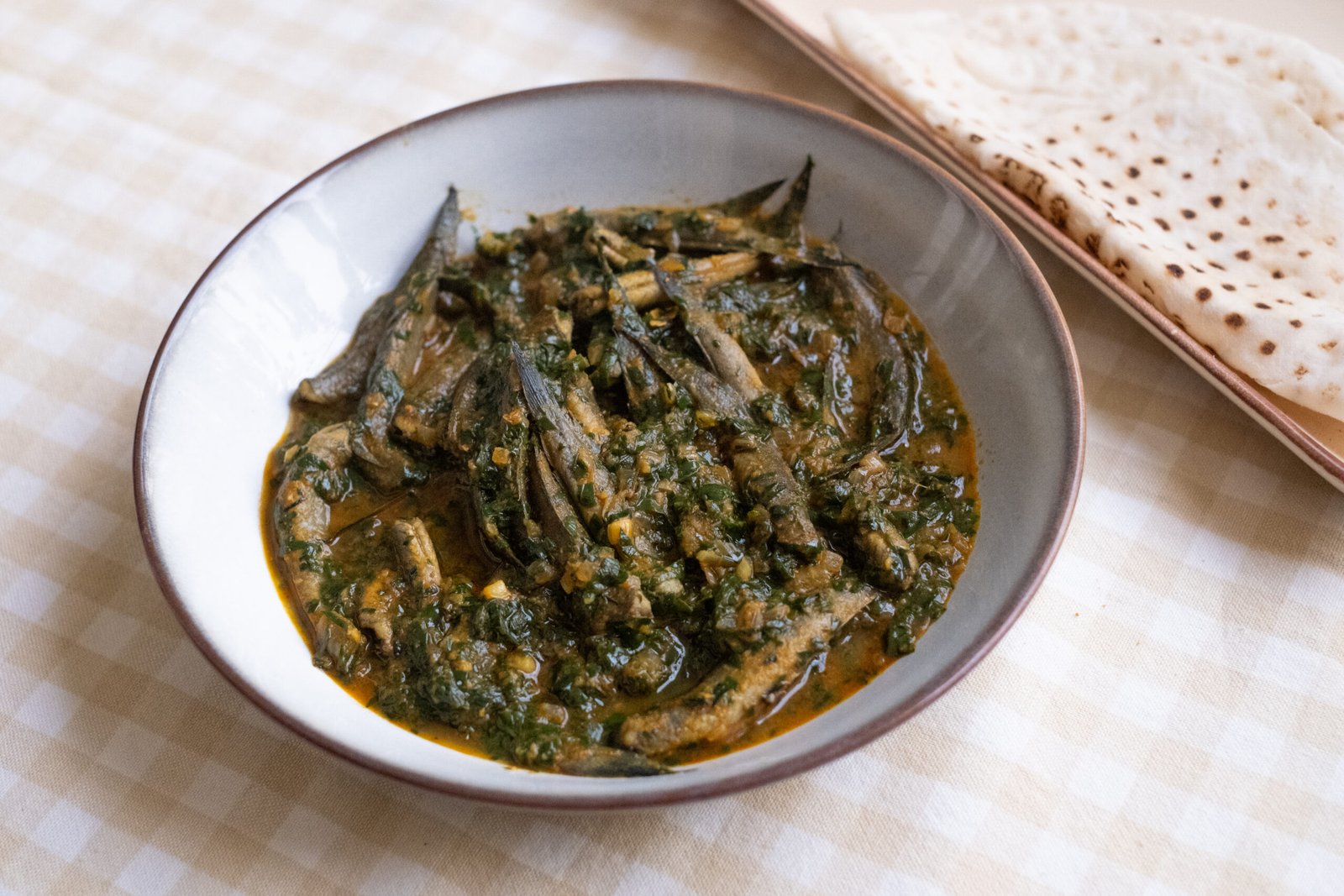
Mudskipper fish—or ‘Nevti’ in Marathi—are amphibious creatures that live on both land and in water and are typically found in intertidal zones, including estuaries, mudflats, and mangroves. They emerge onto land primarily to feed, while returning to water for breeding and to avoid predators. On land, mudskippers move by using their pectoral fins and are able to respire partly through their skin, an adaptation that allows them to survive in fluctuating tidal environments.
In Maharashtra, mudskippers have long been part of local coastal cuisines. They are traditionally caught using simple handheld nets and baskets. However, significant alterations and degradation of their natural habitats has resulted in a decline in their population.
This recipe for Nevti Curry has been contributed by Bhavesh Koli, who notes that nevti is offered as naivedya (a ritual offering) to the goddess Gauri owing to its availability during the Ganpati festival season and is traditionally associated with muddy habitats. Once abundant and easily found alive in the mud, nevti is now becoming rarer to find, often requiring weeks of searching, thereby affecting its consumption. This means that Bhavesh eats it only once a year, on the second day of the Gauri festival.
| Nevti, cleaned | 500 grams |
|---|---|
| Colocasia leaves (Alu leaves) | 3–4 |
| Oil | 3–4 tablespoons |
| Onion, finely chopped | 2,medium |
| Green chillies, finely chopped | 4–5 |
| Turmeric powder | ½ teaspoon |
| Koli masala | 2 tablespoons |
| Salt | to taste |
| Tamarind paste | 2 tablespoons |
| Water | as required |
What You Will Need
Heavy-bottomed pan or kadhai; Colander
You can find the recipe for the Koli masala here.
Instructions
Clean the nevti thoroughly by washing them in fresh water. Set aside.
Rinse the colocasia leaves thoroughly under running water to remove dirt.
Using a knife, trim away any thick stems and tough veins. Finely chop the leaves.
Place a heavy-bottomed pan on medium heat and add the oil.
Once the oil is hot, add the chopped onions and green chillies. Sauté until the onions soften and turn translucent.
Add the chopped colocasia leaves, turmeric powder, Koli masala, and salt. Mix well so the leaves are evenly coated with the spices.
Stir in the tamarind paste and add enough water to lightly cover the mixture.
Bring the mixture to a boil, then reduce the heat and let it cook for about 5 minutes, allowing the flavours to come together.
Add the cleaned nevti to the pan and mix gently.
Cover and cook until the nevti is fully cooked and tender. This usually takes a few minutes. Adjust salt if needed and turn off the heat.
Serve hot with rice bhakri or steamed rice.
Tips:
- Ensure the colocasia leaves cook thoroughly. They should never be eaten raw, as they contain calcium oxalate crystals that can cause itching or a burning sensation in the throat.
- If the gravy thickens too much, add a little warm water and simmer briefly.
Bhavesh Koli, a civil engineer by education with over a decade of experience in advertising, founded Mi Hi Koli—a restaurant in Mumbai dedicated to authentic Koli cuisine in 2011.
Bhavesh is a volunteer with The Mumbai Koli Project by The Locavore. An impact campaign inspired by the film ‘Against the Tide’, the project aims to spotlight the city’s original fisherfolk—the Koli community—and their evolving relationship with the sea, while encouraging Mumbaikars to make more sustainable, seasonal, and inclusive seafood choices. Read more about the project here.
You must be logged in to rate this recipe.
 Login with Google
Sign in with email