
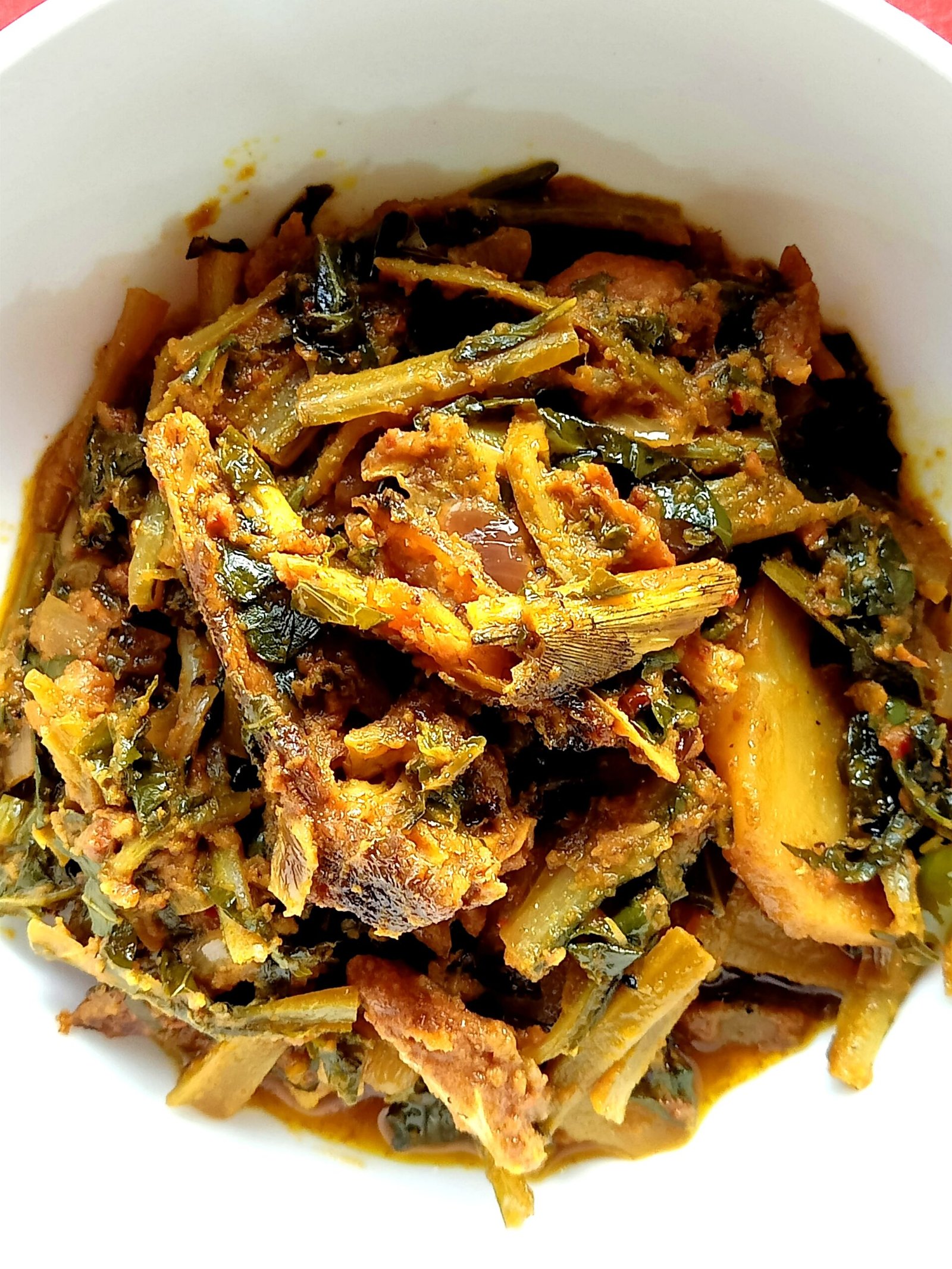
Long-whiskered catfish, known as ‘Shingala’ in Marathi and ‘Aar’ in Bengali, is a much-loved fish across several Indian states. In Bengali cuisine, it is prized for its subtle flavour and versatility, featuring in a variety of traditional preparations. This simple stir-fried recipe, shared by Sayani Sengupta, makes use of cauliflower leaves, stems, and stalks alongside the fish head—ingredients that are often discarded in modern-day kitchens. Traditionally prepared during the winter months, this recipe takes advantage of the tender cauliflower stalks that accompany the seasonal harvest.
For the garam masala:
| Cinnamon sticks | 2 inches |
|---|---|
| Cardamom | 7 pods |
| Cloves | 6 |
For the paanch phoran:
| Fenugreek seeds | ¼ teaspoon |
|---|---|
| Cumin seeds | ¼ teaspoon |
| Nigella seeds | ¼ teaspoon |
| Fennel seeds | ¼ teaspoon |
| Black mustard seeds | ¼ teaspoon |
| Cauliflower stalks and leaves | 1 whole |
|---|---|
| Fish head, cleaned | 1 |
| Onion | 1½ |
| Potato | 1, medium |
| Water | as needed |
| Tomato | 1, medium |
| Green chillies | 2 |
| Dried red chillies | 4 |
| Ginger | ½ inch piece |
| Garlic | 8 |
| Salt | to taste |
| Turmeric powder | ½ + ½ teaspoon |
| Mustard oil | 5 tablespoons |
| Bay leaves | 2 |
| Panch phoron (five-spice blend) | ½ teaspoon |
| Cumin powder | ½ teaspoon |
| Coriander powder | 1 teaspoon |
| Sugar | ½ teaspoon |
| Bengali garam masala powder | ½ teaspoon |
What You Will Need
Kadhai or cooking pot with lid, pressure cooker, mixer grinder, chopping board, knife, turner, measuring spoons and cups, bowls, colander
Instructions
Begin by preparing the two spice blends. Grind the spices listed under garam masala powder and keep aside. In a small bowl, combine spices mentioned under paanch phoron and keep aside ½ teaspoon of each to be added later.
Next, prepare the vegetables and fish. Cut the cauliflower stalks in half lengthwise and then slice them thinly like moringa stalks. Roughly chop the cauliflower leaves.
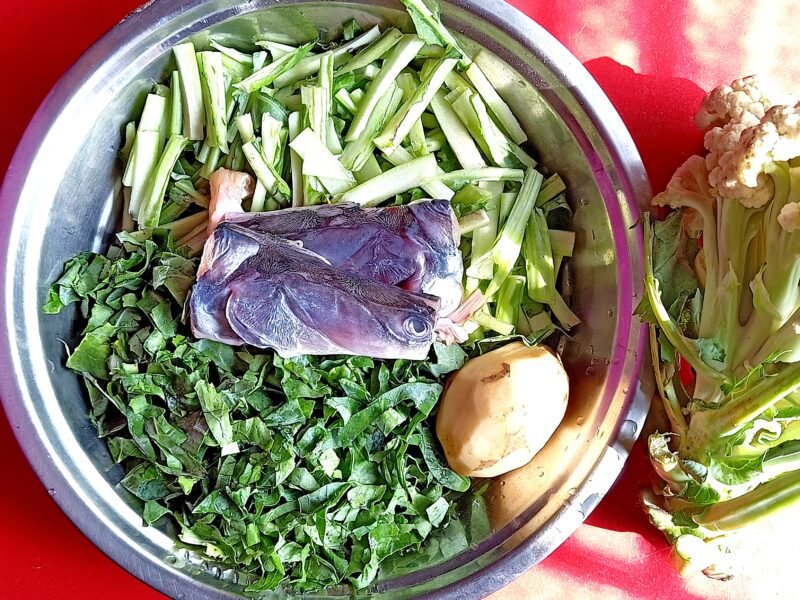
Wash the fish head thoroughly and set it aside. Slice the potato thinly lengthwise. Chop half of the onion and keep it separate, while reserving the remaining onion for grinding.
Prepare the ground spice paste by combining the whole onion, tomato, green chillies, two dried red chillies, ginger, and garlic in a mixer grinder, and grind until smooth.
Marinate the fish head with a little salt and half a teaspoon of turmeric powder, and let it rest for 5 minutes.
Heat the mustard oil in a kadhai over medium heat until it begins to smoke lightly. Carefully fry the broken fish head pieces over low to medium heat for 7-8 minutes, turning them gently so that both sides develop a medium crisp texture. This will help the fish hold together during cooking. Remove the fish and keep it aside.
Using the same oil, temper with the remaining two dried red chillies, broken bay leaves, and the panch phoron. Once the tempering starts to splutter and release its aroma, add the ground ginger-garlic-onion-tomato paste. Sauté this paste on low to medium heat for 5 to 8 minutes, or until the raw smell of the spices disappears and the paste thickens slightly.
Break the cooled fish head into smaller pieces and gently add them to the pan along with the cumin and coriander powders and half of the boiled cauliflower stock. Mix everything carefully to coat the fish and vegetables with the spices.
Add the boiled stalks, leaves, chopped onion and sliced potato and saute for 3 to 4 minutes on medium to high heat.
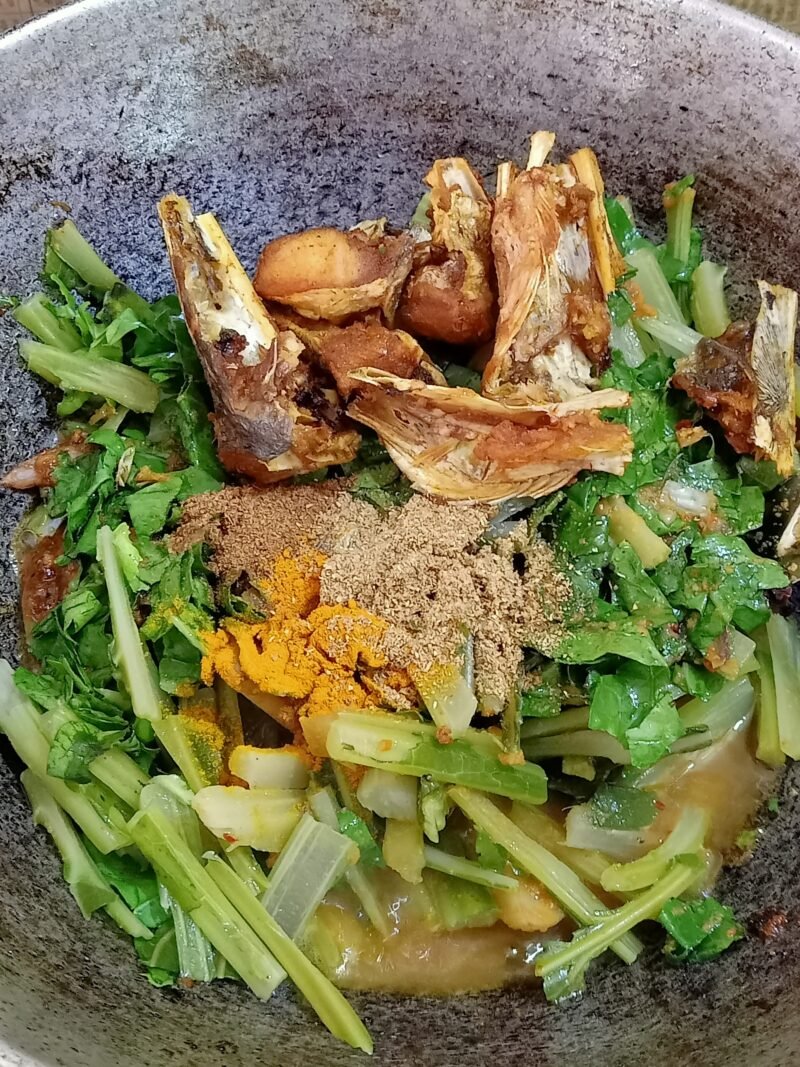
Reduce the heat to low-medium, cover the pan, and cook for 10 to 12 minutes, stirring intermittently, until the potatoes are tender and most of the water has evaporated. At this point add salt to taste and let it cook for 1 more minute.
Finally, sprinkle in the sugar and the reserved garam masala powder. Sauté for another minute to blend the flavours. Serve the fish head curry warm with steamed rice.
Tips:
- The ingredients for the five-spice tempering or panch phoron can be mixed and kept in an air-tight container and stored for months.
- Bengali garam masala powder can be ground with a little salt and kept in an air-tight container to prolong its shelf life
Variations:
- Instead of Long-whiskered catfish, fish heads of Rohu, Katla or Hilsa can be used as well.
- Instead of panch phoron, either cumin or nigella seeds can be used.
Sayani Sengupta is the Cooking Lab Lead for the Millet Revival Project by The Locavore and a home chef based out of Kolkata. She runs her own food brand, Gooseberri, for which she often writes recipes. Her recipes have also featured in Bengali magazines such as Sananda as well as other English publications.
You must be logged in to rate this recipe.
 Login with Google
Sign in with email