
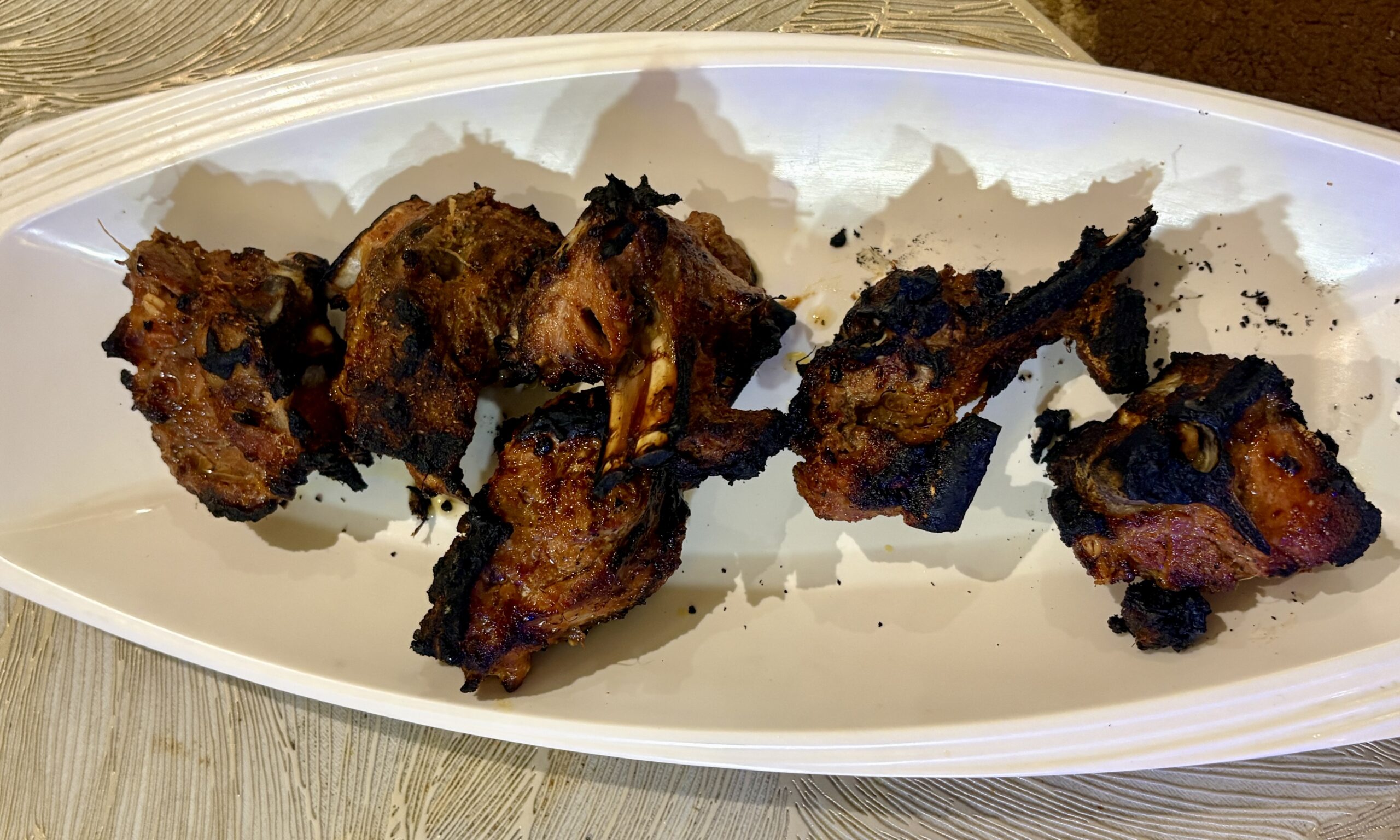
Chopan kabob—also spelled ‘chopan kebab’—is a speciality of Pashtun cuisine, traditionally made with lamb and cooked over a charcoal brazier. The name is derived from the Pashto word ‘chopan’, meaning ‘shepherd’. According to Amir and Ruis, the origins of the dish can be traced back to sheep herders who seasoned pieces of lamb simply with salt, skewered them onto twigs or small branches, and roasted the meat over an open fire while tending to their flocks.
Though rooted in Afghanistan, chopan kebab has travelled with the Afghan diaspora and can today be found in places far from the pastoral landscapes it is associated with. In Delhi, it appears in the lanes of Lajpat Nagar, where several Afghan families have settled over the past decades.
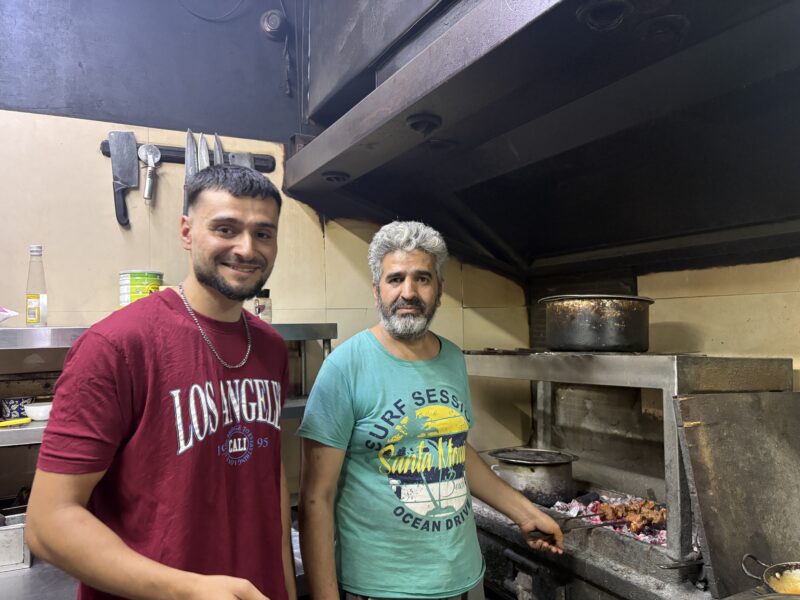
This recipe comes from Amir and Ruis, who both left Afghanistan because of the war—Amir four years ago and Ruis ten. They now live in Lajpat Nagar with their families and work at an Afghan restaurant in the neighbourhood where Amir is the manager and Ruis is the chef.
Pointing to the dastarkhan laid out in the restaurant, Amir shared how it used to be at home back in Afghanistan. The family would gather around it during Ramadan to break their fast together with chopan kabob, dates, pulao, and freshly made khameeri roti. Here, in Delhi, he says, it is harder to recreate those moments. Work schedules rarely allow everyone to be home at the same time, and much of the day is spent trying to make ends meet. Yet the memory lingers. They continue to break their fast with chopan kabob—though not always together.
| Boneless lamb or mutton (shoulder or rib pieces) | 2 kilograms |
|---|---|
| Red onion | 2, medium |
| Garlic, peeled | 1 whole bulb |
| Salt | to taste |
| MSG | 1 teaspoon |
| Black pepper powder | 2 teaspoons |
| Coriander seed powder | 1 teaspoon |
| Red chilli powder | 1–2 teaspoons |
| Fennel seed powder | 1 teaspoon |
| Cooking oil | ½ cup |
| OR | |
| Lamb fat, cut into small cubes | 400 grams |
What You Will Need
Grater or food processor; fine strainer or cheesecloth; mortar and pestle or small grinder; large mixing bowl; metal skewers; grill or sigdi; kitchen towel
Optional (if cooking without a grill): oven with wire rack and baking tray; air fryer
Instructions
Use boneless mutton shoulder or rib pieces, cut into medium-sized cubes suitable for skewering. Rinse the mutton briefly under running water, then drain well and pat dry with a clean kitchen towel or paper towels. Place the meat in a large mixing bowl and set aside.
Peel the onion and grate it using the fine side of a grater. Alternatively, place the onion in a food processor and pulse until it is very finely chopped.
Transfer the grated or processed onion into a fine strainer or a piece of cheesecloth placed over a bowl. Press the onion firmly with a spoon or squeeze the cloth to extract as much liquid as possible. Collect the onion juice in the bowl and discard the remaining pulp, as only the juice is required for this recipe. Set the onion juice aside.
Peel the garlic cloves and crush them using a mortar and pestle, or blend them in a small grinder to form a smooth paste. Set this aside.
To the meat, add onion juice, garlic paste, salt, MSG, black pepper powder, coriander seed powder, red chilli powder, fennel seed powder, and cooking oil or fat.
Using your hands, rub the marinade thoroughly into the meat so that each piece is well coated.
Cover the bowl and place it in the refrigerator. Allow the meat to marinate for 5–6 hours, or ideally overnight.
When ready to cook, remove the bowl from the refrigerator and uncover it. Mix the meat once more to redistribute the marinade. Thread the meat pieces onto skewers. If you are using fat instead of cooking oil, alternate the meat cubes with small pieces of fat while threading. This helps keep the meat moist during grilling.
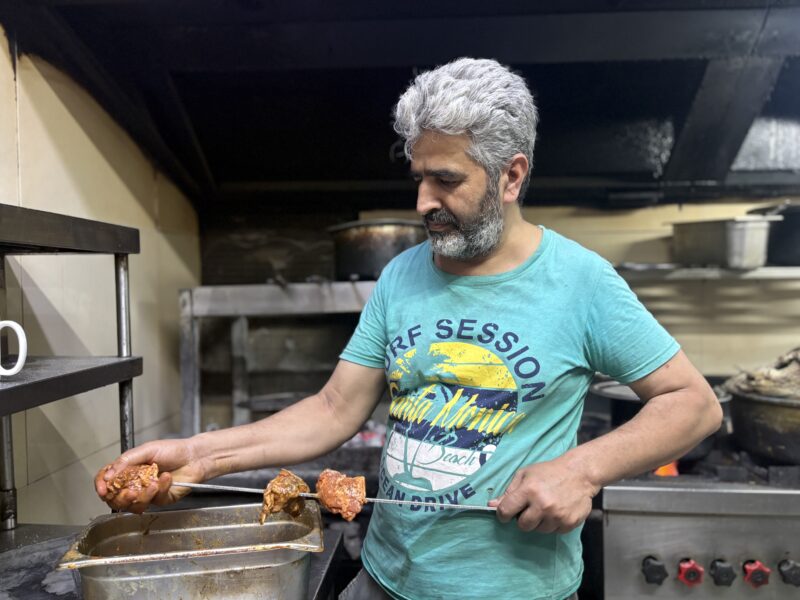
Heat the grill or sigdi. Place the skewers on the grill and cook for 15–20 minutes, or until the meat is browned and cooked through. Turn the skewers frequently so that the meat cooks evenly on all sides and develops a light char.
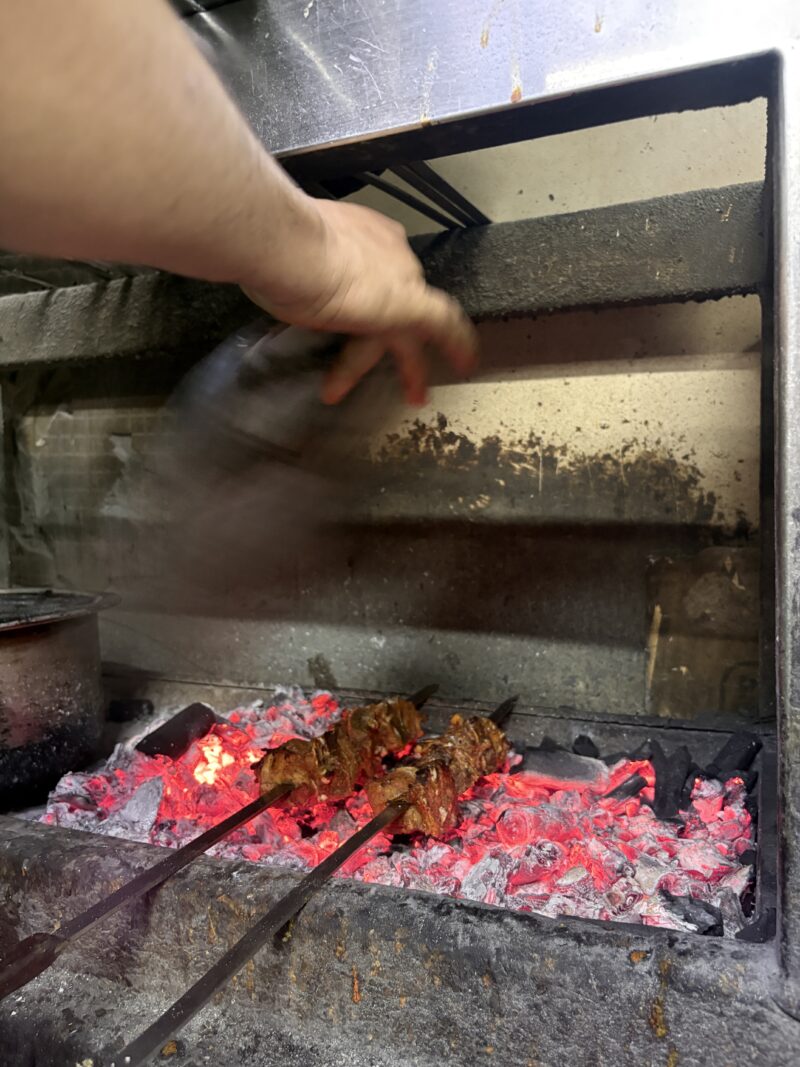
Once cooked, remove the skewers from the grill and serve hot.
Tips:
Traditionally, these skewers are cooked over a grill or open flame over coal, which gives the meat its characteristic smoky flavour and light char. If you do not have a grill, they can be cooked in an oven or air fryer instead.
- Preheat the oven to 200°C. Place the skewers on a wire rack set over a tray and cook for 30-45 minutes turning them a few times during cooking, until the meat is browned and cooked through. The cooking timing will depend on the kind of oven you have and the size of the meat.
- Preheat the air fryer to 200°C and cook the skewers for 20–25 minutes, turning halfway through.
Variations:
The kebabs can also be made using chicken or beef.
Amir and Ruis work at The Chopaan Kebab Restaurant in Lajpat Nagar, Delhi, where Amir manages the restaurant and Ruis works as a chef.
You must be logged in to rate this recipe.
 Login with Google
Sign in with email