
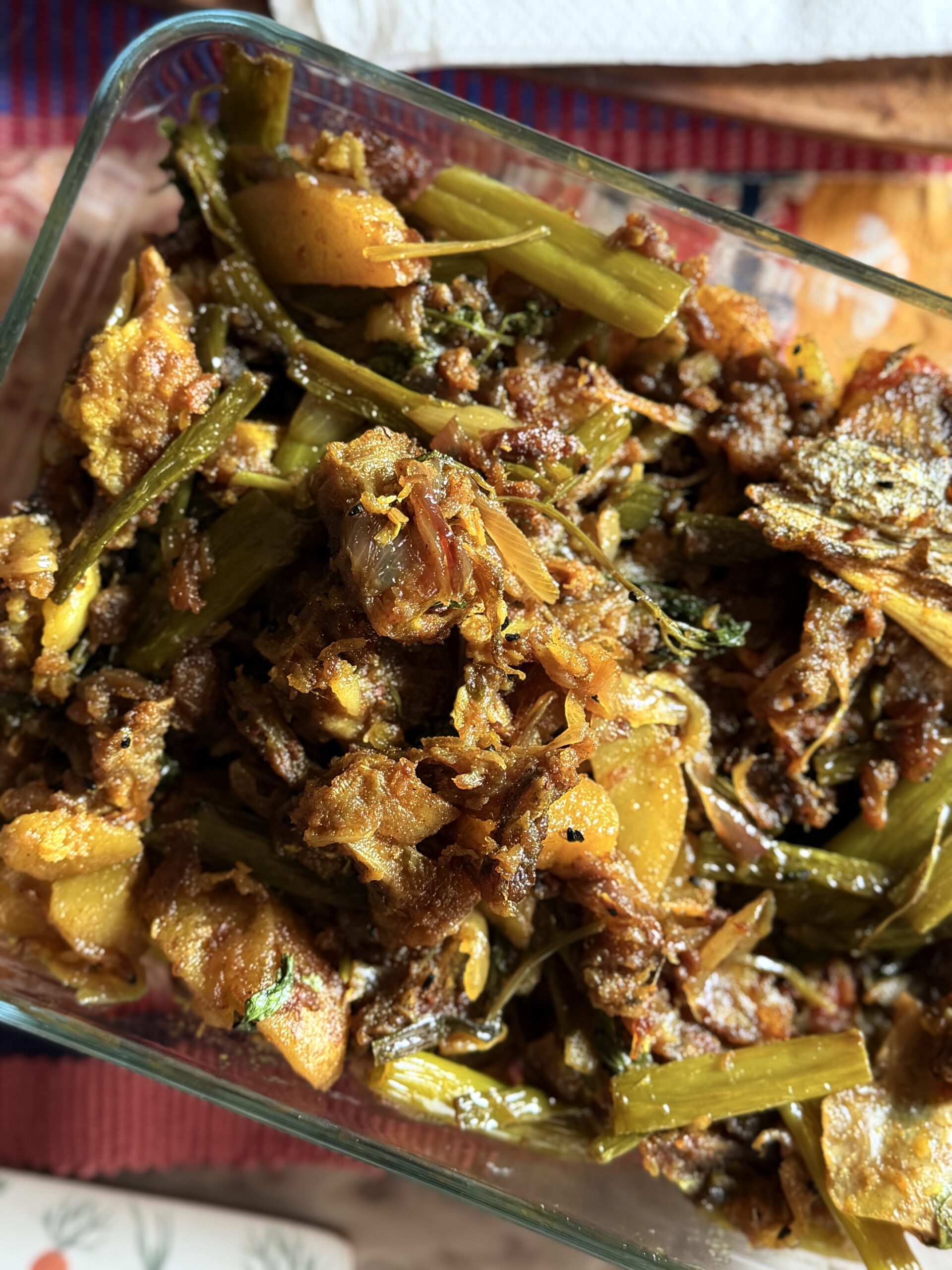
A chorchori (also spelled ‘charchari’ or ‘chadachadi’) is a mixed vegetable preparation common to Bengali and Odia cuisines. It is characterised by a medley of vegetables cooked with aromatic spices, minimal water, and a slightly charred, sizzling finish. The name itself hints at this technique, referring to the gentle charring and caramelisation that occurs as the vegetables fry in oil.
Bengal, as a region, has had a long history of cooking shaped by scarcity. The famine of 1943, in particular, gave rise to dishes that relied on zero-waste practices or made use of parts of ingredients typically considered undesirable. Kata Chochori is one such example. Made with fish bones, head pieces, and the rich pockets of fat that cling to them, it is cooked slowly with leafy greens until the collagen melts into the vegetables and the bones turn crisp.
What makes Kata Chochori distinctive is its textural contrast: soft greens and melting fat set against crisped bones and caramelised edges. Using only the moisture released from the vegetables, the dish remains true to a Bengali cooking tradition born out of necessity—one that has since woven itself into the fabric of the region’s culinary identity.
For the Garam Masala:
| Cinnamon stick | 1 small piece |
|---|---|
| Green cardamom pods | 3 |
| Cloves | 4 |
| Mustard oil | 2 tablespoons |
|---|---|
| Fish bones and fatty trimmings (from freshwater fish) | 250-300 grams |
| Ginger, grated | 1 tablespoon |
| Onions, finely sliced | 2,small |
| Turmeric powder | 1 teaspoon |
| Cumin seed paste | 1½ teaspoons |
| Potatoes, cut into wedges | 3-4 |
| Green chillies, whole | 2-3 |
| Salt | to taste |
| Sugar | ½ teaspoon |
| Peyajkoli (winter onion tips), chopped | 3 cups |
| Garam masala | 1 teaspoon |
Instructions
To Make the Garam Masala: Lightly toast the cinnamon, green cardamom, and cloves in a dry pan over low heat for 1 to 2 minutes, stirring continuously, until fragrant. Remove from the heat and allow the spices to cool completely. Grind them using a mortar and pestle or spice grinder to a fine powder. Measure out 1 teaspoon for the recipe and store any extra powder in an airtight container for later use.
Heat the mustard oil in a korai or heavy-bottomed pan over medium heat until it begins to smoke lightly.
Add the fish bones and fatty trimmings to the hot oil. Cook them on medium heat, stirring occasionally, until the fat starts to render and the bones begin to brown lightly.
Add the grated ginger, sliced onions, turmeric powder, and cumin seed paste. Stir well and cook on high heat for 5–6 minutes, until the raw aroma disappears and the mixture turns fragrant.
Add the potato wedges, whole green chillies, salt, and sugar. Mix thoroughly so that the potatoes and fish are evenly coated with the spices.
Add the chopped peyajkoli to the pan and cook for a further 5–6 minutes, stirring to combine.
Cover the pan with a lid and reduce the heat to medium. Do not add any water—the greens will release enough moisture as they cook. Allow the mixture to cook slowly, stirring occasionally, until the peyajkoli softens and the collagen from the fish melts into the vegetables.
Once most of the moisture has evaporated, increase the heat to high. Fry the mixture uncovered, stirring gently, until the edges turn golden and crisp and the dish takes on a slightly smoky aroma.
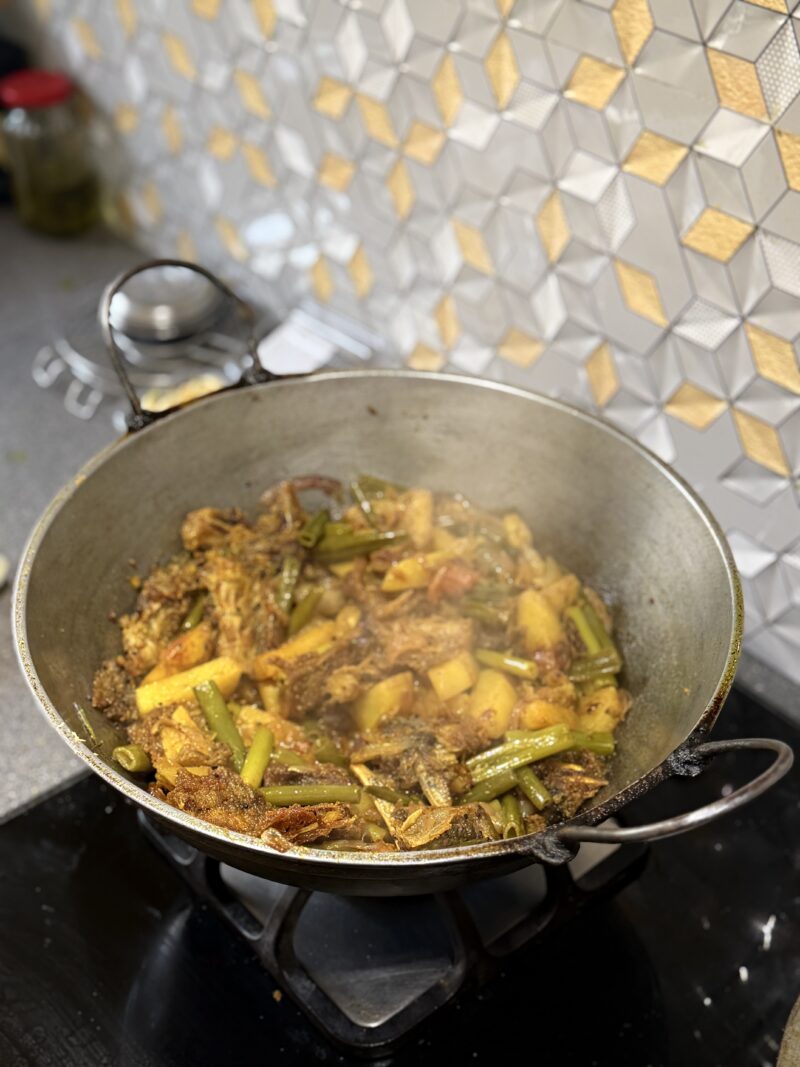
Turn off the heat and finish by sprinkling the freshly ground garam masala over the dish. Mix well before serving.
Serve hot with plain steamed rice.
Tips:
- Choose fish bones with some flesh and visible fat attached, as these contribute significantly to both flavour and texture of the dish. Lean bones alone will result in a drier dish.
- Do not rush the initial frying of the fish bones. Allowing the fat to render slowly in the mustard oil builds the base flavour of the dish and prevents the bones from tasting chalky.
- Avoid adding water at any stage while cooking. The peyajkoli and onions release sufficient moisture, and any excess liquid will prevent the dish from achieving its characteristic crisp edges.
- Stir gently and intermittently while the dish is covered to prevent sticking to the pan, but avoid frequent stirring, which can break the fish bones and soften the texture.
- Finish the dish on high heat only after most of the moisture has evaporated. This final frying is essential for developing the savoury, slightly smoky flavour typical of a good kata chochori.
- Add the freshly ground garam masala only at the end of cooking. Early addition will dull its aroma and overpower the subtler flavours of ginger and cumin.
Sohini Banerjee (@smokeandlime) is the cook and writer behind Smoke and Lime, a London-based Bengali zero-waste supper club and culinary project exploring heritage, memory, and sustainability through food.
You must be logged in to rate this recipe.
 Login with Google
Sign in with email