
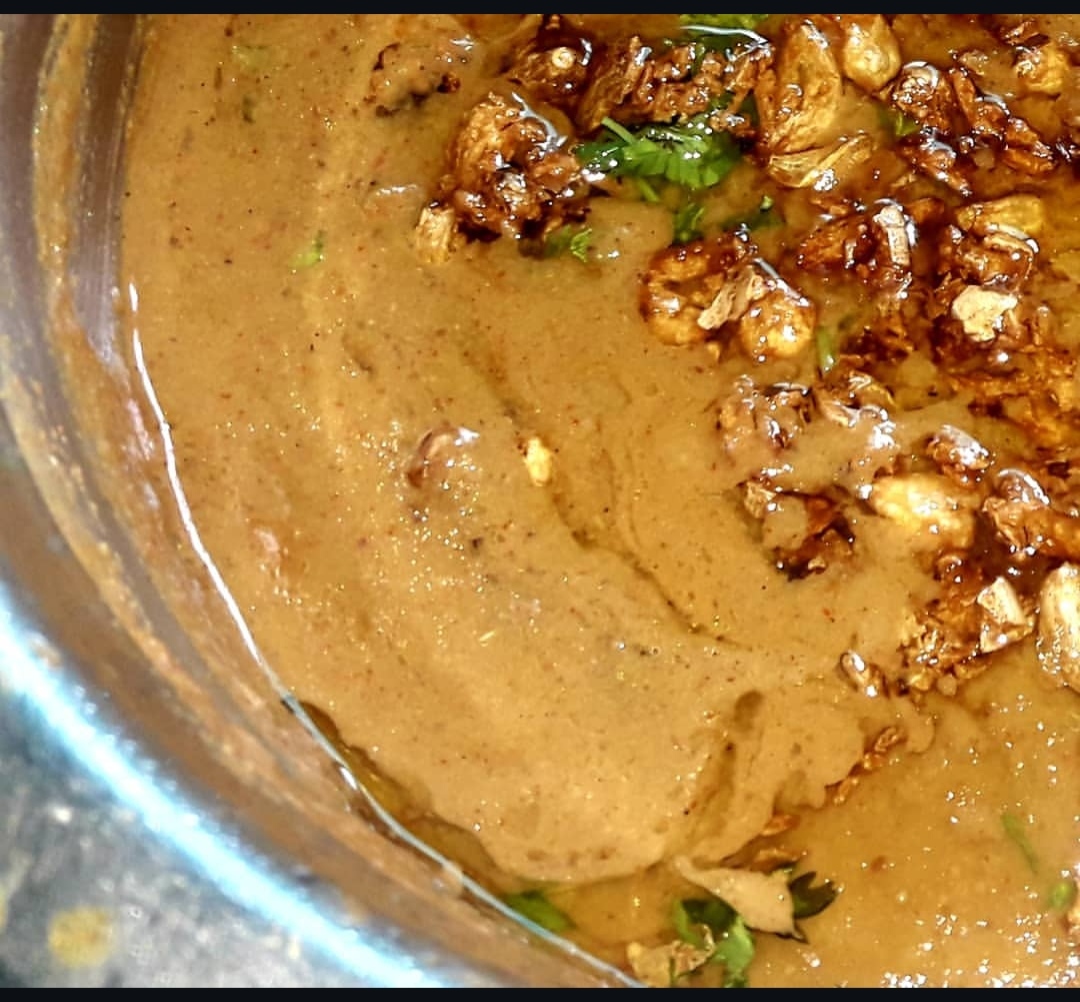
For Parita Parelkar, the first monsoon showers have always meant one thing—making Shevla–Kakad Coconut Curry. When she was a teenager, Parita and her father Nitish Parelkar would wake up early and visit the Thane market near the railway station to buy fresh shevla. It was a tradition she eagerly awaited, made even more special by the hot misal pav breakfast they shared before heading home.
Parita learnt this recipe from her grandmother, Malati Parelkar. As a child, she would sit beside her, helping her clean the shevla stalks while watching her transform simple seasonal ingredients into a hearty dish. Those moments in her grandmother’s kitchen sparked Parita’s love for cooking. Parita says, “Even today, the aroma of the garlic tempering instantly takes me back to those afternoons spent cooking with her”.
For the Shevla–Kakad paste:
| Shevla, cleaned and chopped | 15 stalks |
|---|---|
| Kakad (Garuga pinnata), lightly crushed and seeds removed | 2 handfuls |
| Oil | as required |
| Onion, chopped | 2, medium |
| Ginger, chopped | 25 grams |
| Garlic cloves, chopped | 12–15 cloves |
| Green chillies, chopped | 2–3 |
For the Curry:
| Besan (gram flour) | 2 tablespoons |
|---|---|
| Oil | as required |
| Salt | to taste |
| Red chilli powder | 1 teaspoon |
| Turmeric powder | ¼ teaspoon |
| Cumin powder | ½ teaspoon |
| Coriander powder | 1 tablespoon |
| Jaggery | 20–30 grams |
| Tamarind | 20 grams |
| Prawns | 150 grams |
| Dried shrimp | 150 grams |
| Coconut milk | 1½ cups |
For the Tempering:
| Ghee | 1 tablespoon |
|---|---|
| Garlic cloves, crushed | 10 cloves |
| Fresh coriander leaves, chopped | 2 tablespoons |
What You Will Need
Heavy-bottomed saucepan or kadhai, mixer-grinder or blender, small pan for tempering
Instructions
Preparing the paste:
Begin by cleaning the shevla thoroughly. Remove the outer covering and the yellow pollen-like portion from each stalk. Chop the cleaned shevla into small pieces and keep aside.
Lightly crush the kakad and remove the seeds. Discard the seeds and reserve the flesh.
Heat a little oil in a kadhai over medium heat. Add the chopped onion and sauté until softened and translucent. Add the ginger, garlic, and green chillies. Cook for 1–2 minutes until aromatic.
Add the chopped shevla and stir well to coat with the aromatics. Cover and cook until the shevla becomes tender, stirring occasionally and adding a splash of water, if required.
Remove from the heat and allow the mixture to cool completely.
Transfer the cooled shevla mixture to a blender. Add the prepared kakad to it and grind to a smooth paste. Set aside.
Making the curry:
Soak the tamarind in a little warm water for 10–15 minutes, or until softened. Set aside.
If using whole prawns, peel and devein them. Rinse well and pat dry. If using cleaned prawns, rinse and pat them dry before using.
Squeeze the soaked tamarind thoroughly and strain the liquid, discarding the fibres.
Add the besan to the tamarind extract and whisk until completely smooth and lump-free.
Heat a little oil in a heavy-bottomed saucepan. Add the ground shevla–kakad paste and cook over low heat for 3–4 minutes, stirring frequently.
Add the salt, red chilli powder, turmeric powder, cumin powder, and coriander powder. Mix well and continue cooking until the spices are fragrant.
Add the jaggery and stir until completely dissolved. Taste and adjust the seasoning and sweetness as needed.
Pour the tamarind-besan mixture into the saucepan, stirring continuously to prevent lumps from forming. Bring the curry to a gentle simmer and cook until it thickens slightly.
Add the prawns and dried shrimp and simmer until the prawns are just cooked through.
Pour in the coconut milk and mix well. Heat the curry gently for 2–3 minutes, taking care not to let it boil vigorously after adding the coconut milk.
Making the tempering:
Heat the ghee in a small pan over medium heat. Add the crushed garlic and fry until lightly golden and fragrant. Immediately pour the hot garlic tempering over the curry.
Cover the saucepan at once and allow the curry to rest for 2–3 minutes so the garlic aroma infuses the dish.
Garnish with chopped coriander leaves before serving.
Tips:
- Shevla requires careful cleaning; removing the outer sheath and yellow pollen-like portion helps prevent bitterness.
- The amount of jaggery can be adjusted depending on the natural tartness of the tamarind.
Variations:
For a vegetarian version, omit the prawns and dried shrimp and increase the quantity of kakad.
Parita Parelkar is a home cook who loves experimenting in the kitchen and sharing recipes. Follow her on Instagram at @keep_munching.
You must be logged in to rate this recipe.
 Login with Google
Sign in with email