
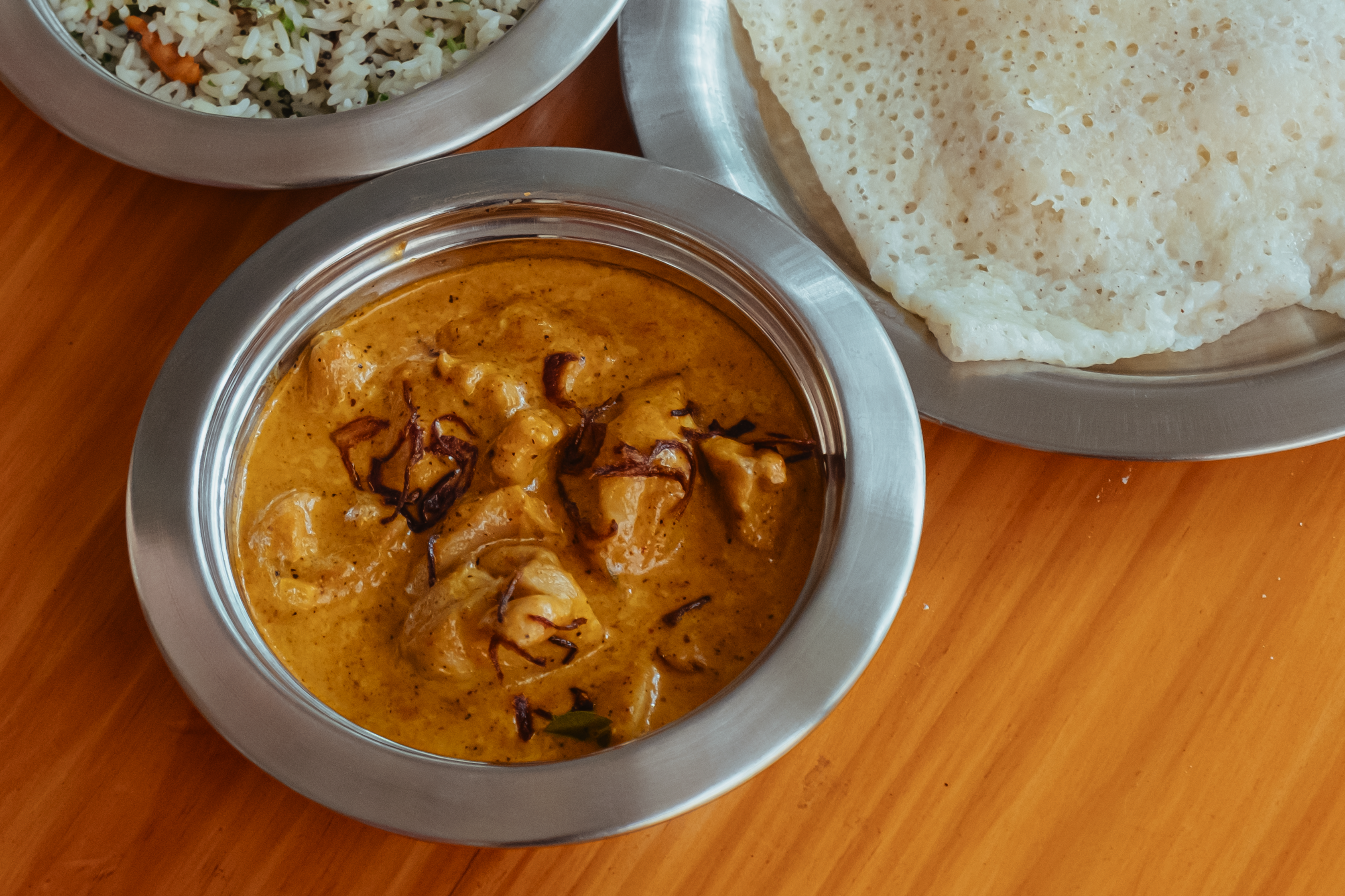
Kori gassi or chicken gassi is a chicken curry from Karnataka’s coastal belt, particularly associated with the city of Mangaluru. The dish is characterised by a rich spice paste made with Byadgi chillies, coconut, and whole spices, which is simmered with chicken and finished with coconut milk.
Like most Mangalorean curries, kori gassi relies on deep red Byadgi chillies to lend vibrancy and moderate heat. The curry is traditionally served with rotti, a crisp rice-based side dish that softens as it absorbs the curry, though it is equally enjoyed with neer dosa, set dosa or ghee rice.
| Chicken thigh fillets, cut into medium-sized (approx. 5 cm by 4 cm) pieces | 1 kg |
|---|---|
| Turmeric powder | ½ tsp |
| Salt | to taste |
For the spice paste:
| Tamarind | 10 grams |
|---|---|
| Warm water | ¼ cup |
| Dried Byadgi chillies, stalks and seeds removed | 25 |
| Coriander seeds | 3 tablespoons |
| Cumin seeds | 1 tablespoon |
| Fenugreek seeds | 1 teaspoon |
| Poppy seeds | 1 tablespoon |
| Black peppercorns, lightly pounded | 2 tablespoons |
| Cinnamon bark | a 1-inch piece |
| Green cardamom pods | 2 |
| Cloves | 3 |
| Grated copra (dried coconut) | 50 g (approx. ⅓ cup) |
| Fresh coconut slivers | 50 g (approx. ⅓ cup) |
| Turmeric powder | ½ tsp |
| Ghee | 1 tablespoon |
| Red onion, finely chopped | 1, medium |
| Garlic cloves, whole and unpeeled | 15 |
For the curry:
| Ghee | 105 grams (45g / 3 tbsp for frying onion, curry leaves, and chicken; 60 g / 4 tbsp for frying the spice paste) |
|---|---|
| Red onion, finely chopped | ½, medium |
| Curry leaves | 25 |
| Water | 1–1½ cups |
| Coconut milk | 500 ml |
| Salt | to taste |
| Lemon juice | to taste |
For the garnish:
| Ghee | 2 tablespoons |
|---|---|
| Red onion, thinly sliced | ½, medium |
What You Will Need
Kitchen towel or paper towels, sharp knife, chopping board, large bowl, flat skillet, blender or food processor, heavy-based pan or kadhai, frying pan
Instructions
Wash the chicken thoroughly under running water. Drain well and pat dry using a clean kitchen towel or paper towels.
Place the chicken in a large bowl. Add turmeric powder and salt. Mix well until all the pieces are evenly coated. Cover and refrigerate for 10–15 minutes while preparing the spice paste.
For the spice paste
Soak the tamarind in ¼ cup warm water and set aside to soften.
Place a flat skillet on low heat. Add the Byadgi chillies and dry-roast for 1–2 minutes, turning frequently until fragrant and slightly darkened. Remove from the pan and set aside.
Add the coriander seeds to the skillet and roast for 1–2 minutes until aromatic. Remove from the heat and set aside.
Add the cumin seeds, fenugreek seeds, and poppy seeds. Roast for 30–60 seconds, stirring continuously to prevent burning. Remove from the heat and set aside
Add the lightly pounded black peppercorns and roast for 20–30 seconds, until fragrant. Remove from the heat and set aside.
Add the cinnamon bark, cardamom pods, and cloves to the skillet. Roast for 30 seconds, stirring continuously, until aromatic. Remove from the heat and set aside.
Add the dried coconut and fresh coconut slivers to the skillet. Sprinkle over the turmeric powder and roast for 2–3 minutes, stirring continuously until it appears lightly golden and nutty in aroma. Remove from the heat and allow to cool slightly.
Return the skillet to low heat and add the ghee. Once melted, add the onion and garlic cloves. Cook for 5–7 minutes, stirring frequently until the onions soften and begin to caramelise, and the garlic skins darken slightly. Remove from the heat and allow to cool.
Transfer the soaked tamarind and liquid, chillies, spices, coconut, onion and garlic to a blender or food processor. Blend until smooth. If required, add ½ cup of water. The spice paste should be thick and spreadable, without any coarse pieces remaining.
For the curry
Place a heavy-based pan or kadhai over medium-low heat and add 45 grams (about 3 tablespoons) ghee.
Once the ghee is hot, add onion and curry leaves. Fry for 10–15 seconds until aromatic and crisp around the edges.
Increase the heat to high and add the marinated chicken. Cook for 6 minutes, stirring occasionally, until the chicken begins to brown. The chicken should sear rather than steam. Remove the chicken from the pan and set aside.
Reduce the heat to low and add 60 grams (about 4 tablespoons) of ghee and add the prepared spice paste to the same pan. Cook for 5 minutes, stirring continuously to prevent sticking. The spice paste should darken slightly and the aroma should change from pungent and raw to deep, rich and fragrant.
Return the chicken to the pan and stir thoroughly over low-medium heat for about 2 minutes so that each piece is coated in the spice paste. The chicken will release moisture as it cooks. If required, add 1–1½ cups of water to achieve a thick curry consistency.
Cover the pan and cook for 20–25 minutes, stirring occasionally, until the chicken is fully cooked and tender.
Once the chicken is cooked, pour in the coconut milk and stir gently to combine. Simmer for a further 3–4 minutes over low heat. Do not allow the curry to boil vigorously after adding the coconut milk.
Add salt and lemon juice. Adjust to taste.
For the garnish
In a separate frying pan, heat 30 grams (about 2 tablespoons) of ghee over medium heat. Add the sliced onions and fry, stirring occasionally, for 10–12 minutes until golden brown.
Spoon the fried onions over the chicken gassi and serve with neer dosa, rotti, ghee rice or set dosa.
Tips:
- Chicken thigh fillets are used here for convenience. Traditionally, chicken gassi is prepared with bone-in chicken, which lends additional flavour and body to the curry during cooking.
- Roasting each spice separately allows them to cook evenly and prevents delicate spices from burning before larger spices have released their flavours.
- The garlic cloves are blended with their skins intact. The skins contribute a subtle texture to the finished spice paste and are traditionally not removed. A food processor produces the smoothest paste, though a blender may also be used.
- The recipe uses both dried and fresh coconut: dried coconut preserves the spice paste for longer, while fresh coconut keeps the curry flavourful.
- Cook the spice paste thoroughly before adding the chicken. This helps remove any raw taste from the spices and develops a deeper flavour.
- Avoid burning the Byadgi chillies during roasting as this can make the curry bitter.
- After adding the coconut milk, maintain a gentle simmer rather than a rolling boil. Excessive heat can cause the coconut milk to split.
- Frying the onions separately and adding them at the end provides sweetness and texture that contrasts with the rich curry.
- The heat level of Byadgi chillies can vary. If the finished curry is spicier than desired, additional coconut milk may be stirred in to reduce the heat. A small quantity of cashew paste can also be added for a richer, milder curry.
the kitchen collective (tkc) is a women-led restaurant and training centre in Sangolda, Goa. They re-create traditional recipes from the coastal belt of Maharashtra, Goa, Karnataka and Kerala, while fostering a space where local women learn how to run satellite kitchens and serve customers.
This recipe has been published as a part of The Locavore’s collaboration with Powerhouse Museum, Australia. Titled ‘Setting The Table: Stories from India’s Food Cultures’, it aims to highlight diverse undertold stories about India’s culinary landscape to a non-native reader, adding texture to global narratives about Indian food.
Read more about local modern coastal cuisine from India’s western coast here.
You must be logged in to rate this recipe.
 Login with Google
Sign in with email