
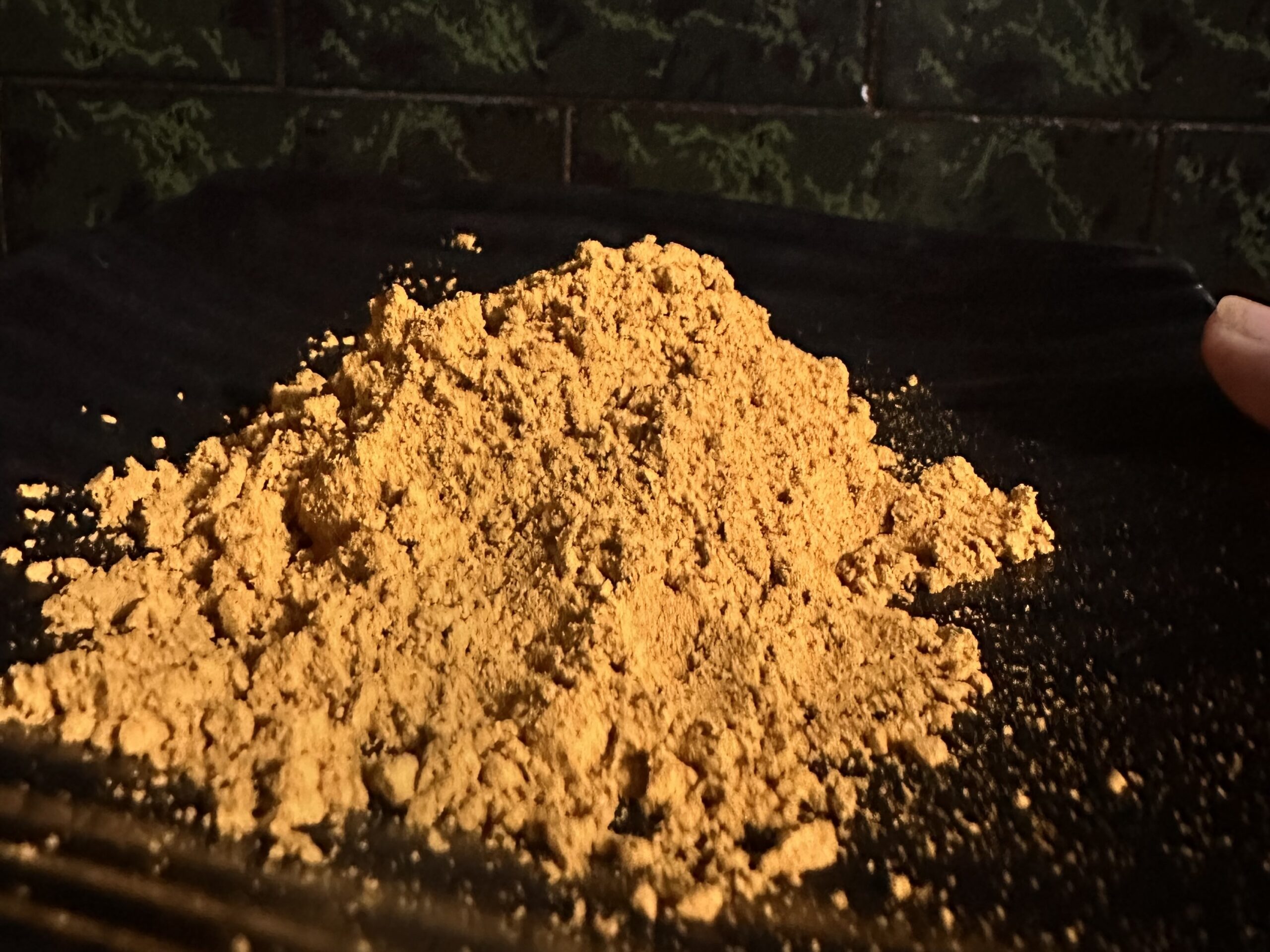
For as long as Subhangi Bajpai can remember, summer holidays meant visiting her nani, Munni Devi’s house in Lucknow. It was the one time of the year when all her cousins would be under the same roof, and before they even arrived, her nani would have already made a fresh batch of buknu. By the time they reached, it would be sitting in a glass jar on the dining table, ready to be eaten with almost every meal.
As children, buknu was simply part of the way Shubhangi and her cousins ate. It went on hot parathas, pooris, khichdi, and sometimes even a simple bowl of dal-rice. They would often mix it with a little ghee, happily finishing their meal without asking for any sabzi.
Shubhangi didn’t know how much work went into making it. Every year, before their holidays began, her nani would roast spices, fry herbs, painstakingly grind the ingredients separately, then mix it all together. As children, they only ever saw the finished jar on the table. It was only after Subhangi returned home to Varanasi and asked her mother, Laxmi Bajpai, to make buknu, that she understood why her mother would smile and say, “It takes a lot of time and effort.”
Shubhangi’s nani is no longer with them, and no one in the family makes buknu as regularly anymore because of how time-consuming it is. Whenever Subhangi visits Lucknow now, she asks her mami, Preeti Mishra, if she has made a batch that she can bring back home. The flavour has remained unchanged over the years, as has what it reminds her of.
For frying:
| Mustard oil | 4 tablespoons |
|---|---|
| Goti haldi (whole turmeric) | 50 grams |
| Sonth (dried ginger) | 50 grams |
| Chhoti harad (small chebulic myrobalan) | 25 grams |
| Badi harad (large chebulic myrobalan) | 25 grams |
| Baheda (belleric myrobalan) | 25 grams |
| Marod phali (screw tree pods) | 25 grams |
For dry-roasting:
| Jeera (cumin seeds) | 20 grams |
|---|---|
| Ajwain (carom seeds) | 20 grams |
| Saunf (fennel seeds) | 20 grams |
| Kali mirch (black peppercorns) | 10 grams |
| Hing (asafoetida) | 5 grams |
Other ingredients:
| Kala namak (black salt) | 100 grams |
|---|---|
| Sendha namak (rock salt) | 50 grams |
| Sada namak (table salt) | 100 grams |
| Amchur (dried mango powder) | 20 grams |
What You Will Need
Heavy-bottomed kadhai, dry frying pan, mortar and pestle or rolling pin, spice grinder or mixer grinder, fine-mesh sieve, clean glass jar with an airtight lid
Instructions
Heat the mustard oil in a heavy-bottomed kadhai over a low flame. Add the goti haldi, sonth, chhoti harad, badi harad, baheda, and marod phali. Fry gently, stirring occasionally, until the ingredients become aromatic and the harad begins to puff slightly. Take the kadhai off the heat and transfer the fried ingredients to a plate. Allow them to cool completely.
Once cooled, lightly crush these ingredients using a mortar and pestle or a rolling pin. Break them into smaller pieces so that they are easier to grind.
Heat a dry frying pan over a low flame. Add the jeera, ajwain, saunf, and kali mirch. Dry-roast, stirring continuously or frequently, until the spices become fragrant. Take the pan off the heat, add the hing, and stir for a few seconds using the residual heat. Allow the roasted spices to cool.
Transfer the crushed fried ingredients and roasted spices to a spice grinder. Add the kala namak, sendha namak, sada namak, and amchur. Grind in batches, if necessary, until the mixture forms a fine, uniform powder.
Pass the ground mixture through a fine-mesh sieve to remove any coarse fibres or pieces. Regrind the coarse mixture left in the sieve and pass it through the sieve again. Mix the finely ground powder together.
Allow the buknu to cool completely before storing. Transfer to a clean, dry glass jar and seal tightly. Store in a cool, dry place.
Tips:
- Keep the flame low while frying the whole ingredients so that they dry and become aromatic without burning.
- Make sure all the ingredients are completely cool before grinding and storing; any residual moisture or heat can affect the shelf life of the buknu.
- Grind the mixture in batches if using a small spice grinder to achieve a finer, more even powder.
Shubhangi Bajpai is a freelance writer covering travel, food, and culture. She is interested in stories that explore the relationship between people, places, and the food they share. Her work has appeared in publications such as Outlook Traveller and The Better India.
Editor: Ishani Banerjee
Copy editor: Khorshed Deboo
You must be logged in to rate this recipe.
 Login with Google

Sign in with email