
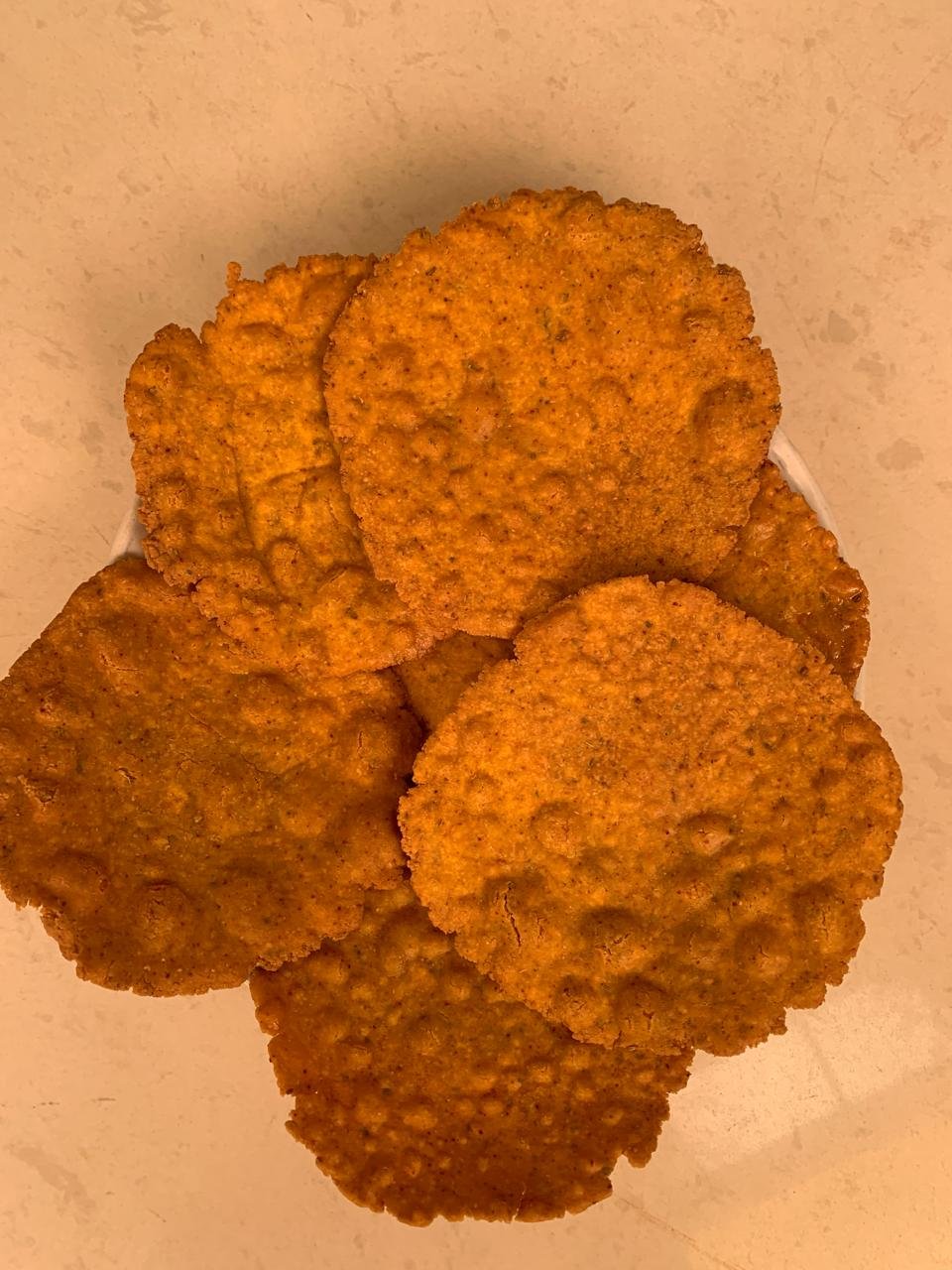
This recipe comes from Sushila Rathod, an Adivasi woman from Navagam village in Gujarat’s Dahod district, and is shared through Aranya, a Farmer Producer Organisation comprising smallholder farmers from the forests of the Aravalli Hills in eastern Gujarat.
Sushila learnt to make Chana Khakra from her elders, and the recipe continues to be passed down through generations of the Bhil community. Traditionally eaten during Holi, its preparation is a celebration in itself, made collectively by both men and women.
In the Adivasi regions of Gujarat, Holi is more than just a festival of colours—it marks a time of homecoming, when those who have migrated for work come back to their villages, reuniting with family and community. The spirit of Holi is expressed not only through joyful dances and music but also in the vibrant melas accompanying it. These melas are spaces for cultural expression, where age-old rituals are performed, gratitude is offered to nature, and young people often meet their future partners. At the heart of it all is food—made with locally available ingredients and shared with love.
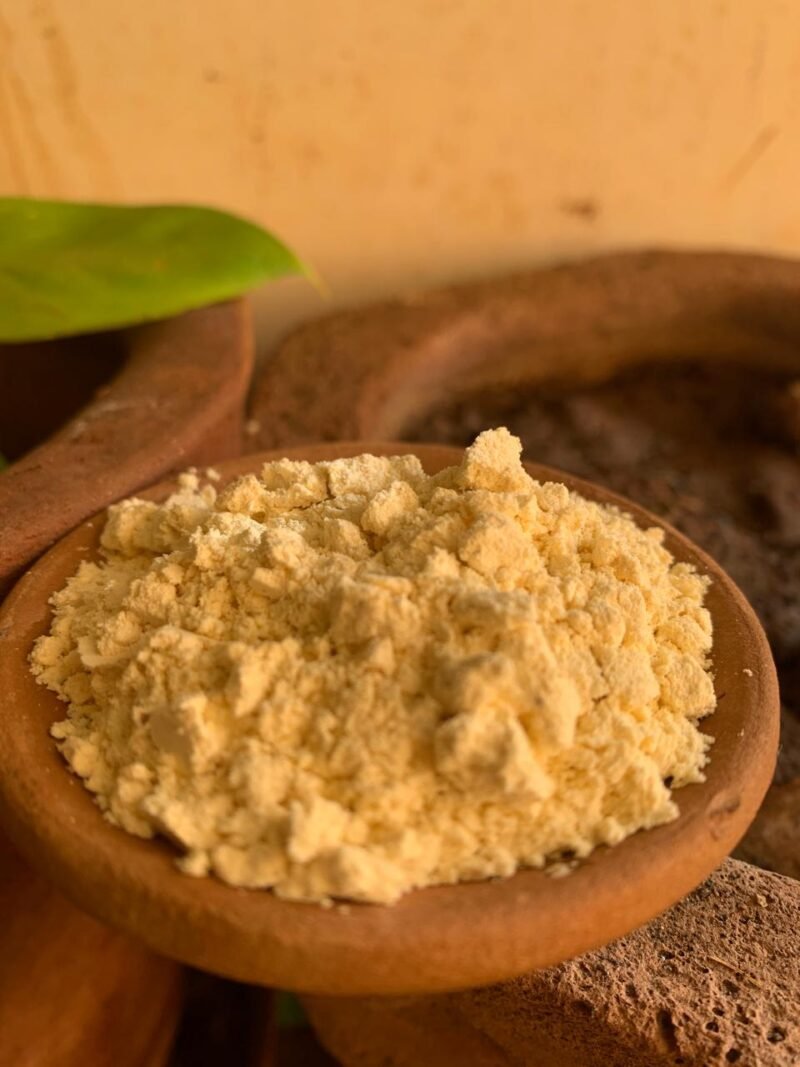
For the Chana Flour (besan)
| Whole Black Chana | 1 cup |
|---|---|
| Water | for soaking |
For the Khakhras
| Chana flour (besan) | 120 grams | 1 cup |
|---|---|
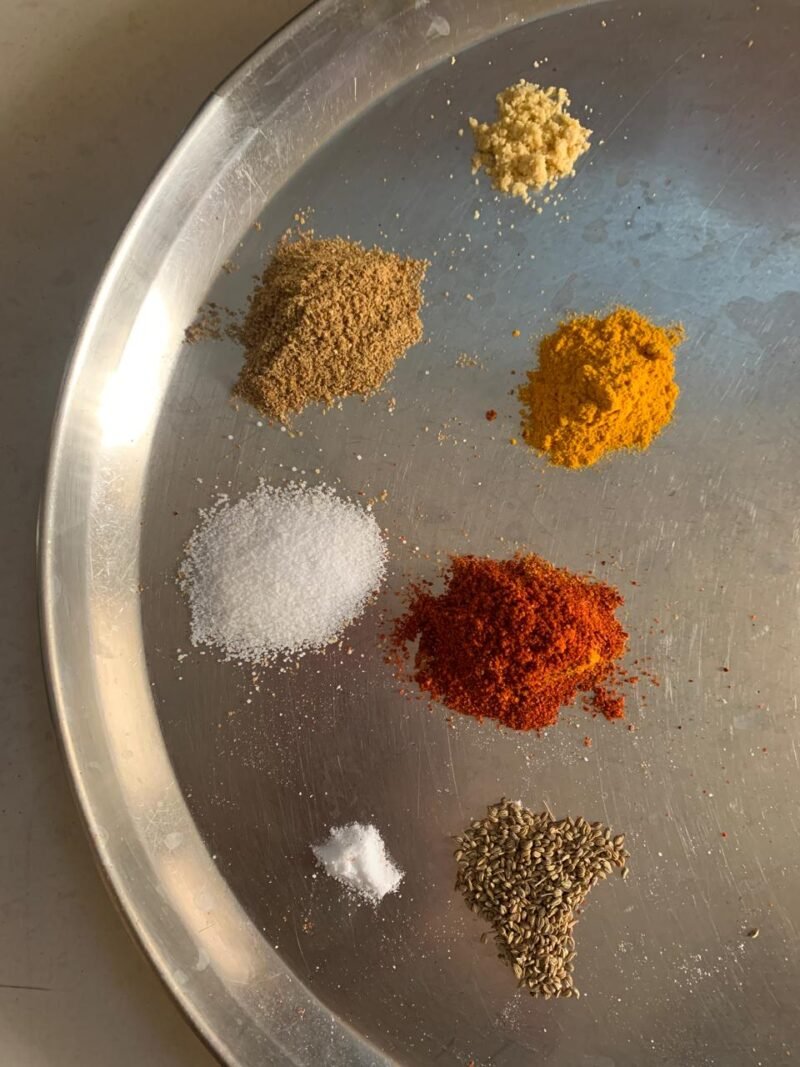
| Red chilli powder | 3 grams | 1 teaspoon |
| Turmeric powder | 1 gram | ½ teaspoon |
| Coriander powder | 2 grams | 1 teaspoon |
| Cumin seeds | 1 teaspoon |
| Salt | to taste |
| Water | as needed |
| Oil | for frying, as needed |
What You Will Need
Mixing bowl; Sieve; Mixer-Grinder; Rolling pin; Flat surface for rolling; Flat pan or tawa (for the pan-cooked version); Cloth or spatula (for pressing); Kadhai or deep-frying pan (for the fried version); Slotted spoon; Clean tray or cloth for sun-drying
Instructions
To make the chana flour, first soak the whole black chana overnight in water.
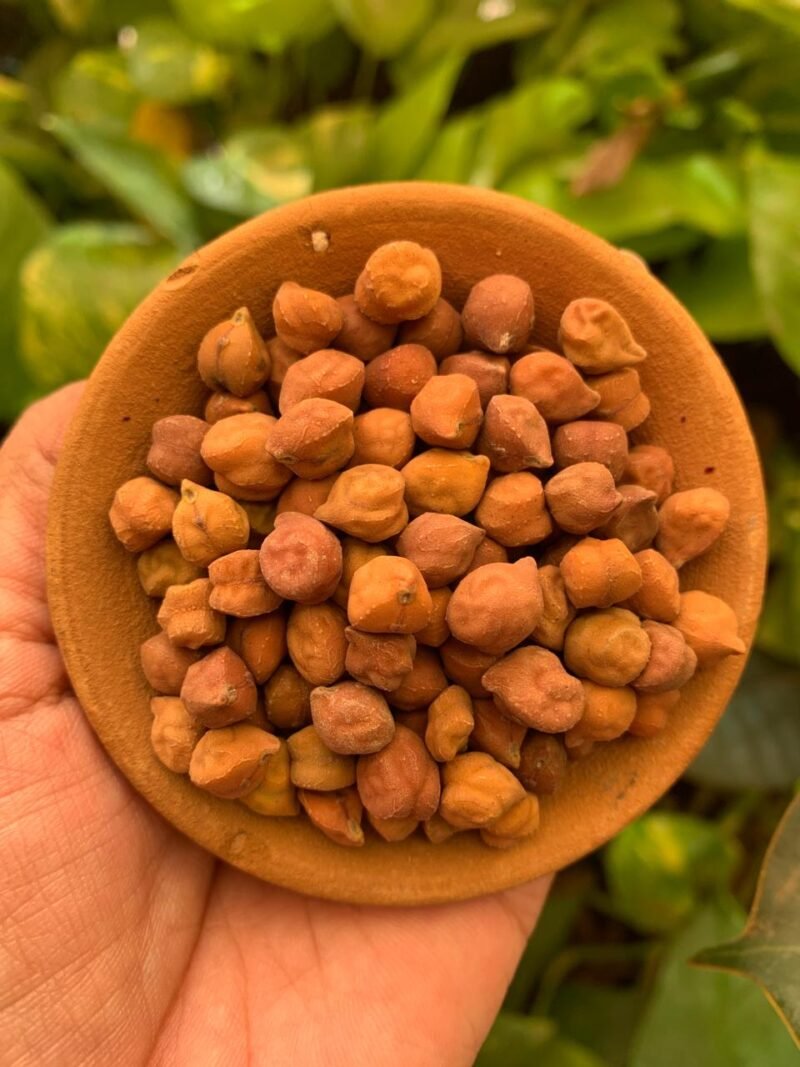
Drain and let the chana dry completely in the sun or under a fan.
Once dried, grind the chana into coarse chana dal using a grinder or flour mill.
Further grind the dal into a fine powder to make chana flour (besan). Sieve if needed.
In a mixing bowl, combine the chana flour with red chilli powder, turmeric powder, coriander powder, cumin seeds, and salt.
Add water gradually, mixing with your hands until the dough comes together.
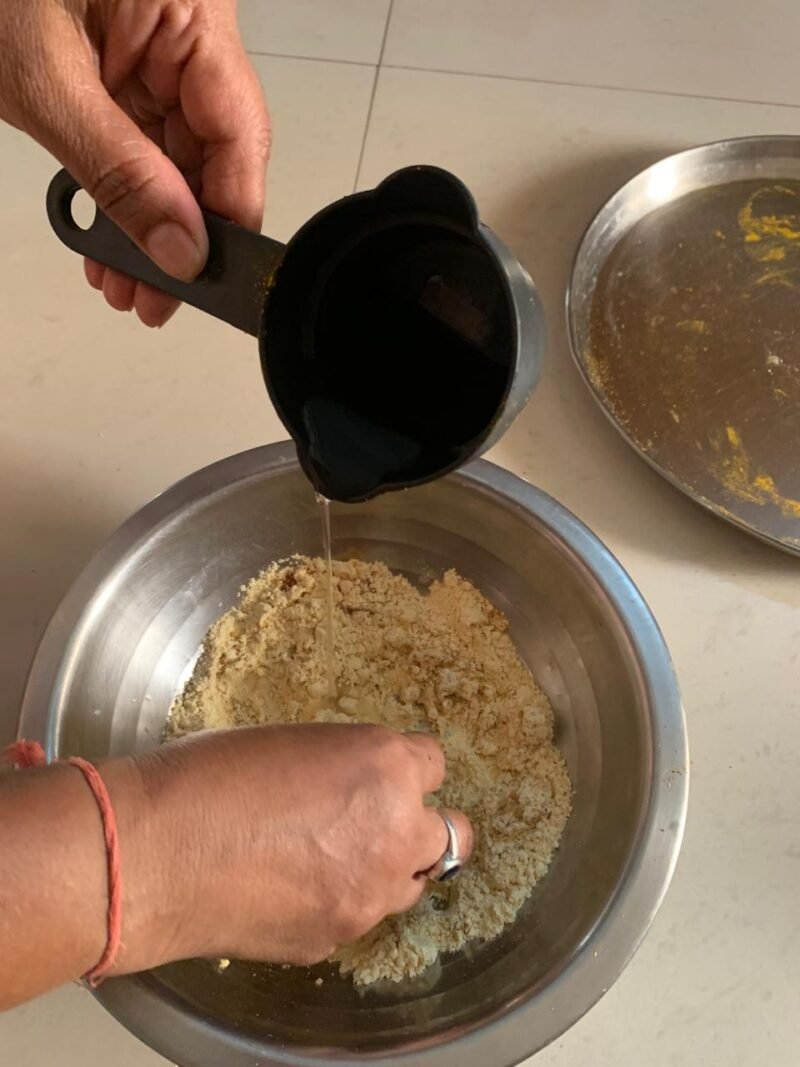
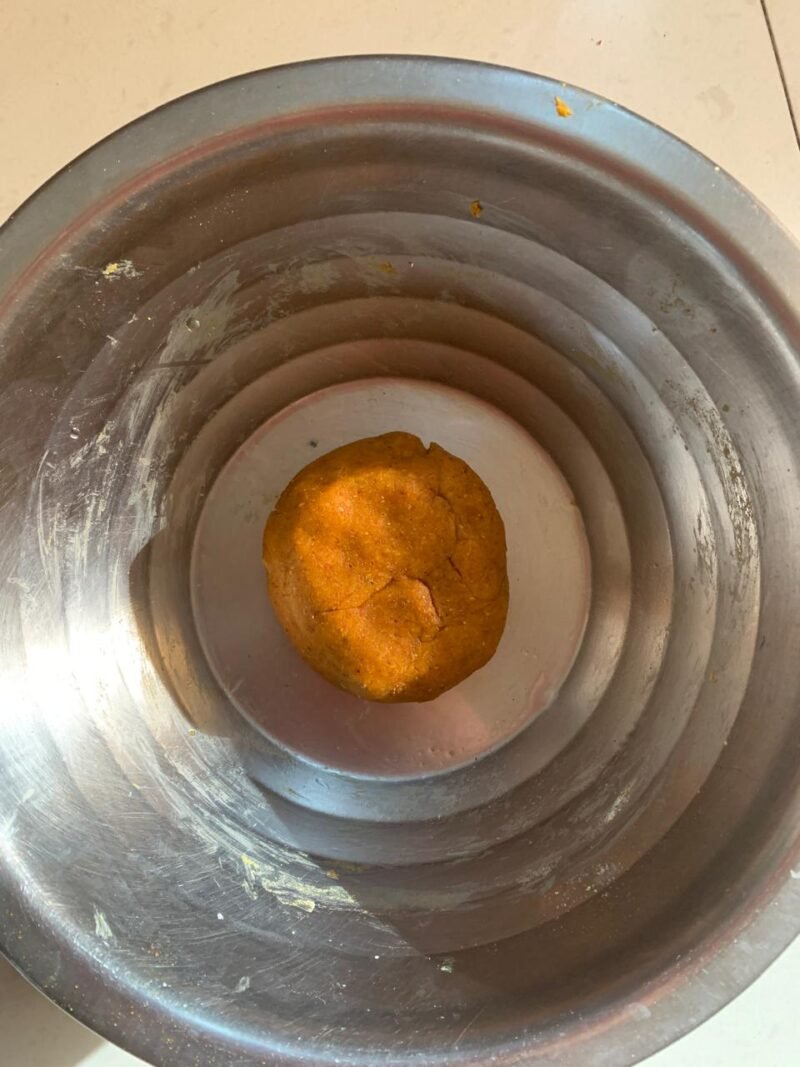
Knead into a firm but pliable dough. Cover and let it rest for 10–15 minutes.
Divide the dough into small, equal portions.
Roll each portion on a flat surface using a rolling pin to form thin, round discs, about the size of a puri.
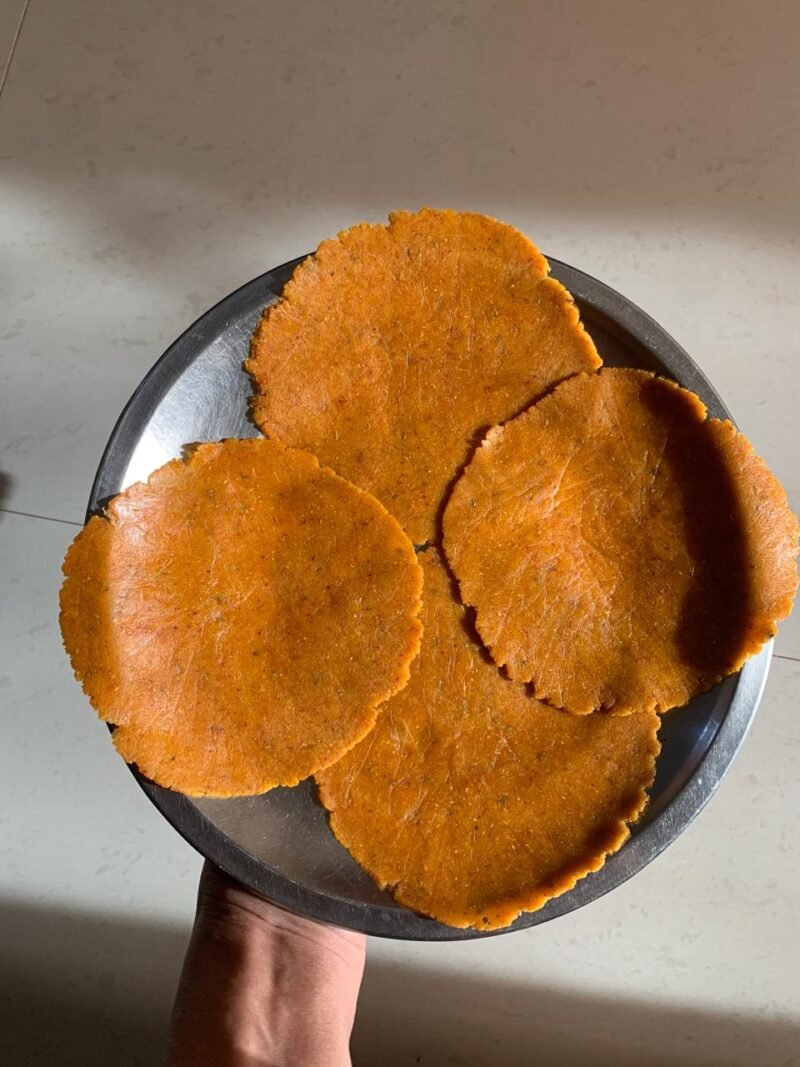
Place the rolled-out khakhras on a clean tray or cloth and allow them to dry in the sun for 1–2 hours, until they feel slightly firm and dry to the touch.
Heat a flat pan or tawa on low flame. Place a khakhra on the pan and cook slowly on both sides, pressing gently with a cloth or spatula to ensure even roasting.
Continue flipping and pressing until the khakhra is golden brown and crisp.
Alternatively, if frying the khakhra, heat the oil in a kadhai or deep-frying pan on medium heat.
Fry the khakhras one at a time, gently pressing with a slotted spoon so they cook evenly.
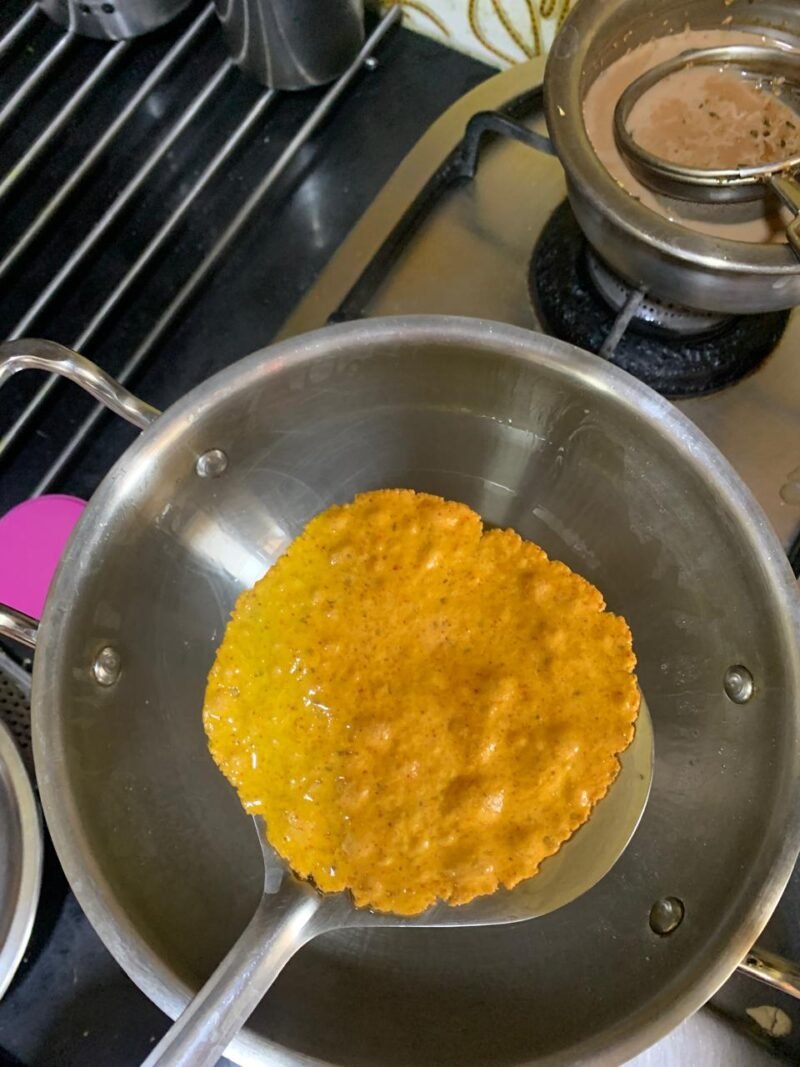
Fry until golden and crisp, then drain any excess oil on an absorbent paper.
Let them cool completely and then store in an airtight container.
Sushila Rathod lives in Navagam village in the Dahod Taluka of Gujarat’s Dahod district. She is passionate about experimenting with new recipes, and is part of the network of farmers supported by Aranya, a partner producer with The Locavore. Aranya works towards building sustainable food systems by supporting smallholder farmers through agro-ecological interventions.Their efforts not only help improve farm yields but also make locally grown produce available through their online shop. You can learn more about Aranya and their work here.
You must be logged in to rate this recipe.
 Login with Google
Sign in with email