
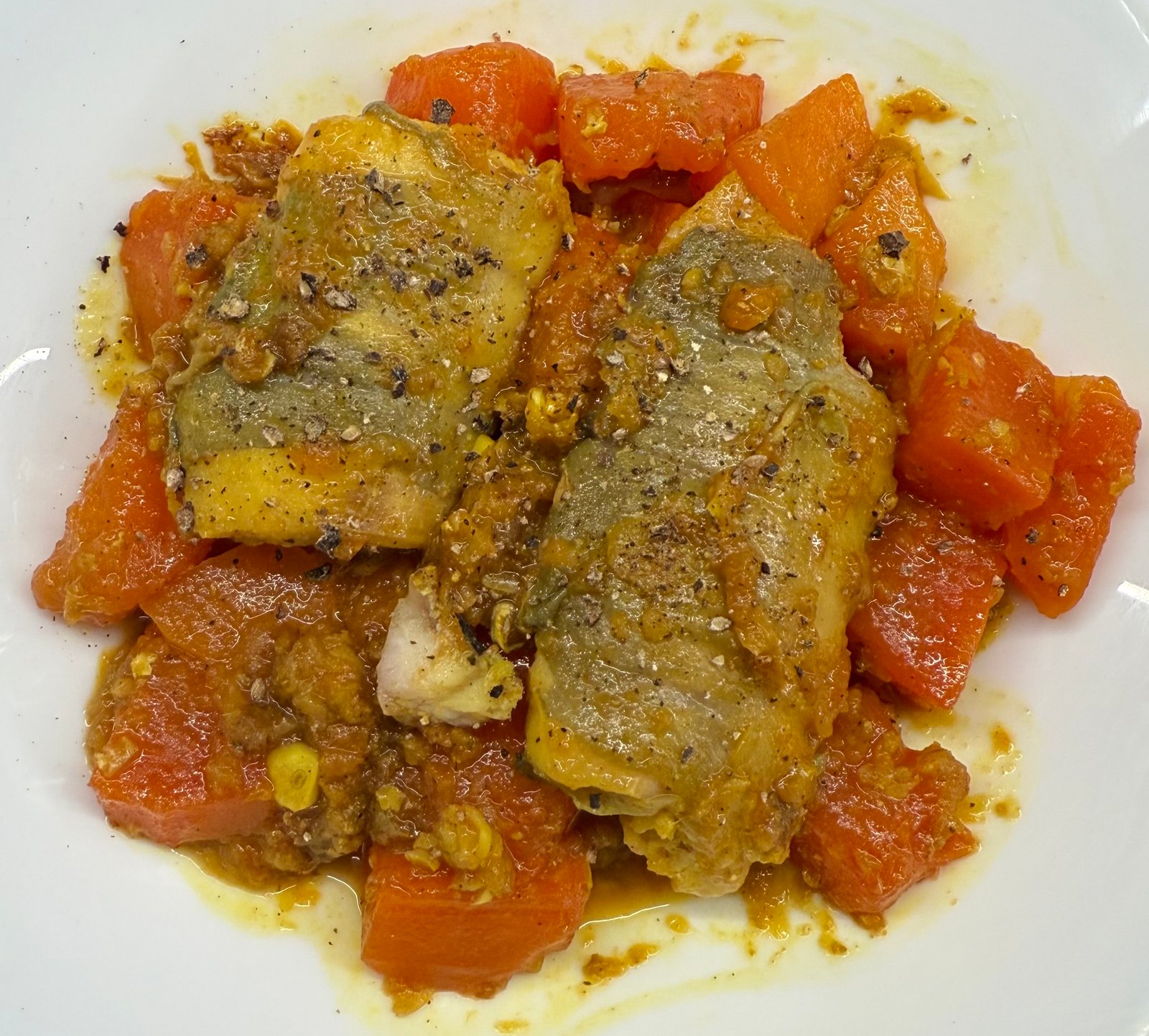
In parts of coastal Bengal and Assam, Kusia Jalukia—or a preparation featuring eel and raw papaya—is commonly found. Here, freshwater and estuarine fish are a part of the everyday diet. Eel has long been used in these regions, particularly in rural and fishing communities, owing to its availability in rivers, tidal creeks, and seasonal floodplains. Its rich, slightly fatty flesh benefits from slow cooking and strong seasoning, which is why it pairs well with mustard oil, whole spices, and savoury aromatics.
The use of raw papaya in this dish is practical and intentional. Papaya contains natural enzymes that help soften tougher cuts of meat and fish. When cooked slowly with eel, it releases a gentle sweetness, contributing body to the gravy without overwhelming the flavour of the fish.
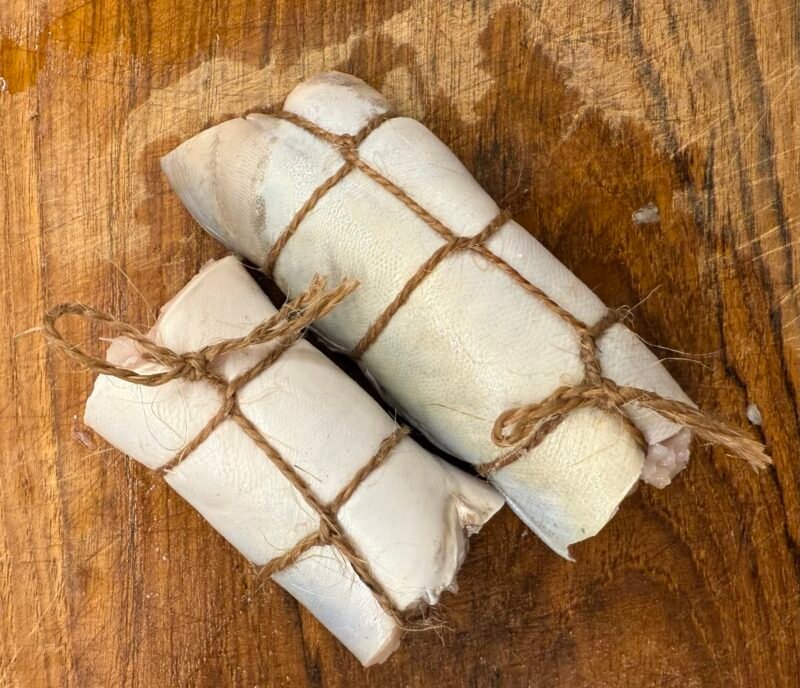
Rolling the eel fillet and tying it with twine helps the fish hold together as it is cooked. This technique also ensures that the skin is retained on the outside, and can be browned in mustard oil for a slightly crisp exterior.
For the Fish
| Eel fish fillets | 500 grams |
|---|---|
| Salt | to rub |
| Black pepper powder | to rub |
| Kitchen twine | 1 metre |
For Cooking
| Mustard oil | 3 tablespoons |
|---|---|
| White onions, grated (along with their juices) | 6, medium |
| Garlic, finely chopped | 2 tablespoons |
| Ginger, cut into long thin slices | 1 thumb-sized piece |
| Green chillies, slit lengthwise | 2 |
| Cumin seeds, whole | 4 teaspoons |
| Black pepper, whole | 4 teaspoons |
| Turmeric powder | 2 teaspoons |
| Raw papaya, peeled and cut into medium pieces | 1, medium |
| Salt | to taste |
| Hot water | 1/4 cup (approx.) |
What You Will Need
Heavy-bottomed wok (or kadhai); Mortar and pestle or spice grinder
Instructions
Lay the eel fillets flat on a board. Rub the surface with salt and black pepper powder. Roll them tightly with the skin facing outward.
Tie the rolls securely with kitchen twine at intervals so that they hold their shape during cooking. Set aside.
Place a heavy-bottomed wok on medium heat and add the mustard oil. Heat until the oil reaches smoking point, then reduce the heat slightly before proceeding.
Add the grated onions (including their juices) into the hot oil. Cook, stirring frequently, until they turn light golden in colour.
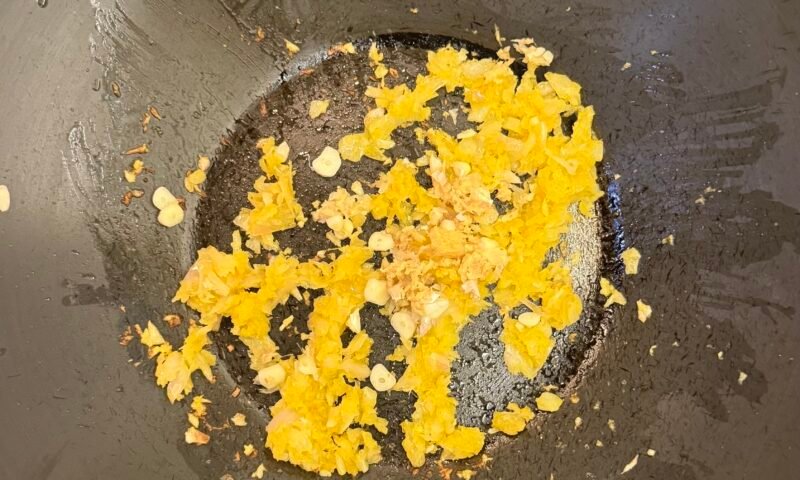
Add the chopped garlic and continue cooking for 1 more minute. Add the ginger and green chillies and stir well.
Using a mortar and pestle or a grinder, coarsely grind the whole cumin seeds and whole black pepper.
Add this ground spice mixture along with the turmeric powder to the wok. Cook the mixture for about 5 minutes, stirring often.
If the mixture begins to stick to the bottom of the wok, add a small splash of water to loosen it.
Increase the heat to medium-high. Gently place the rolled eel into the wok. Fry, turning occasionally, until the outer skin begins to darken and develops a slight crispness.
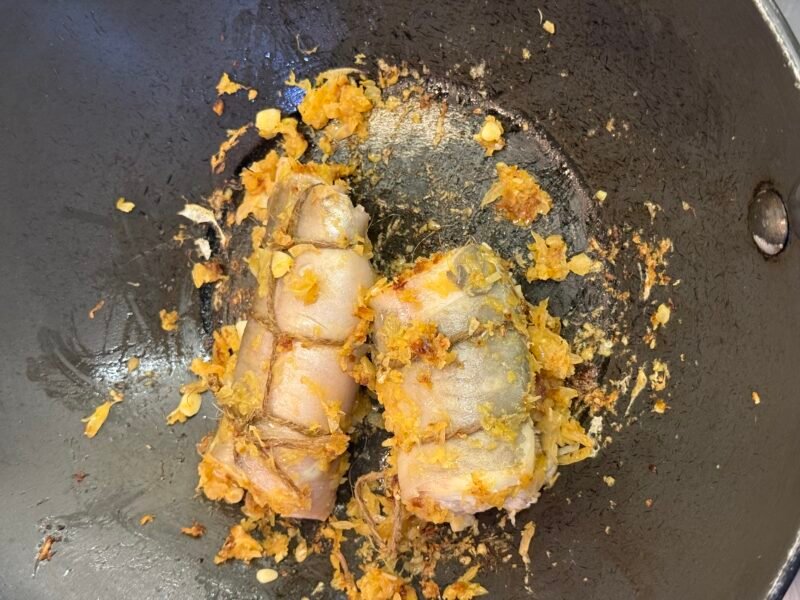
Add the pieces of raw papaya and stir to coat everything evenly in the masala.
Season with salt.
Pour in one-quarter cup of hot water, reduce the heat to low, and cover the wok with a lid.
Allow the dish to simmer until the papaya turns soft and the gravy thickens slightly.
Turn off the heat. Carefully cut and remove the twine before serving.
Grind a little fresh black pepper on top just before eating. Serve hot with steamed rice.
Tips:
- Heating the mustard oil until it begins to smoke removes its raw sharpness; always lower the flame slightly afterwards.
- Ensure the eel is tied firmly, or it may unravel while frying.
- Do not add too much water—the gravy should remain thick and cling to the fish and chopped papaya.
Arjun Singh is a cancer surgeon at Tata Memorial Hospital, Mumbai, where he works across clinical practice, research, and public policy. Outside the hospital, he enjoys cooking, and is a volunteer with The Mumbai Koli Project by The Locavore. Read more about the project here.
You must be logged in to rate this recipe.
 Login with Google
Sign in with email