
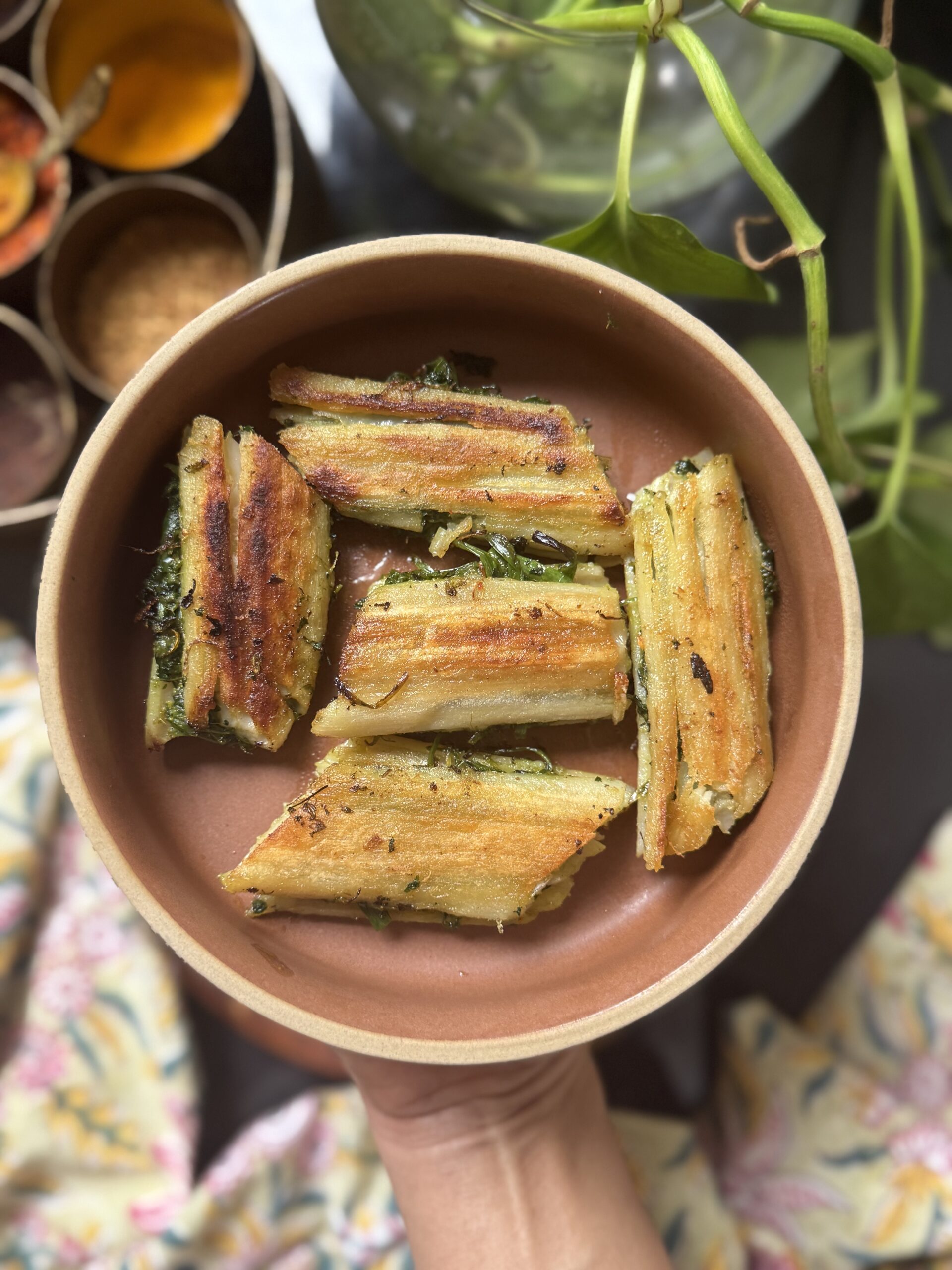
Sindhi cuisine has a long-standing affection for bhee, or lotus stem. While lotus stem is widely recognised on restaurant menus in honey-chilli preparations, Sindhi kitchens celebrate the ingredient through a far wider repertoire. From pakodas to gravy-based sabzis—such as raswali bhee and daagwali bhee—lotus stem appears frequently on the table. Meals served to guests often feel incomplete without at least one dish featuring bhee.
In this recipe, Dimple Bajaj Senani brings together two ingredients that hold a special place in most Sindhi homes: lotus stem and green garlic. With the arrival of winter, green garlic begins to appear in a variety of everyday preparations, from sabzis to chutneys and even buttermilk.
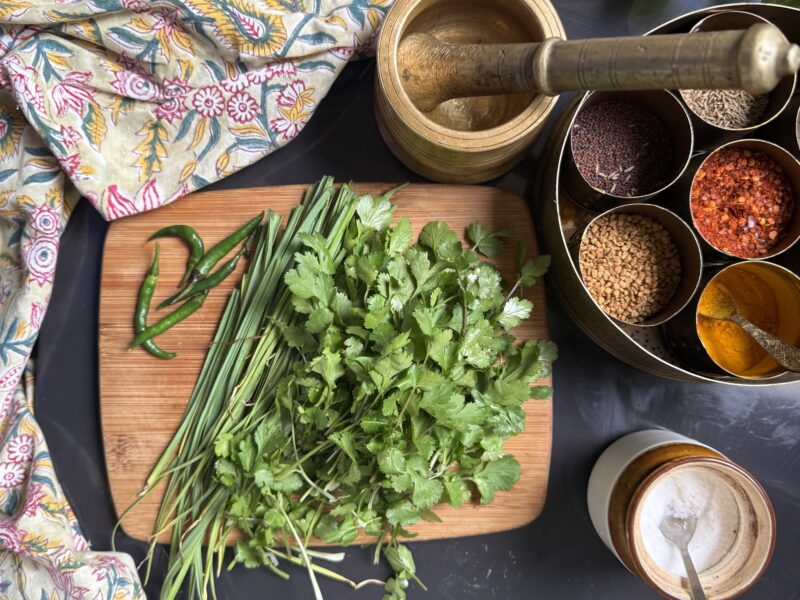
Bhee ji Chaap is a dry preparation that uses ‘Sao masalo’, a characteristic Sindhi green masala made with fresh herbs and green chillies. In winter, the masala becomes especially fragrant with the addition of green garlic, lending warmth and depth to the dish. In the warmer months, the preparation adapts easily: regular garlic may be used instead, or the green garlic omitted altogether.
Recollecting an anecdote from her childhood, Dimple narrates how in her mother’s household, a thin thread was tied around each stuffed piece of bhee to keep the masala filling intact while frying. Crisped slowly on a flat pan, Bhee ji Chaap is typically served as a side dish or a starter.
| Fresh lotus stem (bhee) | 500 grams |
|---|---|
| Milk | 2–3 tablespoons |
| Salt | 1 teaspoon |
| Water, for pressure-cooking | as needed |
| Green garlic (bulbs and greens), roughly chopped | ½ cup |
| OR garlic cloves | 3–4 |
| Coriander leaves with tender stems | ½ cup |
| Green chillies | 2–3 |
| Salt | to taste |
| Turmeric powder | ½ teaspoon |
| Red chilli powder | 1 teaspoon |
| Coriander powder | 1½ teaspoons |
| Oil | 1 tablespoon |
| Oil, for pan-frying | 3–4 tablespoons |
What You Will Need
Pressure cooker; flat-bottomed frying pan (or tawa); mortar and pestle (hamam dasta) or mixer grinder
Instructions
Begin by peeling the lotus stem and rinsing it thoroughly under running water, ensuring that any mud lodged in the holes is removed. Cut the stem into large pieces, about 7–10 centimetres long.
Place the pieces in a pressure cooker with the salt and milk. Add enough water to fully cover the lotus stem. Cook on high heat for 2–3 whistles, then lower the heat and simmer for 4–5 minutes. If the lotus stem has been stored for a few days or is more mature, it may require 4–5 whistles to soften.
Allow the pressure to release naturally. Drain the lotus stem and let it cool slightly until it is comfortable to handle. Slice each piece lengthwise into halves.
Making the Sao masalo:
In a mortar and pestle, pound the green garlic, coriander, and green chillies into a coarse paste. If using a mixer, pulse briefly without adding water. The mixture should remain coarse rather than smooth.
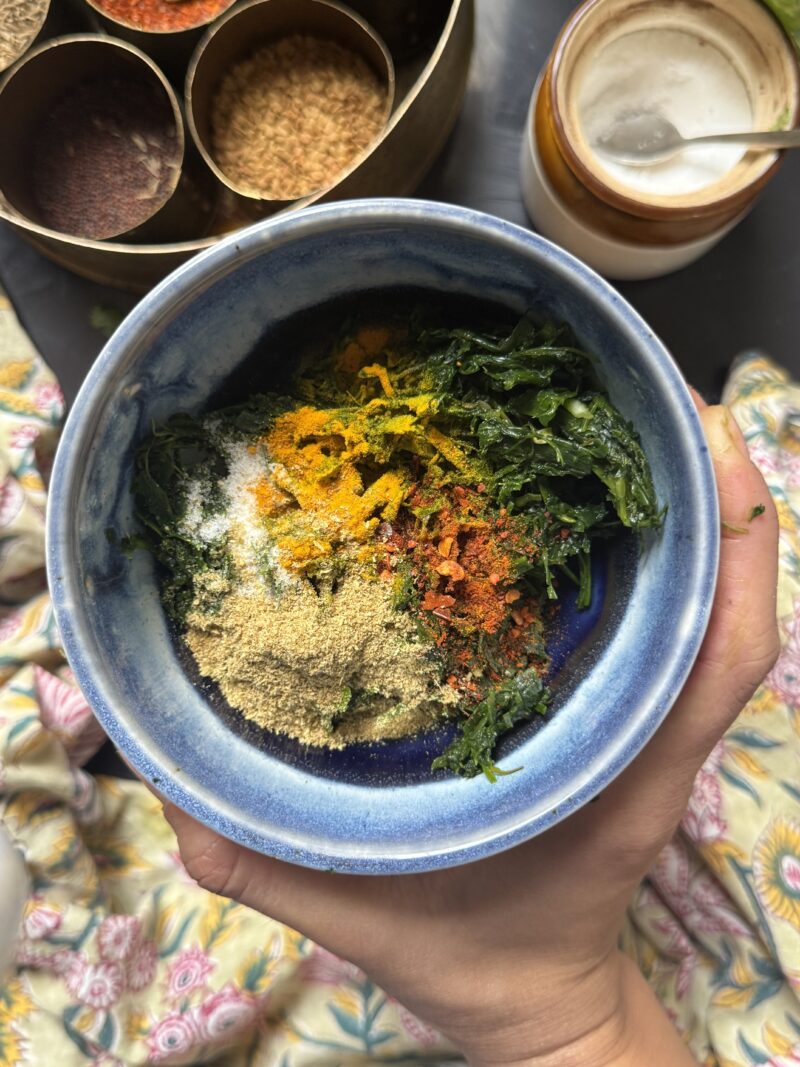
Transfer the mixture to a bowl and add the salt, turmeric, red chilli powder, coriander powder, and 1 tablespoon of oil. Mix well to combine and set aside.
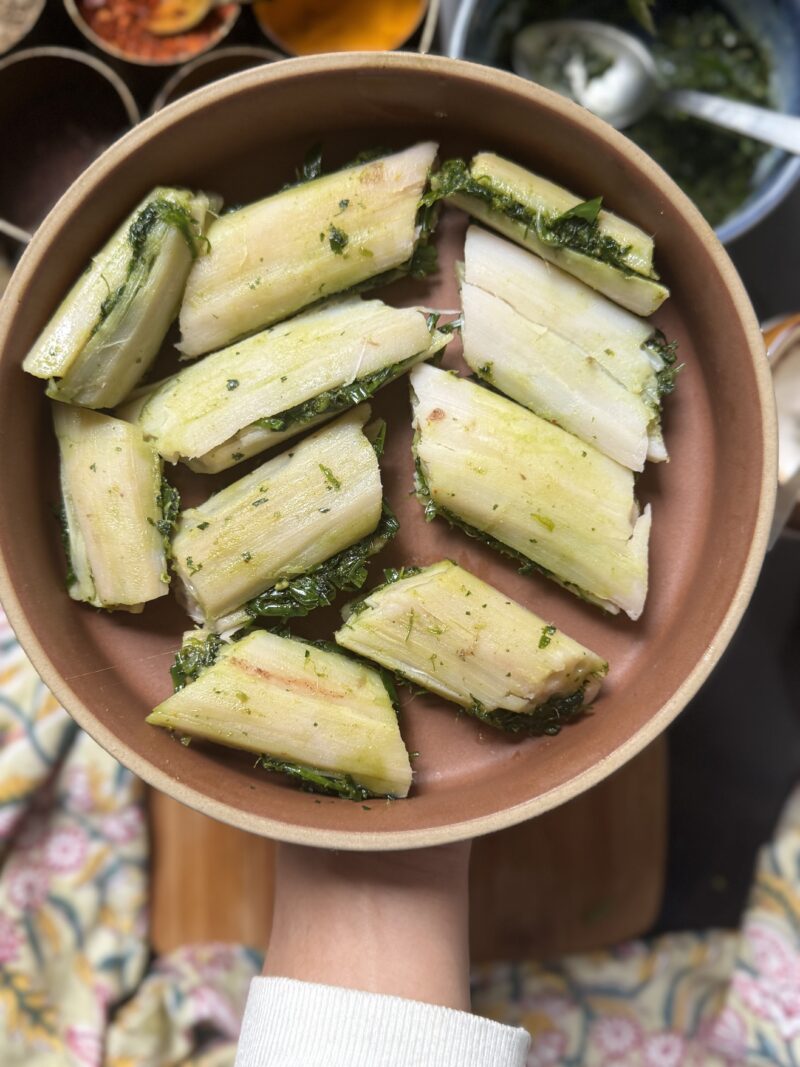
Take one piece of the cooked lotus stem and spread a thin layer of the masala over the cut side. Place another piece on top to form a sandwich. Press the two pieces together gently between your palms so the filling holds in place. Repeat with the remaining pieces.
Heat the oil in a wide, flat-bottomed pan over medium heat. Arrange the stuffed lotus stems in a single layer, ensuring they do not overlap.
Cook undisturbed until the underside turns golden and crisp. Carefully flip each piece and cook the other side until similarly crisp. Remove from the pan once evenly browned and lightly crunchy on the outside.
Serve warm.
Tips:
- Fresh lotus stems tend to cook faster and become tender more easily.
- Adding milk to the cooking water helps prevent the lotus stem from darkening.
- Keep the masala coarse rather than smooth for better texture.
- Green garlic lends the dish its distinctive winter flavour; outside the season, it can be replaced with regular garlic cloves.
- A wide, flat pan helps the lotus stem crisp evenly while frying.
Dimple Senani is a home cook who documents vegetarian, seasonal cooking rooted in Sindhi traditions while exploring flavours from across India and beyond. Through her work, she preserves memory-led recipes and everyday food wisdom. She shares her work on Instagram at foodly_madly_deeply
You must be logged in to rate this recipe.
 Login with Google
Sign in with email