
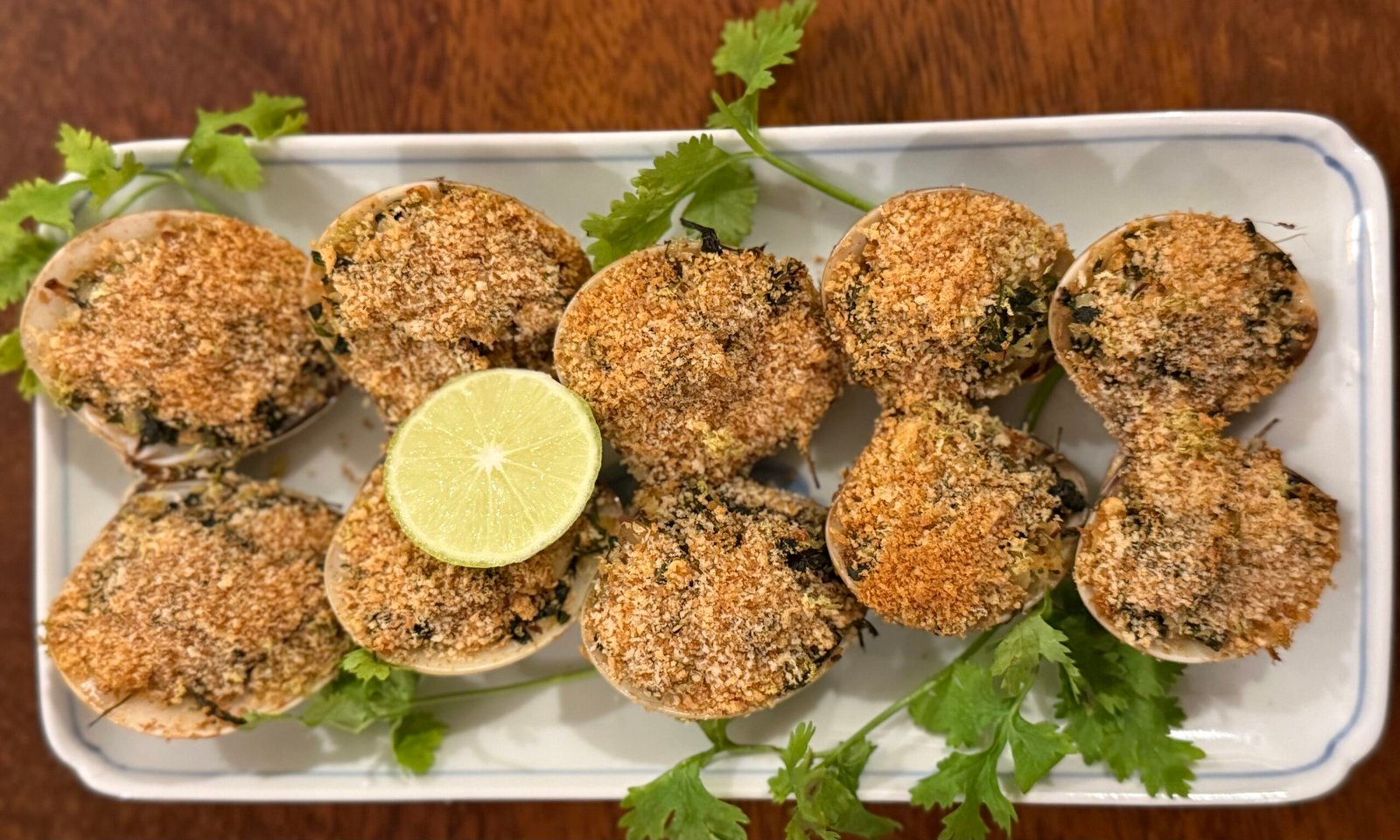
Tisriya are small clams commonly eaten along the western coast of India, especially in the regions of Goa, Maharashtra, and parts of Gujarat. They are available fresh in local fish markets, often sold on the same day they are collected from shallow coastal waters or estuaries. In Marathi and Konkani, the word ‘tisriya’ simply means ‘clam’.
Interestingly, the Tisrya Koli—a subgroup within the Koli community—derives its name from their association with collecting and eating clams. For the Tisrya Kolis, clams have been a significant and accessible source of protein for generations, traditionally gathered by hand at low tide. Learn more about the community through The Mumbai Koli Project by The Locavore here.
In many coastal households, clams are cooked soon after they are brought home to maintain their freshness. They are commonly prepared in curries with coconut, garlic, and spices, or simply steamed until the shells open up. Delicately flavoured and mildly briny, they pair well with fresh herbs and coconut.
In this baked preparation from Arjun Singh, the clam meat is first cooked in its shell, then removed, chopped, and combined with a seasoned coconut filling. The shells are reused as natural serving vessels. Once baked, a breadcrumb-and-butter topping is added to create a crisp layer.
The recipe calls for some careful preparation: cleaning the clams to remove grit, removing the cooked meat without damaging the shells, and assembling each shell individually. However, the steps are straightforward when taken one at a time. The finished dish works well as a starter or a small plate to share.
For the Tisriya (Clams):
| Coconut oil | 1/4 cup |
|---|---|
| Garlic | 1 pod |
| Cashew feni | 150 millilitres |
| Mint leaves | a generous handful |
| Tisriya (clams), washed | 1 kilogram (approx.) |
For the Filling:
| Coconut oil | 2 tablespoons |
|---|---|
| Ghee | 1 tablespoon |
| Curry leaves | 4–5 |
| Garlic with skin, roughly chopped | 1 pod |
| Onion, roughly chopped | 1, medium |
| Turmeric powder (haldi) | 1 teaspoon |
| Dried red chillies, chopped | 2–3 |
| Salt | to taste |
| Baby fenugreek (Barik methi) leaves, stems removed | 4–5 small bundles |
| Fresh, grated coconut | 1/2 cup |
For assembling the dish:
| Breadcrumbs | 500 grams |
|---|---|
| Lemon zest | 1 tablespoon |
| Butter, melted | 2 tablespoons |
| Fresh lime (for serving) | to taste |
What You Will Need
Heavy-bottomed pot with lid; baking tray; oven; mixing bowls; tongs (for handling the hot shells); fine grater or microplane (for the lemon zest)
Instructions
Preheat the oven to 170°C (350°F).
Place a heavy-bottomed pot on a medium flame and add the coconut oil. Allow it to warm for a minute.
Add the chopped garlic and cook, stirring often, until the garlic turns light brown. Take care not to burn it.
Pour in the cashew feni. Carefully tilt the pan slightly or use a lighter to flambé it. The flame will rise briefly and then settle.
(If uncomfortable flambéing, simply let the feni simmer until its strong aroma evaporates.)
Add the mint leaves and the tisriya immediately after.
Cover the pot with a tight lid, reduce the flame to low, and allow the clams to cook for 8-10 minutes, or until all the shells have opened.
(Discard any clams that remain closed.)
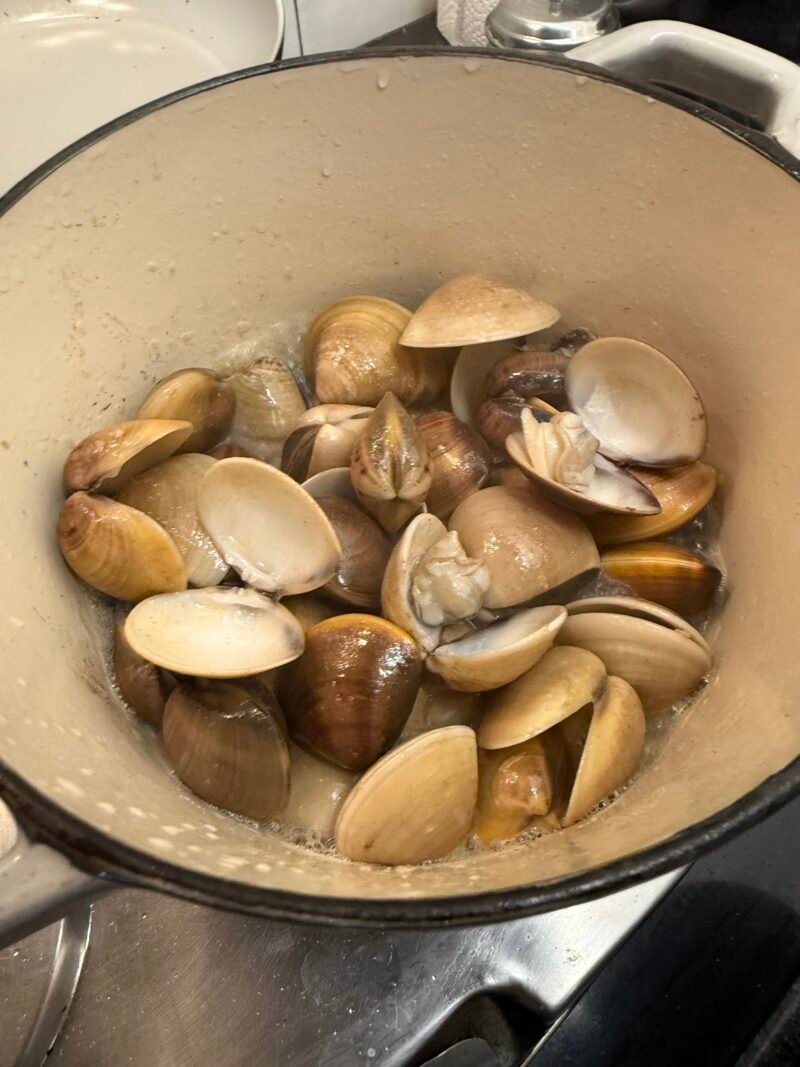
Once cooked, transfer the clams to a large plate. Allow them to cool for a few minutes—just enough to handle.
Gently remove the clam meat from the shells, keeping the shells aside to use later. Chop the meat into small, bite-sized pieces.
Return the pot with the leftover cooking liquid to the stove and cook over medium to high heat for a few minutes, allowing the liquid to reduce and become slightly thicker. Turn off the flame and keep aside.
For the filling:
In the same pot, add the coconut oil and ghee. Heat on a medium flame until the oil and ghee melt.
Add the curry leaves and let them sizzle for a few seconds.
Add the garlic, onion, turmeric powder, and dried red chillies. Cook while stirring continuously until the onions turn soft. They should not turn brown.
Add salt to taste.
Tear the barik methi leaves roughly with your hands and add them to the pot. Cook for 1-2 minutes until the leaves soften.
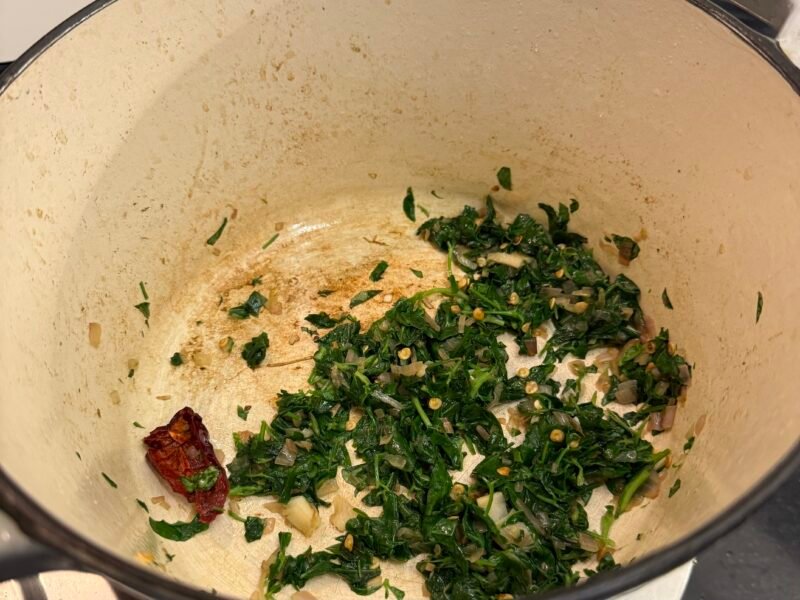
Turn off the flame and add the grated coconut. Stir everything together until fully combined. Set aside to cool slightly.
For assembling the dish:
In a wide bowl, mix together the breadcrumbs, lemon zest, and softened butter using your fingers until the mixture resembles damp sand.
In another bowl, combine the clam meat with the prepared filling. The mixture should contain more clam meat than filling.
Take the empty shells and fill each one with the clam mixture. Press the filling down firmly so it is tightly packed.
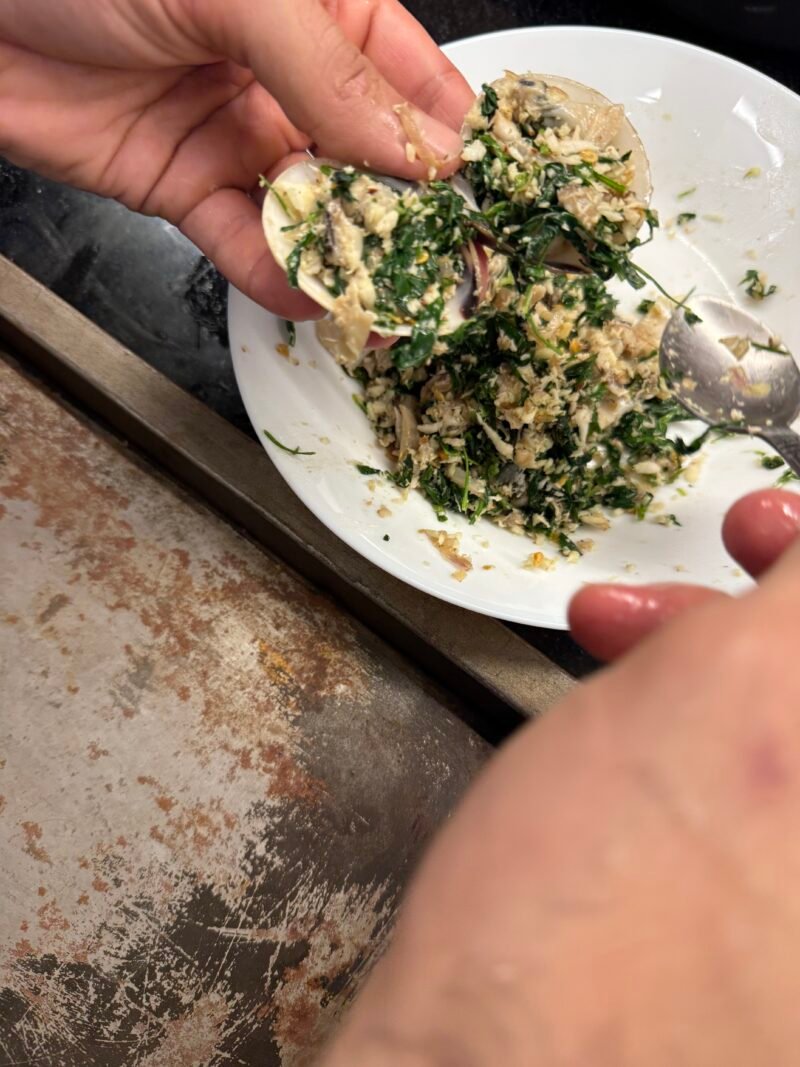
Dip the open filled side of each shell into the breadcrumb mixture, coating it well.
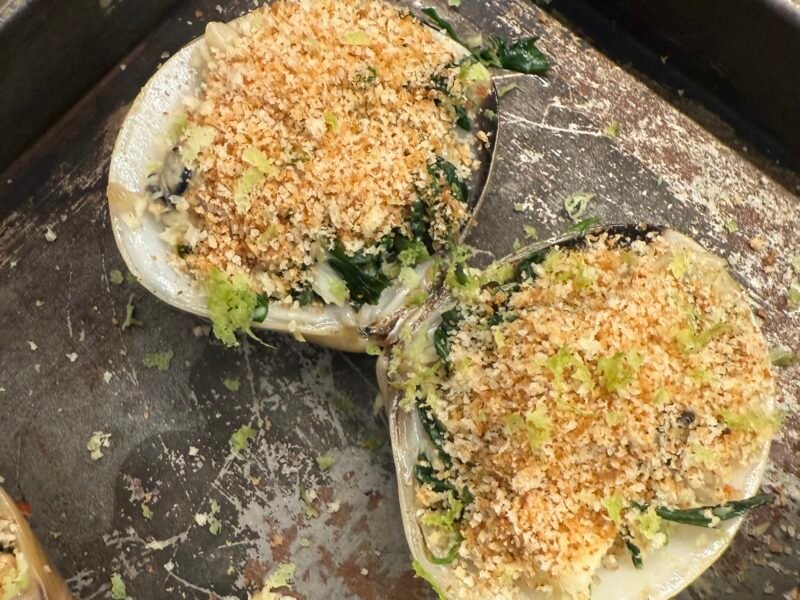
Arrange the shells on a baking tray. Place the tray on the middle rack of the oven and bake for 12-15 minutes, or until the tops turn golden brown.
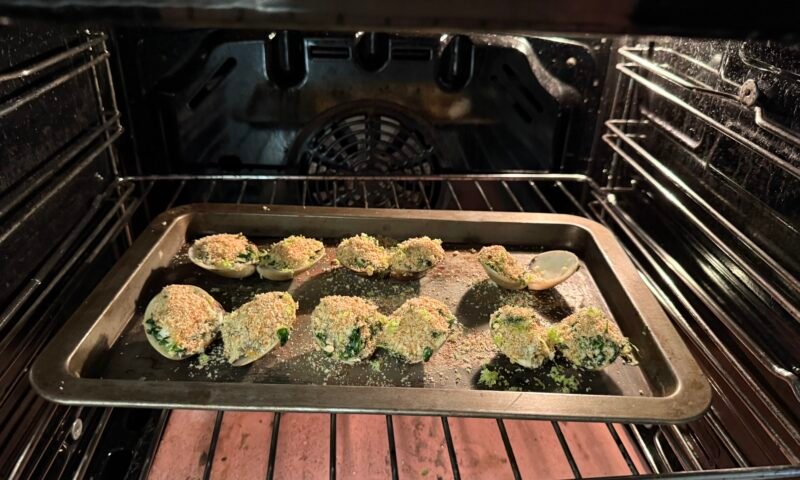
Remove from the oven and allow the shells to rest for 2-3 minutes so they are easier to handle.
Serve warm with a squeeze of fresh lime.
Tips:
- Rinse the tisriya in cold water several times. If possible, soak them in salted water for about 10-15 minutes—this encourages them to release any sand.
- Once they open, they are cooked through. Overcooking makes them chewy. Remove from the pot as soon as the shells open.
- Handle the shells gently while removing the meat to prevent them from cracking.
- Press the mixture firmly into each shell so it holds together well and does not spill out during baking.
- Let the baked shells sit for 2-3 minutes before serving—this helps the filling set.
Variations:
If cashew feni is unavailable, you may use white wine or palm feni for a similar aromatic effect. Alternatively, you can skip flambéing and let the alcohol cook off naturally.
Arjun Singh is a cancer surgeon at Tata Memorial Hospital, Mumbai, where he works across clinical practice, research, and public policy. Outside the hospital, he enjoys cooking, and is a volunteer with The Mumbai Koli Project by The Locavore. Read more about the project here.
You must be logged in to rate this recipe.
 Login with Google
Sign in with email