
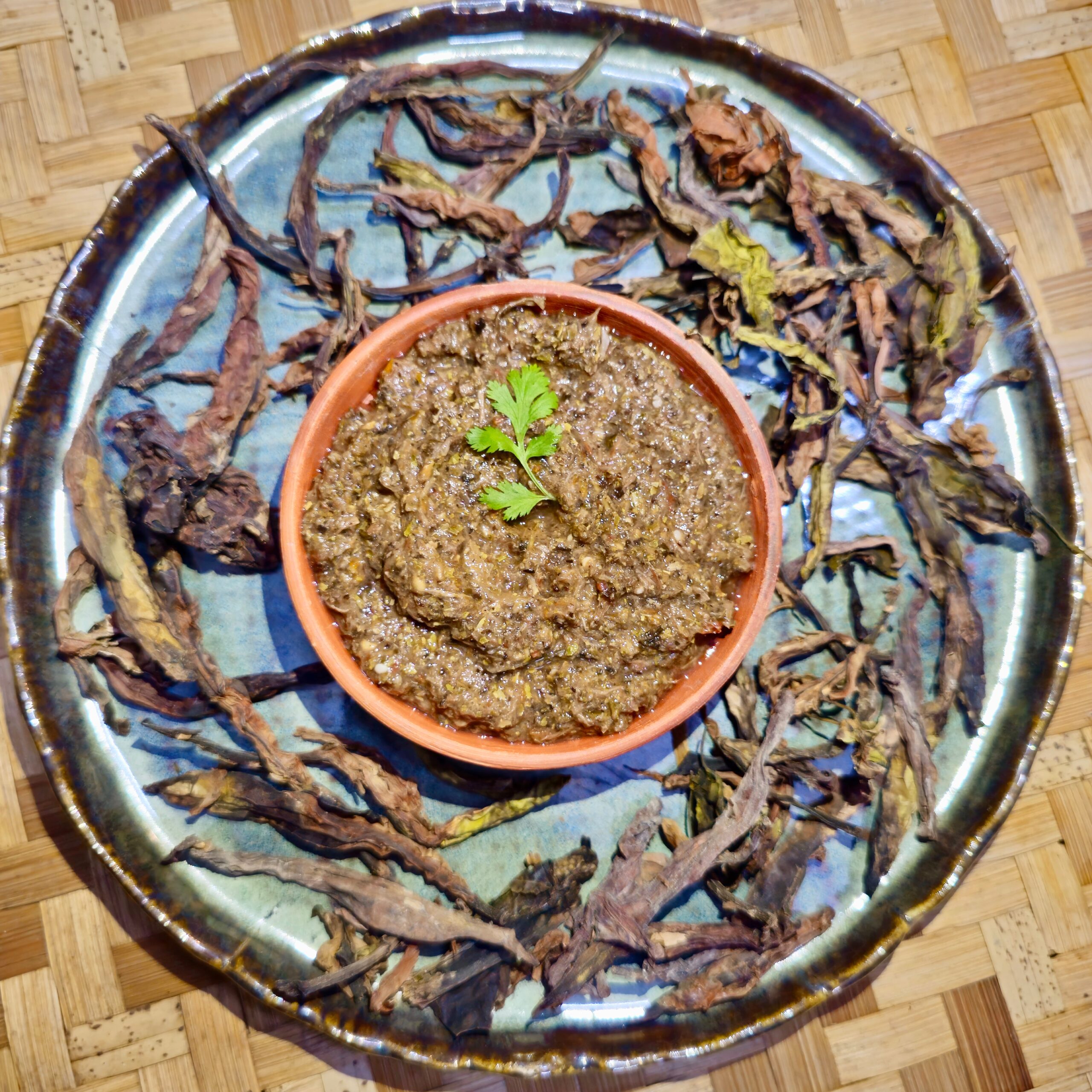
Futkal—also known as Phutkal—is a summer food that has long been part of tribal home kitchens in Jharkhand. It comes from Ficus geniculata L., a species of wild fig that grows across the Chotanagpur Plateau. Communities have traditionally gathered its tender leaf buds, or ‘toosa’, every February and March. These buds are then sun-dried and preserved, to be used as a source of nourishment and healing during the hotter months.
The buds are first boiled and then dried in the sun, allowing them to turn brown with a distinctly sour taste and very little aroma. They are often pickled or used in curries. One of the most loved preparations is Futkal Chutney, wherein the softened buds are ground along with roasted tomato, ginger, garlic, chilli, and salt to make a tangy accompaniment that is usually eaten with rice or millet rotis.
Beyond its distinctive flavour, Futkal is especially valued during summer for its cooling properties. It is traditionally eaten to soothe the stomach, prevent dehydration, and support digestion. Even today, it remains a beautiful example of how forest foods continue to shape seasonal food wisdom in Jharkhand.
| Futkal leaf buds (fresh or dried) | ½ cup or 12–13 buds |
|---|---|
| Tomato | 1, medium |
| Ginger, peeled and chopped | 1-inch piece |
| Garlic | 3–4 cloves |
| Green chilli | 1–2 pieces |
| Salt | to taste |
| Mustard oi | 1 teaspoon |
What You Will Need
Mortar and pestle or blender, open flame or frying pan
Instructions
If using fresh Futkal leaf buds, rinse them thoroughly under running water. Bring a pot of water to the boil and cook the buds for 5–7 minutes, or until softened. Drain and allow them to cool slightly.
If using dried Futkal, soak the buds in water for about 30 minutes until softened and rehydrated. Drain before use.
Roast the tomato directly over an open flame or in a dry frying pan until the skin is charred and the flesh softens. Allow it to cool slightly, then peel away the burnt skin.
Place the softened Futkal, roasted tomato, chopped ginger, garlic cloves, green chilli, and salt into a mortar and pestle.
Grind the mixture into a coarse chutney. Traditionally, the chutney is slightly textured rather than completely smooth. If using a blender, add only a minimal amount of water.
Transfer the chutney to a serving bowl and drizzle the mustard oil over the top. Mix well before serving.
Serve fresh with steamed rice, millet roti, or Dhuska (fritters made with rice and lentils).
Tips:
Adjust the number of green chillies depending on your preferred spice level.
Variations:
- Some households add roasted dried red chillies instead of fresh green chillies for a smokier flavour.
- A small quantity of roasted sesame seeds can be added for nuttiness and texture.
Dr. Manisha Oraon is a social entrepreneur and co-founder of The Open Field, based in Ranchi, Jharkhand, where she works to strengthen indigenous food systems, forest livelihoods, and community-led enterprises. She is also the founder of Paroksha Foundation, which works toward tribal advocacy.
You must be logged in to rate this recipe.
 Login with Google
Sign in with email