
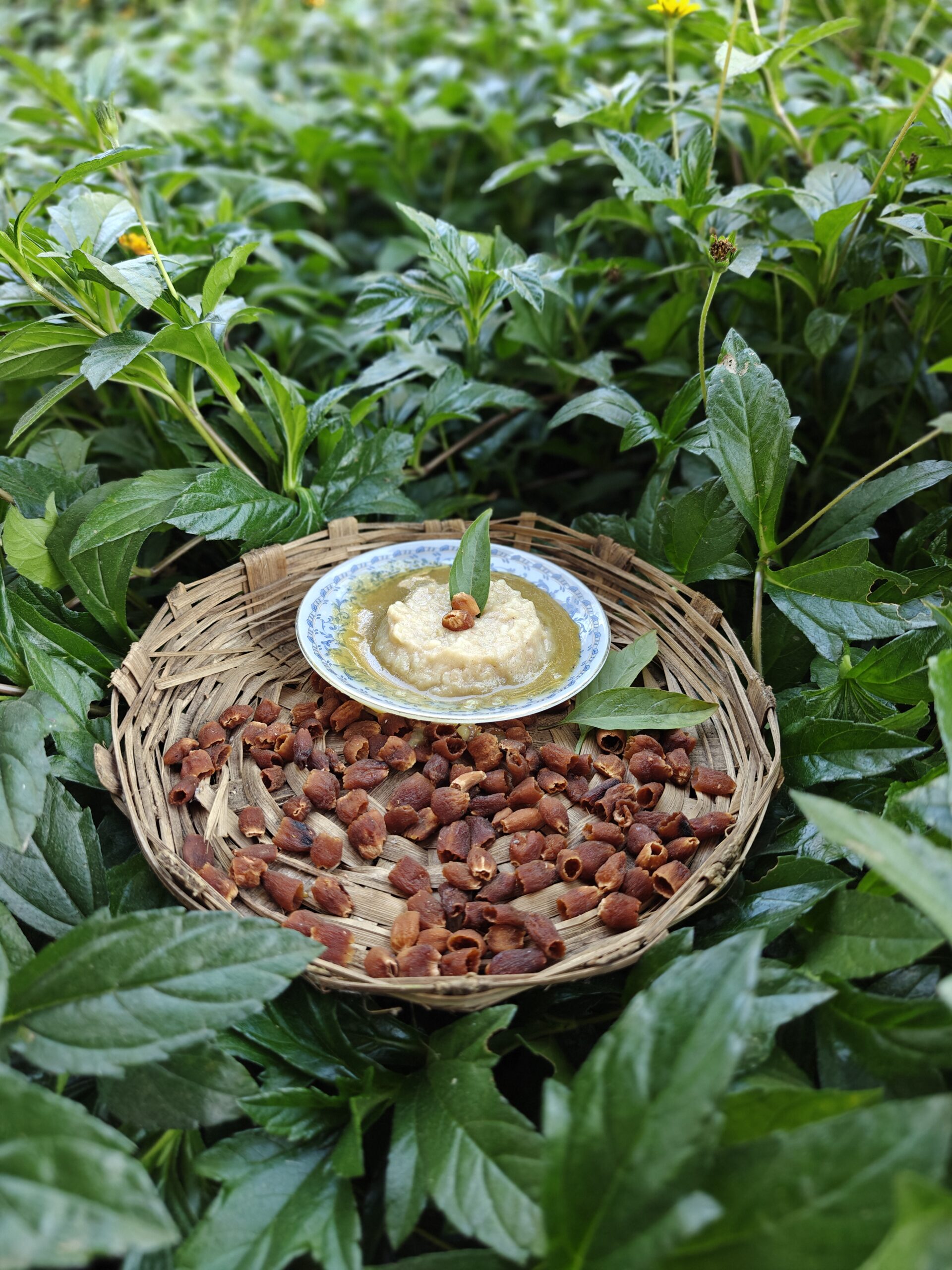
The arrival of summer in Jharkhand is marked not just by the heat but also by Mahua flowers in full bloom. Between late February and April or May, as the trees shed their leaves, soft cream-coloured Mahua flowers begin to fall to the forest floor. Mahua is deeply woven into tribal life; the flowers are not simply plucked, but gathered by hand after they fall naturally, making it one of the most sustainably harvested forest foods.
Naturally rich in sugars, Mahua flowers serve as both nourishment and livelihood for forest communities. Families traditionally sun-dry the flowers and store them to be used throughout the year, transforming a brief seasonal abundance into a long-term source of sustenance. This practice allows Mahua to move beyond the forest into everyday kitchens, where it appears in drinks, sweets, fermented foods, and preserves.
For Dr. Manisha Oraon, childhood summers were defined by journeys from Ranchi to her mother’s village Bishunpur, Gumla. Early mornings meant stepping outside to find the last Mahua flowers of the season scattered across the ground, eventually gathered by hand. By afternoon, verandahs and mud rooftops would be covered with flowers laid out carefully to dry in the sun.
At her Badi Ma’s house in the village, Manisha remembers eating rice with Futkal chutney, its sharp sourness cutting through the summer heat, or sipping on maar jhor, a light rice starch-based broth comprising dried Futkal leaves. Mahua, too, would make an appearance—this time slowly cooked, with roasted tamarind seeds or dried fruits brought from the market.
| Dried Mahua flowers | 250 grams |
|---|---|
| Ghee | 1 teaspoon |
| Milk | ½ litre |
| Rice, washed and soaked for 20 minutes | 250 grams |
| Whole jaggery or sugar | 3–4 tablespoons |
| Tamarind seeds (cheenya) | 5–10 pieces |
| Cardamom powder (optional) | to taste |
| Chopped nuts (cashewnuts, almonds) (optional) | 1 tablespoon |
What You Will Need
Heavy-bottomed pans or kadhais
Instructions
Wash the dried Mahua flowers thoroughly under running water to remove any dust or impurities. Alternatively, soak them overnight in water to soften them further.
Drain the flowers well.
Heat the ghee in a heavy-bottomed pan over a low flame. Add the soaked Mahua flowers and roast gently for 2–3 minutes until aromatic.
In a separate heavy-bottomed pan, bring the milk to a gentle boil.
Add the soaked rice to the milk and cook over a low flame, stirring occasionally to prevent it from sticking to the bottom of the pan.
Continue cooking until the rice softens completely and the milk thickens to a creamy consistency.
Add the roasted Mahua flowers to the pan and simmer for another 10–15 minutes so that the flavours combine.
Stir in the jaggery or sugar and mix until fully dissolved. If using jaggery, keep the flame low to prevent the milk from splitting.
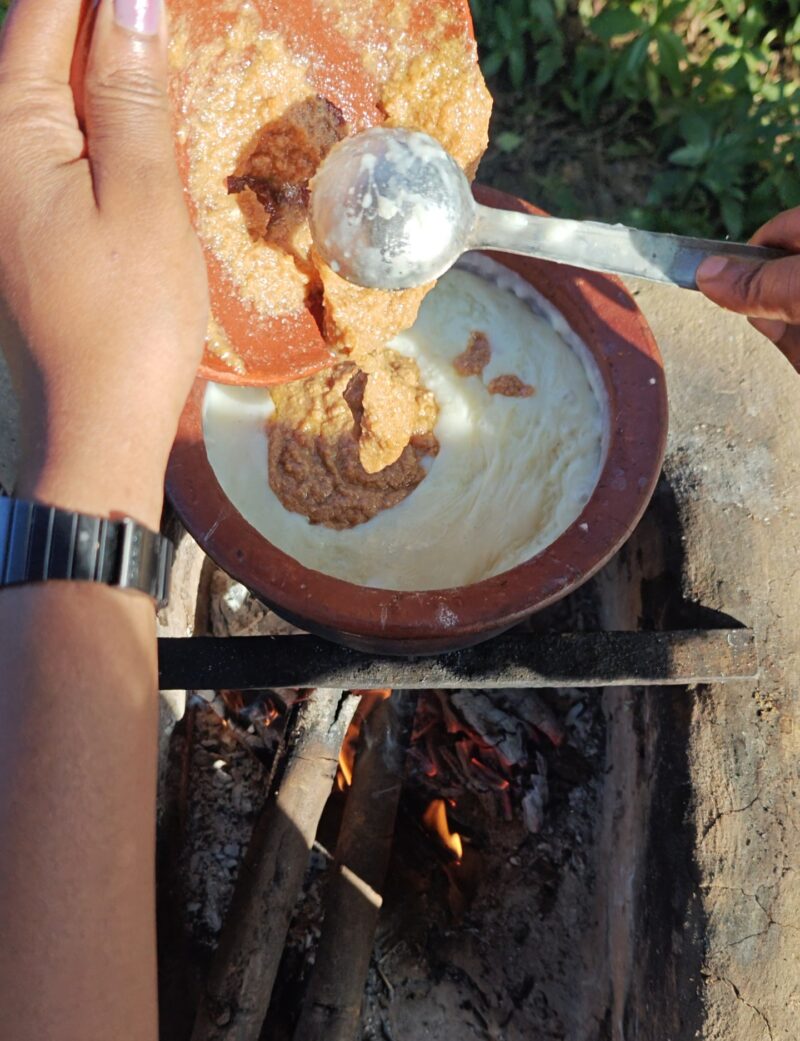
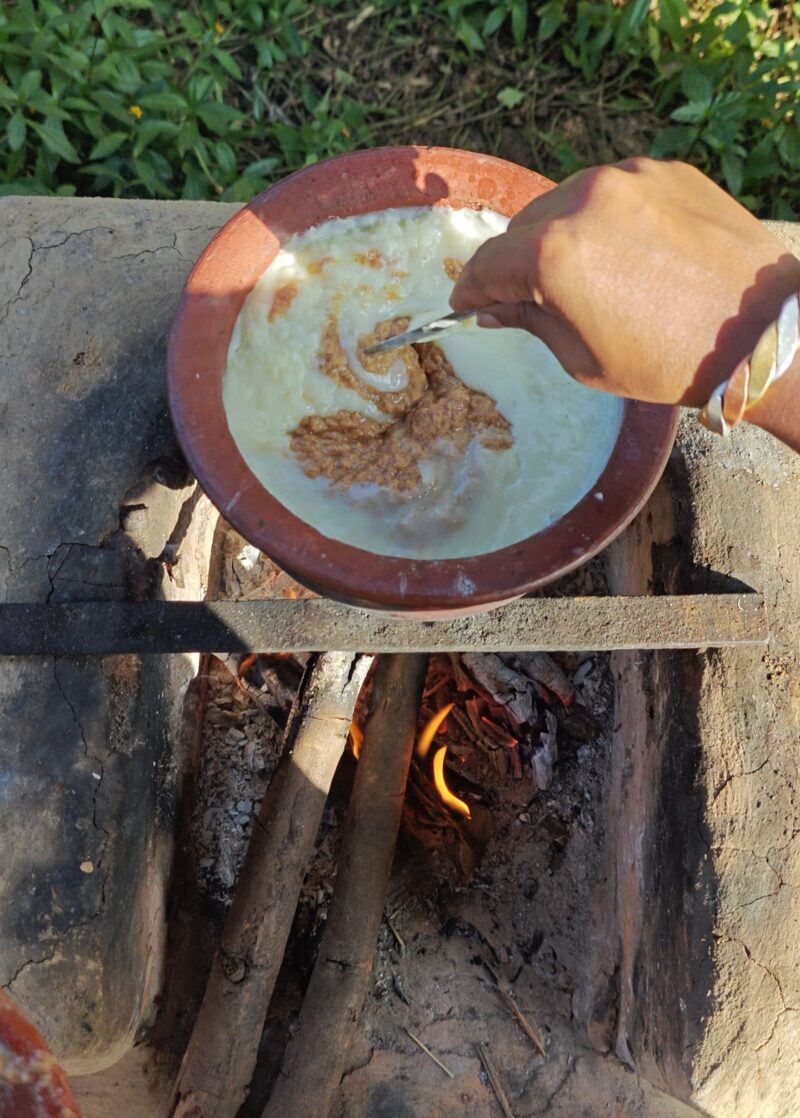
Add the roasted tamarind seeds, cardamom powder, or chopped nuts, if using.
Remove from the heat and allow the kheer to cool slightly.
Serve warm, or refrigerate and serve chilled.
Tips:
- Stir the kheer regularly while cooking to prevent the milk and rice from catching at the bottom of the pan.
- The sweetness can be adjusted depending on the natural sweetness of the Mahua flowers.
- Chilling the kheer before serving gives it a thicker texture and deeper flavour.
Variations:
- Some households prepare the dish using only jaggery, while others prefer using sugar for a lighter flavour.
- Roasted dried fruits such as raisins and coconut are sometimes added for more richness and texture.
- The kheer can also be made thinner and served warm as a comforting summer drink.
Dr. Manisha Oraon is a social entrepreneur and co-founder of The Open Field, based in Ranchi, Jharkhand, where she works to strengthen indigenous food systems, forest livelihoods, and community-led enterprises. She is also the founder of Paroksha Foundation, which works toward tribal advocacy.
You must be logged in to rate this recipe.
 Login with Google
Sign in with email