
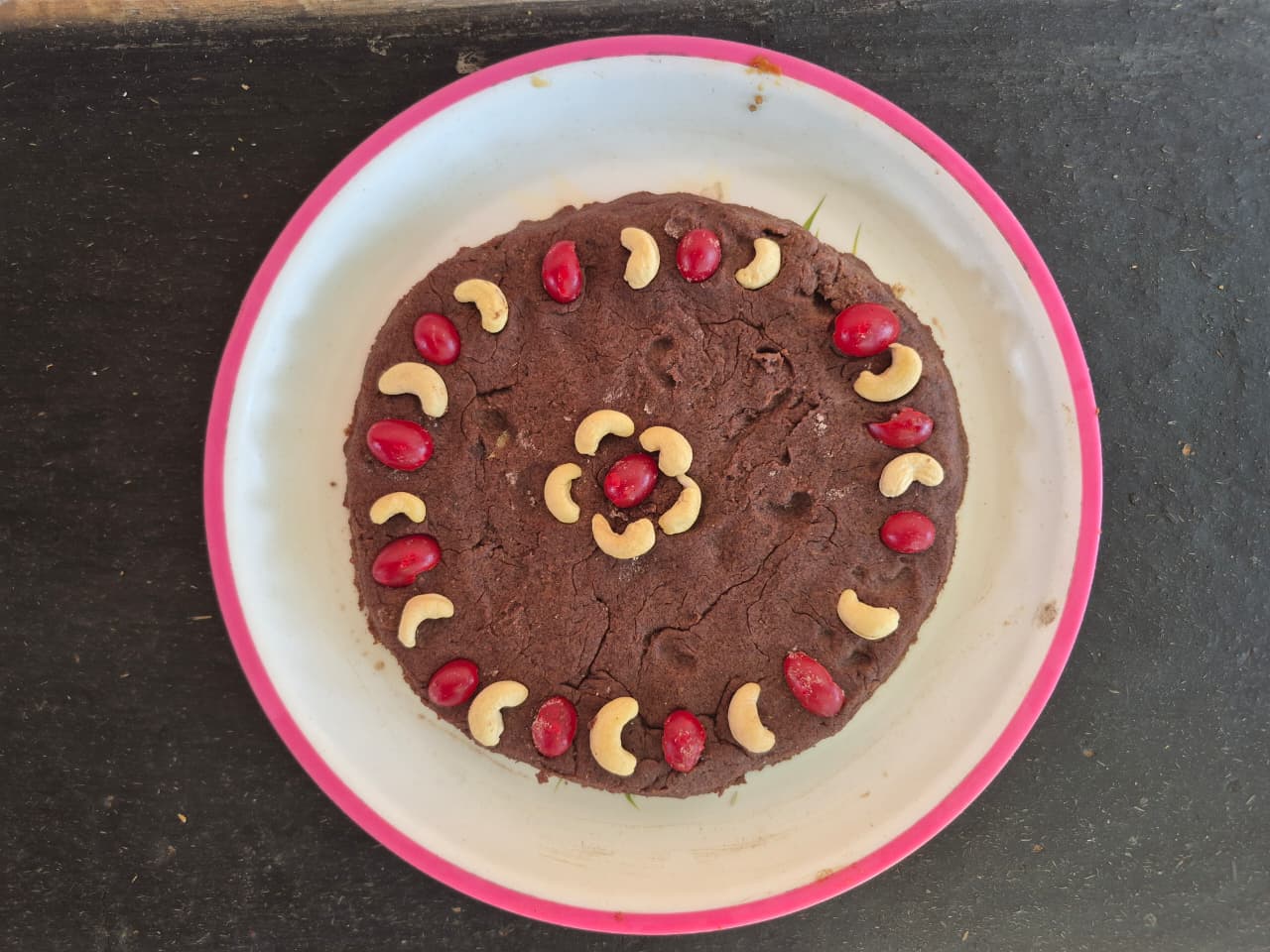
Once dismissed as “poor man’s staple,” nutrient-dense crops like finger millet (ragi) were slowly losing their place in our food systems. Yet indigenous communities in Odisha continued to cultivate them, safeguarding their agrobiodiversity. Their resilience was not without reason: ragi’s ability to adapt to different soil types and deliver exceptional nutritional value made it indispensable to tribal communities and their food culture. Much has changed since—ragi has now gained mainstream popularity for its rich nutritional profile, inspiring recipes across India.
Ragi-based recipes such as this manduru—or halwa—are notably high in calcium, iron, and dietary fibre. Manduru is intentionally calorie-dense, developed to meet the demands of high-intensity physical labour that defines life in most tribal communities.
One such community is the Paraja of Koraput, Odisha, for whom food has always been a sacred offering. Ragi Manduru is a seasonal and festive dessert prepared for special occasions—served to honour deities and ancestors, to welcome guests, and to celebrate Nuakhai, the agricultural festival that marks the arrival of the new rice harvest in western Odisha.
Reintroducing millets like ragi into our food systems strengthens nutrition security while preserving the biodiversity of regions such as Koraput. This International Day for Biological Diversity, we want to spotlight the foods that are genuinely worth returning to.
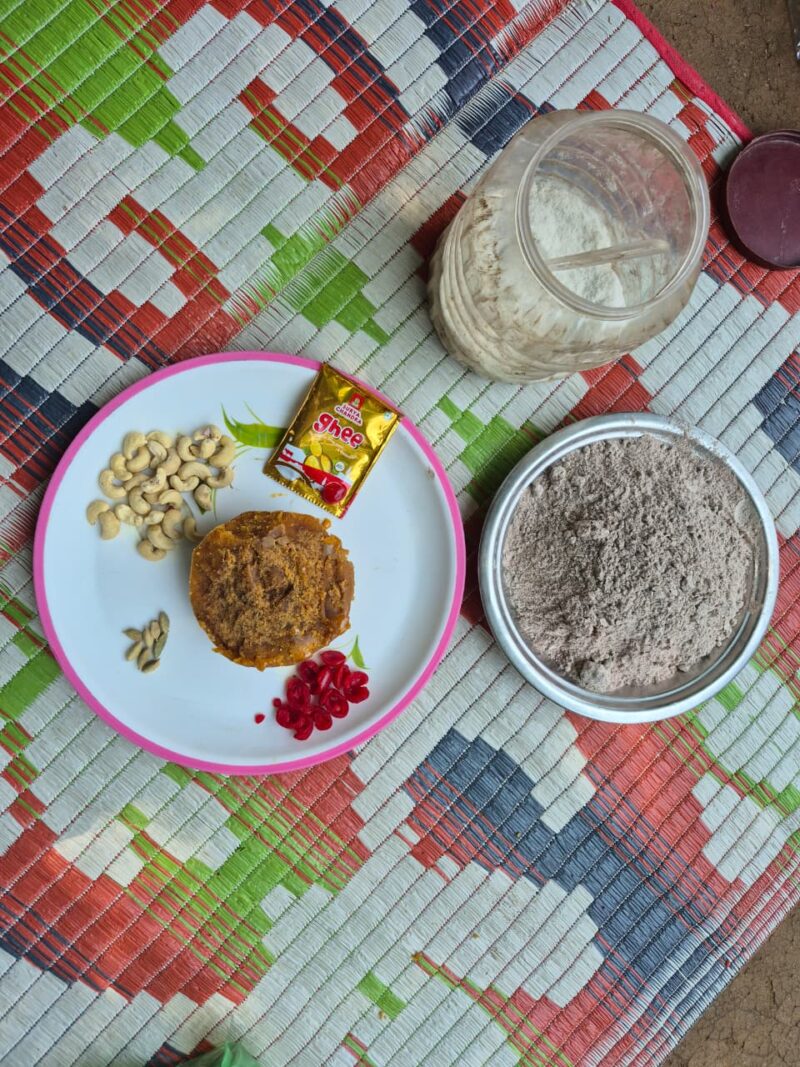
| Ghee | 1/2 cup to 3/4 cup + extra |
|---|---|
| Cashews, cherries, raisins (optional) | a handful |
| Jaggery (Gud/Guda), grated | 1 cup |
| Water | 2 to 3 cups |
| Ragi flour (Mandia aata) | 1 cup |
| Salt | to taste |
| Cardamom powder | 1 teaspoon |
What You Will Need
Heavy-bottomed frying pans (Kadhais), Spatula, Sieve
Instructions
Add 1 tablespoon of ghee to a small pan. Once the ghee is hot, fry the cashews until golden brown and keep aside to be used as a garnish.
In a heavy-bottomed kadhai or deep pan, combine 1 cup of jaggery with 2 cups of water. Place the pan over a low flame and stir occasionally until the jaggery has completely dissolved, about 5–6 minutes. Do not let the mixture boil vigorously. Once dissolved, strain the liquid through a fine sieve into a bowl to remove any dirt or impurities from the jaggery. Set the syrup aside.
Heat 1 tablespoon of ghee in a separate heavy-bottomed kadhai or pan over a low flame. Add the ragi flour and roast it slowly, stirring continuously with a spatula so that it does not catch at the bottom. Continue roasting for 4–5 minutes, or until the flour turns aromatic and slightly darker in colour.
Gradually add the water while stirring to avoid lumps from forming. Keep stirring for 4-5 minutes until the mixture thickens into a smooth, homogenous paste, and looks glossy.
Pour the prepared ragi paste into the strained jaggery syrup and mix thoroughly until well combined. Cook the mixture over a low–medium flame, stirring continuously to prevent sticking. Begin adding the remaining ghee in small intervals, about 2 tablespoons at a time. Allow each addition to be absorbed into the mixture before adding more.
Add salt for balance and continue stirring until the mixture starts leaving the sides of the pan and achieves a thick, glossy, fudge-like consistency.
Add the cardamom powder, fried cashews, and cherries and raisins as a garnish.
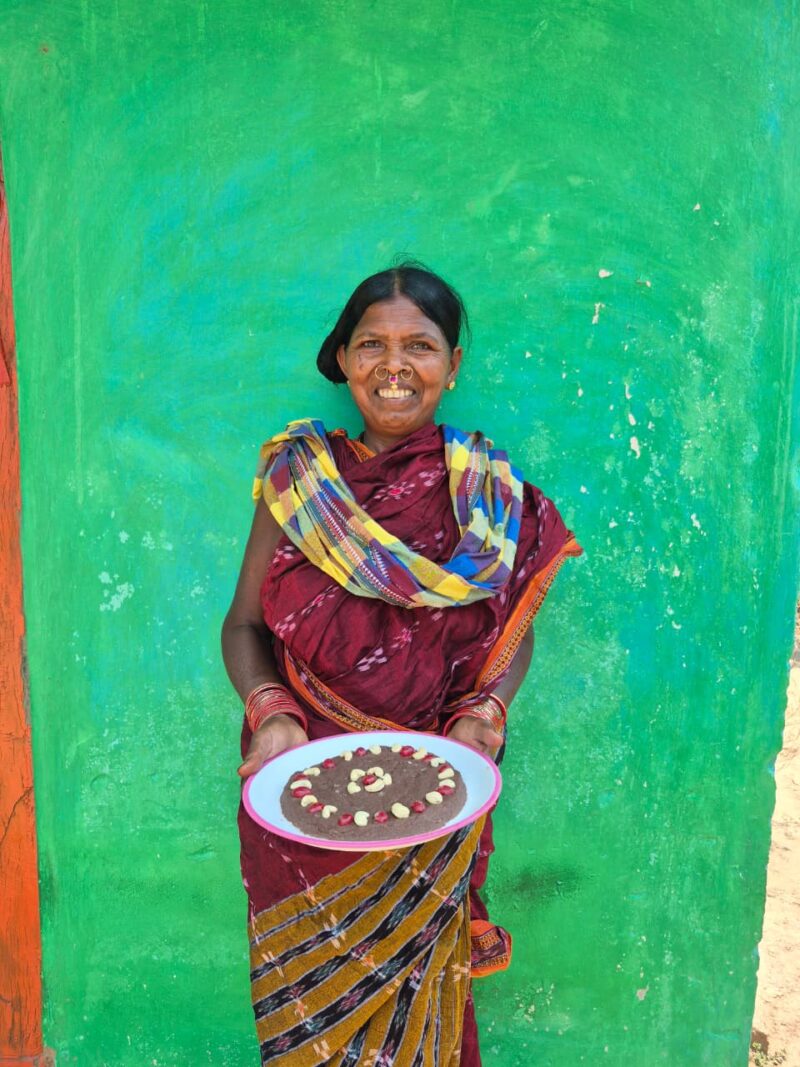
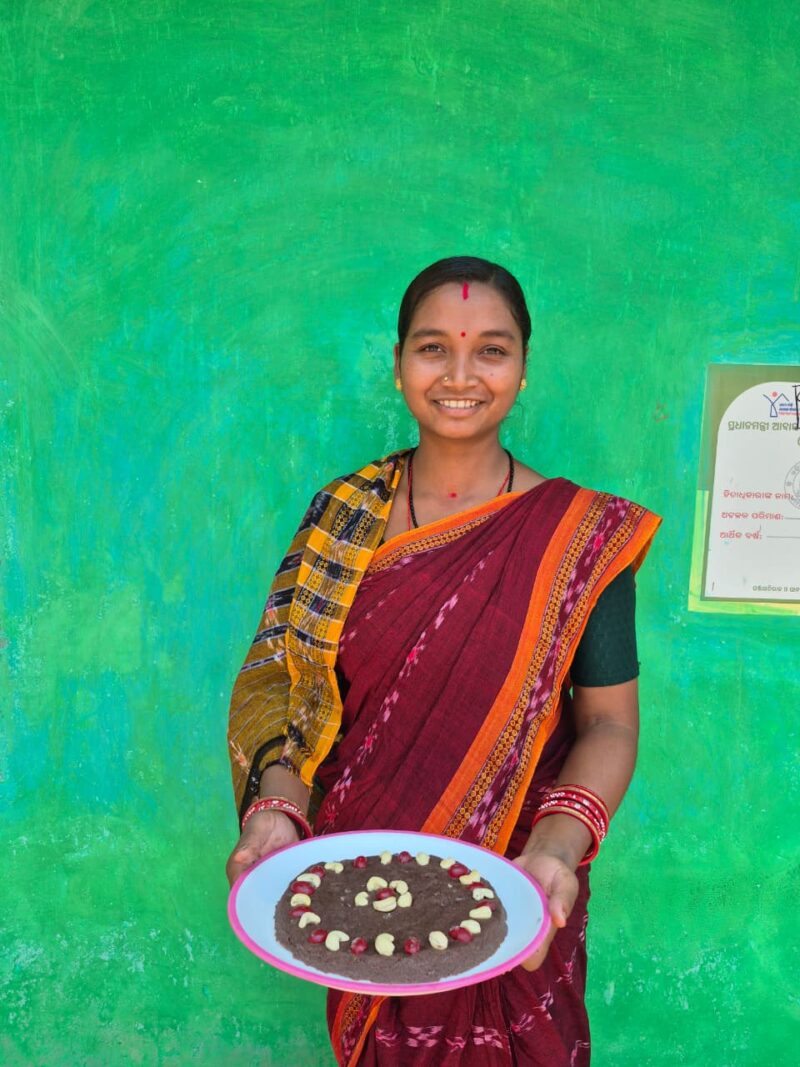
This recipe comes from the kitchen of Damai Pradhani of Koraput, Odisha. Part of a limited series by the M.S. Swaminathan Research Foundation (MSSRF) and The Locavore, created for International Day of Biological Diversity to spotlight lesser-known native ingredients—both climate resilient and nutritionally rich—that deserve a place in our food systems.
About the farmer:
Damai Pradhani is a 47-year-old woman farmer from Nuaguda village, Koraput, Odisha.
About MSSRF:
Established in 1988, the M.S. Swaminathan Research Foundation (MSSRF) is a community-focused, science-driven, interdisciplinary research institution dedicated to sustainable rural development. In a mission to harness science for sustainable development, MSSRF has been working with communities in Odisha, Tamil Nadu, and Kerala to conserve millets and revive them for our food systems.
Learn more here: https://mssrf.org/
You must be logged in to rate this recipe.
 Login with Google
Sign in with email