
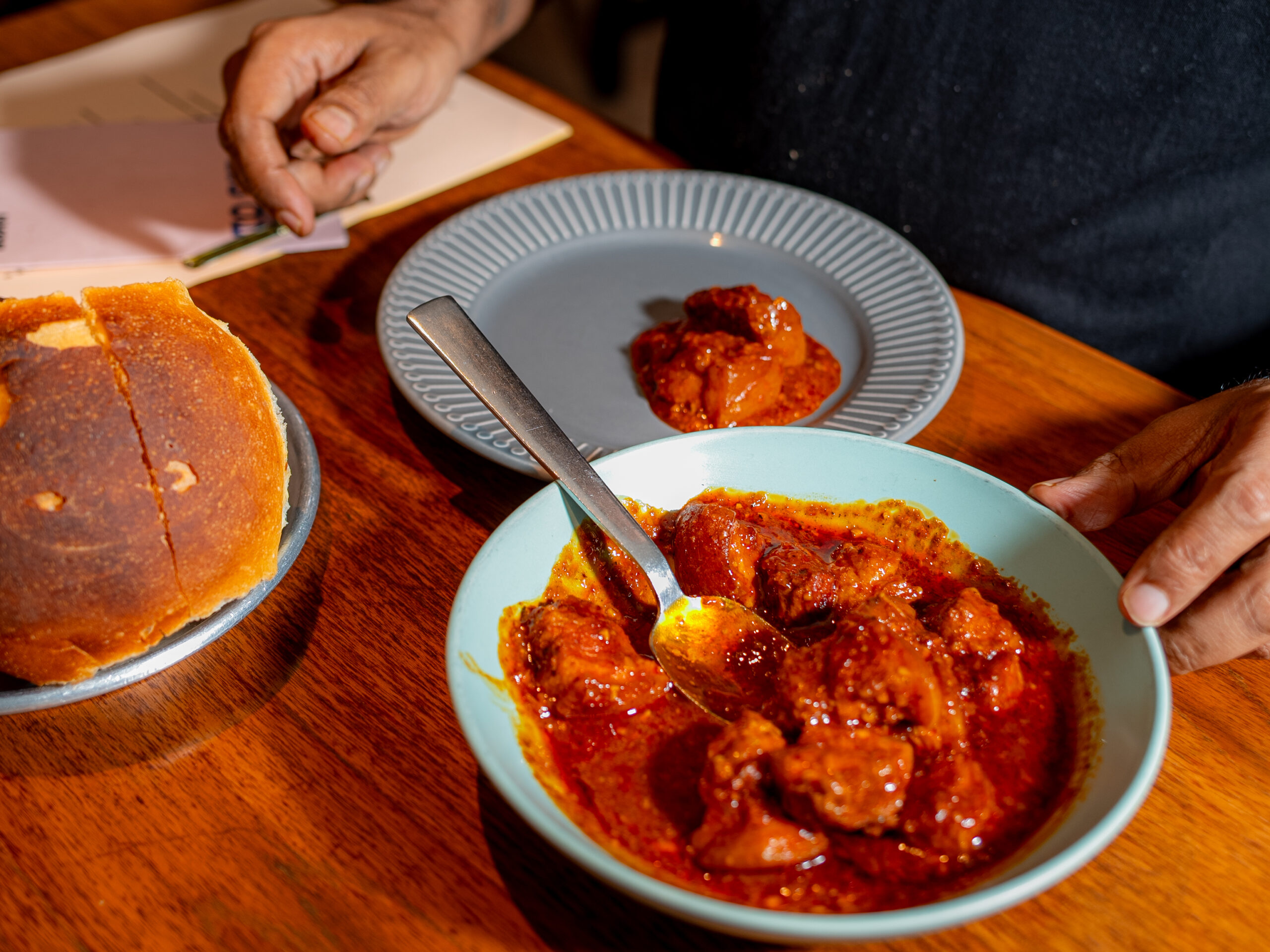
For chef Gresham Fernandes, one of the perfect accompaniments to pav is pork vindaloo. Made using toddy vinegar and multiple spices, vindaloo is a rich, tangy and hearty stew-like dish popular in Mumbai’s East Indian households. The dish, though, did not originate in Mumbai. It derives from carne de vinha d’alhos, which is made using wine vinegar and garlic, and was brought by the Portuguese to their colonies in India.
While many versions of the dish exist—for example, the East Indian one uses the laboriously prepared bottle masala, while the Goan version might demand coconut vinegar—in this recipe, Chef Gresham shares his rendition. He admits that the preparation he loves most would not be deemed ‘authentic’ by his family members. They would, after all, insist that the 33 hand-roasted and ground spices comprising the bottle masala be a part of the ingredient list. However, in a quest to make the dish less labour-intensive, and given Mumbai’s cramped real estate—meaning shrinking terrace space inadequate for sun-drying spices—Chef Gresham’s version offers the perfectly piquant flavours typical of a vindaloo, with techniques adjusted for the present-day kitchen. Plus, ‘authentic’ in the context of the migrating vindaloo might be a misnomer, anyway.
For the spice paste:
| Dried whole red stalkless Kashmiri chillies | 12 (8 without seeds + 4 with seeds) |
|---|---|
| Ginger, sliced | 50 g |
| Garlic cloves, whole | 8 |
| Cumin seeds | 5 g / 2 tsp |
| Cinnamon stick | 2 g / 2-inch piece |
| Black peppercorns, whole | ½ Tbsp or 7 |
| Cloves, whole | 4 |
| Mustard seeds | ½ tsp |
| Fenugreek seeds | ¼ tsp |
| White sugar | ½ tsp |
| Toddy vinegar | 60ml / ¼ cup |
For the marinated pork:
| Pork belly, 2-inch pieces with fat and skin | 500 g |
|---|---|
| Spice paste | 50 g |
| Salt | 1 tsp |
| Turmeric | 1 tsp |
For the vindaloo:
| Neutral oil | 50 ml / 2 ½ Tbsp |
|---|---|
| Brown onion, finely chopped | 100 g / ¾ cup |
| Garlic, finely chopped | ½ Tbsp |
| Ginger, finely chopped | ½ Tbsp |
| Salt | 1 tsp (or to taste) |
| Spice paste | 25 g / 1 Tbsp |
| Feni (optional, to deglaze) | 30 ml / 1 ½ Tbsp |
| Chicken stock | 125 ml / ½ cup |
| White sugar | ¼ tsp |
| Toddy vinegar (coconut vinegar) | 50 ml / 2 Tbsp (or to taste) |
What You Will Need
Small bowl, Knife, Blender or food processor, Medium-sized bowl, Heavy-bottomed kadhai or pot, Pot, Spatula
Instructions
To make the spice paste, place the dried chillies, ginger, garlic, and all the whole dry spices and sugar into a small bowl. Pour over the toddy vinegar to fully submerge everything. Cover and leave to soak overnight (or at least 8 hours) at room temperature to soften the ingredients.
Transfer the softened ingredients, including the vinegar, into a blender or food processor. You can also use a mortar and pestle for this. Grind into a thick and smooth paste. The paste should be a deep red colour and yield approximately 150–180 grams / ⅔–¾ cup.
Place the pork pieces in a medium-sized bowl. Add 50 g of the prepared spice paste, along with the salt and turmeric. Using your hands, massage the marinade thoroughly into the pork, ensuring every piece is well coated. Refrigerate the marinated pork overnight.
Heat oil in a heavy-bottomed pot over medium heat. The oil should be gently shimmering at this stage — not smoking — to ensure that the onion doesn’t burn. Add the onion and cook gently for about 5 minutes, or until it turns soft and translucent . Stir occasionally to prevent burning.
Add the garlic, ginger and a small pinch of salt. Fry for 2 minutes until fragrant and lightly coloured, being careful not to let it brown too much. When ready, the aroma of the ginger should be stronger than that of the garlic.
Add 25 g of the spice paste to the pot. Cook it with the onions, garlic and ginger, stirring continuously. The mixture will deepen in colour to a rich red and begin to release oil. You’ll be able to see very tiny pools of oil around the edges or on the surface of the paste.
As the mixture cooks, it may begin to stick to the bottom of the pot. Pour in the feni to deglaze, scraping the base of the pot with a spatula to loosen any browned bits. If feni is unavailable, use 80 ml of the chicken stock to deglaze the pan (see Notes) or omit entirely.
Turn the heat from medium to medium-low, and add the marinated pork to the pot, along with the sugar and extra salt to taste. Stir well while frying the pork so that it is coated in the spice mix.
Pour in the chicken stock (if stock was used to deglaze the pan, add the remaining 45 ml stock). Use your spatula to scrape up any remaining bits stuck to the bottom of the pot. Add the toddy vinegar to balance the flavours.
Allow the pork to cook for a few minutes. You’ll notice the meat tightening and shrinking slightly, which means it is beginning to sear. You may also notice browning. Once this happens, add 250 ml or 1 cup of water to create a thick gravy. The gravy should cling to the back of a spoon.
Lower the heat further, cover the pot and let the pork simmer gently for about 45 minutes, or until the meat is tender. Stir occasionally and check if more water is needed to prevent drying out.
Taste and adjust seasoning if needed. Serve hot with pav, allowing the bread to soak up the rich, spicy gravy.
Tips:
- Ensure that all the spice paste ingredients are fully submerged in vinegar while soaking so they soften evenly.
- Add the stock and water in stages, rather than all at once, to maintain a rich consistency.
- Stir occasionally while simmering and check that the liquid hasn’t reduced too much. Add a little water if needed.
- Pork vindaloo tastes best after it has had some time to rest. Prepare it a day in advance for the best flavour.
Notes:
- The spice paste recipe yields about 150–180 grams / ⅔–¾ cup of spice paste. The extra paste can be stored in the refrigerator for up to a week or frozen for future use.
- The process of slowly adding liquid and continuously stirring is called bhunna. This process is what leads to caramelisation, which in turn calls for deglazing the pan and/or continuously stirring the dish. This process contributes to the deep, layered and rich flavour central to the vindaloo.
Gresham Fernandes is the chef-partner at Bandra Born Mumbai. He has previously worked at renowned Mumbai establishments The Leela, Salt Water Grill, Aurus and the Salt Water Café. His repertoire of work highlights his commitment to fostering community connections through hyperlocal dining experiences.
This recipe has been published as a part of The Locavore’s collaboration with Powerhouse Museum, Australia. Titled Setting The Table: Stories from India’s Food Cultures, it aims to highlight diverse undertold stories about India’s culinary landscape to a non-native reader, adding texture to global narratives about Indian food.
Read more about Mumbai’s pav bakeries in this article.
You must be logged in to rate this recipe.
 Login with Google
Sign in with email