
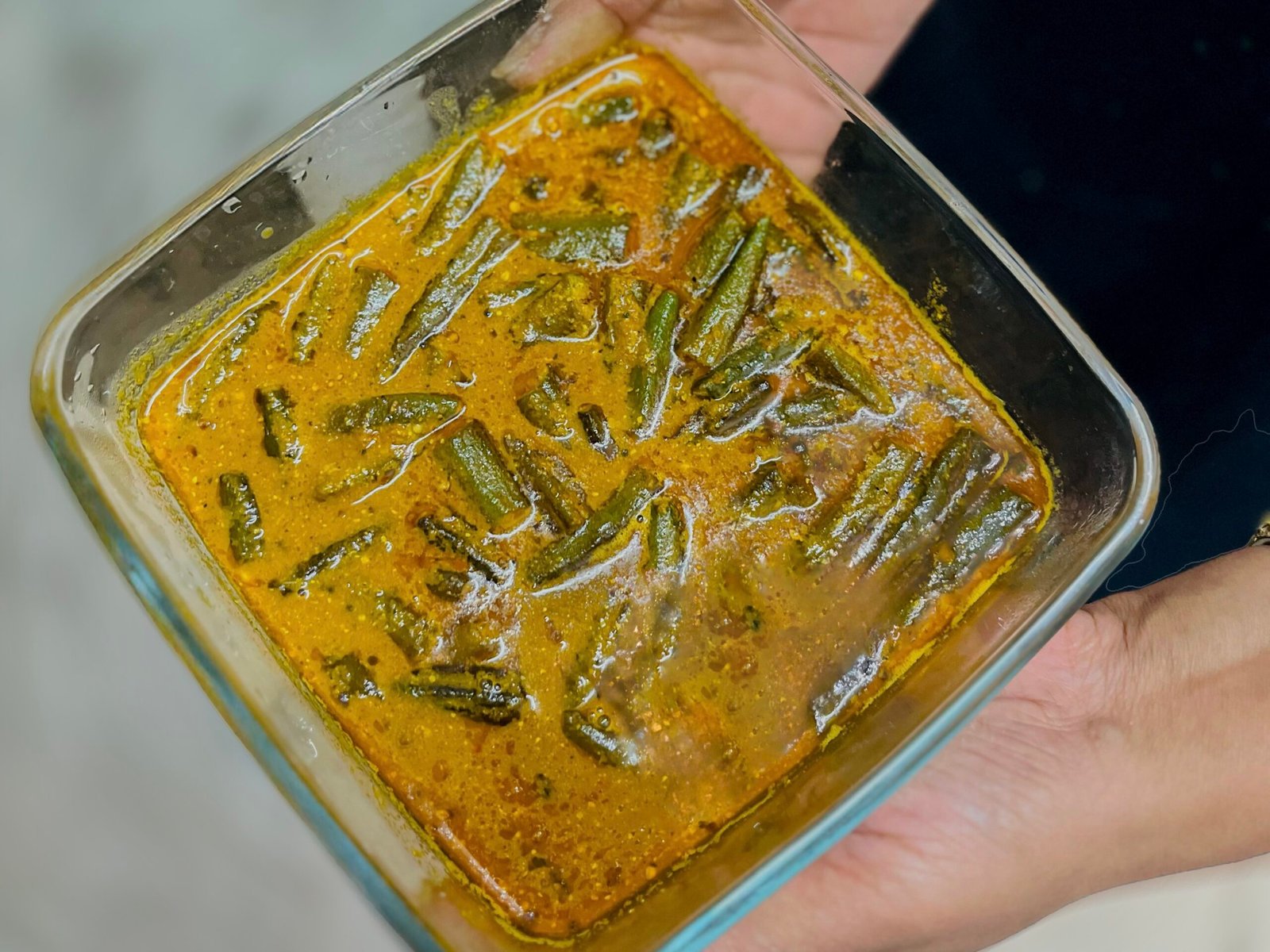
For Delhi-based animator Rishita Yadav, the Ras Waali Bhindi is a recipe that, like many other recipes in her family, has been passed down through the women over generations.
Rishita learnt this recipe from her mother, Madhu, who grew up in Hajipur, Bihar. Back then, vegetables were available only seasonally in their village. Bhindi would appear for a short window during the months of June and July thus making this dish a special one in their household. Madhu fondly recalls going to the fields with her siblings to harvest bhindi, which their mother would then cook the same day.
Today, in their home in Delhi, bhindi is available year-round. But for the Yadav family, this recipe is still made the same way—always with mustard oil and mustard seeds, which, Rishita notes, are central to Bihari cooking. She adds that the taste is never quite the same; it’s a flavour that simply can’t be replicated.
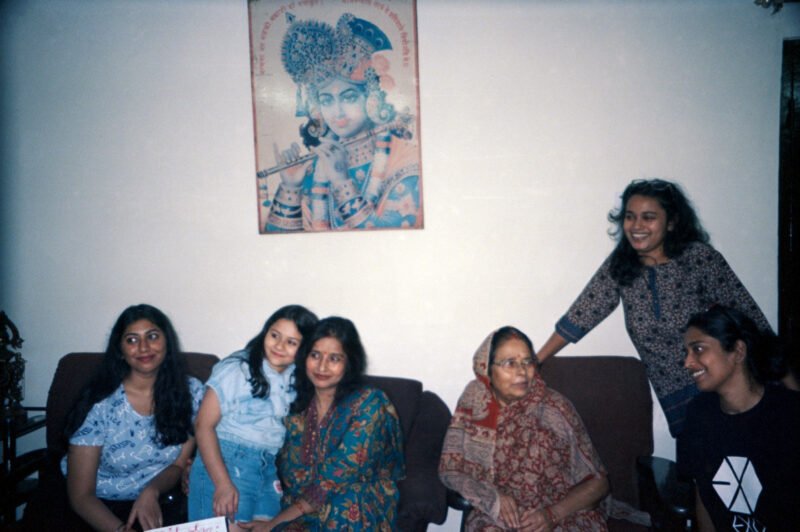
A quiet moment across generations. From right to left, Rishita’s elder sister Ria, Rishita, her nani Sushila Devi, her mother Madhu, and her cousins Aarshia and Avishi.
| Bhindi (lady’s finger) | 250 grams |
|---|---|
| Mustard oil | for frying |
| Mustard seeds | 1 teaspoon |
| Garlic cloves | 6–8 pieces |
| Black peppercorns | 1/2 teaspoon |
| Tomato, chopped | 1 medium |
| Turmeric powder | 1/2 teaspoon |
| Coriander powder | 1 teaspoon |
| Water, for grinding | 2–3 tablespoons approx. |
| Red chilli powder | 1 teaspoon |
| Salt | to taste |
| Water, for the curry | 1/3 cup approx. |
What You Will Need
Heavy-bottomed pan; mixer grinder
Instructions
Begin by washing the bhindi under running water to remove any dirt or residue. Dry it thoroughly with a kitchen towel, as any moisture can increase its sliminess while cooking. Once dry, remove the top stems and cut each bhindi into equal halves.
Heat the mustard oil in a pan. Once hot, add the chopped bhindi and shallow-fry on medium heat. Avoid overcrowding the pan. Stir occasionally and cook uncovered until the bhindi turns light golden and loses its slimy texture. This may take 10–12 minutes. Set aside once done.
In a mixer grinder, combine ½ teaspoon mustard seeds, garlic, black pepper, chopped tomato, turmeric powder, and coriander powder. Add 2–3 tablespoons of water to help blend the mixture into a smooth paste. Adjust the amount of water as needed to ensure the paste is not too runny. Add a splash of water, if needed, to allow the paste to blend easily.

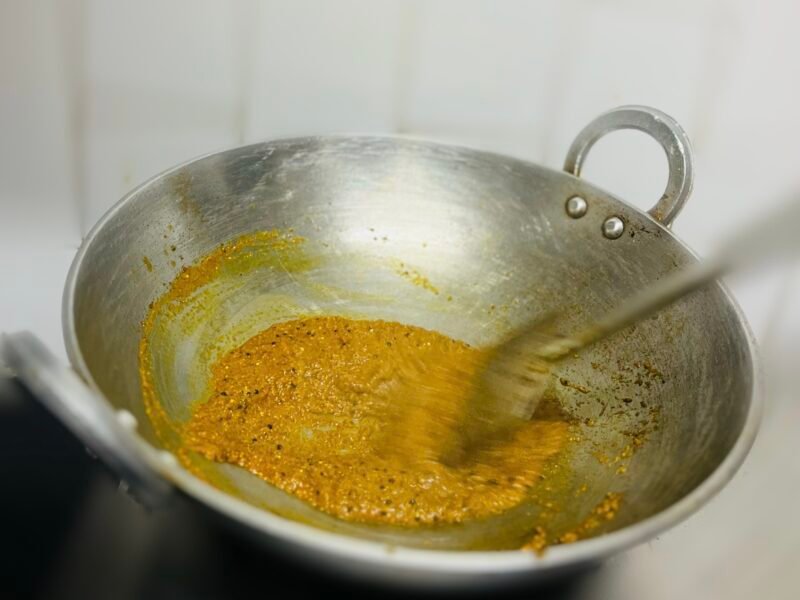
In the same kadhai used for frying the bhindi, add a little more mustard oil if needed. Heat the oil until it begins to smoke lightly. Reduce the heat and add 1/2 teaspoonful of mustard seeds. Once they begin to splutter, add the prepared masala paste along with red chilli powder. Cook the paste on medium-to-low heat, stirring frequently so it doesn’t stick. Over the next 7–8 minutes, the raw smell of the garlic and tomato should fade, the paste will darken slightly, and the oil will begin to separate.
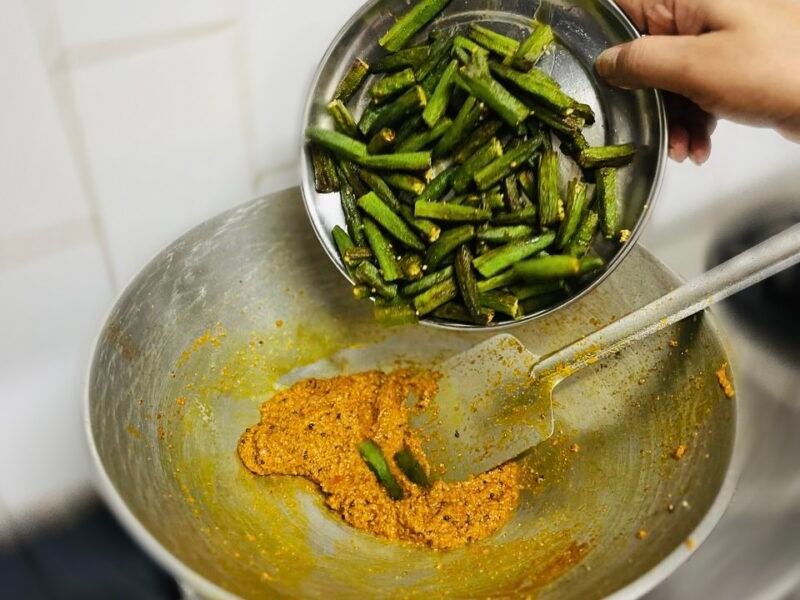
Add the shallow-fried bhindi to the cooked masala. Sprinkle salt to taste and mix well, coating the bhindi in the spice paste.
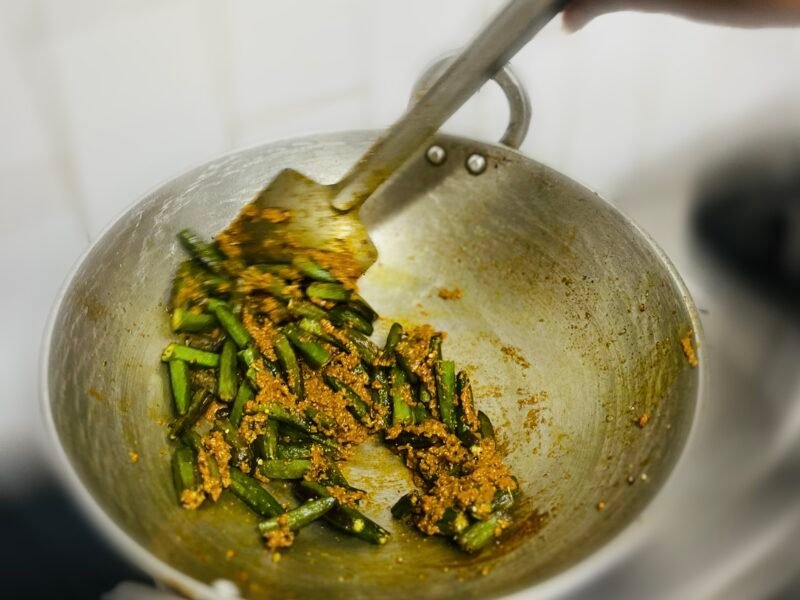
Pour in water, just enough to make a semi- thick curry. Simmer on low heat for another 4–5 minutes, allowing the flavours to meld.
Serve warm with rice or roti.
Tips
Avoid adding salt to the bhindi while frying; it draws out moisture and increases its gooeyness.
Madhu Yadav is a homemaker-turned-entrepreneur based in Delhi. She is the founder of Murho Estate, a small venture named after her marital home, through which she sells organic fruits, vegetables, and handmade achaars using her own recipes. Her aim is to highlight and preserve the culinary culture of the Kosi plains of Bihar.
You must be logged in to rate this recipe.
 Login with Google
Sign in with email