
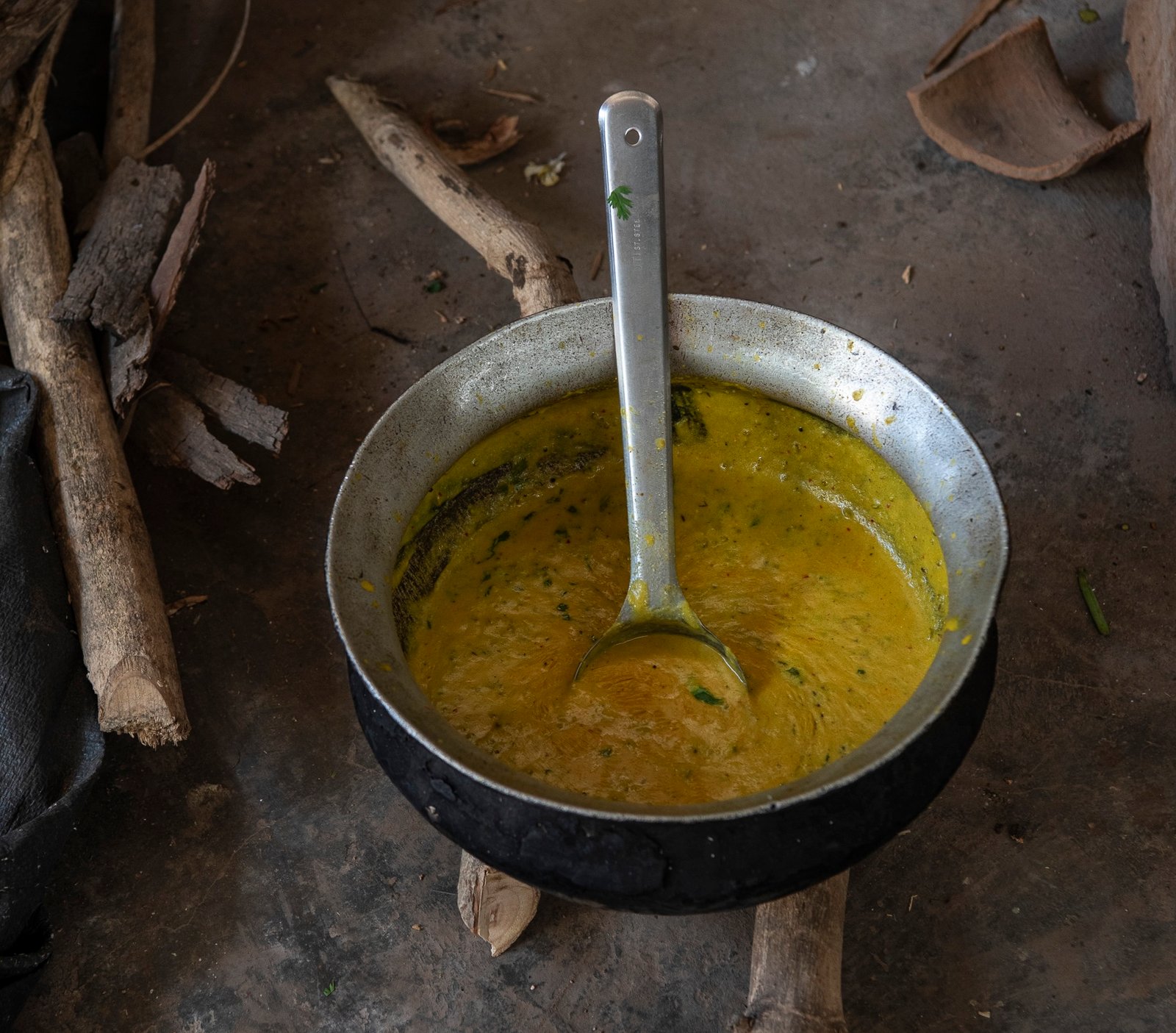
This recipe has been excerpted from Silent Cuisines: The Unsung & Disappearing Foodways of Gujarat’s Adivasis by Sheetal Bhatt, a cookbook documenting some of the culinary traditions of tribes from the foothills of the Aravalli mountains of Gujarat, across six northeastern districts of the state.
Silent Cuisines first began as an attempt to document Gujarat’s folk rice varieties, kept alive by custodian Adivasi communities. With Aranya, a Farmer Producer Organisation run by small and marginal Adivasi farmers from the forests of the Aravalli hills, and Paulomee Mistry, director of Aranya, Sheetal was able to access regions where certain traditional varieties were still grown and eaten. However, as they spent time in the thick forests and dense vegetation of the region, it became apparent that rice was only one part of a diverse foodscape of pulses, grains, and native wild greens that were still grown in these unspoiled lands and eaten by the Garasia, Dungri Garasia, and Bhil communities in the region.
Gunda (Cordia Dichotoma), is typically recognised through its use in pickles. Known locally as vad gundo or moti gundi, the tree has a resilient presence across villages, farms, and forests, thriving even in the harshest Indian summers when it bears its fruit. The gunda tree is more than just a source of food; its leaves, bark, and fruits are rich in medicinal properties.
Interestingly, Adivasis in Gujarat neither use the raw nor ripe berries. Instead they have a unique culinary tradition: relishing the tiny blossoms of the gunda tree, which they call gunda ni bhaaji or gundi no mor (glueberry blossom). These mustard-sized, spring-blooming flowers, which appear between March to April, are transformed into a delightful curry cooked in buttermilk. The natural gumminess of the gunda blossoms is balanced by the acidity of cultured buttermilk. Meanwhile, the kadhi is thickened with maize flour instead of the Gujarati practice of using chickpea flour, highlighting how traditional wisdom utilises readily available local resources. Adivasi communities eagerly await the very brief season of gunda blossoms ensuring they savour this delicacy at least two to three times before the flowers mature.
The recipes in this book, of which the Gunda Na Mor Ni Kadhi is one, cover what is eaten across all seasons in districts of northeast Gujarat—specifically the districts of Banaskantha, Sabarkantha, Aravalli, Mahisagar, Dahod, and Panchmahal. As community elders express concern over these disappearing foodways, with government schemes and younger generations’ tastes prioritising more commercial or popular foods, this documentation is an attempt to preserve the tastes and flavours of a region, and offer it the tools of aspiration—beautiful photos and publication—that could contribute to keeping them alive.
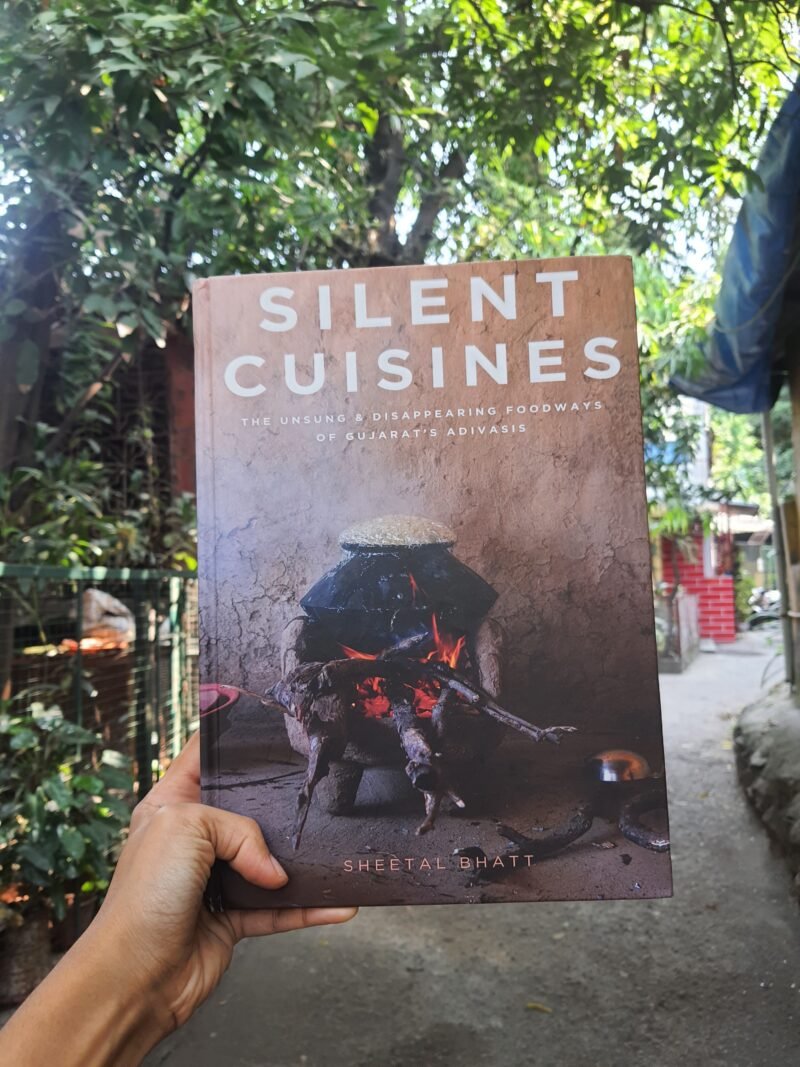
Silent Cuisines, a project of Disha, authored and photographed by Sheetal Bhatt.
| Gunda blossoms (plucked from tender stems, washed) | 2 heaped cups |
|---|---|
| Red chillies | 3 |
| Garlic cloves, peeled | 3 |
| Salt | to taste |
| Turmeric powder | 1 teaspoon |
| Coriander seeds, powdered | 1 teaspoon |
| Cumin seeds, powdered | 1 teaspoon |
| Water | ½ cup |
| Oil | ¼ cup or as needed |
| Mustard seeds | ½ teaspoon |
| Cumin seeds | ½ teaspoon |
| Buttermilk | 3 cups |
| Maize flour | ½ cup |
What You Will Need
Heavy-bottomed pan or kadhai with lid; mixing bowls; mortar and pestle; colander; whisk; kitchen towel
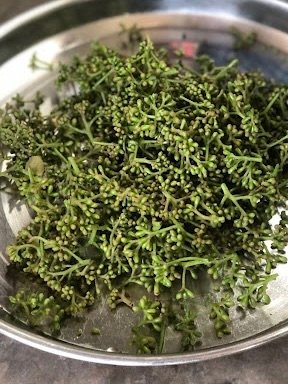
Gundi no mor (glue berry blossoms). Photo by Sheetal Bhatt.
Instructions
Pluck the gunda blossoms from their tender stems, discarding any tough bits or discoloured petals. Rinse the blossoms thoroughly in several changes of water to remove grit and tiny insects. Drain well in a colander and pat gently with a clean towel if needed. Set aside.
To make the masala, roast 2–3 dried red chillies briefly on a dry pan until fragrant. Cool, then pound or blend with 2–3 peeled garlic cloves and a pinch of salt to a smooth paste. Measure out 1 tablespoon for the recipe.
In a small bowl, combine turmeric, coriander–cumin powders, and the masala paste. Add water to this mixture and whisk to make a smooth, lump-free paste.
Place a kadhai over medium heat and add oil. Give the oil 30–45 seconds to warm—it should shimmer but not smoke.
Add the mustard seeds. As soon as they start to splutter, add the cumin seeds.
Immediately add the spice–masala paste to the hot oil.
Sauté on medium–low heat, stirring continuously with a spatula, until you see the oil beginning to separate from the masala and the mixture becomes glossy and fragrant. This usually takes 2–4 minutes.
Add the drained gunda blossoms to the kadhai. Toss gently with the masala so every blossom is well coated. Use the spatula to fold rather than smash them.
Cover the kadhai with a lid and reduce the heat to low–medium. Cook for 6-8 minutes, checking once after 4 minutes. If the blossoms look dry or are sticking, add 1–2 tablespoons of water at a time—you want some steam but not a watery stew. Stir gently each time you check.
Once the blossoms are tender (they will soften and reduce in volume), pour in the buttermilk slowly while stirring gently. Keep the heat low—high heat may make the buttermilk curdle. Stir to combine; you should have a thin, creamy mixture at this stage.
Sprinkle the maize flour evenly over the surface of the kadhi.
Immediately stir briskly and continuously so the maize flour disperses evenly and does not form lumps.
Continue to cook on low heat, stirring often, until the kadhi thickens to your desired consistency. The mixture will thicken further on standing.
Taste and add salt as needed. Once it has reached a glossy, slightly thickened consistency, remove from the heat. Let it rest for 2-3 minutes and serve the gunda blossom kadhi warm with rotla or steamed rice.
Tips:
To avoid lumps, whisk the maize flour into 2–3 tablespoons of cold buttermilk first to make a smooth slurry. Then pour the slurry into the kadhi and stir.
Sheetal Bhatt is a social development professional by training and has worked extensively with marginalised communities in Gujarat. Her journey into the study of food and hyper-local regional Gujarati cuisines began a decade ago with her website, www.Theroute2roots.com.
You can find more recipes and their stories from Silent Cuisines here and here.
You must be logged in to rate this recipe.
 Login with Google
Sign in with email