
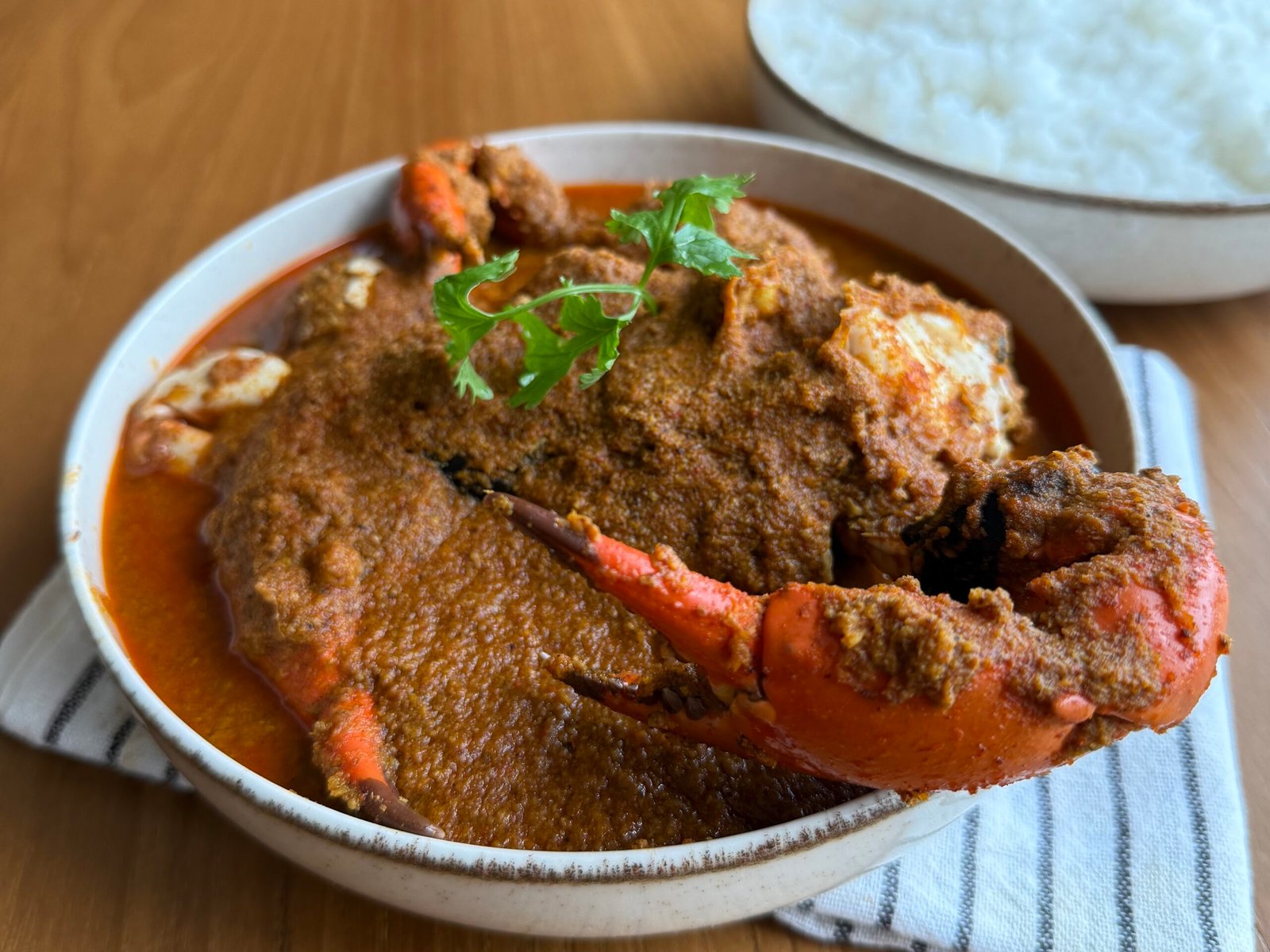
Large crabs found in estuaries—where rivers meet the sea, creating brackish, nutrient-rich waters—the mud crab gains its unique flavour from its environment, its meat sweet and firm. Mud crabs differ from other crabs—they are larger, have harder shells, and stand up well to Indian spices, which is why they feature in so many regional recipes.
Bhavesh Koli recalls visiting Thane Creek with his grandfather to catch mud crabs—his grandfather storing them in wooden ‘topli’ baskets while he played along the shore. A family recipe, the Kekda Masala was always prepared at Bhavesh’s home after a fresh catch.
| Oil | 4 to 5 tablespoons |
|---|---|
| Onion, chopped | 1 cup |
| Freshly grated coconut | 1/2 cup |
| Coconut, dessicated | 1/4 cup |
| Crab, cleaned | 4 medium-sized (500 to 600 grams) |
| Water | as needed |
| Ginger-garlic paste | 3 heaped teaspoons |
| Koli masala powder | 3 heaped teaspoons |
| Garam masala | 1 teaspoon |
| Turmeric | 1 teaspoon |
| Salt | to taste |
| Coriander leaves, chopped | 2 tablespoons |
What You Will Need
Kadhai/Heavy-bottomed pan, mixer grinder, fine-mesh strainer, measuring spoons and cups, spatula or turner, chopping board, knife, mixing bowls
Note: To make Koli Masala at home, you can refer to this recipe.
Instructions
Heat 1 tablespoon of oil in a pan over medium heat. Add the chopped onion, freshly grated coconut, and desiccated coconut. Fry gently, stirring often, until the mixture turns a light golden-brown. This should take around 6–8 minutes.
Remove the pan from the heat and allow the mixture to cool to room temperature. Once cooled, transfer it to a mixer grinder and blend into a smooth, homogeneous paste. Set aside.
Clean the mud crabs thoroughly under running water. Separate the thin legs from the body—keep the body pieces and claws aside for cooking. Place the thin legs in the grinder.
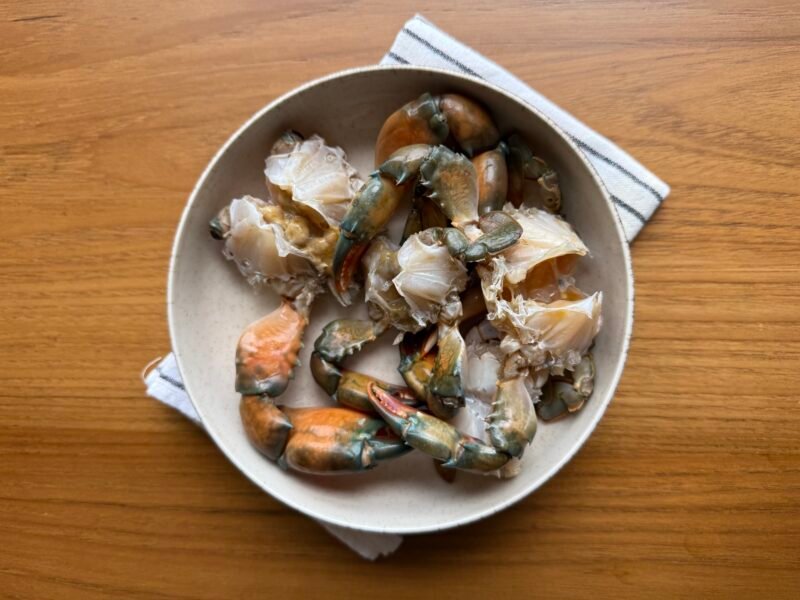
Add 6–7 tablespoons of water to the crab legs in the grinder and blend to form a coarse paste.
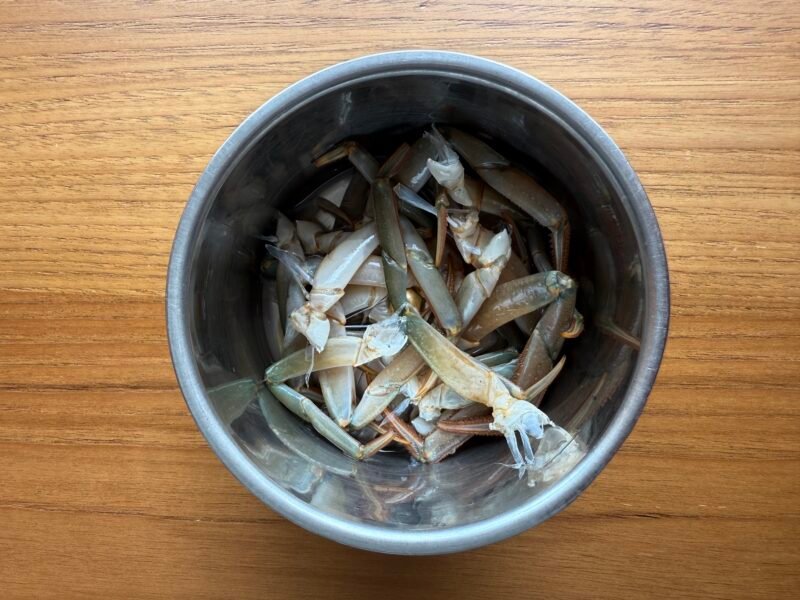
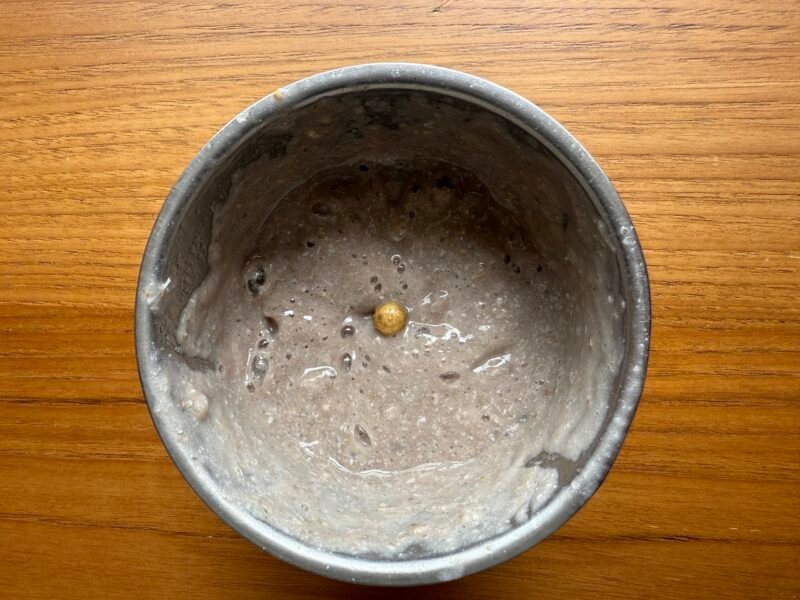
Pour this paste into a bowl and add ½ cup of water. Mix well, then strain the liquid through a fine sieve or muslin cloth into another bowl. Press the paste firmly to extract as much liquid as possible. Discard the remaining shell paste. Keep the strained crab leg juice aside.
Heat the remaining oil in the main cooking pot over medium heat. Add the ginger-garlic paste and fry for 3-4 minutes, or until the paste loses its raw smell and turns lightly golden.
Add the coconut–onion paste prepared earlier. Sauté for 2-3 minutes, stirring well so it doesn’t stick to the bottom.
Add the Koli Masala powder, garam masala, and turmeric powder. Stir continuously for 3-4 minutes on medium heat. The mixture should darken slightly and the raw aroma of the turmeric should disappear. Pour in 1 cup of water, stir well, and bring the mixture to a gentle boil.
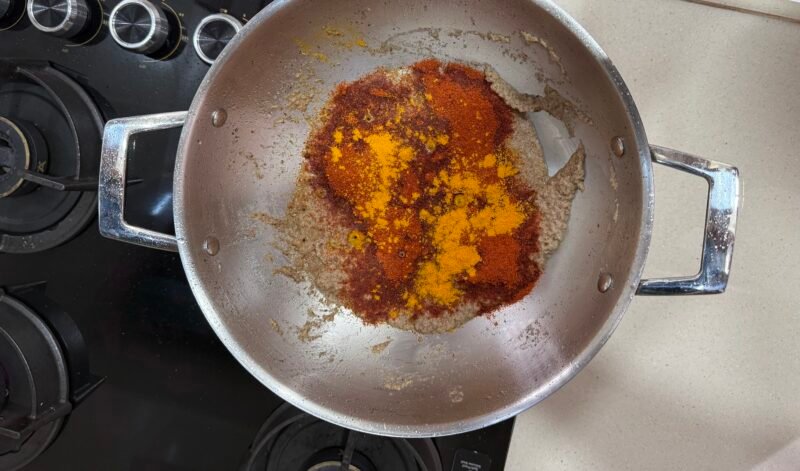
Add the cleaned pieces of the crab and the claws to the pot. Pour in the strained crab leg juice as well.
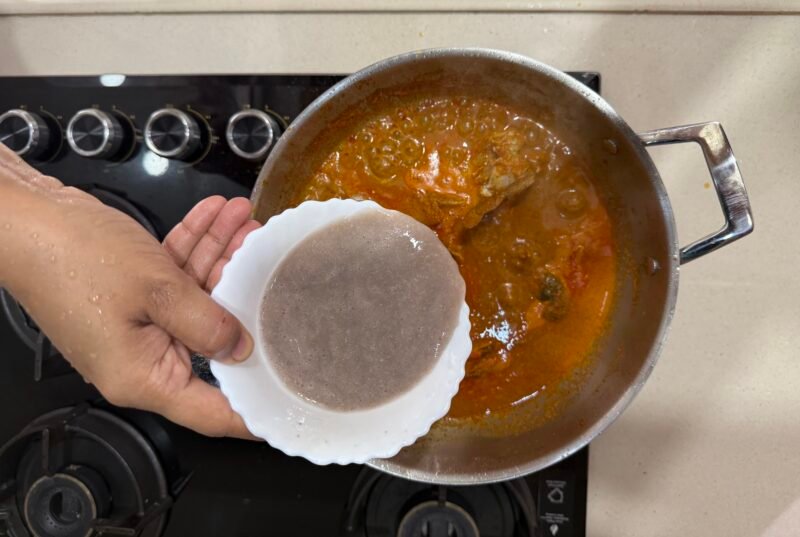
Cover partially and cook on medium heat for 11-13 minutes, or until the crab shells turn a bright red and the meat is cooked through.
Add salt to taste at this stage. Adding salt towards the end helps the crab meat retain its natural sweetness while the gravy develops a savoury depth.
Garnish with chopped coriander leaves.
Serve hot with rice bhakri or steamed rice.
Tips:
- Cleaning crab can be a bit tricky, so take your time. Make sure to remove and discard the gills. Scrub every part of the crab—the shell, claws, joints, and body cavity—under running water to remove any sand or debris.
- When grinding the thin crab legs in the mixer, blend them to a smooth, homogenous consistency so that the flavour is fully extracted. After grinding, add the measured water, mix well, and then strain to collect the flavourful crab leg juice.
A civil engineer by education with over a decade of experience in advertising, Bhavesh Koli founded Mi Hi Koli in 2011, a restaurant in Mumbai dedicated to authentic Koli cuisine.
Bhavesh is a volunteer with The Mumbai Koli Project by The Locavore. An impact campaign inspired by the documentary film Against the Tide, the project aims to spotlight the city’s original fisherfolk—the Koli community—and their evolving relationship with the sea, while encouraging Mumbaikars to make more sustainable, seasonal, and inclusive seafood choices. Read more about the project here.
You must be logged in to rate this recipe.
 Login with Google
Sign in with email