
Photographs by Veronica Sinam
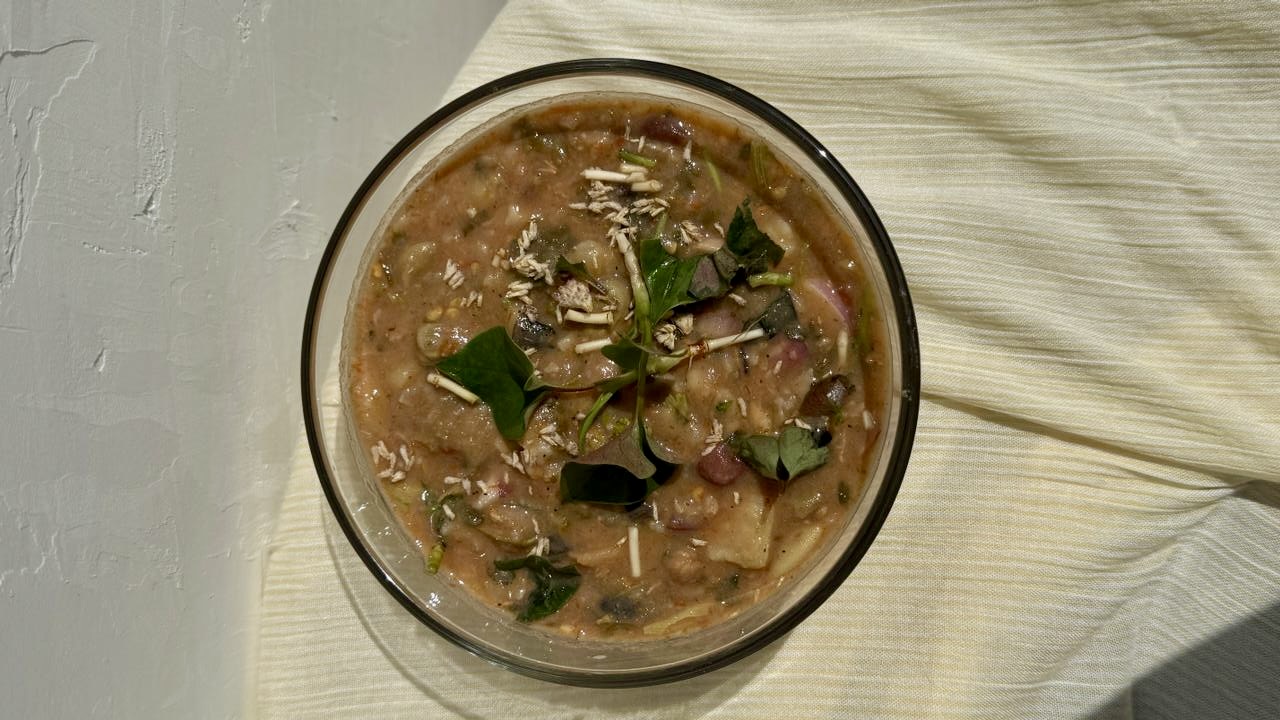
An introduction to Manipuri food for those unfamiliar with the cuisine is usually made with Eromba. Considered quintessential, Eromba is a dish that is loved across the region. Its name is derived from the process of its making—”eeru taana lonba”—which translates to “to mash together.” The dish is defined by its texture: ingredients are mashed to varying degrees to form a coarse, thick mixture, never a smooth purée.
Eromba is inherently seasonal, with recipes shifting according to the vegetables available at different times of the year. While there are several variations, two elements are central to most preparations: ngari, a fermented fish that lends depth and pungency, and chilli, which provides heat. To make a vegetarian version, ngari is omitted while retaining the essential character of the dish.
For Beauty Thounaojam and Akoijam Sunita, Yongchak Eromba carries strong associations of home and identity. They recall the excitement surrounding the arrival of the season’s first yongchak (tree bean) in local markets. Despite its high price, people often buy a single pod, carrying it visibly rather than tucking it away, inviting others to stop, inspect, and ask about its cost and quality.
They also share a more humorous, intimate memory tied to its consumption. Known for its strong aroma, yongchak leaves a lingering presence even after it is eaten. Beauty recalls preparing Yongchak Eromba during her time in a hostel in Delhi, where she and her friend worried about navigating its ramifications the following day, especially given how food from Manipur was already marked and misunderstood through its smell.
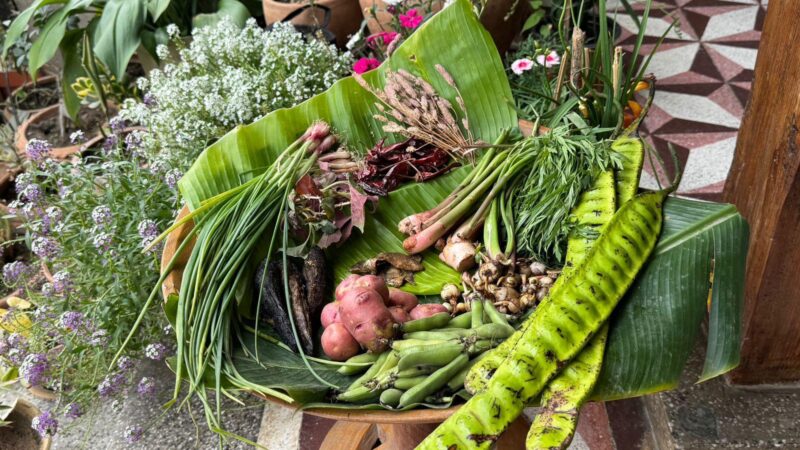
| Yongchak (tree beans) | 2 pods |
|---|---|
| Red potatoes | 4–5,small |
| Loklei (ginger lily rhizome), peeled | 3–4 pieces |
| Hawai mubi (broad beans) | 1½ handfuls |
| Koukha (Sagittaria sagittifolia) | a handful |
| Pheija (Wendlandia glabrata) | a handful |
| Water | as required |
For the fish and chilli paste:
| Ngari (fermented fish) | 5–6 pieces |
|---|---|
| U-kaabi ayaiba (smoked and dried fish) | 2–3 pieces |
| Dried red chillies | to taste |
| Salt | to taste |
For the garnish:
| Lomba (Elsholtzia griffithii/blanda) | a handful |
|---|---|
| Chantruk (shepherd’s purse) | a handful |
| Toningkhok (chameleon plant) | a handful |
| Spring onion | a handful |
| Tender pea shoots | a handful |
What You Will Need
Pressure cooker; Steamer; Mortar and pestle, Yongkhot
Instructions
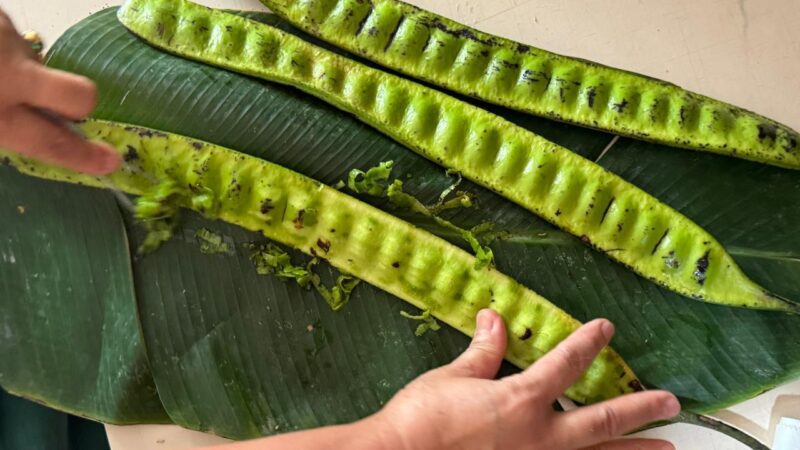
Begin by preparing each ingredient individually. Scrape off the thin green outer layer of the yongchak using a yongkhot (a u-shaped metal scraper, designed specifically to scrape the outer layer of yongchak) , then cut into 3-4 inch pieces.
Peel the potatoes and keep them whole or halve them if large.
Peel the loklei, removing the fibrous outer layers until you reach the tender inner core. Break this into small, bite-sized pieces.
Trim the ends of the hawai mubi and gently pull away any tough fibres along the seams. Tear into smaller sections if needed.
For the koukha, remove the outermost layers and wash thoroughly to get rid of any residual mud or grit.
Carefully separate the pheija flower clusters from the thicker stems, keeping the delicate portions intact.
Once all the vegetables are ready, wash them thoroughly in several changes of water.
Transfer all the prepared vegetables into a pressure cooker. Add enough water to just cover the base (avoid adding too much, as the vegetables will release their own moisture).
Pressure cook for 2–3 whistles, until the vegetables are tender but still hold their shape. The potatoes should be soft when pierced, while the beans and yongchak should remain intact. Avoid overcooking, as this will result in a mushy texture.
Allow the pressure to release naturally, then open the cooker and drain any excess water if needed.
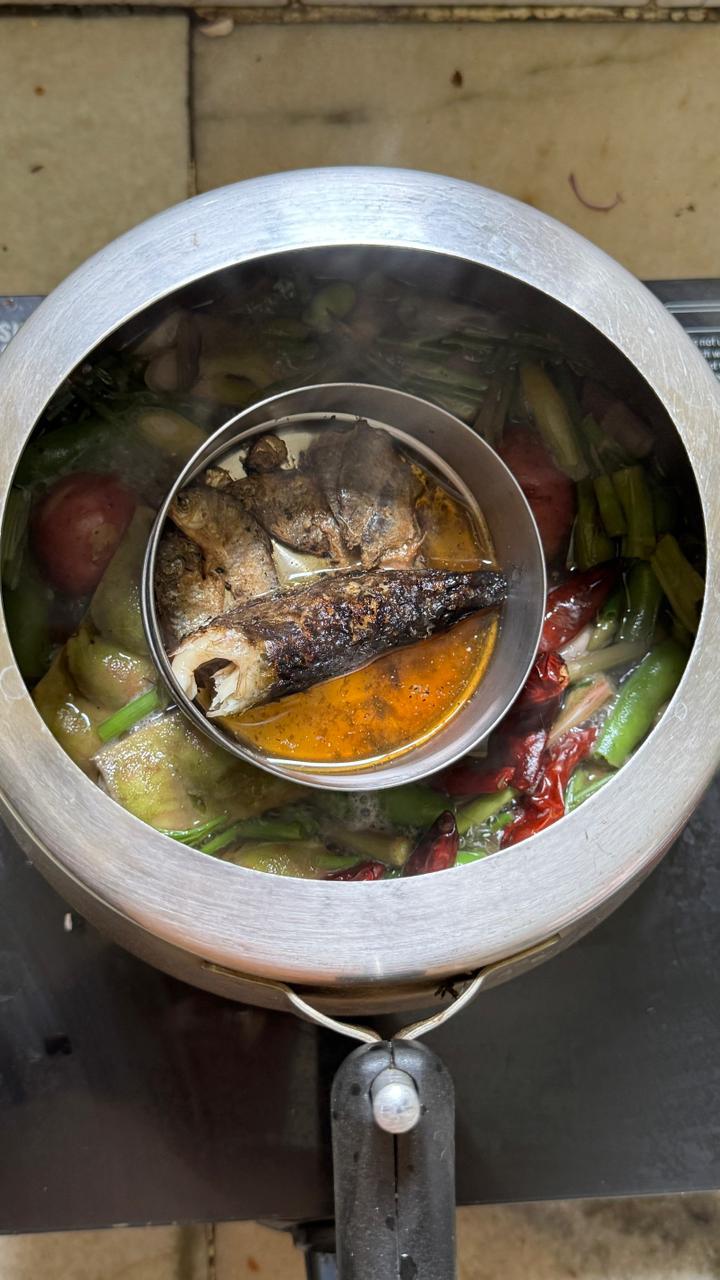
To make the paste, place the ngari, u-kaabi ayaiba, and dried red chillies in a steamer and steam briefly until softened and aromatic. The fish should loosen slightly and the chillies should become pliable.
Transfer to a mortar and pestle, add salt, and pound into a coarse, pungent paste. The texture should be slightly grainy rather than smooth.
While the yongchak is still warm, peel off its outer skin gently. Take care to retain the inner pulp and seeds, as these contribute to the texture of the dish.
In a large bowl, combine all the cooked vegetables. Using your hands or a masher, gently mash them together. Aim for a coarse, lumpy consistency—avoid turning the mixture into a smooth puree. The yongchak seeds should remain intact, and the koukha should not break down completely.
Add the prepared fish and chilli paste to the vegetables and mix thoroughly, ensuring it is evenly distributed.
Add a small amount of water, just enough to bring the mixture together into a thick, spoonable consistency. The final texture should resemble a coarse mash with a light coating of gravy, not a watery curry.
Garnish with a mix of fresh herbs such as lomba, chantruk, toningkhok, spring onion, or tender pea shoots. Serve warm with rice.
Tips:
- Avoid overcooking the vegetables; they should be tender but still hold their shape. Overcooking will result in a mushy, flat texture.
- Peel the yongchak while it is still warm, as the outer skin comes off more easily at this stage.
- Adjust the amount of ngari and dried chillies to suit your tolerance for pungency and heat.
Note:
As a traditional Manipuri preparation, this dish relies on ingredients that are indigenous to the region; substitutions may significantly alter its flavour and character.
Yongchak (Parkia timoriana), also known as tree bean, lends a distinctive pungency and slight bitterness. Koukha (Sagittaria sagittifolia), the tuber of the arrowhead plant, contributes a mild, starchy texture. Hawai mubi (broad bean, Vicia faba) adds body and sweetness, while loklei (Hedychium flavum), an aromatic rhizome, imparts a subtle, ginger-like fragrance. Pheija (Wendlandia glabrata) brings a vegetal, slightly astringent note through its tender leaves and shoots. The depth of the dish comes from ngari, a fermented fish, and u-kaabi ayaiba, a smoked and dried fish, both of which lend strong umami flavours. Fresh herbs used for garnish—such as lomba (Elsholtzia griffithii/blanda), chantruk (shepherd’s purse, Capsella bursa-pastoris), and toningkhok (Houttuynia cordata), add brightness and a fresh aroma to the final dish.
Akoijam Sunita is an entrepreneur, independent researcher, writer, translator, and multimedia producer. She runs Lomba Kitchen, an initiative offering Manipuri food while also curating research, stories, and memories related to the region’s culinary practices.
Dr. Beauty Thounaojam is a Senior Lecturer at the Taylor’s Culinary Institute, Taylor’s University Lakeside Campus, Malaysia. She teaches Food Studies and Gastronomy to undergraduate and postgraduate students. Her research focuses on the sociology of food, culture, and identity, with a particular interest in food practices and culinary traditions.
You must be logged in to rate this recipe.
 Login with Google
Sign in with email