
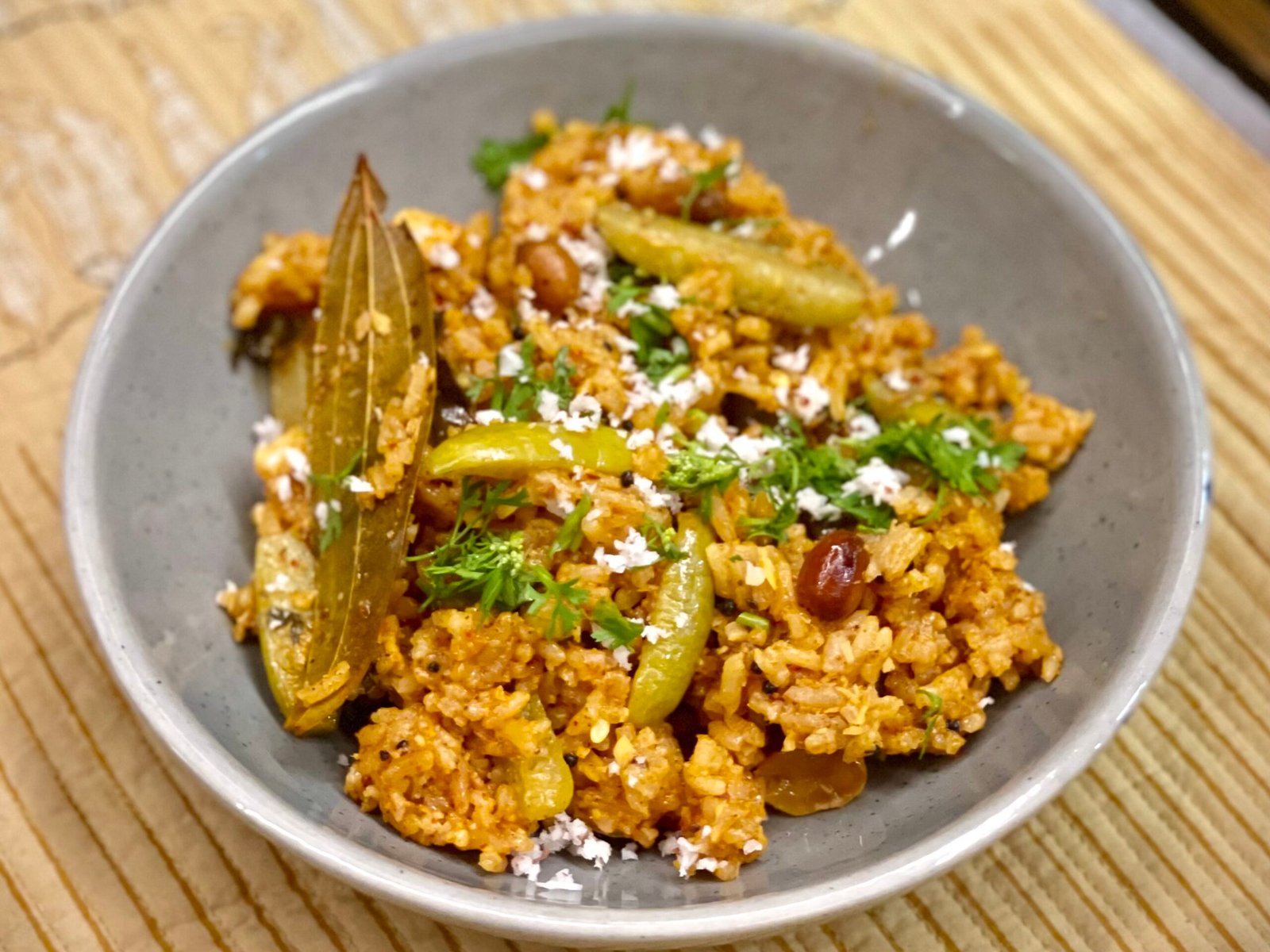
Tendli Masale Bhaat is a fragrant, spice-infused rice dish featuring tendli (ivy gourd), peanuts, freshly grated coconut, and an aromatic blend of whole spices. Traditionally cooked during festive occasions and special gatherings, this dish uses seasonal, locally available ingredients.
Chef TZac’s version of this classic Maharashtrian dish stays true to its roots while adding his own twist. He starts by dry-roasting whole spices and grinding them fresh to build a flavour base. In hot oil, mustard seeds crackle, followed by curry leaves and a pinch of hing, which lend a distinct aroma. Cooked rice is then tossed with this tempering, along with the freshly ground spice mix. Peanuts are added toward the end, lending a welcome crunch that contrasts with the soft rice. The dish brings together the signature balance of Maharashtrian cooking—mild sweetness, gentle heat, and a hint of tang.
Whole Spices:
| Green cardamom | 2 pieces |
|---|---|
| Black cardamom | 1 piece |
| White sesame seeds | ½ teaspoon |
| Black peppercorns | 10-12 |
| Mace | 1 piece |
| Cinnamon | 1 stick |
| Fenugreek seeds | ¼ teaspoon |
| Poppy seeds | ½ teaspoon |
| Dried red chilli | 2 pieces |
| Cumin | 1 teaspoon |
| Coriander seeds | ½ tablespoon |
Other Ingredients:
| Green chilli | 4 pieces |
|---|---|
| Ginger | 10 grams |
| Tendli (Ivy gourd) | 200- 250 grams |
| Salt | to taste |
| Fresh coconut | ½ cup |
| Coriander leaves | for garnish |
| Groundnut oil | as needed |
| Black mustard seeds | 1 teaspoon |
| Hing (Asafoetida) | ½ teaspoon |
| Bay leaves | 2 |
| Curry leaves | 10-12 |
| Peanuts | 1 ½ tablespoon |
| Indrayani rice | 1 cup |
| Turmeric powder | ½ teaspoon |
What You Will Need
Mixer grinder; cooking pot with lid
Instructions
Begin by placing a dry pan over low heat and adding the whole spices. Gently toast them, stirring continuously or shaking the pan to prevent burning.
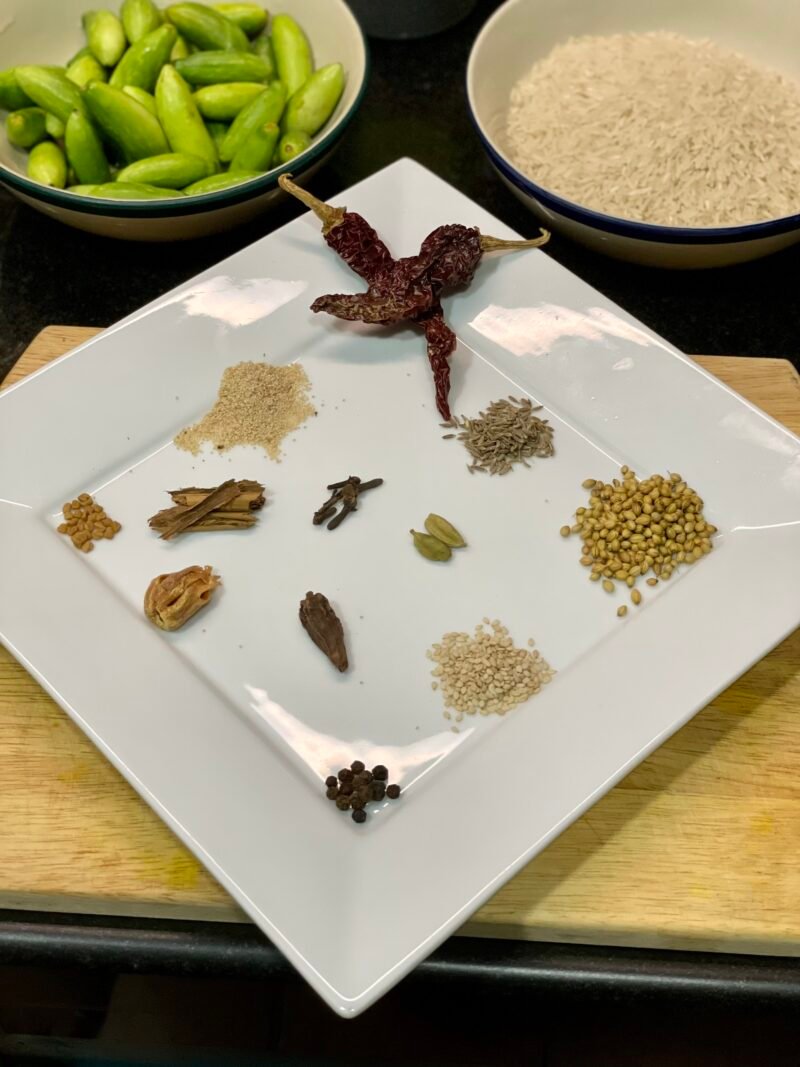
After about 3-4 minutes, the spices will begin to release their aroma. At this stage, remove the pan from the heat.
Allow the toasted spices to cool completely, then grind them into a fine powder using a spice grinder or a mortar and pestle. Set the spice blend aside.
Slit the green chillies lengthwise and finely chop the ginger.
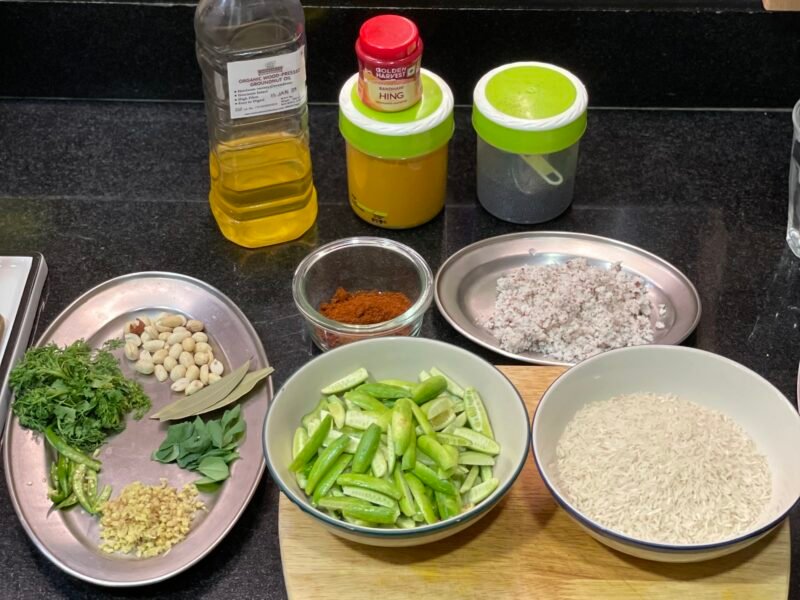
Cut the tendli lengthwise into quarters.
Place the quartered tendli in a bowl, season it generously with salt, and let it rest for 10-15 minutes.
Grate the fresh coconut and set aside a small portion to use later as a garnish.
Roughly chop the coriander leaves and keep them aside for garnishing as well.
Heat a heavy-bottomed pot over medium heat and add groundnut oil. Once the oil is hot, add the black mustard seeds and allow them to crackle.
Immediately add a pinch of hing, the slit green chillies, chopped ginger, and bay leaves Sprinkle in a little salt at this stage, but be careful not to let the hing burn. Sauté for a few seconds until fragrant.
Add the curry leaves and peanuts to the pot, stirring constantly. Continue sautéing until the peanuts turn golden brown and slightly crisp.
Once the peanuts are browned, add the seasoned tendli and sauté over medium-high heat for a few minutes, stirring occasionally to prevent sticking.
Add the rice to the pot and continue sautéing for another 2-3 minutes so the grains absorb the flavours.
Stir in the prepared ground spice mix and most of the grated coconut, reserving a small amount to use as garnish.
Sprinkle in the turmeric powder and mix gently, being careful not to break the rice grains.
Add enough water to cook the rice, following a 1:3 ratio—three cups of water for every one cup of rice.
Season with salt to taste and check the balance of flavours. Add a small amount of sugar to round out the dish.
Stir everything well, then cover the pot with a lid. Reduce the heat to low and let the rice cook for about 15 minutes.
After 15 minutes, the rice should be about 95 percent cooked. Turn off the heat and leave the lid on to allow the residual steam to finish the cooking.
After a few minutes, gently fluff the rice with a fork.
Finally, garnish with the reserved grated coconut and chopped coriander leaves before serving.
Tips:
Be precise with the water-to-rice ratio (1:3) and use a tight-fitting lid for the cooking pot so that the steam doesn’t escape.
Thomas Zacharias, or ChefTZac, is a chef with nearly 15 years of professional cooking experience, and arguably a lot more if you count the early start he got in his grandmother’s kitchen in Kerala. The first phase of his career was centered around European cuisine, starting out as a line cook at Le Bernardin, New York City’s famed three-Michelin-star eatery in 2009. But in 2014, a culinary expedition across India made him rethink his entire approach to food. He went on to helm the kitchen at The Bombay Canteen as Chef Partner, finding inventive ways to showcase indigenous ingredients through contemporary regional Indian cuisine. In 2022, Chef Zac decided to bring together some of his passions—storytelling, working with local produce, and nurturing connections between people within the Indian food system—and founded The Locavore to do good through what he knows best: food.
You must be logged in to rate this recipe.
 Login with Google
Sign in with email