
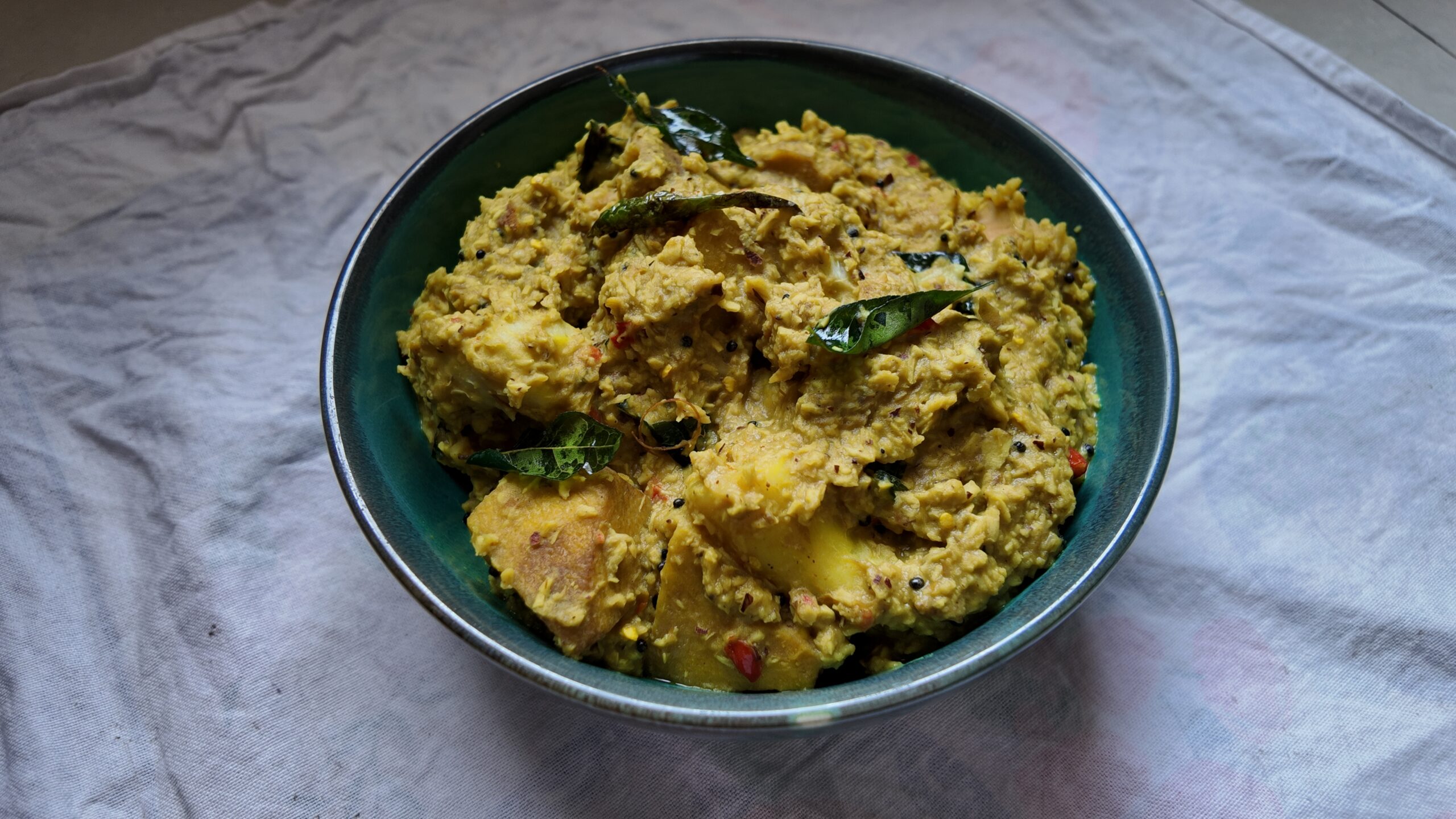
The Paniya tribal community of Wayanad, Kerala, has been strengthening food and nutrition security for generations, long before it became a global concern. Their elders passed down this recipe for Puzhukku, a boiled mix of tubers mixed with a spiced coconut paste. Historically deemed a “famine food”, it sustained families through lean agricultural seasons and periods of scarcity. At the heart of this dish are tubers like yam, taro, tapioca, and elephant foot yam—crops now classified among the world’s neglected and underutilised (NUS) species, increasingly dismissed from mainstream food systems. Yet the Paniya community never let them go. They continue to maintain homestead gardens rich in traditional tuber diversity—preserving and passing down knowledge of their farming practices that might otherwise be lost.
Tubers contribute to nutritional security in more ways than one—they are rich in carbohydrates, fibre, antioxidants, and essential minerals. Puzhukku is a hearty, calorie-dense meal. It is traditionally served after long days of agricultural labour, when the Paniya community needed sustained energy most. For many elders, the dish carries memories of shared family meals and seasonal harvests.
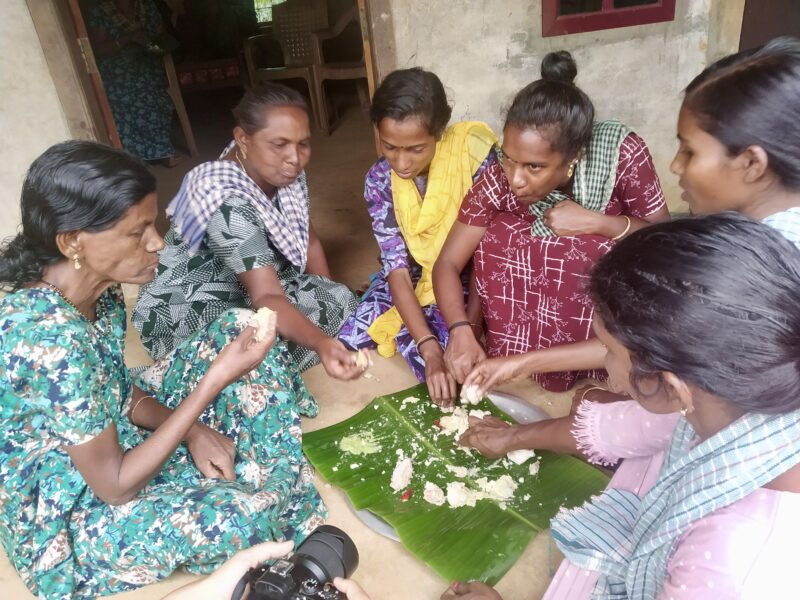
| Mixed tubers (Greater yam, lesser yam, taro, tapioca, elephant foot yam) | 2-3 kilograms |
|---|---|
| Tamarind | one large lemon-sized piece |
| Grated coconut | 250 grams |
| Bird’s eye chillies | 10-15 |
| Water | as required |
| Salt | as required |
| Turmeric (optional) | 1- 2 teaspoons |
| Coconut oil | 2 teaspoons |
| Mustard seeds | 1 teaspoon |
| Curry leaves | 2 sprigs |
| Green chillies | 4 |
What You Will Need
Traditional knife for peeling tubers, earthen pot or heavy-bottomed metal cooking vessel, mortar and pestle or mixer, wooden ladle
Instructions
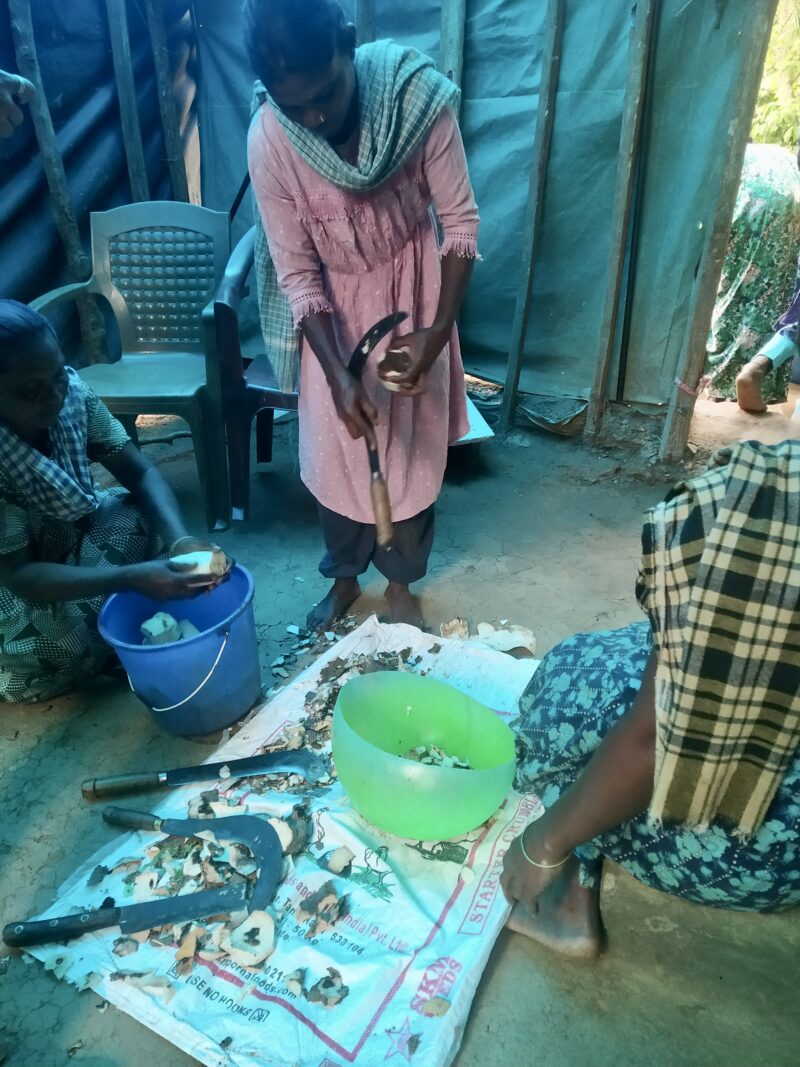
Wash the tubers thoroughly under running water to remove any soil or dirt. Peel the skin and cut them into medium-sized pieces so they cook evenly.
Soak the tamarind in a small bowl of warm water for 10–15 minutes to soften it. Once softened, squeeze out the pulp and discard any seeds or fibres.
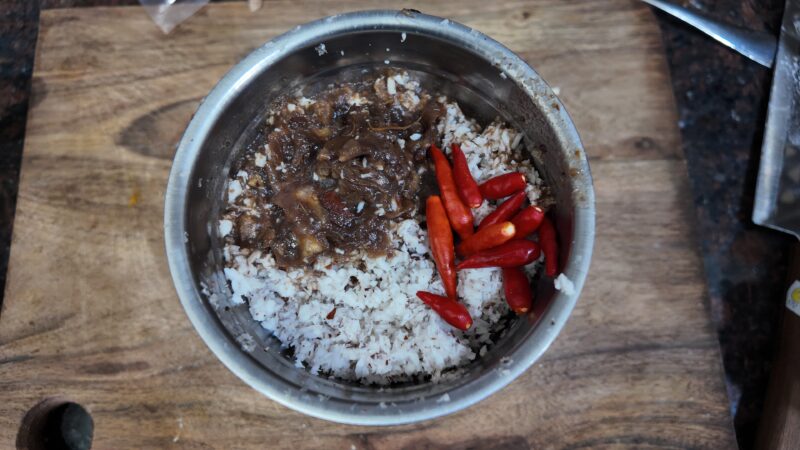
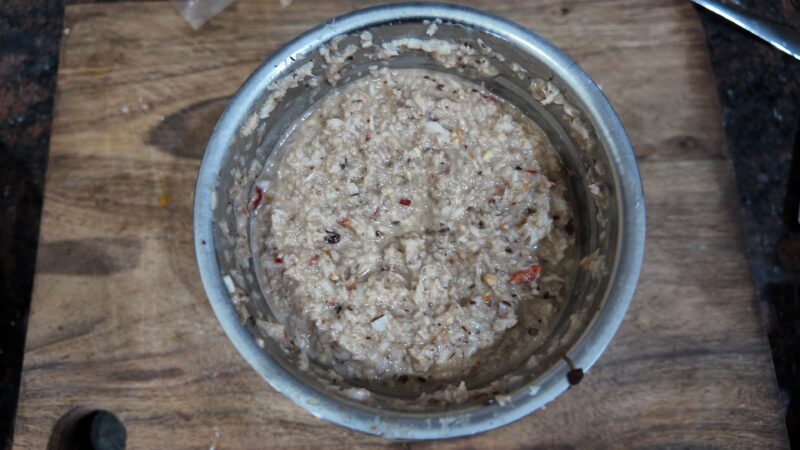
In a mixer or using a mortar and pestle, combine the grated coconut, tamarind pulp, and bird’s eye chillies. Grind lightly to form a coarse paste. Avoid adding too much water.
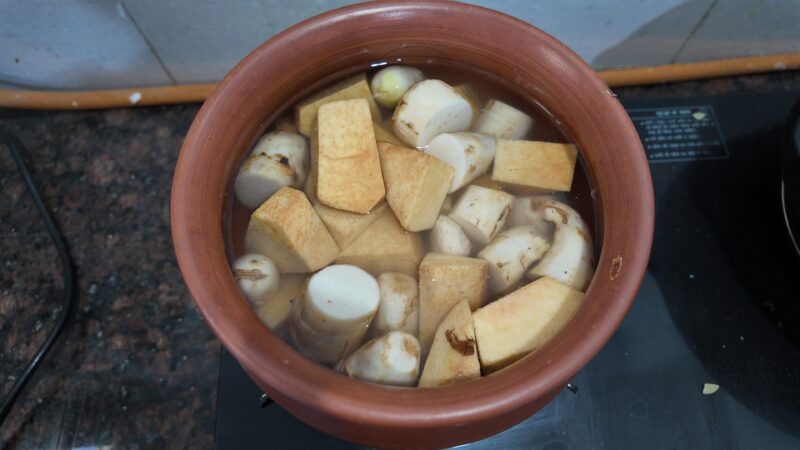
Place the cut tubers in a large cooking vessel and add enough water to cover them completely. Season with salt and add the turmeric, if using. Bring to a boil over a medium flame, then reduce the heat and cook for 30–40 minutes, or until the tubers are soft and can be easily pierced with a knife.
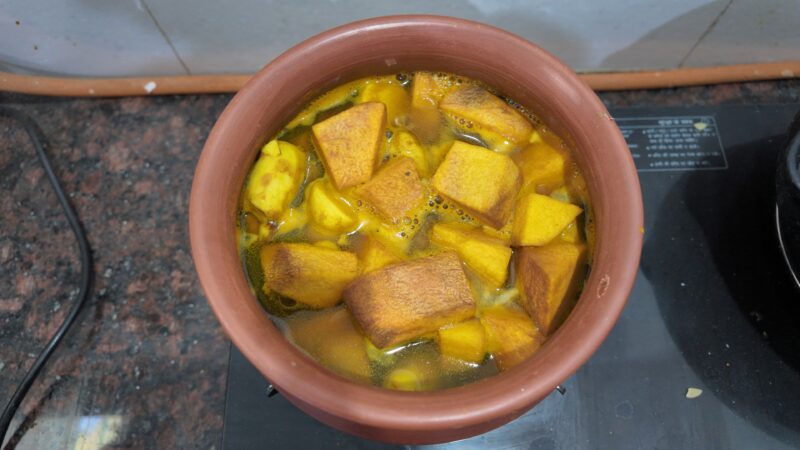
Once the tubers are cooked, add the prepared coconut mixture to the vessel. Stir gently so the pieces do not break apart. Cook on a low flame for 5–10 minutes, allowing the flavours to combine and the rawness of the coconut mixture to cook out slightly.
In a separate small pan, heat the coconut oil over a medium flame. Add the mustard seeds and allow them to splutter.
Add the green chillies and curry leaves to the hot oil and sauté briefly for a few seconds until fragrant. Take care, as the curry leaves may splutter.
Pour this tempering over the cooked tuber mixture and stir gently before serving warm.
Tip:
Serve with green chilli chutney and black tea to experience the dish the way the Paniya community does.
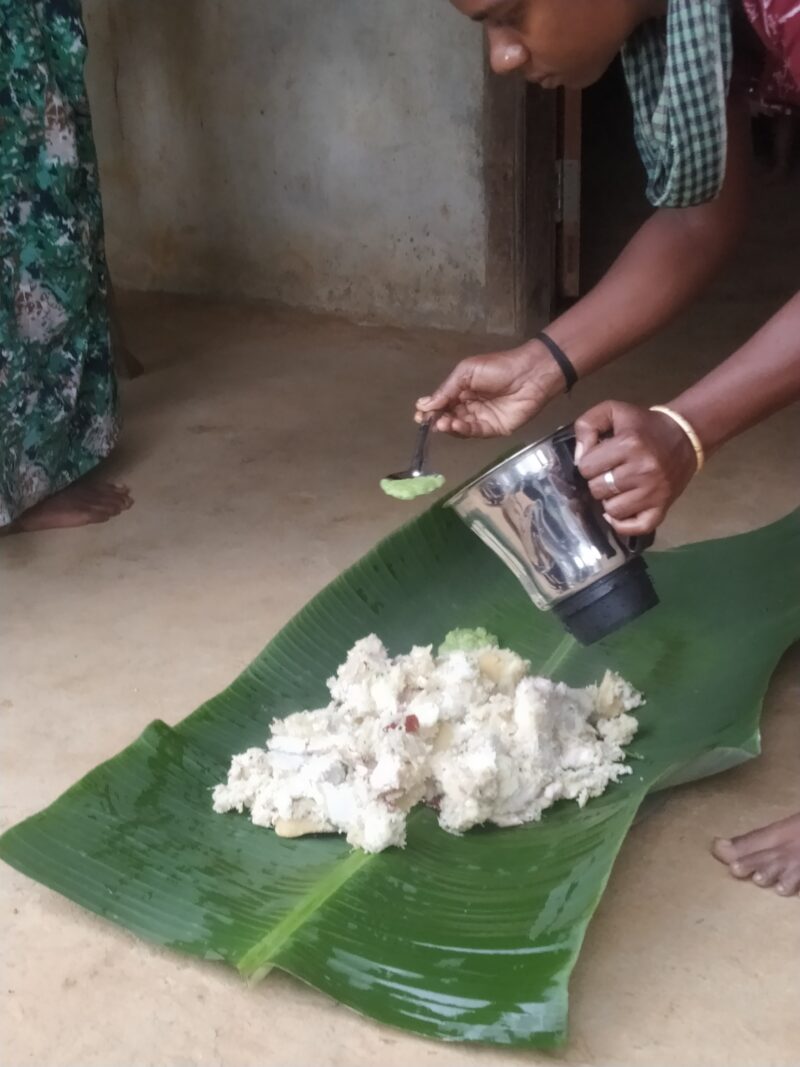
This recipe comes from the kitchen of Devaki from Wayanad, Kerala. Part of a limited series by the M.S. Swaminathan Research Foundation (MSSRF) and The Locavore, created for International Day of Biological Diversity to spotlight the lesser-known native ingredients—both climate resilient and nutritionally rich—that deserve a place in our food systems.
About the Farmer:
Devaki is a 38-year-old farmer from Kuzhimukku, Meppady, Arappetta, Wayanad, Kerala. She belongs to the Paniya tribal community, who are traditionally dependent on agricultural and daily wage labour.
About MSSRF:
Established in 1988, the M.S. Swaminathan Research Foundation (MSSRF) is a community-focused, science-driven, interdisciplinary research institution dedicated to sustainable rural development. In a mission to harness science for sustainable development, MSSRF has been working with communities in Odisha, Tamil Nadu, and Kerala to conserve millets and revive them for our food systems.
Learn more here: https://mssrf.org/
You must be logged in to rate this recipe.
 Login with Google
Sign in with email