
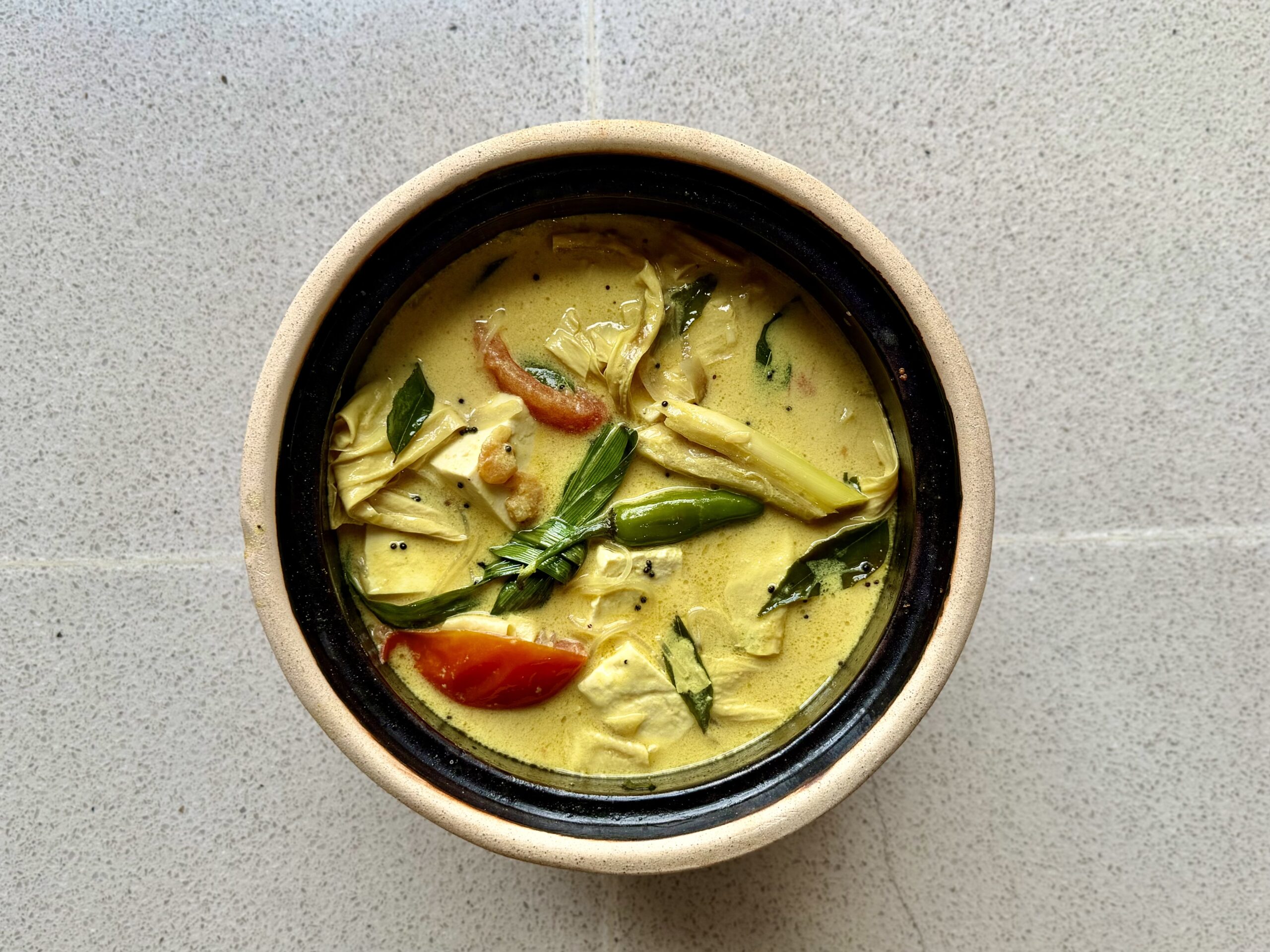
Outside the Tamil communities of Malaysia and Singapore, few people know about the remarkable home cooking that emerged from generations of migration, labour, and adaptation. These are dishes born in plantation homes, where resourcefulness mattered more than abundance. At the heart of many of them are fermented and shelf-stable ingredients—soy sauce, shrimp paste, dried beancurd skin, tinned sardines, dried anchovies, and dried prawns—that could withstand the tropical climate, stretch across paydays, and transform simple meals with nourishment and deep umami.
From the late 19th century onwards, more than two million South Indian labourers—many from the drought-prone districts of Tamil Nadu—were brought to British Malaya to work on rubber plantations and other colonial enterprises. Living in isolated estates with limited access to familiar ingredients and fresh produce, they rebuilt their food traditions using what was available around them. Fermented condiments, preserved foods, and dried staples—readily available in local markets and easily stored without refrigeration—became indispensable pantry essentials for communities whose lives revolved around physically demanding work.
Over time, necessity gave rise to a cuisine that was distinctly Tamil yet unmistakably Malaysian. Some dishes, such as Suhoon Tofu Sothi, remain rooted in Tamil cooking while embracing Chinese ingredients like dried beancurd skin and mung bean noodles. Others, including Anchovy Sambal and Chicken Kicap Perattal, borrow from Malay and Chinese kitchens but are shaped by Tamil cooking techniques. While dried and salted seafood has long been associated with coastal Tamil cuisine, in Malaysian Tamil cooking it became commonplace regardless of proximity to the sea, reflecting both practicality and the influence of local foodways.
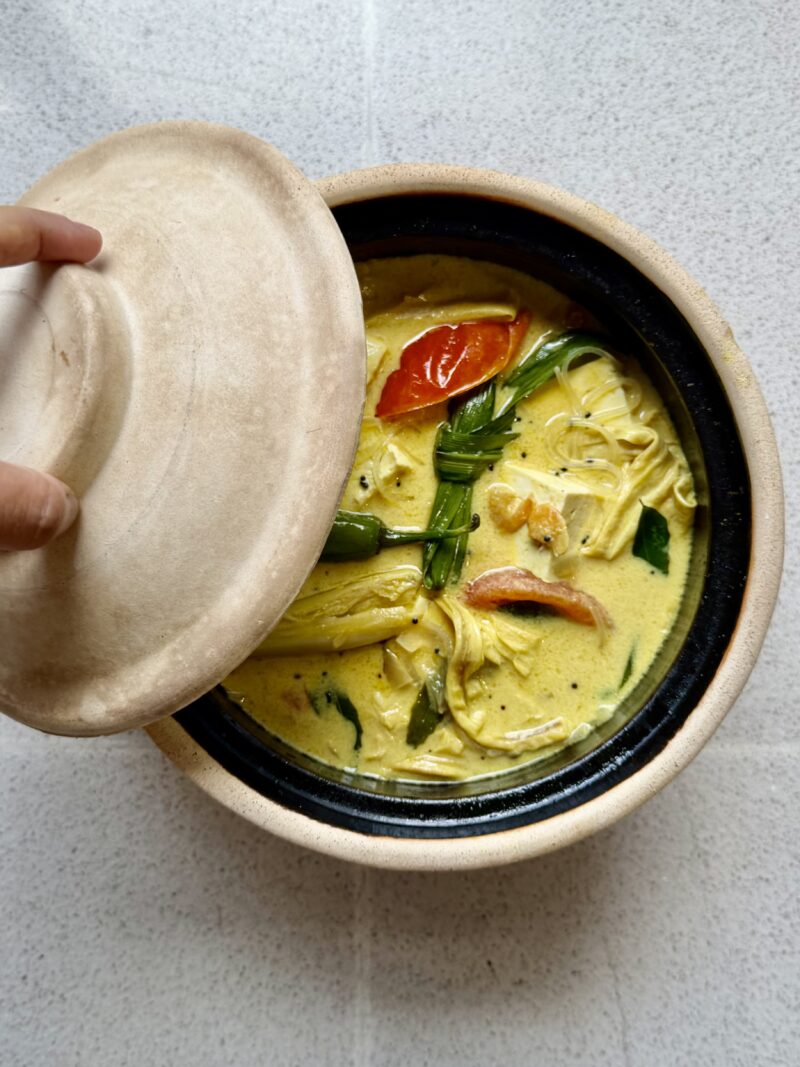
A dish that captures the adaptability of Malaysian Tamil cooking is the Suhoon Tofu Sothi. Combining a classic Tamil coconut-based curry with Chinese pantry staples such as dried beancurd skin and mung bean noodles, it is one of my favourite everyday dishes.
The Sothi made in Malaysian and Singaporean homes is closely related to the Thirunelveli Mappillai Sothi of Tamil Nadu and Sri Lankan Sothi, reflecting the migrations and culinary exchanges that shaped Tamil communities across the India Ocean. While every household prepares it a little differently, it is most commonly served with idiyappam or spooned generously over plain rice, often accompanied by a spicy sambal.
Ingredients:
| Dried beancurd sheet (yuba) | 1 large sheet |
|---|---|
| Mung bean noodles (suhoon) | 1 small bundle (about 50–60 grams) |
| Dried prawns | 20 grams |
| Onion | 1, medium |
| Green chillies | 2 |
| Tomato | 1, medium |
| Firm tofu | 300–400 grams |
| Lemongrass (optional) | 1 stalk |
| Pandan leaf (optional) | 1 |
| Coconut oil | 15–20 grams | 1–1½ tablespoons |
| Fenugreek seeds | about ¼ teaspoon |
| Black mustard seeds | 2 grams | ½ teaspoon |
| Curry leaves | 1 sprig |
| Thin coconut milk | 200–300 ml |
| Turmeric powder | 1 teaspoon |
| First-press coconut cream | 200–300 ml |
| Salt | to taste |
What You Will Need
A medium-sized heavy-bottomed pot, a wooden spoon or spatula
Instructions
Begin by breaking the dried beancurd sheet into large, manageable pieces and soak them in room-temperature water for 10 minutes until softened. Soak the mung bean noodles in a separate bowl of room-temperature water for 10 minutes. Drain both and set aside.
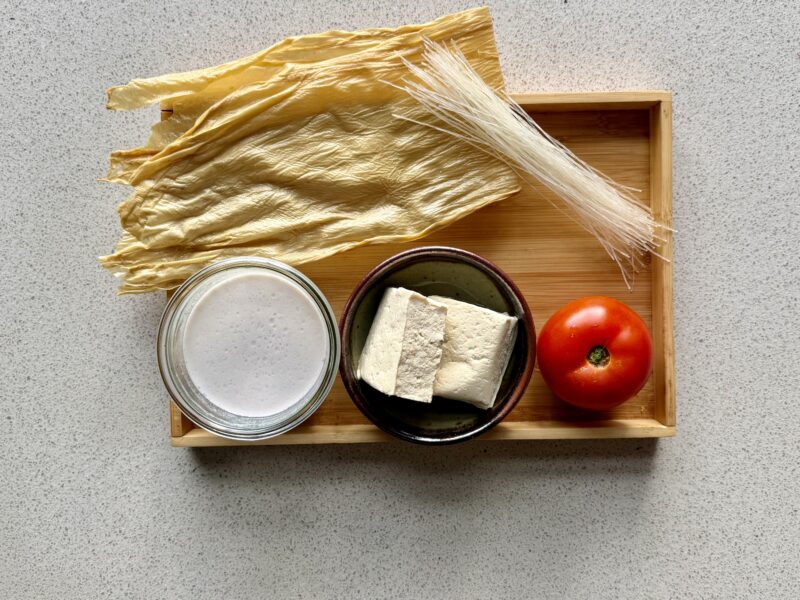
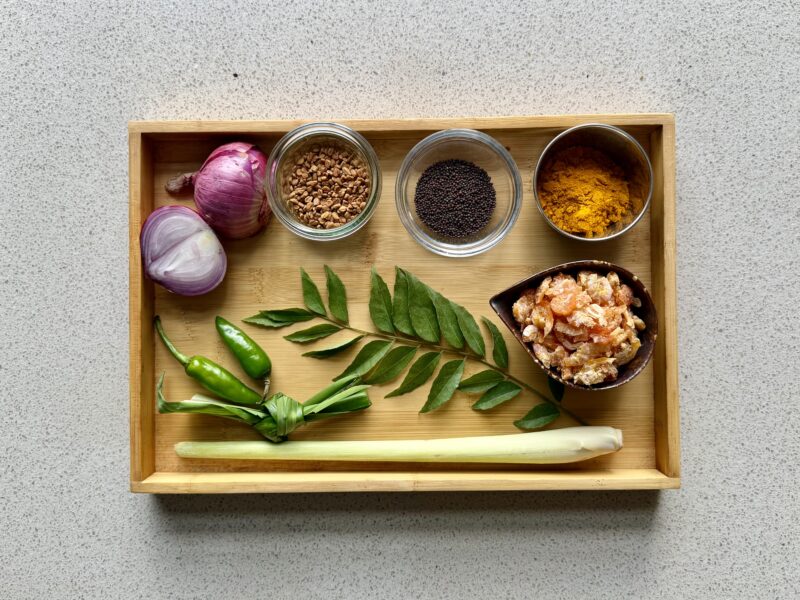
Rinse the dried prawns and pat them dry. Thinly slice the onion, slit the green chillies lengthwise while leaving the stalks intact, cut the tomato into quarters, and cut the tofu into medium-large cubes. If using lemongrass, remove the tough outer layers, keep only the bulbous lower portion, and lightly bruise it with the back of a knife. Knot the pandan leaf, if using.
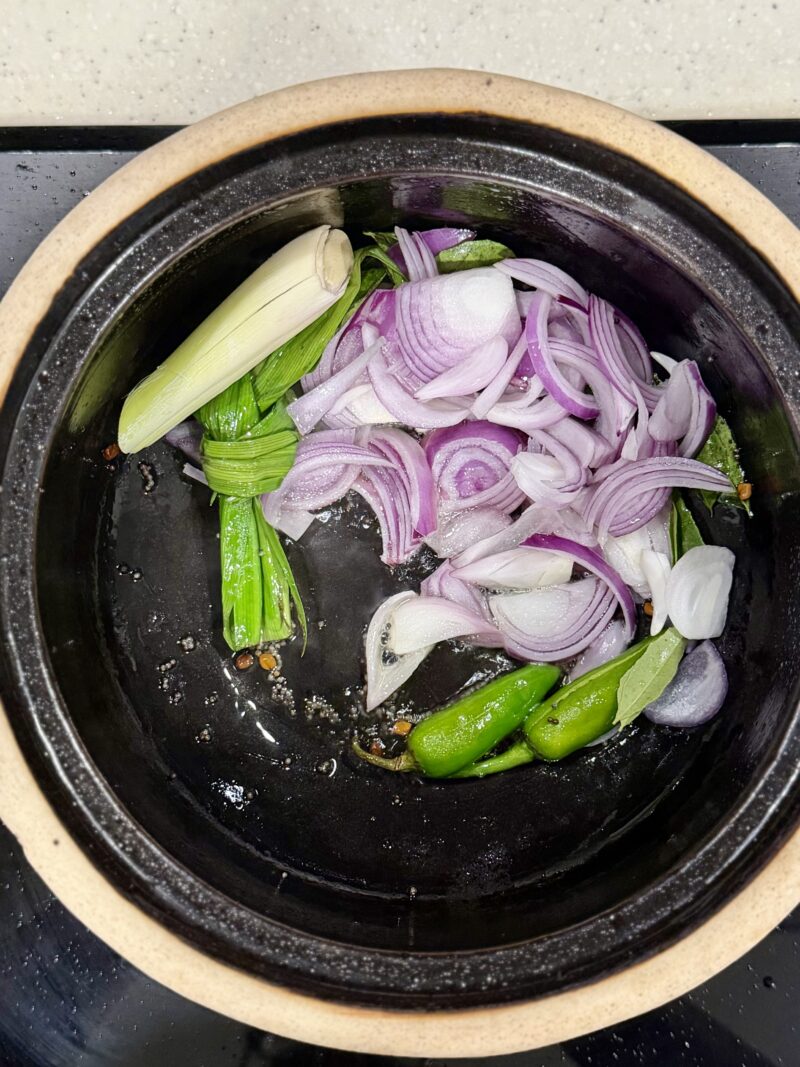
Heat the coconut oil in a medium heavy-bottomed pot over medium heat. Add the fenugreek seeds and toast for a few seconds until fragrant. Immediately add the mustard seeds and cook until they begin to pop.
Add the curry leaves, pandan leaf, lemongrass, sliced onion, and green chillies. Sauté for 5–7 minutes, stirring occasionally, until the onions soften and become translucent.
Stir in the dried prawns and cook for about 1 minute, until aromatic.
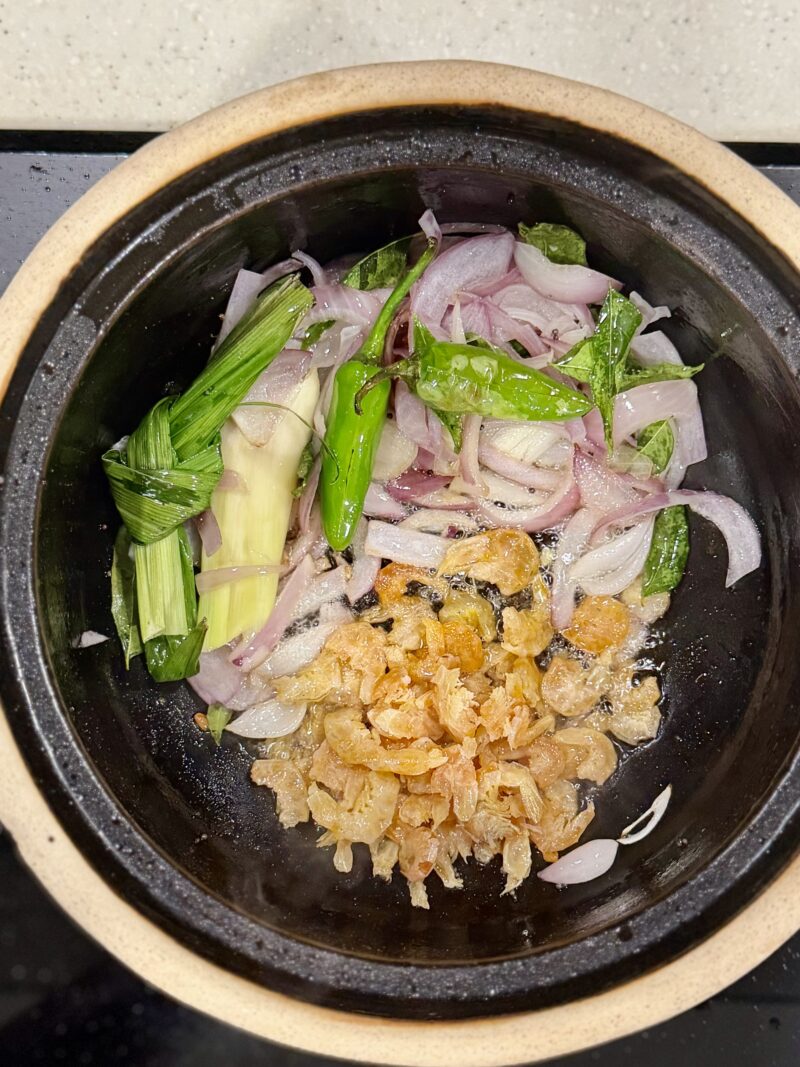
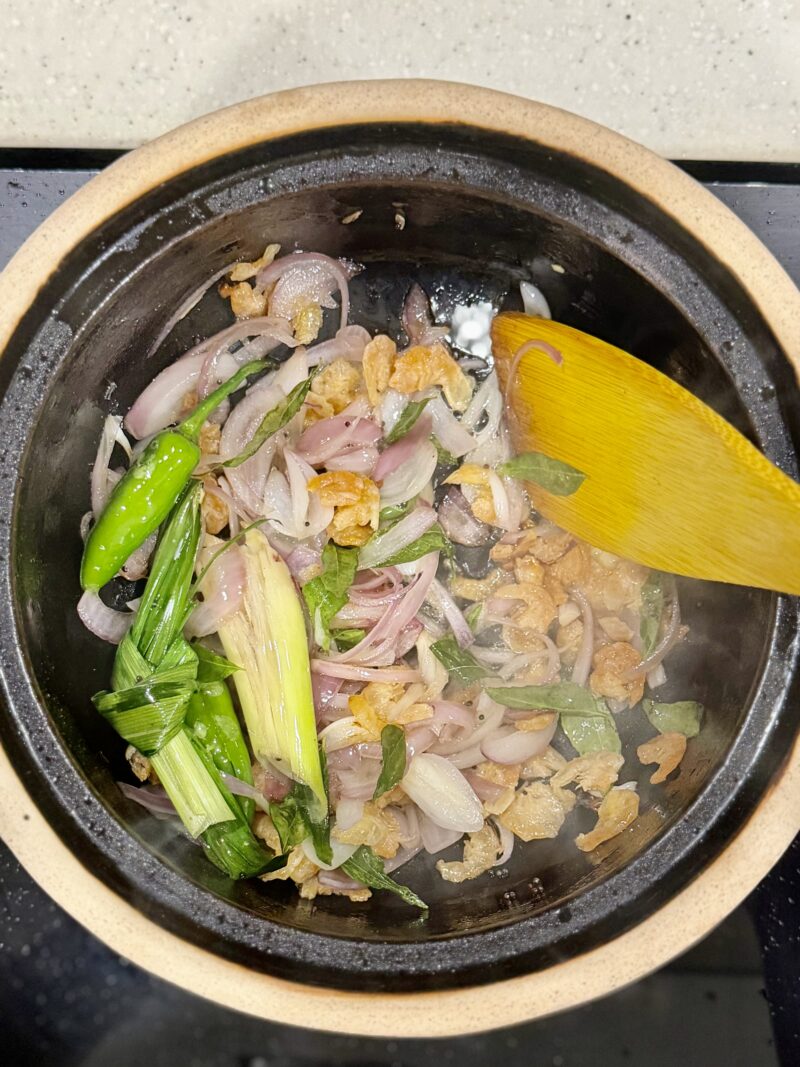
Pour in the thin coconut milk and add the tomatoes, softened beancurd sheet, and soaked mung bean noodles. Sprinkle in the turmeric powdeand stir until evenly combined. Bring the mixture to a gentle simmer.
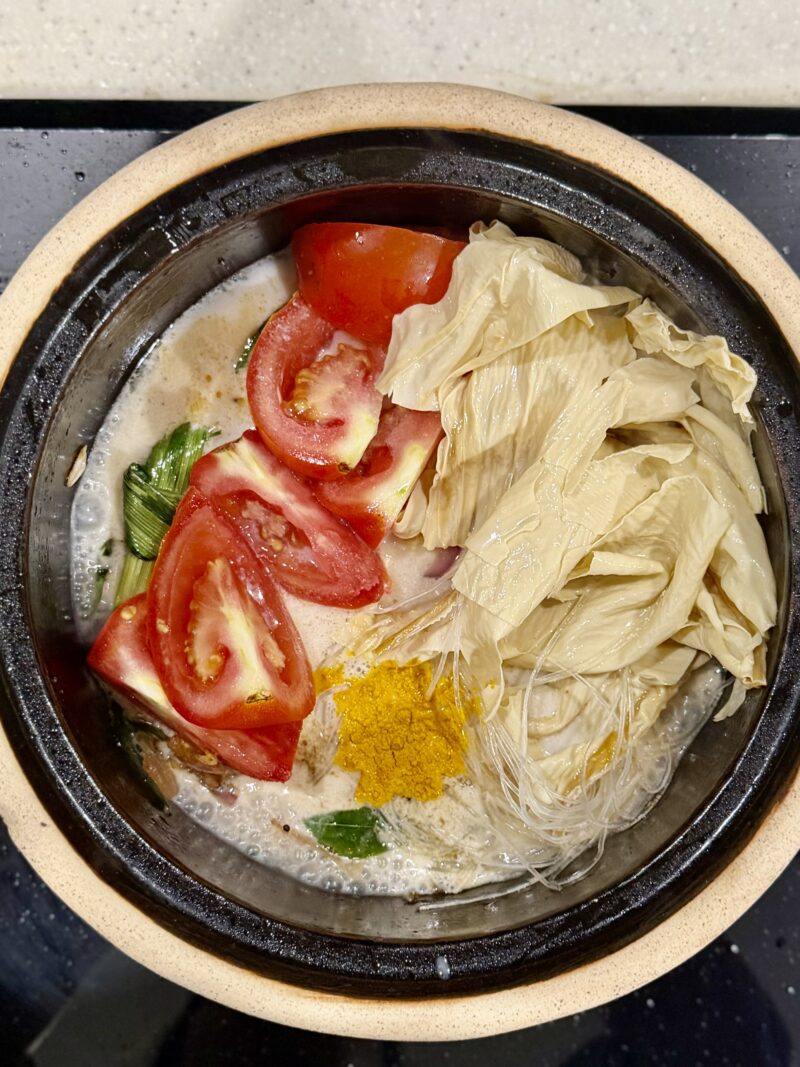
Reduce the heat to low and gently add the tofu cubes, followed by the coconut cream. Stir carefully so the tofu doesn’t break apart. Cover and simmer gently for another 5–10 minutes, allowing the flavours to meld without bringing the curry to a vigorous boil.
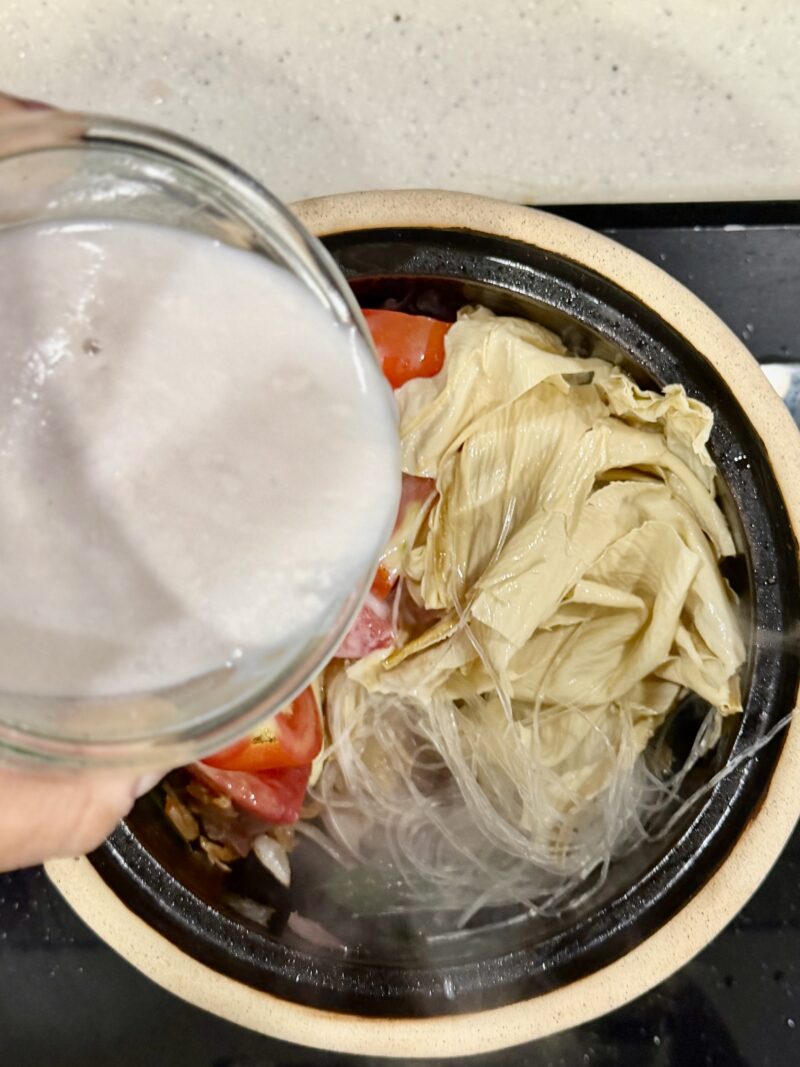
Taste the broth and season with salt only if needed. The dried prawns contribute a fair amount of salt, so adjust the seasoning cautiously.
Remove the curry from the heat and let it rest for at least 30 minutes before serving. This allows the flavours of the pandan, lemongrass, and dried prawns to infuse the broth more fully, resulting in a richer, more rounded Sothi.
Serve warm with idiyappam or steamed rice.
Tips:
- Season only at the end, as the dried prawns naturally release salt into the broth.
- Keep the curry at a gentle simmer after adding the coconut cream to prevent it from splitting.
- Allowing the curry to rest before serving significantly improves its flavour.
Variations:
- Replace the dried prawns with dried anchovies, or omit both for a vegetarian version.
- Vegetables such as cabbage, napa cabbage, potatoes, carrots, or green beans are excellent additions. Add them together with the tomatoes and coconut milk so they have time to cook through.
- Increase the amount of thin coconut milk for a lighter, broth-like Sothi.
- Like many family recipes, Sothi has no single definitive version. Once you’ve mastered the base, adapt it with seasonal vegetables, different proteins, or your preferred level of richness.
Vasunthara Ramasamy (vasunthara.r) is a food researcher, chef, writer, and home fermenter based in Singapore. She is passionate about making the diversity of South Indian ferments more accessible through supper clubs and workshops. Her current research—for which she frequently travels back to India—looks at fermented foods and traditions in the home pantries of Tamil Nadu.
This recipe is in collaboration with Desi Cultures, an online event taking place from the 20th-24th of July 2026, that brings together fermentation practices rooted in the Indian subcontinent and connected global conversations.
You must be logged in to rate this recipe.
 Login with Google
Sign in with email