
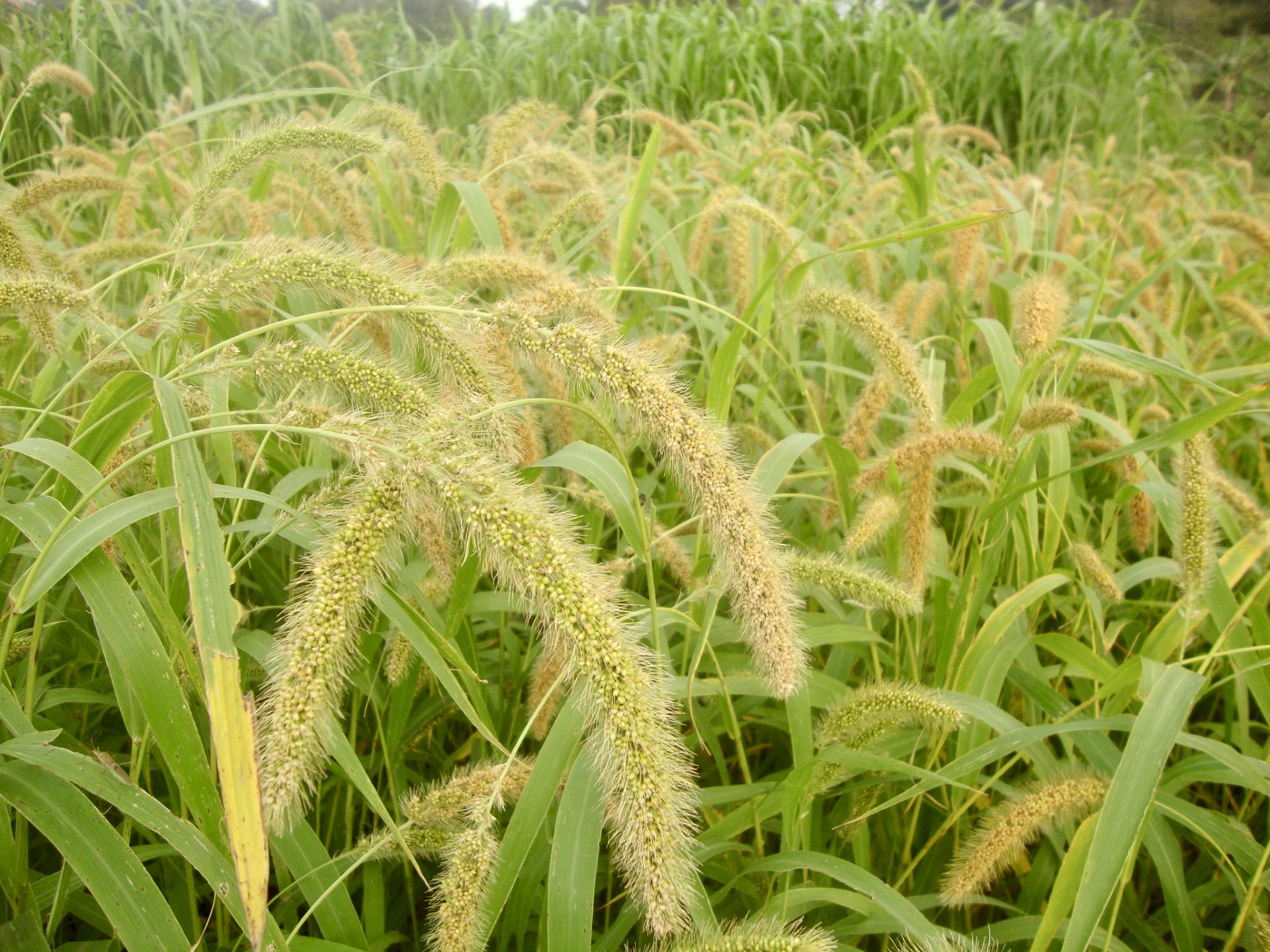
Foxtail millet—or thinai—has sustained the Malayali tribal community for generations, long before paddy or commercial crops like pepper and coffee reached their slopes. Classified as a neglected and underutilised (NUS) crop, it is slowly disappearing from our plates. Yet in Kolli Hills, Tamil Nadu, the Malayali tribe continues to protect this millet, along with many other traditional crops and local biodiversity, through community seed banks and sharing of knowledge across generations.
Foxtail Millet Pudding (Thinai Payasam) is a celebratory dessert which holds great cultural relevance in the region. It is served during agricultural festivals like Aadi Perukku and at local temple celebrations to honour the sacred mountain deities.
Thinai is important to this farming community because the cost of cultivation is low, yet the nutritional benefits it offers are substantial. It requires no chemical fertilisers or pesticides, which also makes it a low footprint crop. Essential for climate-resilience, this millet is highly efficient at carbon fixation and thrives on minimal rainfall. The Malayali tribe face increasingly erratic monsoons, and while most other crops might fail, thinai endures.
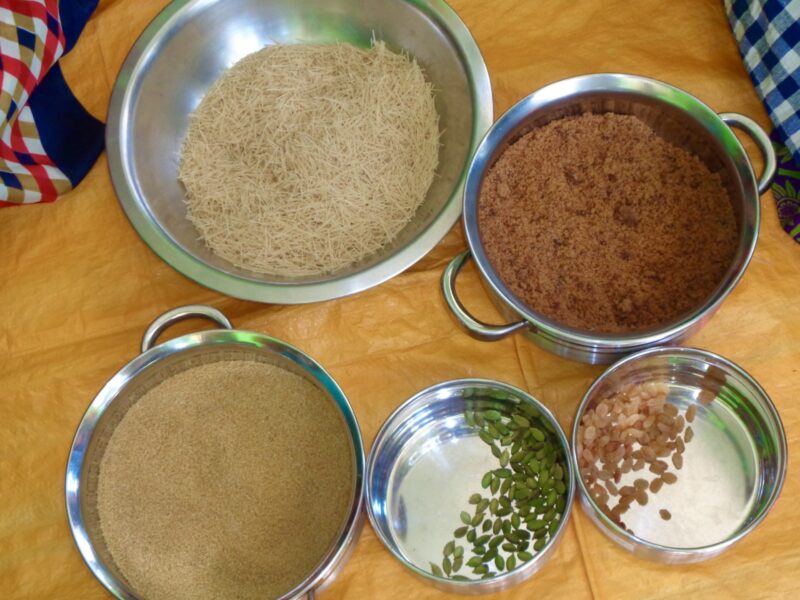
For the payasam
| Foxtail millet | 200 grams | 1 cup |
|---|---|
| Jaggery, grated | 150–180 grams | ¾–1 cup |
| Warm water, for dissolving jaggery | 120 ml | ½ cup |
| Green gram (moong dal) | 2 tablespoons |
| Fresh grated coconut | 2 cups |
| Milk | 1 tablespoon |
| Cardamom powder | 1 pinch | ¼ teaspoon |
For the garnish
| Ghee | 2 tablespoons |
|---|---|
| Cashews | 15–20 |
| Raisins | 2 tablespoons |
What You Will Need
Heavy-bottomed vessel or deep earthen pot, small tempering pan, a fine sieve or muslin cloth
Instructions
Place the foxtail millet in a large bowl and rinse it thoroughly under cold running water three to four times, until the water runs mostly clear. Soak the millet in fresh water for 30 minutes to help soften the grain. Once soaked, drain and set aside.
Add the grated jaggery to a small bowl with ½ cup of warm water. Stir until the jaggery dissolves completely. Strain the liquid through a fine sieve or muslin cloth to remove any grit or impurities, then keep aside.
Heat a heavy-bottomed vessel or earthen pot over a low–medium flame. Add the green gram and dry-roast for about 4–5 minutes, stirring continuously, until it turns lightly golden and releases a nutty aroma.
Add the soaked and drained foxtail millet to the same pot, followed by the water and grated coconut. Stir well with the wooden ladle to combine all the ingredients evenly.
Bring the mixture to a gentle simmer over a medium flame. Once it begins to bubble lightly, reduce the heat to low and cook for 20–25 minutes, stirring frequently to prevent the millet from sticking to the bottom of the pot. As it cooks, the millet and green gram will soften and the mixture will gradually thicken into a porridge-like consistency.
Once the grains are fully cooked and soft, slowly pour in the strained jaggery syrup while stirring continuously. Mix well. Continue cooking on a low flame for another 5–8 minutes. The mixture should begin to look glossy and deepen into a rich golden-brown colour.
Pour in the milk and stir gently to combine. Allow the payasam to heat through for 1–2 minutes over a very low flame. Avoid boiling vigorously at this stage, as it may affect the texture.
Add the cardamom powder and mix well.
For the garnish:
In a small tempering pan, heat the ghee over a low flame.
Add the cashews and fry until lightly golden. Then add the raisins and continue frying briefly until they turn plump.
Pour the fried cashews, raisins, and ghee into the payasam. Stir gently, then remove the pot from the heat. Serve warm.
Tips:
- For a deeper, toasted flavour, dry-roast the raw foxtail millet for 3–4 minutes before soaking it. The grains should smell nutty and aromatic. This also helps the payasam retain a better texture without becoming overly mushy.
- A small pinch of dry ginger powder may be added along with the cardamom powder to balance the richness of the coconut and jaggery.
This recipe comes from the kitchen of Malarkodi of Kolli Hills, Tamil Nadu. It is part of a limited series by the M.S. Swaminathan Research Foundation and The Locavore, created for International Day of Biological Diversity to spotlight the lesser-known native ingredients — climate resilient and nutritionally rich — that deserve a place in our food systems.
About the Farmer:
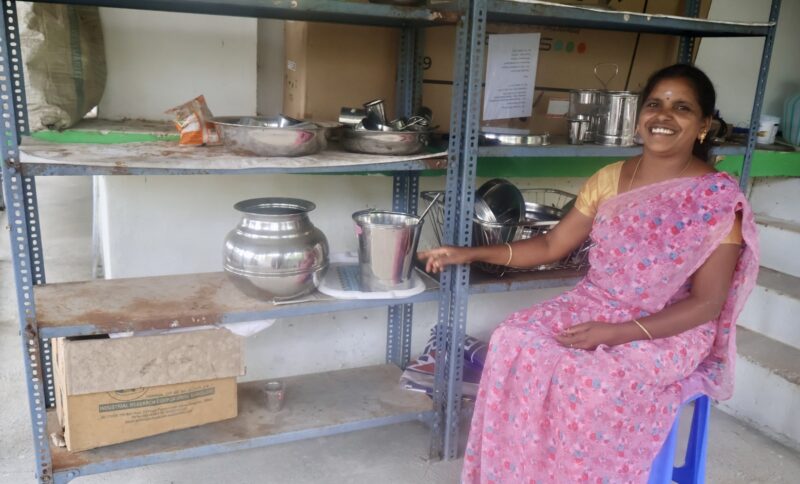
Malarkodi is a 45-year-old agriculturalist and entrepreneur based in Sakarapatti village in Kolli Hills, Tamil Nadu. She manages 1.5 acres of land with her family and has been a master trainer in making millet-based value-added products for two decades. She also operates a millet-focused retail outlet.
About MSSRF:
Established in 1988, the M.S. Swaminathan Research Foundation (MSSRF) is a community-focused, science-driven, interdisciplinary research institution dedicated to sustainable rural development. In a mission to harness science for sustainable development, MSSRF has been working with communities in Odisha, Tamil Nadu, and Kerala to conserve millets and revive them for our food systems.
Learn more here: https://mssrf.org/
You must be logged in to rate this recipe.
 Login with Google
Sign in with email