
Made without any oil, Popti is a traditional preparation from Alibag that is associated with the monsoon and winter seasons. The dish relies on slow steaming rather than frying, allowing the meat and vegetables to cook in their own juices while retaining their nutritional value.
Typically cooked as a communal meal, Popti brings together marinated chicken, eggs, and seasonal vegetables such as vaal, ghewda, and other beans, all sealed within an earthen pot. The pot is placed upside down over an open fire, with families gathering around it. While the women prepare and layer the ingredients, the men tend to the fire.
Childhood friends Priti and Aditi recall tasting the dish for the first time as children with their respective families. Bhamburda greens lend a distinct aroma and flavour, while seasonal beans, at their best during winter, add freshness to the dish.
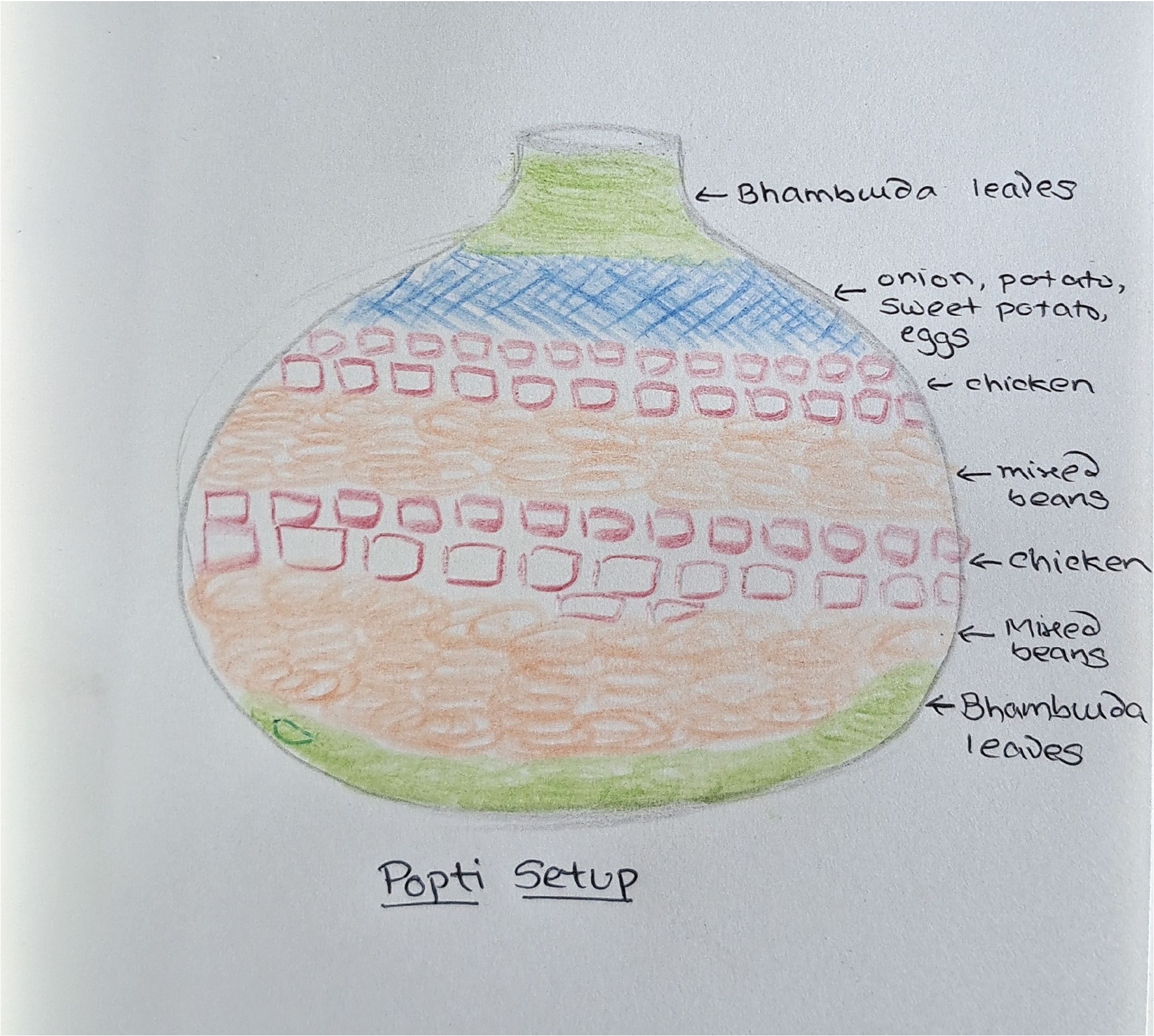
The cooking process is as unique as the dish itself. The ingredients are layered into the pot right up to the neck, the opening sealed with leaves, and then inverted before a fire is built around it.
For the vatan (roasted onion-and-coconut paste):
| Onion, sliced | 35 grams |
|---|---|
| Dried coconut, grated | 15 grams |
| Oil | 1 teaspoon |
| Bhamburda greens, cleaned | 250 grams |
|---|---|
| Ghewda (green beans) | 250 grams |
| Pawta (flat field beans) | 250 grams |
| Vaal shenga (fresh hyacinth bean pods) | 250 grams |
| Green pea pods | 250 grams |
| Potato | 500 grams |
| Sweet potato | 500 grams |
| Onion, peeled | 500 grams |
| Chicken, curry-cut pieces | 1 kilogram |
For the chicken marinade:
| Garam masala | 60 grams |
|---|---|
| Ginger-garlic paste | 50 grams |
| Red chilli powder | 40 grams |
| Vatan (roasted onion and coconut paste) | 20 grams |
| Rock salt | 50 grams |
|---|---|
| Eggs, whole | 12 |
What You Will Need
Mortar and pestle or mixer-grinder, earthen pot, open fire chulha, large mixing bowl
Instructions
Begin by making the vatan. First, heat a pan over a medium flame, add a few drops of oil, and dry-roast the sliced onions until deeply browned and caramelised. Stir frequently to prevent burning.
Add the grated dried coconut to the pan and continue roasting until aromatic and lightly browned.
Allow the mixture to cool completely.
In a mortar and pestle or a mixer-grinder, grind the roasted onion and coconut together into a coarse paste, adding a small splash of water only if needed. Use immediately or store in the refrigerator for up to 2 days.
Clean and wash the bhamburda greens, ghewda, pawta, vaal shenga, and green pea pods. Keep the pods whole where possible.
Wash the potatoes and sweet potatoes thoroughly under running water. Peel the onions and set them aside whole.
In a large bowl, combine the chicken with the garam masala, ginger-garlic paste, red chilli powder, and the vatan. Mix thoroughly so that all the chicken pieces are evenly coated. Set aside to marinate for at least 15 minutes.
If any marinade is left, make small slits in the potatoes and stuff some of the marinade into them for added flavour.
In a clean earthen pot, begin layering the ingredients. Start with half the bhamburda greens at the base of the pot.
Add half of the mixed beans and pods over the greens, followed by a layer of the marinated chicken.
Repeat the layers with the remaining beans and chicken.
Sprinkle the rock salt evenly on top.
Place the eggs, onions, potatoes, and sweet potatoes over the layered ingredients.
Finish with the remaining bhamburda greens, filling the pot up to its neck. Use the leaves to tightly seal the opening of the pot.
Carefully turn the pot upside down.
Arrange wood around the inverted pot and light the fire. Allow the Popti to cook for about 20 minutes. The exact cooking time will vary depending on the size of the pot and the quantity being cooked.
Once cooked, carefully remove the pot from the fire, open it, de-shell the whole eggs, and serve hot.
Alternatively, the dish can be prepared in a pressure cooker, although it will not develop the same smoky flavour imparted by the earthen pot and open fire.
Tips:
- The cooking time may vary depending on the size of the earthen pot and the quantity of ingredients used.
- Placing some of the chicken pieces along the sides of the pot creates more charred, smoky-flavoured bites.
- Ensure the pot is seal
Variations:
Any seasonal vegetables can be added to the dish—popular additions include corn cobs and carrots.
The dish can also be made in a steel pot or a pressure cooker on a gas stove, in case there is no access to an earthen pot or open flame.
Priti and Aditi, both from Narangi in Alibag, work with Tiny Miracles, stitching tote bags for their brand Rituals.
This recipe has been documented by Sameha Patankar, a hospitality graduate with a deep interest in food, its history, and the science behind it. Sameha is the culinary volunteer for the Tiny Food Project: Alibaug which aims to facilitate skill-building for women in the coastal village of Narangi, resulting in a model of women-led entrepreneurship. This is a collaboration between Tiny Miracles and The Locavore.
You must be logged in to rate this recipe.
 Login with Google
Sign in with email